
 Worksheets
Artificial Selection v. Natural Selection Unit Review 2024
Total questions: 142
Worksheet time: 1hrs 26mins


A giraffe has a long neck in order to better reach leaves to eat. This is an example of _____.
an adaptation
environment
response
stimulus
part of DNA that codes for a specific trait
gene
chromosome
1. The process of choosing parent organisms for desired characteristics is called
natural selection
Artificial selection
random selection
genetic manipulation
What is an example of artificial selection?
Letting dogs choose their own mate
Letting plants pollinate on their own
Crossing a labrador and a poodle to create a labradoodle
Which statement is true comparing natural selection and artificial selection?
In natural selection, traits benefit humans and in artificial selection, the traits benefit the species
In natural selection, traits benefit the species and in artificial selection, the traits benefit humans
In natural and artificial selection, the process takes hundreds of years to occur
In natural and artificial selection, nature determines what traits will be passed down to offspring.
When humans select desirable traits to be passed down to offspring
natural selection
artificial selection
The change that occurs over long periods of time in the characteristics and diversity of organisms
natural selection
artificial selection
evolution
acquired characteristics
The primary difference natural and artificial selection is
In nature selection the “pressure” comes from the environment; In artificial selection the “pressure” comes from humans (or another species).
In artificial selection the “pressure” comes from the environment; In natural selection the “pressure” comes from humans (or another species).
Natural selections is when humans breed the animal; Artificial selection is when humans direct genes directly.
They are different terms for the same concept.
These cause variations.
mutations
adaptations
a desire to change
breeding
Which of these is not a benefit of artificial selection.
Organism can become stronger
Breeding can be expensive
Farmers and breeder will have better business.
Migration
1. Artificial selection has been a big factor in the evolution of:
Dogs
Panda bears
Snakes
Jellyfish
What is a goal of selective breeding?
I. To increase the value of species to humans
II. To produce species that resist disease
III. To produce species with specific traits
I and II
II and III
I and III
I, II, and III

When a farmer breeds only his or her best livestock, the process involved is.......
natural selection
artificial variation
artificial selection
survival of the fittest
An example of selective breeding is
a dog breeder mating 2 dogs to make more dogs
a farmer grows bees to pollinate the plants on his farm
a person pollinates 2 white rose plants to only create white roses
Which of these is the first step in selective breeding flowers.
Repeat the process only with the offspring with the desired traits
watch the seeds grow
Choose plants that have the desired trait to pollinate
chose which trait is desirable
GMOs can be
plants only
animals only
plants and animals
What is a good argument for genetically modifying animals?
Produce more meat
Figure out how to make Spiderman
Modifying your kids to make them more awesome
New genes are needed to create new species

1. Scientists measured the spot size of guppies (small fish) in two different populations. Which population has more guppies with large spots?
They both have the same number of guppies with large spots.
The population in Brazil has more guppies with large spots.
The population in Venezuela has more guppies with large spots.
These bar graphs do not show which population has more guppies with large spots.

Hummingbirds can have different beak lengths.
They use their beaks to reach to the nectar (their food) at the bottom of flowers. Hummingbirds with longer beaks can get food from long flowers. Hummingbirds with shorter beaks cannot reach the nectar in long flowers. If a hummingbird can’t easily reach its food, it will die.
The diagrams below show three possible hummingbird populations.
If their environment changes to have only long flowers, which of the following hummingbird populations will most likely survive?
Only population 2 will survive because it is the only population with variation.
All the populations will survive because the hummingbirds will change the length of their beaks if they need to.
Populations 1 and 2 will survive.
Populations 1 and 2 will survive.

Eider ducks live in the ocean and have a layer of warm feathers underneath their regular feathers. They can have feathers of different thicknesses.
These feathers helps the ducks stay warm in cold water. Ducks with thicker feathers are more likely to stay warm and survive in cold water. But, in warm water, thicker feathers can make the ducks overheat and die.
The diagram below shows a population of ducks that live in an area of an ocean. At time 1, the population had the same number of ducks with thin and thick feather layers. At time 2, after many generations, there were many more ducks with a thin feather layer and fewer ducks in the population with a thick feather layer.
How did the environment change between time 1 and time 2? How did the population change?
The water became warm. As a result, ducks with thin feathers were more likely to survive, so the ducks with thick feathers changed to have thin feathers.
The water became warm. As a result, ducks with thin feathers were more likely to survive, so both kinds of ducks passed on the gene for thin feathers to their offspring.
The water became warm. With each generation, more ducks with thin feathers survived long enough to pass on the gene for thin feathers to their offspring.
You cannot tell how the environment changed. With each generation, more ducks passed on the gene for thin feathers to their offspring.

There is a kind of snake that can be born with red, yellow, or green skin. Eagles hunt these snakes, but snakes that are the same color as their environment are harder for the eagles to see and catch.
A population of snakes once lived in an environment where there was sand and dirt, but no grass. The image above shows what the population looked like then. The environment changed so that green grasses and plants now grow there.
The diagrams below show two predictions for what the population could look like after many generations.
Which prediction best shows what the population could look like after many generations? What caused it to change?
Prediction 1 is best. Two yellow or red snakes had a baby with a mutation in its genes for the green-skin trait. Because green snakes are more likely to survive, that baby survived long enough to pass on its mutation, so the green trait became more common over generations.
Prediction 1 is best. Green snakes are more likely to survive, so yellow and red snakes began to have offspring with mutations in their genes for the green- skin trait so that their offspring would have a better chance of surviving.
Prediction 2 is best. A snake could have been born with a mutation in its genes for the green-skin trait and lived for a little while. Because green snakes are more likely to die, it would have been more likely to die before it had offspring, so the final population will only have yellow and red snakes.
Prediction 2 is best. A snake could have been born with a mutation in its genes for the green-skin trait, but having a mutation in its genes would have caused it to die when it was born, so the final population will only have yellow and red snakes.

Scientists measured the height of the giraffes in two different populations. Which population has the largest number of tall giraffes?
The population in Niger has the largest number of tall giraffes.
The population in Somalia has the largest number of tall giraffes.
Both populations have the same number of tall giraffes.
These bar graphs do not show which population has more tall giraffes.

Harbor seals live in northern oceans and a have layer of blubber (fat) that keeps them warm. Seals can have blubber of different thicknesses.
Seals with thicker blubber are more likely to stay warm and survive in cold ocean waters. But, in warm ocean waters, thicker blubber can make the seals overheat and die.
The diagrams below show three possible seal populations.
If their environment changes to have warm water, which of the following seal populations will most likely survive?
Populations 1 and 2 will most likely survive.
Populations 2 and 3 will most likely survive.
Only Population 2 will survive because it is the only population with variation.
All the populations will survive because the seals will change the thickness of their blubber if they need to.

Guppies are small fish that live in South American rivers. They can have different- sized spots on their bodies.
The river bottoms are covered in rocks. Guppies with spots that are the same size as the rocks on the bottom are harder for bigger fish to see and catch.
The diagram below shows a population of guppies that live in a river. At time 1, the population had the same number of guppies with small and large spots. At time 2, after many generations, there were many more guppies with small spots and fewer guppies with large spots in the population.
How did the environment change between time 1 and time 2? How did the population change?
You cannot tell how the environment changed. With each generation, more guppies passed on the gene for small spots to their offspring.
The rocks became smaller. With each generation, more guppies with small spots survived long enough to pass on the gene for small spots to their offspring.
The rocks became smaller. Guppies with small spots are more likely to survive, so the guppies with large spots changed to have small spots.
The rocks became smaller. Guppies with small spots are more likely to survive, so both kinds of guppies passed on the gene for small spots to their offspring.

Northern foxes can have different fur colors.
The foxes hunt squirrels for food. Foxes that have fur the same color as their environment are better at getting closer to squirrels and catching them.
A population of foxes once lived in an environment where there was not very much snow. The image above shows what the population looked like then. The environment changed so it is now very snowy.
The diagrams below show two predictions for what the population could be like after many generations.
Which prediction best shows what the population could look like after many generations? What caused it to change?
Prediction 1 is best. Two brown or gray foxes had a baby with a mutation in its genes for the white-fur trait. Because white foxes are more likely to survive, that baby survived long enough to pass on its mutation, so the white-fur trait became more common over generations.
Prediction 1 is best. White foxes are more likely to survive, so brown and gray foxes began to have offspring with mutations in their genes for the white-fur trait so that their offspring would have a better chance of surviving.
Prediction 2 is best. A fox could have been born with a mutation in its genes for the white-fur trait and lived for a little while. Because white foxes are more likely to die, it would have been more likely to die before it had offspring, so the final population will only have brown and gray foxes.
Prediction 2 is best. A fox could have been born with a mutation in its genes for the white-fur trait, but having a mutation in its genes would have caused it to die when it was born, so the final population will only have brown and gray foxes.

Scientists measured the spine size of a population of cactuses found in an area in 1970. They measured the spine size of the cactus population again in 2015. Which of the statements below best describes the difference in the cactuses at the two time points?
The cactuses in 1970 had smaller spines than the cactuses in 2015.
The cactuses in 1970 had larger spines than the cactuses in 2015.
There were more cactuses in 1970 than there were in 2015.
There was more variation in spine size in 1970 than there was in 2015.

Brown anoles are lizards that live on islands in the Bahamas. They can have legs of different lengths.
Lizards with shorter legs are better at climbing trees than lizards with longer legs. This makes lizards with shorter legs better at escaping from the floods that sometimes cover the islands.
The diagrams below show three possible lizard populations.
If their environment changes so that there are many floods each year, which of the following lizard populations will most likely survive?
All the populations will survive because the lizards will change the length of their legs if they need to.
Populations 1 and 2 will most likely survive.
Populations 2 and 3 will most likely survive.
Only Population 2 will survive because it is the only population with variation.

Tree squirrels can have different fur colors.
Squirrels live in forests where foxes also live. Foxes hunt squirrels for food. Squirrels that have fur that is the same color as the trees are harder for the foxes to see and catch.
The diagram below shows a population of squirrels that live in a forest. At time 1, the population had the same number of black and gray squirrels. At time 2, after many generations, there were many more black squirrels and fewer gray squirrels in the population.
How did the environment change between time 1 and time 2? How did the population change?
You cannot tell how the environment changed. With each generation, more squirrels passed on the gene for black fur to their offspring.
There were more black trees. Squirrels with black fur are more likely to survive, so the squirrels with gray fur changed to have black fur.
There were more black trees. Squirrels with black fur are more likely to survive, so both types of squirrels passed on the gene for black fur to their offspring.
There were more black trees. With each generation, more squirrels with black fur survived long enough to pass on the gene for black fur to their offspring.

Blue jays are birds that live in the forest. They can have thick beaks, medium beaks, or thin beaks.
Blue jays use their beaks to get to the seeds they eat. Blue jays with thinner beaks can easily reach and eat the seeds inside pinecones. Blue jays with thicker beaks can easily open and eat seeds with hard shells.
The population of blue jays shown above lives in an environment that has always had seeds with hard shells. Could there ever have been blue jays with thin beaks in this population?
No blue jays could have been born with a thin-beak trait because none of the adult blue jays had that trait to pass down.
No blue jays could have been born with a thin-beak trait in the past, but some with that trait could be born in the future if the environment changes to have pine cones with seeds.
A blue jay could have been born with a mutation in its genes for the thin-beak trait and lived for a little while, but it would have been more likely to die before it had offspring.
A blue jay could have been born with a mutation in its genes for the thin-beak trait, but having a mutation in its genes would have caused it to die when it was born.

Scientists measured the spot size of all the guppies (small fish) that lived in a river 40 years ago. They measured the spot size of the guppy population again last year. When was there more variation in the spot size of guppies in the river?
These bar graphs do not show the amount of variation in the population.
There was the same amount of variation in spot size 40 years ago and last year.
There was more variation 40 years ago.
There was more variation last year.

Northern foxes can have different fur colors.
The foxes hunt squirrels for food. Foxes that have fur the same color as their environment are better at getting close to squirrels and catching them.
The diagrams below show three possible fox populations.
If their environment changes to have only brown dirt, which of the following fox populations will most likely survive?
Populations 1 and 2 will most likely survive.
Populations 2 and 3 will most likely survive.
Only Population 2 will survive because it is the only population with variation.
All the populations will survive because the foxes will change the color of their fur if they need to.

Harbor seals live in northern oceans and a have layer of blubber (fat) that keeps them warm. Seals can have blubber of different thicknesses.
Seals with thicker blubber are more likely to stay warm and survive in cold ocean waters. But, in warm ocean waters, thicker blubber can make the seals overheat and die.
The diagram below shows a population of seals that live in an area of ocean. At time 1, the population had the same number of seals with thin and thick blubber. At time 2, after many generations, there were many more seals with thick blubber and fewer seals with thin blubber in the population.
How did the environment change between time 1 and time 2? How did the population change?
You cannot tell how the environment changed. With each generation, more seals passed on the gene for thick blubber to their offspring.
The water became colder. Seals with thick blubber are more likely to survive, so the seals with thin blubber changed to have thick blubber.
The water became colder. Seals with thick blubber are more likely to survive, so both kinds of seals passed on the gene for thick blubber to their offspring.
The water became colder. With each generation, more seals with thick blubber survived long enough to pass on the gene for thick blubber to their offspring.

Eider ducks live in the ocean and have a layer of warm feathers underneath their regular feathers. They can have thin feathers, medium feathers, or thick feathers.
These feathers help the ducks stay warm in cold water. Ducks with thicker feathers are more likely to stay warm and survive in cold water. But, in warm water, thicker feathers can make the ducks overheat and die.
The population of ducks shown above lives in an environment that has always had very cold water. Could there ever have been ducks with thin feathers in this population?
No ducks could have been born with the thin-feather trait because none of the adult ducks had that trait to pass down.
No ducks could have been born with the thin-feather trait in the past, but some with that trait could be born in the future if the environment changes to be warmer.
A duck could have been born with a mutation in its genes for the thin-feather trait and lived for a little while, but it would have been more likely to die before it had offspring.
A duck could have been born with a mutation in its genes for the thin-feather trait, but having a mutation in its genes would have caused it to die when it was born.

Scientists measured the height of giraffes in two populations—one in the wild and one in a nature preserve. Which statement best describes the difference between the two populations?
There is more variation in height of the giraffes found in the wild.
There is more variation in height of the giraffes found in the nature preserve.
The giraffes in the wild are mostly shorter than the giraffes found in the nature preserve.
The giraffes in the wild are mostly taller than the giraffes found in the nature preserve.

Scientists measured the beak length of a population of birds in a lake in 1960. They measured the beak length of the bird population again in 2010. When was there more variation in the beak lengths of the birds by the lake?
There was the same amount of variation in 1960 and in 2010.
These bar graphs do not show the amount of variation in the population.
There was more variation in 2010.
There was more variation in 1960.
Who is the English naturalist that's responsible for Natural Selection?
Gregor Mendel
Robert Hooke
Charles Darwin
Isaac Newton
Which of the following species did Charles Darwin study while on his voyage to the Galapagos Islands?
Finches
Spiders
Giraffes
Fishes
_________ is when an organism resembles another animal.
Instinctive behavior
Camouflage
Natural Selection
Mimicry
__________ is when an organism blends in with its environment.
Mimicry
Camouflage
Adapting
Learned behavior
What are the two types of behavioral adaptations?
Learned and natural selection
Instinctive and camouflage
Camouflage and mimicry
Instinctive and learned
The venom of a snake is considered to be _____________ adaptation.
Structural
Behavioral
Physiological
Mimicry
The spines on a hedgehog is considered to be _____________ adaptation.
Structural
Behavioral
Physiological
Learned
Running away from a predator is considered to be _____________ adaptation.
Structural
Behavioral
Physiological
Camouflage

A physical feature or behavior that helps an organism survive in its habitat.
adaptation
natural selection
selective breeding
artificial selection

an adaptation on the inside of an organism's body.
external adaptation
behavioral adaptation
internal adaptation
structural adaptation

an adaptation on the outside of an organism's body.
external adaptation
behavioral adaptation
internal adaptation
structural adaptation

a body part or structure that helps an organism survive
external adaptation
behavioral adaptation
internal adaptation
structural adaptation

Actions that an organism does that help it survive
external adaptation
behavioral adaptation
internal adaptation
structural adaptation
This process describes how individuals that have the best traits for their environment survive and reproduce, while individuals that are not fit for their environment die out.
adaptations
artificial selection
natural selection
this process describes how humans choose individuals to reproduce to get offspring with more desirable traits
selective breeding / artificial selection
natural selection
adaptations

The turtle that has the toughest shell survives longer and reproduces more than the turtle with the softer shell. This is ...
natural selection
selective breeding

The rancher selects the fastest horses and has them reproduce. This is...
natural selection
selective breeding

A salmon swims upstream to safer waters to breed. This is a _______ adaptation.
structural
behavioral

Farmers choose seeds from the best plants to grow. This is...
selective breeding
natural selection

A fish has gills for breathing underwater. This is a _____ adaptation.
behavioral
structural
1. The process of choosing parent organisms for desired characteristics is called
natural selection
Artificial selection
random selection
genetic manipulation
1. Artificial selection has been a big factor in the evolution of:
Dogs
Panda bears
Snakes
Jellyfish
Which statement is true comparing natural selection and artificial selection?
In natural selection, traits benefit humans and in artificial selection, the traits benefit the species
In natural selection, traits benefit the species and in artificial selection, the traits benefit humans
In natural and artificial selection, the process takes hundreds of years to occur
In natural and artificial selection, nature determines what traits will be passed down to offspring.
The following is a similarity between artificial selection and natural selection
Takes hundreds of years
Humans determine traits
Nature determines traits
Offspring are produced
Artificial selection is also known as
natural selection
selective hearing
genetic manipulation
selective breeding
All artificial selection or "selective breeding" is good
True
False
Changes in a species over generations, due to changes in the environment
Distribution
Mutation
Adaptation
Resistance
Process in which traits become more/less common due to some traits making it more likely for individuals to survive and reproduce
Natural Selection
Mutation
Distribution
Adaptation

Which statement best describes natural selection?
A lion eating another animal.
A dog breeder.
A farmer selecting the cows that will breed.
A botanist creating a new coral colored flower.

Which statement does not explain natural selection?
A zoologist choosing the animals that will live at the zoo.
Survival of the fittest.
Eat or be eaten
Adapt or die out, changes over time.
Artificial Selection and Selective Breeding have the same meaning.
True
False

Natural selection or Artificial/Selective Breeding?
Natural Selection
Artificial/Selective Breeding
Natural selection is
nature decides changes over time.
a person selecting what will breed for a desired trait.

Natural selection or Artificial/Selective Breeding?
Natural Selection
Artificial/Selective Breeding
All of the following statements about Darwin are true EXCEPT for
Darwin was highly curious about the natural world
Darwin collected many specimens over his lifetime, including rocks, shells, beetles, plants, and more.
Darwin wrote many letters to fellow scientists, family members, and peers over his lifetime.
Darwin loved learning about blood, surgeries, and medicine which is why he almost became a medical doctor.
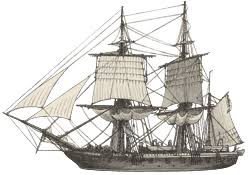
What was the name of Darwin's boat?
Indefatiguable
Bugle
Sloop John B
Beagle

Example: How does the lizard benefit from being blended into its sandy habitat?
It makes the lizard harder to see.
It makes the lizard harder to hear.
It makes the lizard harder to touch.
It makes the lizard harder to smell.
What did Darwin observe about finches in the Galapagos Islands?
Their feathers were adapted to match their environment
Their beaks were adaptations related to the foods the finches ate
they all had identical phenotypes in all locations
they had identical genotypes in all locations
The endangered seabird the marbled murrelet, in California, is dependent upon Sequoia forests and trees for survival. What might happen to the marbled murrelet population if the sequoia population went extinct?
the population of marbled murrelet would remain the same
the population of marbled murrelet would increase
The marbled murrelet would go extinct
the marbled murrelet would be placed on the threatened species list
Whether a fossil formed before or after another fossil is described by its
relative age
absolute age
fossil record
radioactive age
A slight change in a rabbit's ability to hear its predators better and help it survive is
an adaptation.
an acquired trait.
a vestigial structure.
an isolation.
What are fossils?
molds and casts of organisms that live today
footprints or burrows of small animals that live today
drawings of ancient animals and other organisms
the preserved remains or traces of organisms that lived in the past
Natural selection is affected by ___ or traits that are different in members of the same species.
camouflage
ancestor
variations
evolution

The bird on the right is better adapted to get the worm. It will probably survive and reproduce. This is known as_____.
Atomic distribution
Natural Selection
Population
Why are advantageous traits more likely to be passed onto offspring?
Because organisms with those traits are more likely to survive and reproduce.
Because they come from recessive alleles.
Because they come from dominant alleles.
Because the trait is an acquired (learned) phenotype.
What is a change in an organism that allows for it to survive in its environment?
homologous
variation
vestigial
adaptation

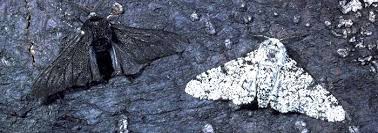
Predict which moth would increase in population
light
dark

Which layer of rock would be the oldest in this picture?
A
E
F
D
What can happen to a species over time if most of the organisms have an advantage, for example, good camouflage?
The population would increase.
The population would decrease.
The population may become extinct.
Why are advantageous traits more likely to be passed on to future generations?
Because they are more likely to survive and reproduce.
Because they come from recessive alleles.
Because they come from dominant alleles.
Why did the populations of peppered moths in England change from light to dark after the Industrial Revolution?
Light moths were easy to see against sooty trees and were eaten.
The birds that ate the dark moths were killed by soot.
Dark moths were produced by industrial processes.
Light moths were killed by soot.
what is natural selection?
the surrounding conditions in which a person, animal, or plant lives
an individual individual animal, plant or single-celled life form
the process whereby organisms better adapt to their environment tend to survive and produce more offspring
the process by which humans can choose a plant or animal to breed based on specific traits
what is artificial selection (also called selective breeding) ?
the process by which humans choose a plant or animal to breed based on specific traits
the process whereby organisms better adapt to their environment tend to survive and produce more offspring.
characteristics that are passed to you from your parents
a body part or feature or behavior that helps a living thing survive and function better in its environment
what's an environment?
characteristics that are passed to you from your parents
a body part, feature, or behavior that helps a living thing survive and function better in its environment
an individual animal, plant or single celled life form
the surrounding or conditions in which a person, animal, or plant lives
what's an organism?
a body part or feature or behavior that helps a living thing survive and function better in its environment
an individual animal, or single celled life form
the process by which humans choose a plant or animal to breed based on specific traits
the surrounding or conditions in which a person, plant, or animal lives
what's an adaptation? (there are two answers)
a body part, feature, or behavior that helps a living thing survive and function better in its environments
the surrounding or conditions in which a person, animal, or plant lives
happens through natural selection
happens through selective breeding
who is Charles Darwin? (there's more than one answer)
he studied finches
he fought in the new england war
he discovered natural selection
he wrote the finch book
what are genetic traits?
the process by which humans choose a plant or animal to breed based on specific traits
characteristics that are passed on to you (inherited) from your parents
a body part, feature, or behavior that helps a living thing survive and function better in its environment
the process whereby organisms better adapt to their environment tend to survive and produce more offspring
what have we artificially selected
dogs
cats
food
plants
a big white polar bear lives in the freezing cold arctic, what is an adaptation it has?
big claws
very thick skin
camouflage
small ears
Darwin began to formulate his concept of evolution by natural selection after what
experimentation with animals
observations of many species of plants and animals while aboard the H.M.S Beagle
reading many books about finches
watching a finches every move every second of the day
What is a trait?
a color
the quality or characteristic of an organism
the DNA of an organism
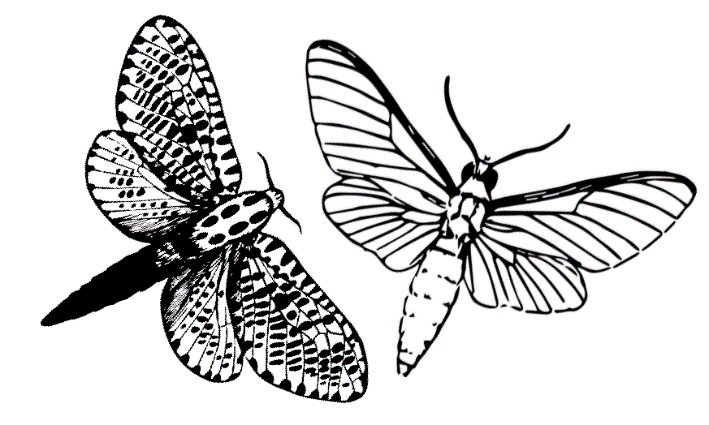
According to natural selection, dark colored tree trunks would favor
light colored moths
dark colored moths
red colored moths
What is the goal of artificial selection/selective breeding?
I. To increase the value of species to humans
II. To produce species that resist disease
III. To produce species with specific traits
I and II
II and III
I and III
I, II, and III

the intentional breeding of plants and animals
Natural Selection
Artificial Selection
In natural selection initially what determines which traits will be passed to the next generation?
the environment
the breeder
it's a 50/50 chance

Both cause changes in animals and plants.
The difference between the two is that Natural Selection happens naturally, but Artificial Selection (selective breeding) only occurs when humans intervene.
Natural Vs Artificial Selection
Genetic Variation

What makes us all unique, whether in terms of hair color, skin color or even the shape of our faces.
genetic variation
natural selection
A giraffe has a long neck in order to better reach leaves to eat. This is an example of _____.
an adaptation
environment
response
stimulus

When a farmer breeds only his or her best livestock, the process involved is.......
natural selection
artificial variation
artificial selection
survival of the fittest

All of a species born and living at about the same time
generation
grouping

the process where organisms with favorable traits are more likely to reproduce, they then pass on these traits to the next generation. Over time this process allows organisms to adapt to their environment.
Natural Selection
Survival of the Fittest

When humans breed certain plants and animals for certain genetic characteristics
Selective Breeding
Natural Selction

the differences in characteristics between individuals of the same species
Mimicry
Variation
Which of the following is a condition needed in order for natural selection to occur?
Variation in traits
Difference in fitness
Inheritability of traits
Ability to eat new foods
Frogs having a large amount of offspring is an example of
genetic variation
natural selection
competition
overproduction
If an organism has the trait of fitness it will
be able to get used to a new environment
survive and reproduce
have a mutation
live a very long life
In artifical selection what initially determines the traits that will be passed on to the next generation?
the environment
the breeder
it's a 50/50 chance

In a given population of plants there is variation in the time of day when flowers open. Those individual plants with flowers that open at night would be more likely to pass on this trait in an environment dominated by what?
Nocturnal pollinators
Solar radiation
Moist soil
Grazing animals

A population of a certain kind of fish is introduced into a new habitat. These fish have variations in color from light to dark. Because of the lighting conditions and predators in this new habitat, light colored fish survive better near the surface and dark-colored fish survive better near the bottom. What change would likely result after many generations of these fish living in this environment?
The fish would become smaller over time so that they could more easily defend themselves from predators.
None of the fish would be able to survive, because the new habitat is not suited to any of them.
All the fish would become more similar, something exactly between light-colored and dark-colored.
There would be two populations of fish, light-colored near the surface and dark-colored near the bottom.

This illustration provides information on four variations in the size and shape of antlers in a population of moose. In order to grow antlers, a male moose must expend a great amount of the energy it gets from food. In an environment where food resources are LIMITED, it would be predicted that there would be an increase in which kind of antlers?
A
B
C
D
Some plants have developed a thick, waxy coating that helps prevent the loss of water. In order for plants to develop this thick, waxy coating over many generations, what must be true?
The plants must be able to absorb water directly from the air.
The plants must have variation in the amount of waxy coating.
The plants must live an in area with heavy rainfall.
The plants must produce wax that animals are able to eat.

A diagram of the anatomy of a catfish is provided. Catfish have dorsal fin spines, which help defend against predators, and caudal fins, which help to propel the fish through the water. A swim bladder controls how high or low the fish sits in the water and gills allow the fish to breathe by taking oxygen out of the water. Catfish spend most of their lives at the bottom of freshwater lakes and streams. Which catfish trait may change (over many generations) if the pond habitat in which it lives becomes significantly deeper?
Swim Bladder
Dorsal Fin
Caudal Fin
Gills
Over time, a species of mammals living in cold environments may evolve long fur. Describe how natural selection creates this adaptation.
Mammals with slightly longer fur have a survival advantage. Over time, mammals with this trait will be better adapted to survive in warmer climates.
Mammals with slightly longer fur DO NOT have a survival advantage. Over time, mammals with this trait will be better adapted to survive in colder climates.
Mammals with slightly shorter fur have a survival advantage. Over time, mammals with this trait will be better adapted to survive in colder climates
Mammals with slightly longer fur have a survival advantage. Over time, mammals with this trait will be better adapted to survive in colder climates.
For centuries, certain animals have been crossed to produce offspring with desirable qualities. What technique is used to produce offspring with specific qualities?
NON-Selective breeding is the technique used to produce offspring from organisms with desired qualities.
Selective breeding is the technique used to produce offspring from organisms with desired qualities.
Selective breeding is the technique used to produce offspring from organisms with undesired qualities.
Random breeding is the technique used to produce offspring from organisms with undesired qualities.
In some cases, humans have chosen to mate certain individual farm animals within a species. For example, large cattle are more desirable than smaller cattle. Describe how humans selectively breed large cattle.
By allowing only the largest cattle to reproduce over many generations, strains of large cattle can be produced.
By allowing only the largest cattle to reproduce over many generations, strains of small cattle can be produced.
By allowing only the smallest cattle to reproduce over many generations, strains of large cattle can be produced.
None of these is correct

The table displays data about the presence of certain traits in a population of chickens over several generations.The data provide evidence that best supports the claim that these chickens are being bred for which characteristic?
Fewer white feathers
Larger Bodies
Beak Length
Number of tail feathers
Which of the following is required for a trait to become more common over time in a population?
There must be many varieties of the trait in the population.
The trait must allow members of the population to eat only some kinds of food.
The trait must be the result of an immediate change in the environment.
The trait must give individuals an advantage in producing offspring that survive.
Greyhounds are dogs with long, powerful legs and slim bodies that make them very fast runners. Which of the following best describes how humans were able to engineer this breed of dog?
For many generations, these dogs were allowed to run freely in large, open fields.
Dogs that were slower than others were given exercise and trained to run fast.
Over many years, all the dogs were fed diets high in protein and vitamins.
In every generation, only those dogs with the desired traits were allowed to reproduce.
Which of the following best describes artificial selection as compared to natural selection?
In artificial selection, the passing on of traits is determined by survival advantages in nature
In artificial selection, the passing on of traits is determined by human choice
In natural selection, the passing on of traits is determined by human choice
In natural selection, the passing on of traits is determined by choices on the part of the organism
In gene therapy, DNA which encodes a healthy, functional gene is used to replace a mutated gene. This technology will most likely have which of the following results?
Diseases caused by mutated genes will have new treatments.
The spread of mutated genes will lead to increased risk of disease.
Traditional medications will no longer be effective at treating disease.
Diseases that are not caused by mutated genes will become more common.

