
 Worksheets
8.7abc 8.8abc practice
Total questions: 185
Worksheet time: 2hrs 9mins


What moon would you expect to see on March 23rd?


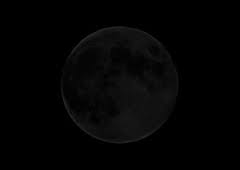
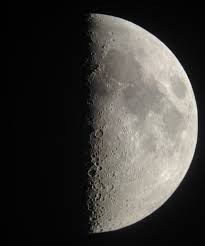
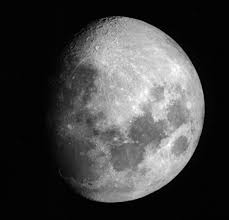
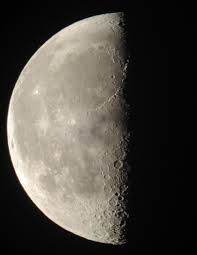
What is the missing lunar phase?
Third Quarter
Waxing Crescent
New Moon
Waning Gibbous

Use the calendar to predict the moon phase on March 9th.
New Moon
Full Moon
Third Quarter
First Quarter
Use the calendar to predict the moon phase on March 26th.
Waxing Crescent
Waning Crescent
Waning Gibbous
Waxing Gibbous
Use the calendar to predict the moon phase on March 30th.
New Moon
Full Moon
Third Quarter
First Quarter

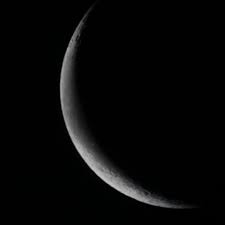
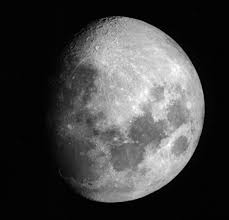
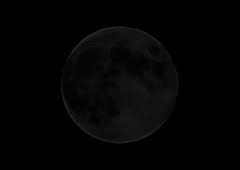
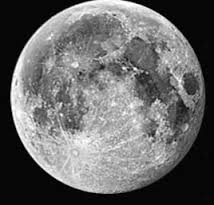


What is illuminating the Moon?
Nuclear Fusion
Mirrors
Sunlight
Flood Lights
As the moon's shape appears to get smaller, we say that the moon is ____.
swelling
waning
waxing
disappearing
The moon goes through each phase...
(a)

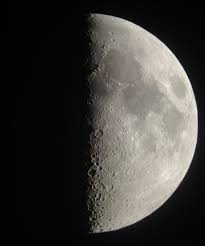
Choose the correct moon phase.
Full moon
Crescent moon
Waxing Gibbous
New moon
The moon phases occur because...
The moon grows and gets smaller.
The moon revolves around the earth.
The sun, earth, and the moon create shadows.
The moon produces its own light.
What moon would you expect to see on March 23rd?
What is the missing lunar phase?
Third Quarter
Waxing Crescent
New Moon
Waning Gibbous
Use the calendar to predict the moon phase on March 9th.
New Moon
Full Moon
Third Quarter
First Quarter
Use the calendar to predict the moon phase on March 26th.
Waxing Crescent
Waning Crescent
Waning Gibbous
Waxing Gibbous
Use the calendar to predict the moon phase on March 30th.
New Moon
Full Moon
Third Quarter
First Quarter
What is illuminating the Moon?
Nuclear Fusion
Mirrors
Sunlight
Flood Lights
As the moon's shape appears to get smaller, we say that the moon is ____.
swelling
waning
waxing
disappearing
The moon goes through each phase...
(a)
Choose the correct moon phase.
Full moon
Crescent moon
Waxing Gibbous
New moon
The moon phases occur because...
The moon grows and gets smaller.
The moon revolves around the earth.
The sun, earth, and the moon create shadows.
The moon produces its own light.





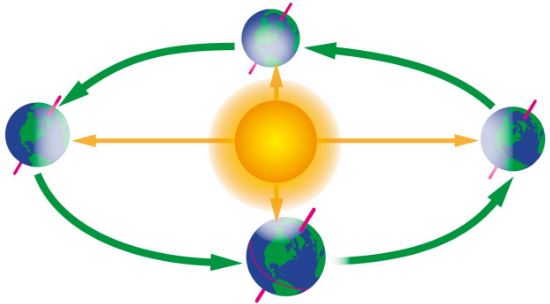
In the diagram below, the Northern hemisphere would be in what season at position A?
Fall or Autumn
Spring
Winter
Summer
During a summer solstice the America, the southern hemisphere experiences
a vernal equinox
the autmunal equinox
a summer solstice
a winter solstice
Why is summer warmer than winter?
The hemisphere experiencing summer is tilted more directly toward the sun
During summer, the entire planet is closer to the sum
The sun radiates more energy during the summer
The earth spins slower on its axis during the summer
6. When the northern hemisphere has summer...
...the southern hemisphere has winter.
...the southern hemisphere has spring.
...the southern hemisphere has autumn.
Which hemisphere do we live in?
Northern Hemisphere
Southern Hemisphere
Western Hemisphere
Eastern Hemisphere

Based on the diagram, which season would the northern hemisphere be experiencing?
Winter
Spring
Summer
Fall
Which diagram models a hypothetical situation in which every location on Earth would have 12 hours of daylight and 12 hours of darkness per day?


Which of these changes would likely occur if the rate of Earth's rotation on its axis increased?
The length of the seasons would be longer.
The length of the seasons would be shorter.
The length of a day would be shorter.
The length of a day would be longer.

The beginning of autumn in North American is in September, but the beginning of autumn in South America is in March. The diagram shows a picture of the Earth, the sun, and the moon on one day in September and another in March. Why does autumn start in different months of the year in North America and South America?
Earth's orbit around the sun is not a perfect circle.
North America has a larger landmass than South America.
The moon has a greater pull on South America than North America.
Earth's axis has a 23.5 degree tilt.

Students in a science class in Marfa, Texas, made a poster with a diagram to represent seasonal change in the Northern hemisphere. Which statement best describes conditions for Earth at position 1 in the diagram?
There are an equal number of hours of daylight and nighttime in the Northern hemisphere, and the north pole is tilted away from the Sun.
The Northern hemisphere has the fewest hours of daylight, and the Earth's axis does not tilt at this position.
There are an equal number of daylight and nighttime hours in this position because the Earth is not tilted in this position.
The Northern hemisphere has the fewest hours of daylight, and the north pole is tilted away from the Sun.






What characteristics are used to classify stars?
Flammability, weight, and reactivity
Temperature/color and brightness
Conductivity, luster, and density
Malleability, distance, and viscoscity

Using the HR diagram, choose the color of Zeta Eridani
blue
white
yellow
red

Which star is hotter than Deneb
Procyon
Sun
Regel
Banard's Star

Which star is brighter than the sun?
Sirius B
Procyon B
Van Maanan's Star
Aldebaran

Which star is brighter than Alpha Centauri B, but dimmer than the sun?
Pollux
Spica
Tau Ceti
Mira

Which star is considered a giant star?
Mira
Zeta Arindani
Barnard's Star
Betelgeuse

Knowing the color of a star also tells us its __________
age
location
temperature
name

(or brightness)


How does the mass of a hot, bright main sequence star compare to a cool, faint main sequence star?
They have more mass
They have the same mass
They have less mass


Which of these observations of Barnard’s Star is most likely accurate?
Barnard's star is less bright than sun and cooler
Barnard's star is brighter than the sun but hotter
Barnard's star is less bright than our sun but hotter
Barnard's star is equal in brightness and temperature to the sun


sort of cool, dim (not too much light), and red?


Which best describes stars located in area A
Bright and Hot
Cooler and bright
Dim and hot
Dim and colder

Which description best describes area B
Brighter and Hotter
Brighter and Cooler
Dimmer and cooler
Dimmer and Hotter

Which best describes stars in area C
Brighter and Hotter
Brighter an Cooler
Dim and Hotter
Dim and Cooler

Which best describes area D?
Brighter and Cooler
Brighter and Hotter
Dimer and Cooler
Dimmer and Hotter

Along the top of the diagram you see the different colors of stars. List the colors from left to right.

What variable is found along the x-axis on the HR diagram?
luminosity (brightness)
temperature
life cycle
popularity
On the Hertzsprung Russell diagram, the x-axis is unusual because it goes in a _______ to ________ direction.
(a)
What variable is found along the y-axis on the HR diagram?
luminosity (brightness)
temperature
life cycle
popularity

Look at the HR diagram and find the group of stars labeled Main Sequence. Which of these is NOT a yellow, main sequence star?
Procyron
Sun
Alpha Centauri A
Polaris
Look at the HR diagram and find the group of stars labeled Main Sequence. Which of these is a blue, main sequence star?
Regulus
Sirius
Alpha Centauri A
Rigel

Look at the HR diagram and find the group of stars labeled Main Sequence. Name a red main sequence star.

Now using the HR diagram locate the group of stars labeled Supergiants. The stars in this group are those of at least 100 times the mass of our Sun. Name a white supergiant star.
Now using the HR diagram, locate the group of stars labeled Supergiants. Name the red supergiant stars, choose all that apply.
Antares
Betelgeuse
Bernard's Star
Polaris

Which star is hotter: Vega or Pollux?
Vega
Pollux

Which star is cooler: Polaris or Regulus?
Polaris
Regulus

Which star is brighter: Spica or Tau Ceti?
Spica
Tau Ceti

Which star is dimmer: Deneb or Mira?
Deneb
Mira

