
NEW
Font size
 Worksheets
Evolution Review
Total questions: 55
Worksheet time: 28mins
The gradual change in a population/species over time is
Mutation
Evolution
Adaptation
Variation


Vestigial structures
structures that perform a similar function but are not similar in origin
remnants of once-important structures that have slowly lost all or most of their function
features found in different organisms that share structural similarities but may have very different functions
preserved remains of an organism

Which layer is the youngest?
1
2
3
4
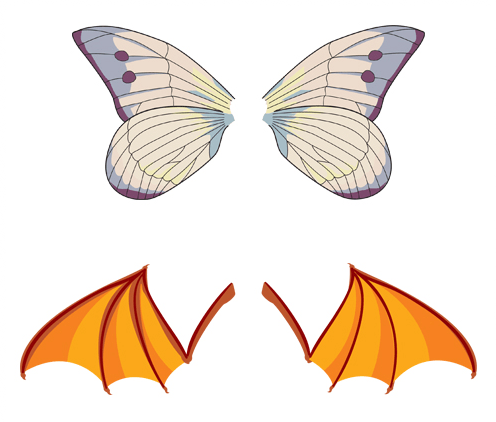
What is this an example of?
Homologous structure
Analogous structure
Vestigial organs
Functional adaption
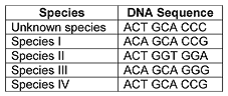
If two organisms have similar traits of DNA, they probably
share a common ancestor
share a common environment
share a common population
speciation

Which layer is the oldest?
B
A
E
C
The appendix, which is not needed to survive, is conisdered to be a
Homologous Structure
Analagous Structure
Vestigial Structure
Homology


The ability of an organism to remain unaffected by a harmful agent in the environment
chronic toxicity
acute toxicity
resistance
monoculture

The illustration below depicts what might happen to bacteria when introduced to antibiotics.
Which of the mechanisms for evolution is represented in the illustration?
mutation
gene flow
genetic drift
natural selection
ONLY take antibiotics for for _________________ infections.
bacterial
viral
In the Amoeba Sister's video, which frogs were an easier target for the predators in the log?
Darker frogs
Lighter frogs
Larger frogs
Smaller frogs
Heterozygous is represented by which of the following
GG
gg
Gg
AUG
In biological terms, what is determined by how many offspring an organism have; not by how long the organism lives?
Gradualism
Adaptation
Evolution
Fitness
Which of the following best describes how natural selection results in bacteria that are antibiotic resistant?
When you take an antibiotic when you're sick, a few bacteria survive. These bacteria happen to have a random mutation that makes them resistant to the antibiotic. These bacteria survive and reproduce, eventually resulting in an antibiotic-resistant population.
When you take an antibiotic when you're sick, the bacteria respond by mutating their DNA, making them resistant to the antibiotic. Therefore, an antibiotic-resistant population evolves.
When you take an antibiotic when you're sick, it causes mutations in the bacteria DNA. Some of these mutations make the bacteria antibiotic-resistant. These bacteria now form a bacteria-resistant population.
When you take an antibiotic when you're sick, it kills the bacteria, which allows a new species of bacteria to infect the body. Some of species are antibiotic resistant, thus a new population of antibiotic-resistant bacteria appears.
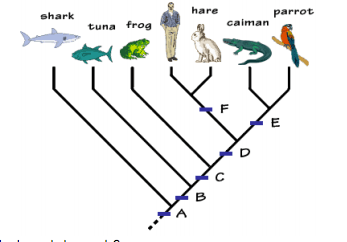
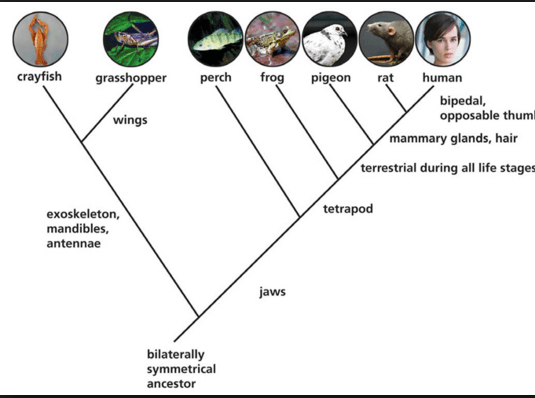
On the cladogram, which organism is the closest relative of the parrot?
Frog
Hare
Caiman
Parrot

What is the common ancestor of Letters C and E?
1
2
3
4

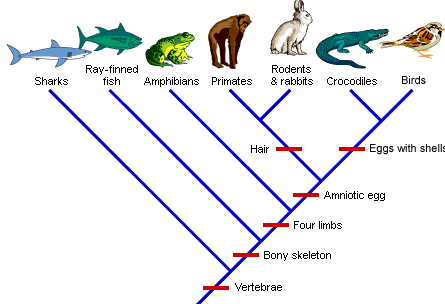
Which group of animals on this tree are most closely related to birds?
Saurischian dinosaurs
Ornithischian dinosaurs
Crocodiles
None of these are related to birds

All bacteria is
prokaryotic and mulitcellular
eukaryotic and multicellullar
prokaryotic and unicellular
eukaryotic and unicellular
Which kingdoms are prokaryotes?
Kingdom Eubacteria
Kingdom Archaebacteria
Kingdom Animalia, Kingdom Plantae
Both Eubacteria and Archaebacteria
Autotrophs
Make their own food
Get their food from others
are Fungi
are none of the above
Heterotrophs
make their own food
get their food from others
are fungi
none of the above
They are heterotrophs and reproduce by spores
What is binomial nomenclature?
system of 3 names
system of 2 names
the names of the kingdoms
the levels of classification
Who created the 2 name system?
Linnaeus
Edison
Darwin
Einstein
What two levels make up a scientific name?
genus and order
genus and species
domain and kingdom
family and genus
What level comes before class?
phylum
domain
order
family
All living things are made of
cells
prokaryotes
autotrophs
heterotrophs
What is the proper way to write a scientific name?
Symbion pandora
Symbion Pandora
symbion Pandora
symbion pandora
Which of these is an autotroph?
mushroom
rose
seal
tiger
What is the correct order of classification?family
kingdom, domain, phylum, class, order, family, genus, species
domain, kingdom, phylum, class, order, family, genus, species
domain, phylum, class, order, kingdom, family, genus, species
species, genus, family, phylum, order, class, domain, kingdom

What is a mutation?
a total of all biotic and abiotic things
the time between when an organism is born and when they reproduce
A change in the DNA sequence.
an ancestor that two or more descendents have in common.

Which of the following statements best describes what will most likely occur to the moth populations in the image?
The light moths will be captured by predators more easily than the dark moths, and the population of light moths will rise.
The light moths will change their wing color to match that of the dark moths.
The light moths will be captured by predators more easily than the dark moths, and the population of dark moths will rise.
The dark moths will be captured by predators more easily than the light moths, and the dark moths will probably go extinct.
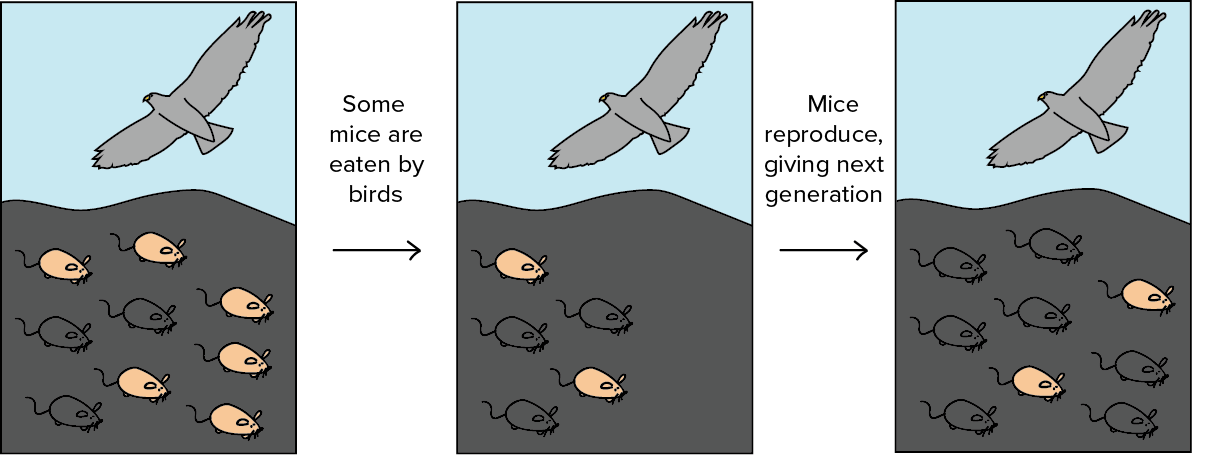
Natural Selection is driven by a change in the environment and survival of the
Earth
Fastest
Fittest
Biggest
Why are advantageous traits more likely to be passed onto offspring?
Because they are more likely to survive and reproduce.
Because they come from dominant alleles.
Because they come from recessive alleles.
Because the organism knew it needed that trait, survives, and passes it on.


What is the most specific category of Linnean classification?
Domain
Species
Family
Class
An archaeologist uncovers some bones that he suspects belonged to an early ancestor of today's modern horse. What is the best method to use to test this belief?
create a model showing the two organisms side by side
perform a DNA comparison of the two subjects
look for analogous structures
create a model of bones from similar burial sites

