Wayground logo

Free Printable Worksheets

Font size

S
M
L
XL
Worksheets

Level 3 Science Review

Total questions: 38

Worksheet time: 19mins

Name
Class
Date
1.

Mr. Shraft found an ant crawling by his house.  Which part of the life cycle is shown with this ant?

a)

adult

b)

pupa

c)

larva

d)

egg

2.

A specific type of small insect is found in four colors. They are red, yellow, green, and brown. The red insects are found on red flowers, the yellow insects are found on yellow flowers, and the green insects are found on green plants. Most likely, where will you find this specific type of an insect for the color brown?

a)

b)

c)

d)

3.
Right before Melanie feeds her dogs, she rings a bell and they run to the kitchen. One day an ice cream truck drove by the house ringing a bell. When hearing the noise, the dogs ran to the kitchen. This is an example of:
a)
Reflex
b)
Hibernation
c)
Learned Behavior
d)
Instinct
4.

Roger kicked a soccer ball toward a goal from 20 feet on an empty field. It stopped a few feet before the goal. He picked the ball up and placed it at the original spot where he had kicked it before. What should Roger do to score a goal from this spot?

a)

Use less energy on the ball

b)

Increase the force on the ball

c)

Increase the pull on the ball

d)

Decrease the force on the ball

5.

Fossils of fish were found on top of a dry mountain. The fish was over a hundred thousand years old. Which of the following BEST explains how the fossils got there?

a)

A person carried them up the mountain and left them there.

b)

The top of the mountain was once covered by a lake, ocean, or sea.

c)

The fish were carried by clouds and dropped on the top of the mountain.

d)

The fish climbed to the top of the mountain.

6.
Which best describes the term “climate”?
a)

The amount of rain in an area on a Monday.

b)

The amount of snow in an area for a few weeks.

c)

The amount of hail in an area for a few months.

d)

The amount of rain, and days without rain, in an area for ten years.

7.
Which human activity is best linked to increasing the possibility of flooding?
a)

Cutting down many trees on the side of a hill.

b)

Planting trees, grass, and bushes on a hill side.

c)

Building walls at the edge of rivers.

d)

Building dams on rivers that often cause flooding.

8.
Which experiment would be best for a plant?
a)

Use three of the same type of plant. Place one by a window, one in the middle of the room, and one in a closet. Measure the start height and then the ending height after 30 days.

b)

Use three different types of plants. Place one by a window, one in the middle of the room, and one in a closet. Measure the start height and then the ending height after 30 days.

c)

Use three different types of plants. Give one only water, one water and salt, and one water and nutrients. Measure the start height and then the ending height after 30 days.

d)

Use three different types of plants. Place one outside, one in a cold room, and one in a warm room. Measure the start height and then the ending height after 30 days.

9.
Which of the following animal activities is BEST linked to forming groups for survival?
a)

An individual lion protecting the area where it lives.

b)

A bear chasing off other bears to protect its food.

c)

A single dog taking a nap.

d)

Dolphins forming pods to work together to find food.

10.
For an experiment, water was placed in a beaker. The water measurement is displayed by the line above. Which BEST describes the measurement of the water in the beaker?
a)
250ml
b)
350ml
c)
200ml
d)
300ml
11.
Many buildings in California have flexible foundations. Which of the following is the natural disaster this action is preparing for?
a)

Flooding

b)

Volcanoes

c)

Earthquakes

d)

Tsunamis

12.
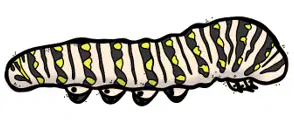
Dr. Seward found a caterpillar on a plant. Which part of the life cycle is shown in this caterpillar?
a)
Adult
b)
Egg
c)
Pupa
d)
Larva
13.
Which characteristic of a cactus allows it to survive in the desert?
a)

Broad flat leaves.

b)

Spiny leaves which fall off when it is cold.

c)

Waxy covering, spiny leaves and the ability to hold water a long time.

d)

Strong wooden structure for stable growth.

14.
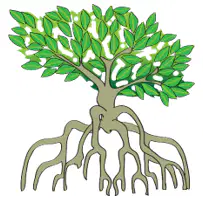
Red Mangrove trees can only live in areas without frost. Which area has the BEST climate for the Red Mangrove trees to survive?
a)
Northern section of Maine.
b)
The south section of Alaska.
c)
The central section of South Dakota.
d)
The southern area of Florida.
15.
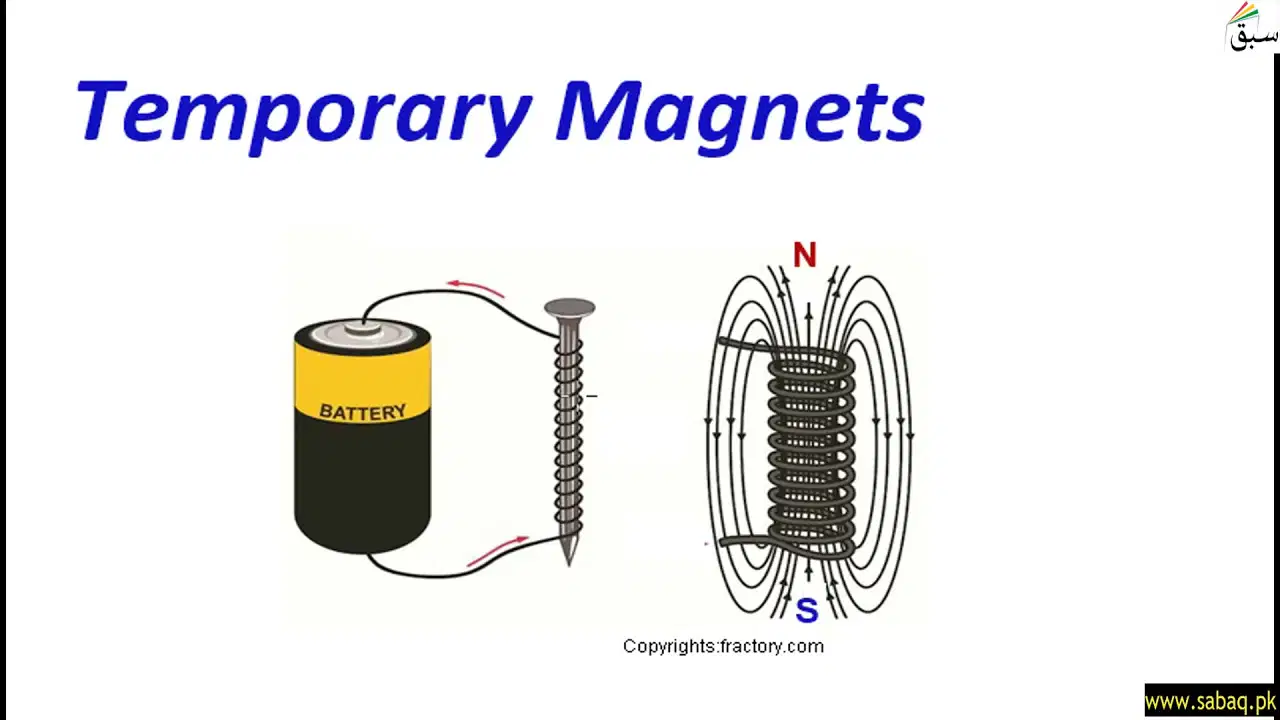
Which type of magnet creates magnetic force without electricity?
a)
Permanent
b)
Temporary
c)
Electro
d)
Battery, Wire, and Nail
16.
Which of the following is an animal behavior for an individual animal?
a)

Flocking Birds

b)

Birds in V formation

c)

A crow dive bombing me in a parking lot.

d)

A bird and her chicks

17.
Where would a group of Cattails grow best?
a)

In a warm environment with salt water.

b)

In a warm wet environment under a lot of shade.

c)

In a warm dry environment under a lot of shade.

d)

In a warm dry environment with some shade.
18.
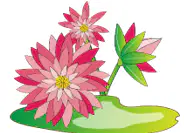
Which of the following BEST describes the stage of life for the flowering plant below?
a)
Seed
b)
Germination
c)
Spore
d)
Growth
19.
Which of the following BEST describes an individual rabbit having a trait change due to the environment?
a)
Desert Cottontail rabbits consume food.
b)
Himalayan rabbits changing color from brown to white when the temperature drops below 26 degrees Fahrenheit.
c)
Pygmy rabbits cannot make their own food like plants
d)
Mini Lop rabbits move around with their legs.
20.
In Science class, an experiment used the scale above when comparing a toy cow and a toy donkey. Which of the following BEST describes the results in the picture above?
a)
The toy cow has more volume than the toy donkey.
b)
The toy cow has more mass than the toy donkey.
c)
The toy cow has more surface area than the toy donkey.
d)
The toy cow has a higher temperature than the toy donkey.
21.
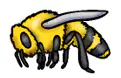
Which of the following characteristics allow this wasp to find food in various places?
a)
Its round shaped head.
b)
Its hard exoskeleton.
c)
Its colors of black and yellow.
d)
Its wings on its body.
22.
Which of the following would create the most pollution in water?
a)
A boat which needs a gasoline motor.
b)
A rowboat with two people in it.
c)
A sailboat with no gasoline motor.
d)
All would contribute the same amount of pollution.
23.
A dry hot area experienced rain for two weeks. Which would BEST describe this situation?
a)

Temperature

b)

Soil Nutrients

c)

Weather

d)

Climate

24.
Which example is BEST linked to the use of a temporary magnet?
a)

Using a refrigerator magnet to hold up pieces of paper.

b)

A gate which is locked by a magnet and opens when using a key card.

c)

Using a horseshoe magnet to pick up nails.

d)

A ceramic magnet stuck on the side of a metal cabinet.

25.
Which insects below share incomplete metamorphosis?
a)
The butterfly and the grasshopper.
b)
The butterfly and the termite.
c)
All share incomplete metamorphosis
d)
The termite and the grasshopper.
26.
Worker bees communicating to each other to find food is BEST linked to which of the following?
a)
Group Behavior
b)
Reflex
c)
Light Communication
d)
Hibernation
27.
The Indian pipe plant does not contain chlorophyll. It is in the shade of trees. Which of the following allows it to survive?
a)
Vast water supplies from clouds.
b)
Wind carrying nutrients.
c)
Stealing nutrients from trees close to it.
d)
Pollination of bees.
28.
Which experiment will BEST use the picture below?
a)
Molding clay into new shapes.
b)
Adding food dye to milk.
c)
Mixing an acid and a base like vinegar and baking soda.
d)
Using popsicle sticks to make a simple machine.
29.
Which characteristic of a Venus Fly trap allows it to survive?
a)
The ability to absorb nutrients from insects.
b)
The ability to easily change locations.
c)
The exoskeleton outer shell of the plant.
d)
The complex nervous system of this plant.
30.
Which best describes the climate of a tropical rainforest?
a)

Very cold with a high amount of rain.

b)

Cold with a medium amount of rain.

c)

Warm with very little amounts of rain.

d)

Warm with high amounts of rain.

31.
A student continues to increase the temperature of a liquid in science class. Which of the following most likely will occur?
a)

The liquid will freeze.

b)

The liquid will boil.

c)

The liquid will melt

d)

The liquid will solidify.

32.
Humans now avoid cutting down Mangrove trees. Which BEST describes the importance of Mangrove trees?
a)
They reduce the number of insects by the beaches.
b)
Their roots stabilize the soil on coasts reducing damage by storms and flooding.
c)
They provide food for arctic animals.
d)
They pollute the waters with toxins.
33.

Which of the following BEST describes a force without contact (touching).

a)

A magnet on a table pulling on another magnet on the other side of the table.

b)

A teacher pushing a cart across the hallway.

c)

A policeman pulling a wagon in a garage.

d)

A student kicking a football on a field.

34.
The scale below is being used in an experiment. Which of the following BEST describes how it is properly used?
a)
To measure the length of an object.
b)
To measure the weight of an object.
c)
To measure the volume of an object.
d)
To measure the area of an object.
35.
Which animal would BEST survive in a dry desert region?
a)
Moose
b)
Penguin
c)
Rattlesnake
d)
Polar Bear
36.
A town cut down all the trees between a very large river and the area where people live, and replaced the area with farms. Which of the following most likely could happen from this change?
a)
Increased volcano overflows.
b)
Earthquakes during hot, dry times of the year.
c)
Droughts when there are steady rainfalls.
d)
Flooding from the river during heavy rains.
37.
Which BEST describes the climate of an arctic tundra?
a)

Very cold with a high amount of rain.

b)

Warm with a medium amount of rain.

c)

Warm with low amounts of rain.

d)

Very cold with low amounts of rain.

38.
Which of the following would be BEST stored in test tubes?
a)

Samples of Rainwater

b)

Various Coins

c)

Samples of Large Rocks

d)

Samples of Large Wood Chips