
 Worksheets
Waves and Energy Practice
Total questions: 53
Worksheet time: 1hrs 3mins
What does a wave carry from place to place?
energy
matter
people
The highest point on a transverse wave is the
compression
crest
rest position
trough
The lowest point on a transverse wave is the
compression
crest
rest position
trough
The number of waves that pass somewhere in a second is:
amplitude
frequency
wavelength
A wave that can travel through matter and empty space is a:
electromagnetic wave
longitudinal wavy
transverse wave

What kind of wave is this?
electromagnetic
longitudinal
transverse

This picture is an example of which type of wave?
transverse wave
compression wave
ocean wave

#1 refers to the
wavelength
amplitude
crest
trough
#2 refers to the
wavelength
amplitude
crest
trough
#3 refers to the
wavelength
amplitude
crest
trough
#4 refers to the
wavelength
amplitude
crest
trough
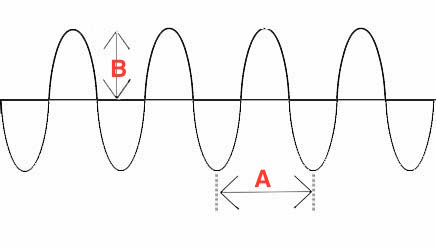
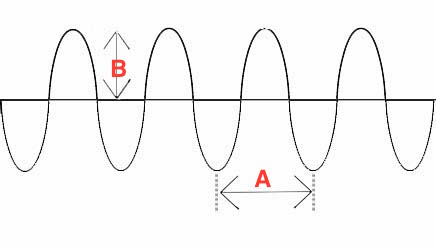
What property of this wave is represented by the letter "A"
amplitude
crest
trough
wavelength

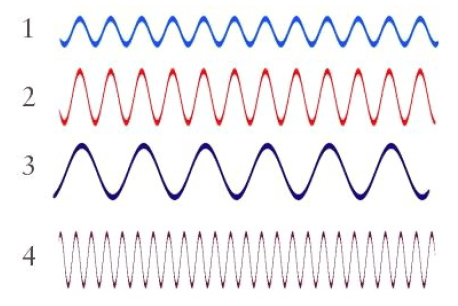
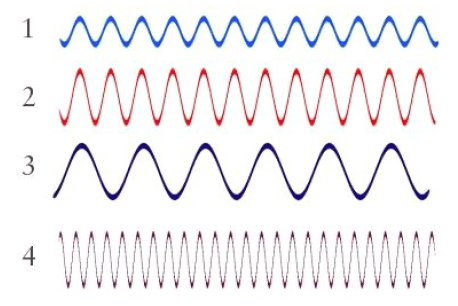

A wavelength is the distance between which 2 points?
B and G
A and C
C and F
A and H

Which image represents a longitudinal wave?
A
B
The highest part of a transverse wave is
the crest
the trough
the wave point
the hotel transylvania
The lowest part of a transverse wave are the
crests
troughs
wave points
low nodules
The distance between two corresponding parts of a wave is its
amplitude
frequency
wavelength
velocity
The height of the wave from its resting point is called its
wavelength
amplitude
velocity
frequency
A wave that needs a medium to travel is called a(n)
electromagnetic wave
mechanical wave
ocean wave
any way can do this
A wave that can travel with or without a medium is called a(n)
electromagnetic wave
mechanical wave
surface wave
all waves can travel in any way
Longitudinal waves have:
crests and troughs
crests and compressions
compressions and rarefactions
troughs and rarefactions
Transverse waves have:
crests and troughs
troughs and rarefactions
compressions and contractions
rarefactions and crests
How often a wave occurs is the wave's
frequency
amplitude
wavelength
velocity
Transverse waves move mediums
at a right angle
in a circle
and matter too
at an acute angle
Longitudinal waves move:
at a right angle compared to the direction the wave is traveling
in a circle compared to the direction the wave is traveling
matter
in the same direction as the wave is traveling
True or False: Amplitude can increase or decrease wavelength
True, amplitude can increase or decrease wavelength
False, frequency can increase or decrease wavelength
False, crests can increase or decrease wavelength

What is the amplitude of this wave?
3
-3
6
4

What is the wavelength of this wave?
3
10
4
8
What happens to the frequency of a wave when the amplitude is tripled?
the frequency is tripled
the frequency is a third of what it was
amplitude does not affect frequency
What would happen to the wavelength if the frequency was doubled?
the wavelength would be halved
the wavelength would be doubled
the wavelength would stay the same
frequency does not affect wavelength
What would happen to the frequency is the wavelength was tripled?
the frequency would be a third of what it was
the frequency would be 3 times larger
the frequency would stay the same
the wavelength does not affect the frequency of a wave
What is the amplitude of this wave?
3
-3
6
4
What is the wavelength of this wave?
3
8
10
4

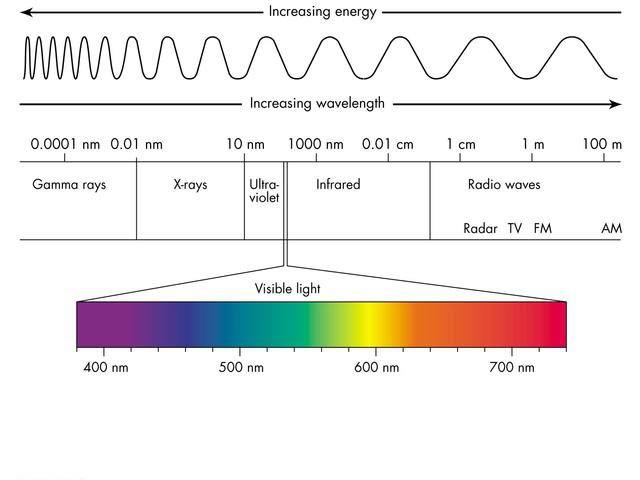
What is the correct order of the visible light spectrum starting with the longer wavelength?
Red, yellow, orange, blue, violet, indigo
Violet, indigo, blue, green, yellow, orange, red
Green, yellow, blue, indigo, red, orange
Red, orange, yellow, green, blue, indigo, violet


Which color has the longest wavelength?
Yellow
Red
Green
Purple

Quasars are extremely distant celestial bodies. Investigators using a special telescope determined that a certain quasar was emitting waves with a frequency of 1.41 x 10⁹ Hz. Using the electromagnetic spectrum provided, investigators were most likely using a telescope that detects -
microwaves
visible light
x-rays
gamma rays

Scientists observed a celestial object emitting a wavelength of 3 x 10⁻¹⁰m. What type of telescope did the scientists have to use to view this?
Radio wave
Infrared ray
X-ray
Gamma Ray
Scientists observed a celestial object emitting waves with a frequency of 1.41 x 10⁸ Hz. What type of telescope did the scientists have to use to view this object?
Radio wave
Microwave
X-ray
Ultraviolet wave
The frequency of an x-ray is --
1.41 x 10⁻¹⁰ Hz
1.41 x 10¹⁸ Hz
1.41 x 10¹⁰ Hz
1.41 x 10⁻¹⁸ Hz
The wavelength of an infrared ray is --
10-5 m
1012 Hz
105 m
10-12 Hz
Scientists observed a celestial object emitting a wavelength of 3 x 10³m. What type of telescope did the scientists have to use to view this?
Radio wave
Infrared ray
X-ray
Gamma Ray

