
 Worksheets
Q3 PMA Review
Total questions: 46
Worksheet time: 35mins

Which reflects the goal of both Cash and Carry as well as the Lend-Lease Act?
to contribute to the success of the Axis powers
to relieve unemployment caused by the Great Depression
to guarantee a third term to President Franklin D. Roosevelt
to aid the Allies without involving the U.S. in the war
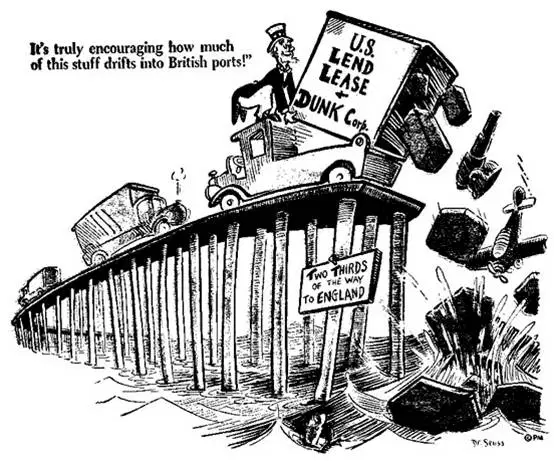
Which statement describes the foreign policy change made by the United States between the start of World War II (1939) and the attack on Pearl Harbor (1941)?
The traditional isolationism of the United States was strengthened.
The nation shifted from neutrality to military
support for the Allies.
War was declared on Germany but not on Japan.
Financial aid was offered to both the Allied and Axis powers.
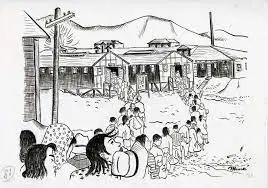
Which conclusion is reflected by the internment of Japanese Americans during World War II?
civil liberties are sometimes limited during times of national crisis
minorities are not allowed to enlist in the United States military
threats to national security are often ignored by the government
the Supreme Court can be relied on to defend civil rights
How About It, Dixie
The President's Four Freedoms
Appeal to me.
I would like to see those Freedoms
Come to be.
If you believe
In the Four Freedoms, too,
Then share 'em with me Don't
keep 'em all for you ....
Looks like by now
Folks ought to know
It's hard to beat Hitler
Protecting Jim Crow.
Freedom's not just
To be won Over There.
It means Freedom at home, too Nowright here!
- Langston Hughes, 1942
In this poem, what is Langston Hughes's criticism about United States foreign policy during World War II?
The Four Freedoms cannot help African-Americans.
Involvement in World War II is not in the best interest of the United States.
Claims of fighting for democracy abroad are inconsistent with segregation at home.
The democratic principles of the United States are best kept at home.

Which statement describes a major social and economic impact on American society during World War II?
Consumer goods became easier to obtain
The United States became an agricultural society.
The Great Depression continued to worsen.
More women and minorities found employment in factories.

Why was the D-Day invasion in June 1944 important to the outcome of World War II?
it opened a new Allied front in Europe
it avoided use of the atomic bomb against civilian targets
it forced Italy to surrender
it stopped Soviet advances in eastern Europe

On what ground did President Harry Truman justified using atomic bombs on Japan in 1945?
Axis powers deserved total destruction
world was ready for a demonstration of nuclear power
early ending of the war would save many lives
American public demanded that the bombs be used

Which precedent was established by the Nuremberg war crimes trials?
National leaders can be held responsible for crimes against humanity.
Only individuals who actually commit murder during a war can be guilty of a crime.
Defeated nations cannot be forced to pay reparations.
Defeated nations can be occupied by the victors.

Which describes the change in the nation's attitude toward membership in the League of Nations and membership in the United Nations?
interventionism and detente
appeasement and internationalism
neutrality and containment
isolationism and involvement
This Floridian Advised on The United Nations Charter and was the only Black Female Attendee.
Eleanor Roosevelt
Mary McLeod Bethune
Amy Adams
Jamie Knox
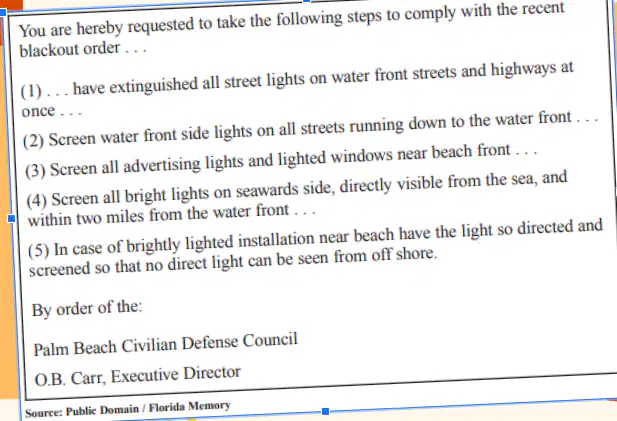
Why did the state of Florida issue this order?
to limit community social activities during the war
to conserve scarce energy resources during the war
to conceal coastal military operations from German spies
to protect coastal settlements from German submarine attacks

Which concept did the creation of the North Atlantic Treaty Organization (NATO) illustrate?
colonialism
isolationism
mutual defense
human rights
During the Cold War era, why were the United States and the Soviet Union hesitant to become involved in direct military conflict?
pressure from nonaligned nations
the threat of China to both nations
the potential for global nuclear destruction
mutual dependence on Middle East petroleum

What led to the Berlin Airlift?
West Berlin Decided it wanted to Unify with East Berlin
The Soviet Union Closed all Rail and Road Traffic to Berlin
The Soviet Uinon Wanted to Leave Germany and turn it over to NATO
Berlin needed supplies because of poor economic management

What Doctrine is being represented in the Image?
Truman Doctrine
Marshall Plan
Domino Theory
Eisenhower Doctrine

Which description represents the goal of developing the Marshall Plan?
end the Korean War
provide aid to Asian nations
promote an isolationist foreign policy
limit the spread of communism

Which was a result of the sentiments expressed by President Eisenhower in the following quote?
"If you knock down the first of a row of dominoes, all the others will fall in quick order…”
stronger support for United States involvement in Southeast Asia
decreased foreign aid to Western Europe
less restrictive immigration policies toward Africa and Latin America
the end of colonialism in Africa
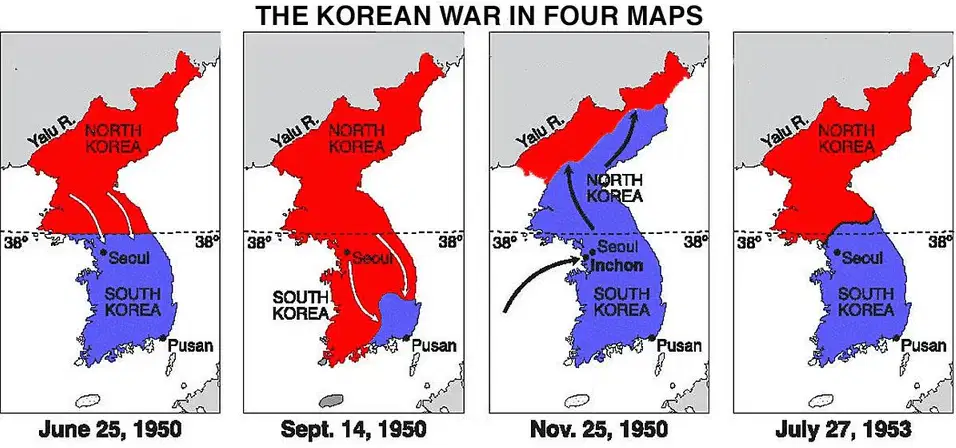
What was a major outcome of the Korean War (1950–1953)?
Korea continued to be a divided nation.
North Korea became an ally of the United States.
South Korea became a communist nation.
Control of Korea was turned over to the United Nations.

What is this cartoon trying to say about mankind's proliferation of Nuclear Weapons?
That the MAD doctrine would be effective during WWIII and that there would be minimal risk
That MacArthur's want to use Nuclear Weapons in Korea would led to Peace
That the World needs to prevent the spread of Nuclear weapons before it's too late
That China would use nuclear Weapons in Korea if the Americans used them first

What was one similarity between the Red Scare following World War I and the Cold War following World War II?
Renewed fighting between wartime enemies was a constant threat
Congressional investigations proved that the Federal Government was heavily infiltrated by Communist spies.
Large numbers of Russian revolutionaries settled in the United States.
Fear of communism led to the suppression of the civil liberties of some Americans.
The House of Un-American Activities and the Loyalty Review Board was created because?
Americans still feared immigration from Asia and wanted to limit immigrants from other nations
The government was looking for supporters of communism and wanted to investigate those they felt were acting disloyal to the United States
The Government sought to jail people who supported Japan and Germany during WWII
The Government wanted to prevented communists from voting and running for public office
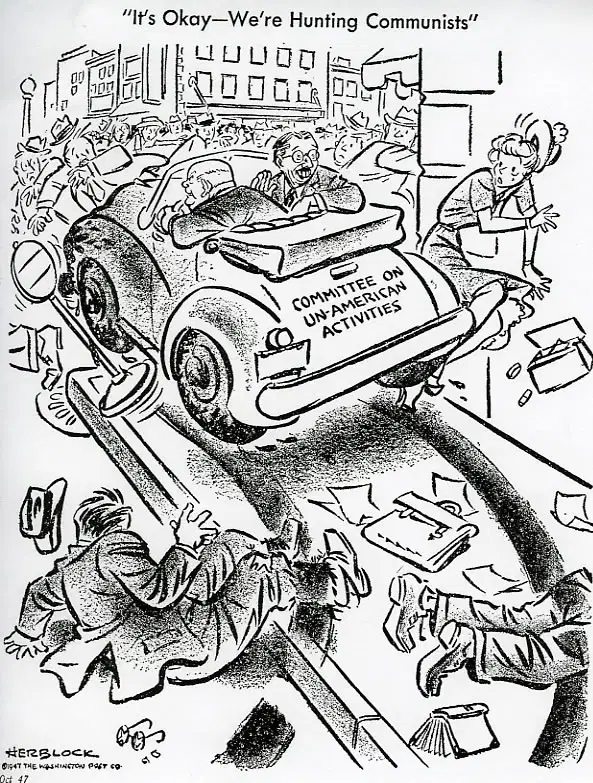
The House Un-American Activities Committee showed that Americans were willing to do what to stop communism?
Override Constitutional Rights to find communists
Arrest and jail communist because they posed a Clear and Present Danger to the United States
To ban books and other communist writings to protect the American Public
Suspend the rule of law to stop communists

How did the Servicemen's Readjustment Act (first GI bill, 1944) attempt to benefit American society?
guaranteeing racial equality in the Armed Forces
providing educational and financial assistance to veterans
abolishing the draft during peacetime
strengthening the concept of civilian control of the military
Which describes the movement of white, middle-class Americans in the United States immediately after World War II?
They moved from the west coast to the east coast
They moved from the Northeast to the Sunbelt
They moved from the cities to the suburbs
They moved from the suburbs to renewal areas in inner cities
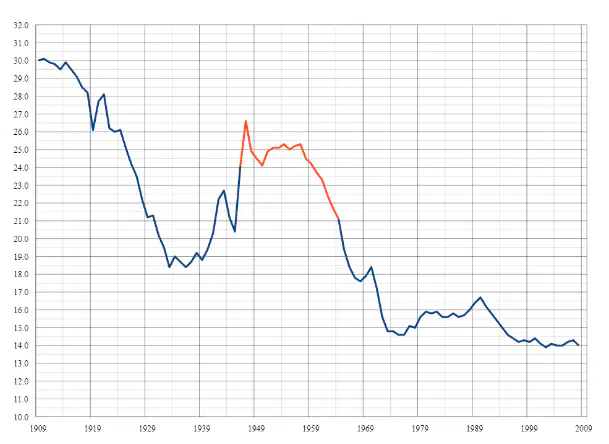
What best describes what occurred in the United States from 1945-1965?
The population of young American men dropped significantly because of high causalities in WWII
National Productivity dropped because of the lack of workers in the United States
This graph fails to recognize POC birthrates
Returning soldiers and their families had a large number of babies
How did the post–World War II baby boom affect American society between 1945 and 1960?
It decreased the demand for housing.
It bankrupted the Social Security System.
It increased the need for educational resources.
It encouraged people to migrate to the Sun Belt.
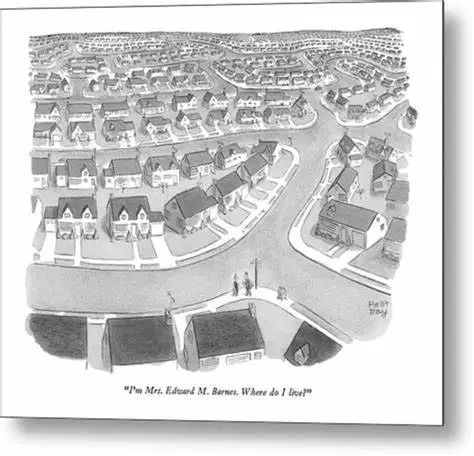
Which 1950s trend is conveyed in the image?
The GI Bill led to an increase in migration from suburbs to cities.
Suburbanization contributed to the conformity of women in the 1950s.
The interstate highway system increased job opportunities for women.
Minorities moved from cities to suburbs in the 1950s.
Which decision made by President Kennedy was influenced by the Cuban Missile Crisis?
negotiate the limited Nuclear Test Ban Treaty with the Soviet Union
reduce the nation’s commitment to the North Atlantic Treaty Organization (NATO)
forbid Americans to trade with and travel to Latin America
send Peace Corps volunteers to aid developing countries
Which program from President Kennedy's “New Frontier program was successfully implemented during his presidency?
establishing healthcare programs for impoverished Americans
passing civil rights legislation ensuring fair housing and equal employment opportunities
removing restrictions on the number of immigrants entering the United States
expanding the United States space program

For which did the Gulf of Tonkin Resolution (1964) provide congressional support?
withdrawing from the United Nations
expanding the Alliance for Progress
escalating military action in Vietnam
reestablishing trade with Cuba

What does this chart say about LBJ's Vietnam policy?
Nixon added more troops than LBJ and Kennedy
LBJ sent more and more troops to Vietnam throughout his presidency
Kennedy massively escalated the War in Vietnam
There was global support for the American effort in Vietnam
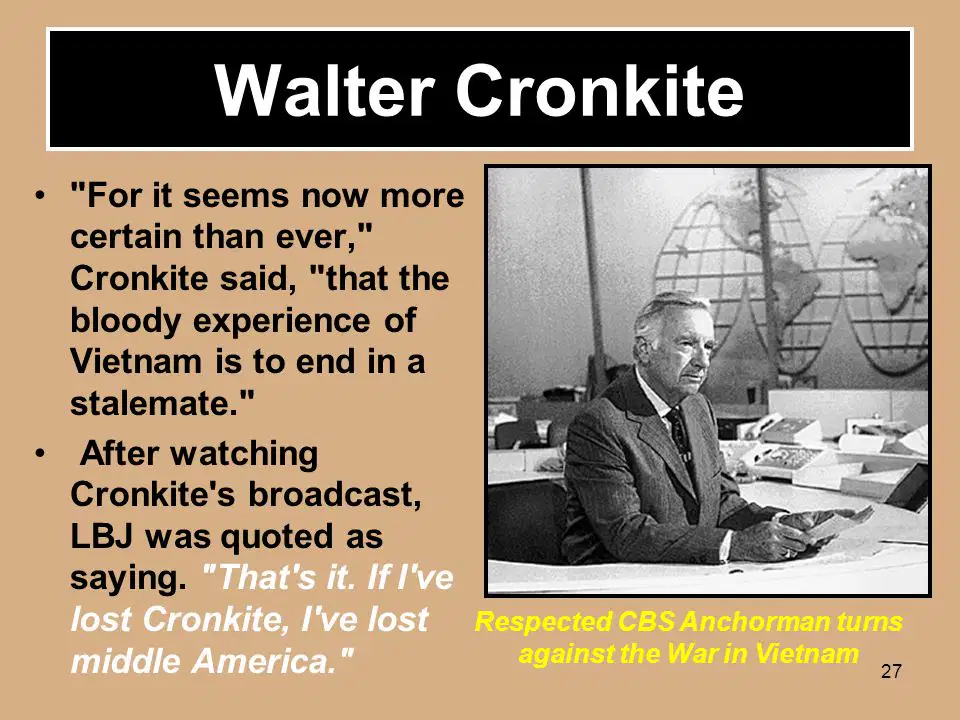
How did trusted American news anchor Walter Cronkite's comments above change Americans' opinions on the Vietnam War?
It encouraged more Americans to sign up for the draft and fight in Vietnam
It created greater trust in the office of the Presidency by the American Public
It led to greater government censorship of the Media
It led Americans' to seek an end to the War
Which was a major goal of President Lyndon B. Johnson’s Great Society program?
to expand foreign aid
to eliminate poverty
to win the Vietnam War
to promote space exploration
Which did the decisions of the Supreme Court in Miranda v. Arizona and Gideon v. Wainwright advance?
voting rights of minorities
principle of separation of church and state
guarantees of free speech and the press
rights of accused persons
During the 1950s and 1960s, which civil rights leader advocated for black separatism?
Medgar Evers
Dr. Martin Luther King, Jr
Rosa Parks
Malcolm X
The March on Washington was a march for what two things?
Freedom and Liberty
Revolution and Adjustment
Jobs and Freedom
Justice for All
“Jackie Robinson Breaks Color Barrier in Major League Baseball”
“President Truman Issues Executive Order Desegregating Armed Forces”
“NAACP Challenges School Segregation”
Which best describes the above headlines?
a decline in African American participation in political activities
the beginning of the modern civil rights movement
Southern resistance to the Civil Rights Act of 1964
the effects of affirmative action programs
Which is a similarity between Congress of Racial Equality (CORE) and the Southern Christian Leadership Conference (SCLC)?
Both were organizations who campaigned for office to legislate equality.
Both were organizations who used the court system to pursue equality.
Both were coalitions of racial groups organizing to protest integration.
Both were coalitions of racial groups organizing to advocate for civil rights.

What beliefs did Malcom X hold when it came to advocating for Civil Rights?
He believed that violence was not a viable option to gain Civil Rights
He believed that violence would be the only way to gain Equal Rights
He believed that MLK and marches would solve Civil Rights issues
He believed that nonviolence was not the only way to gain Civil Rights

The 14th Amendment was used to justify what Court Ruling?
Plessy vs. Ferguson
Brown vs. Board of Education
Roe vs. Wade
United States vs. Ohio

The Black Panthers used the ideas of Black Power to do what?
Improve their communities
Create division in their communities
Only using violence to change their communities' minds
Advocating for a total split between whites and blacks
Which tactics did Cesar Chavez use to unionize migrant farm workers?
using nonviolent tactics such as boycotts and hunger strikes
seizing the land of the lettuce and grape growers
securing passage of federal legislation to limit immigration
urging growers to reduce the workforce through mechanization
Martin Luther King Jr. believed that an alliance or combined action between groups, in this instance between ethnic and racial groups, would be effective in the Civil Rights Movement. What is a word that can define this idea of multiple groups fighting for Civil Rights?
Friendship
Coalition
Partnership
CORE
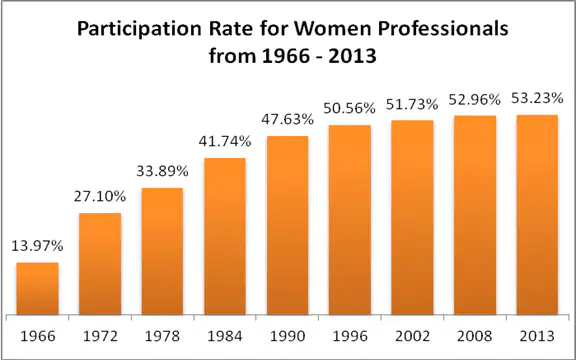
Review the following chart, what does it state about women and their participation in the work force?
More women have left professional work to become homemakers
More women have become unemployed over the past 50 years
The pay gap between men and women has increased over the past 50 years
More and more women have entered into the workforce over the past 50 years

What did Betty Friedan say about women who were homemakers?
They were unhappy with domestic roles and should pursue careers
They were happy with domestic life and should shun professional work
Women were unequal and were being subjected to old Biblical beliefs
Women sought greater acceptance as homemakers

According to the cartoon above, how is the ERA viewed by most Americans?
The ERA is an unpopular Amendment and thus is why a number of states have not supported it's passage
A small number of states are preventing the passage of a highly popular amendment to the Constitution
The ERA was passed with a Majority of American supporting it in all 50 States
Only a small number of states support the ERA, while a majority of Americans oppose it's passage as a Constitutional Amendment

