
 Worksheets
Biomolecules and Enzymes
Total questions: 62
Worksheet time: 34mins
5. Which biomolecules provide quick energy for the cell and also provide materials to build the cell membrane/wall?
Carbohydrates
Proteins
Lipids
Nucleic Acids
10. Your friend is feeling irritable, lightheaded and dizzy. They are also feeling a bit of confusion and brain fog. Which biomolecule would you recommend your friend consume?
Protein
Carbohydrates
Nucleic Acid
Lipid
2. Which biomolecules contains your genetic information?
Proteins
Lipids
Carbohydrates
Nucleic Acids
9. Amino Acids are the monomers of __________.
Nucleic Acids
Proteins
Carbohydrates
Lipids
6. The monomer of carbohydrates is known as _______.
Amino Acid
Fatty Acid
Nucleotide
Saccharide
Just under an orca's skin lies a thick layer of blubber. Blubber helps insulate a whale from heat loss. Based on this information, which biomolecule is blubber primarily made of?
Lipids
Nucleic Acids
Proteins
Carbohydrates
7. Glycerol and fatty acids are the monomers of _________.
Lipids
Carbohydrates
Proteins
Nucleic Acids
3. Which biomolecules act as energy storage for the cell and also cushions and insulates organs?
Carbohyrdates
Lipids
Proteins
Nucleic Acids
8. The monomer of Nucleic Acids is known as _________.
Amino Acid
Fatty Acid
Nucleotide
Saccharide
11. People with albinism do not produce the melanin protein. Melanin allows for people to be protected from the sun and thus people with albinism are prone to severe sunburns. Which biomolecule would you infer is responsible for albinism?
Carbohydrate
Protein
Lipid
Nucleic Acid
1. The four most common elements found in biomolecules are __________.
Sulfur, Phosphorus, Carbon, Oxygen
Carbon, Oxygen, Nitrogen, Hydrogen
Sulfur, Nitrogen, Carbon, Iron
Carbon, Nitrogen, Hydrogen, Sulfur
What is homeostasis?
Keeping something at an ideal position/setting
A species of hominids
The category in which we put biomolecules
A mixture that is fully blended (with all biomolecules equal)
What are the FOUR most common elements in living things?
Carbon
Silicon
Nitrogen
Hydrogen
Oxygen
What is the function of carbohydrates?
Perform cell's functions/tasks
Fast energy
Energy storage
Alter other biomolecules
Store information for cells
Carbohydrates are primarily made out of...
Carbon
Hydrogen
Oxygen
Nitrogen
Phosphorus
What is the function of proteins?
Build and repair structures
Fast energy
Energy storage
Speed up chemical reactions
Transport molecules
Proteins are primarily made out of... (and sometimes Sulfur)
Carbon
Hydrogen
Oxygen
Nitrogen
Phosphorus
What is the function of nucleic acids?
Perform cell's functions/tasks
Fast energy
Energy storage
Alter other biomolecules
Store genetic information for cells
Nucleic acids are primarily made out of...
Carbon
Hydrogen
Oxygen
Nitrogen
Phosphorus
What is the function of lipids?
Perform cell's functions/tasks
Fast energy
Energy storage
Alter other biomolecules
Store information for cells
Lipids are primarily made out of...
Carbon
Hydrogen
Oxygen
Nitrogen
Phosphorus
Dystrophin is a molecule that holds muscle fibers together. In people with muscular dystrophy, a genetic disease that causes people to lose the ability to walk at a young age, dystrophin molecules never develop.
What biomolecule is this person missing?
Carbohydrates
Lipids
Proteins
Nucleic Acids
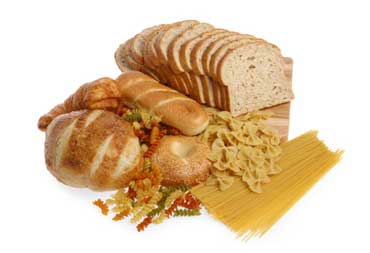

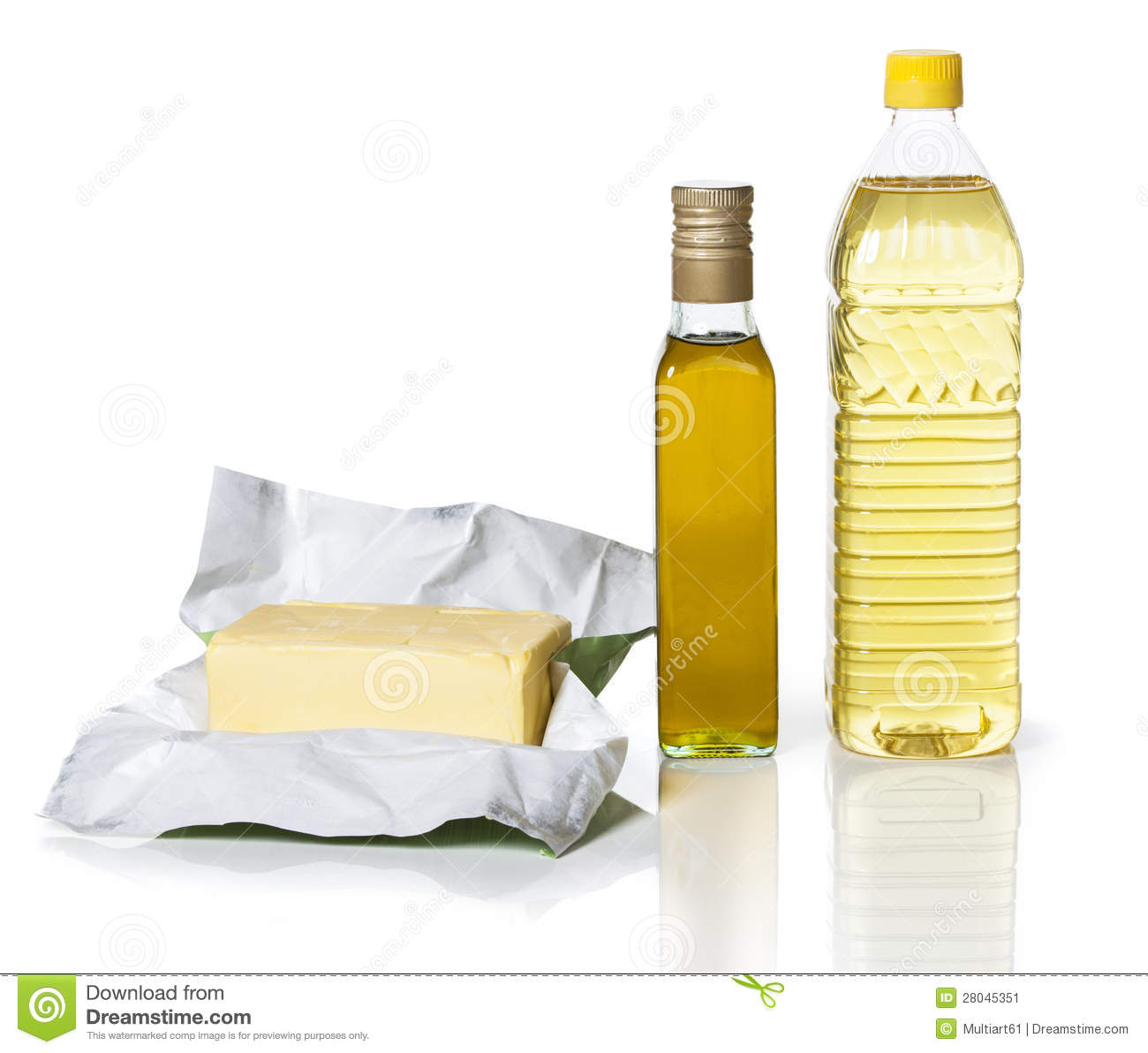
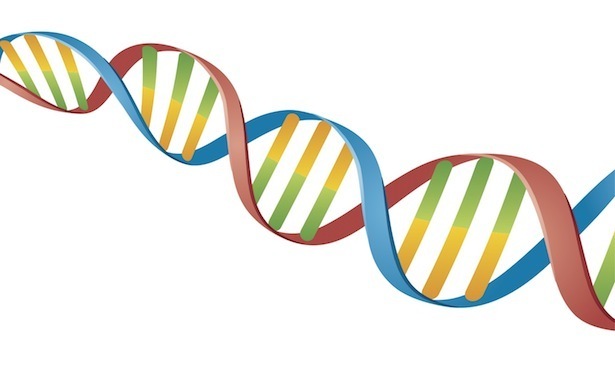
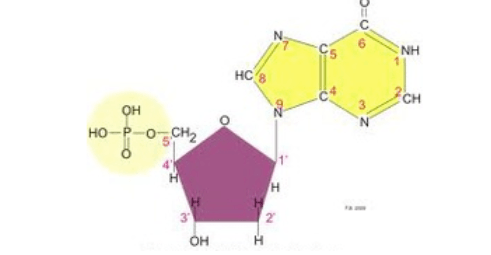
Which biomolecule helps form muscles?
Nucleic Acid
Carbohydrate
Protein
Lipids
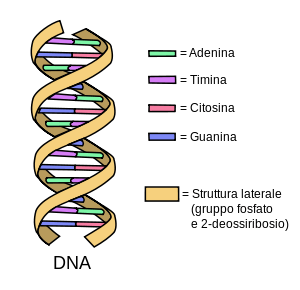
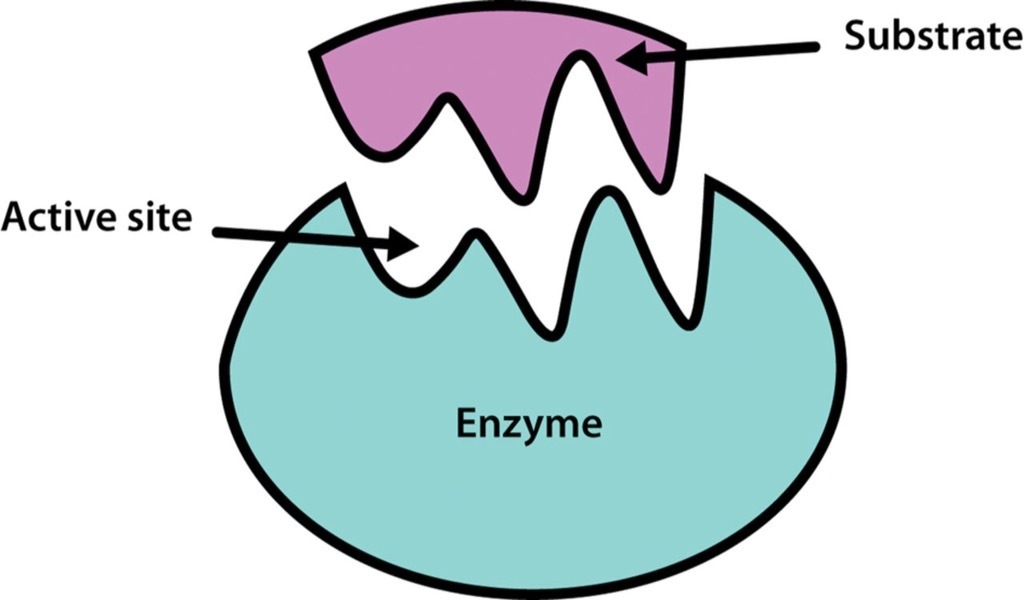
proteins that reduce the amount of energy needed to start biochemical reactions within living cells, i.e. catalysts
protein
enzyme
substrate
active site
the substance on which an enzyme acts upon
protein
enzyme
substrate
active site
the specific area of an enzyme where a substrate binds and chemical reaction occurs
protein
enzyme
substrate
active site
the amount of energy needed to start the reaction
activation energy
catalyst
specificity
a substance that speeds up a chemical reaction without being consumed or changed in the process
activation energy
catalyst
specificity
structural change in the protein that results in the loss (usually permanent) of its biological properties
denature
-ase
the ability of an enzyme to choose/recognize an exact substrate
activation energy
catalyst
specificity
the suffix found in names of enzymes; all enzymes end in this suffix
denature
-ase
-ose
a TERM used for a substance that increases the rate of a chemical reaction by reducing the amount of energy needed to start that reaction is called ....
enzyme
substrate
catalyst
product
Either slow down or stop the activity of an enzyme
inhibitor
activator
Molecules that serve as catalysts in living things
enzyme
product
substrate

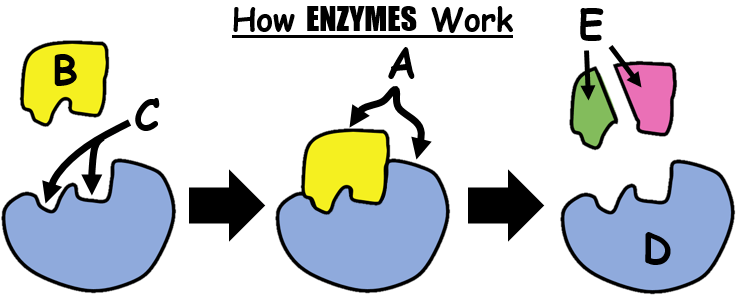
What does part A represent?
active site
substrate
product
enzyme
What does part D represent?
active site
substrate
product
enzyme
What does part B represent?
active site
substrate
product
enzyme
An enzyme is a specialized ....
nucleic acid
lipid
protein
carbohydrate
What does denature mean?
to change a protein structure
to add more product
level of the pH is insignificant
Are enzymes "USED UP" in a chemical reaction?
no
yes
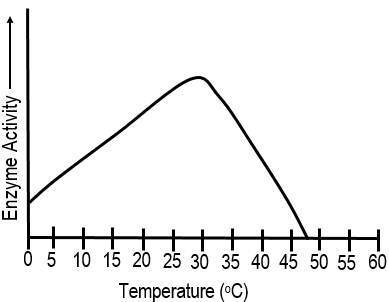
Based on the graph, what temperature does this enzyme work optimally?
15 C
40 C
30 C
47 C


Enzyme A works optimally at pH 7, however, it was removed from its environment and placed into a pH of 1. This is not in its working range. This enzyme is not nonfunctioning how it used too. What do we call the process of an enzyme becoming not functional due to pH change or temp change?
Naturing
Denaturing
Transcription
Translation
Enzyme A works optimally at pH 7, however, it was removed from its environment and placed into a pH of 1. This is not in its working range. This enzyme is not functioning how it used too. Why is the enzyme not functional anymore?
The enzyme shape has altered
The enzyme changed color
The enzyme used all the substrate
The substrate change shape
One morning, Drake ate lots of salt and vinegar chips, which have lots of acid on them. Throughout the day, Drake was feeling stomach pains and his food in his stomach is not being broken down by the enzymes. Why would the enzymes in Drakes stomach not break down the food?
The enzymes have denatured due to the acid in the chips changing the shape of the enzyme.
The enzymes in the stomach have broken the substrate down in to smaller parts
The enzymes in the stomach have built the pieces of substrate in to larger molecules called polymers
The enzymes will function normally not matter the pH change.

What temperature will Pepsin, in the graph, be the least functional?
40 degrees Celsius
30 degrees Celsius
60 degrees Celsius
90 degrees Celsius
Lactase is an enzyme that breaks down a sugar found in dairy products known as lactose. Some people are lactose intolerant, and this can be due to not having enough lactase production. People who are lactose intolerant may not feel well after eating foods containing lactose.
If the person that ate the dairy/lactose was to have a fever of 104.3 degrees fahrenheit. What would occur to the protein if this is out of the optimal range of operation? SELECT ALL THAT APPLY
the enzyme, lactase, will denature
the enzyme, lactase, will change structure
the enzyme, lactase, will function less - if at all
the enzyme will break more lactose down
the enzyme will break apart into amino acids

What is the optimal conditions for enzyme B?
Temp of 78 degrees and pH of 8
Temp of 50 degrees and pH of 4
Temp of 90 degrees and pH of 3
Temp of 78 degrees and pH of 2

