wayground logo

Free Printable Worksheets

Font size

S
M
L
XL
Worksheets

The Living Earth Mid-Term Spring 2023

Total questions: 70

Worksheet time: 59mins

Name
Class
Date
1.

Choose all statements that are parts of Cell Theory.

a)

All living things are made of one or more cells

b)

A cell is the smallest thing that can be considered alive

c)

All cells come from basic nutrient molecules

d)

There are small structures inside cells called organelles

2.

Which of the following organelles are in plant cells but NOT in animal cells? SELECT ALL THAT APPLY

a)

Chloroplast

b)

Mitochondria

c)

Cell Wall

d)

Cell membrane

3.

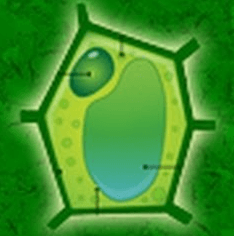
This cell would be classified as a(n) ________________ cell.

a)

Prokaryotic

b)

Eukaryotic

c)

Both

4.

The cell membrane is made up of

a)

chromosomes

b)

carbohydrates

c)

phospholipid bilayer

d)

endoplasmic reticulum

5.

The outermost layer of a plant cell and animal cell is...

a)

Plant cell - cell membrane, animal cell - cell wall

b)

Plant cell - cell wall; animal cell - cell membrane

c)

Plant and animal cell - cell wall

d)

Plant and animal cell - cell membrane

6.

What cell part is NOT found in all cells

a)

Cytoplasm

b)

Genetic material

c)

Cell membrane

d)

Cell wall

7.
Used for short term (quick) energy.
a)
carbohydrates
b)
lipids
c)
proteins
d)
nucleic acids
8.

Provides long term energy and insulation,

a)

lipids

b)

carbohydrates

c)

nucleic acids

d)

proteins

9.
Building blocks of the body, hair , muscles etc.
a)
protein
b)
nucleic acid
c)
lipids
d)
carbohydrates
10.
Waxes, oils and fats are examples of
a)
Carbohydrates
b)
Lipids
c)
Proteins
d)
Nucleic Acids
11.
DNA and RNA are examples of...
a)
proteins
b)
nucleic acids
c)
carbohydrates
d)
lipids
12.

What is the function of nucleic acids?

a)

Stores energy

b)

genetic information

c)

enzymes

d)

Physical structure

13.
Tiffany was investing how fast it took Hayden to react to different sounds. Identify the independent variable.
a)
How fast Hayden reacted
b)
different sounds
c)
types of music
d)
Hayden
14.
Things that stay the same throughout the whole experiment are called
a)
controls
b)
dependent variables
c)
independent variables
d)
constants
15.

Which instrument is used for precise measurements of liquids?

a)

graduated cylinder

b)

measuring cup

c)

beaker

d)

thermometer

16.
The site of photosynthesis
a)
ribosome
b)
mitochondria
c)
chloroplast
d)
nucleus
17.

I am the outer most layer of an animal cell. What am I?

a)

cell wall

b)

nucleus

c)

cell membrane

d)

cytoplasm

18.
A rigid layer that lies outside the cell's  membrane is...
a)
Cytoskeleton
b)
Cilia
c)
Cell Wall
d)
Flagella
19.
When every organism of a species has died.
a)
Evolution
b)
Natural Selection
c)
Extinction
d)
Artificial Selection
20.

Which of these is the simplest unit of life?

a)

tissue

b)

organ

c)

molecules

d)

cell

e)

None of the listed responses is correct.

21.

A substance moving from outside the cell into the cytoplasm must pass through ______.

a)

a microtubule

b)

a ribosome

c)

the cell membrane

d)

the endomembrane system

e)

the nucleus

22.
Which of the following is NOT a tenant of the Cell Theory?
a)
All cells come from existing cells.
b)
All living things are made of cells.
c)
Cells are the basic units of structure and function.
d)
All cells contain a nucleus.
23.
Which system pumps blood through your body?
a)
circulatory
b)
digestive
c)
respiratory
d)
muscular
24.
Where does digestion start?
a)
mouth
b)
throat
c)
stomach
d)
intestines
25.
Your lungs are part of which body system?
a)
circulatory
b)
respiratory
c)
digestive
d)
muscular
26.

What system is shown in the picture?

a)

Nervous System

b)

Circulatory System

c)

Muscular System

d)

Skeletal System

27.

Select the main function of the Digestive system

a)

Regulates body function using hormones

b)

Take in oxygen and give off carbon dioxide

c)

Break down food into nutrients

d)

Transport nutrients to the cells and carry wastes away from the cells

e)

Controls the body's actions through electrical impulses.

28.

Select the main function of the Muscular system

a)

Regulates body function using hormones

b)

Take in oxygen and give off carbon dioxide

c)

Covers and protects the body, Regulates body temperature.

d)

Provides movement for the body

e)

Provides framework and support for the body

29.

Select the main function of the Respiratory system

a)

Filters wastes out of the blood.

b)

Take in oxygen and give off carbon dioxide

c)

Covers and protects the body, Regulates body temperature.

d)

Provides movement for the body

e)

Provides framework and support for the body

30.

Select the main function of the Skeletal system

a)

Filters wastes out of the blood.

b)

Take in oxygen and give off carbon dioxide

c)

Covers and protects the body, Regulates body temperature.

d)

Provides movement for the body

e)

Provides framework and support for the body

31.

Select the main function of the integumentary system

a)

Filters wastes out of the blood.

b)

Produce offspring for the next generation

c)

Covers and protects the body, Regulates body temperature.

d)

Provides movement for the body

e)

Provides framework and support for the body

32.

True or False: The skin is the largest organ in the body?

a)

False

b)

True

33.

True or False: Each system is made up of smaller parts like cells, tissues and organs.

a)

True

b)

False

34.

Place the following levels of organization in order.

a)

Cell

b)

Tissue

c)

Organ

d)

Organ System

e)

Organism

1)
2)
3)
4)
5)
35.

What is an example of an organ?

a)

Pancreas

b)

Blood

c)

Insulin

d)

Knee

36.

Each of the 11 body systems:

a)

Is interchangeable

b)

Depends on others to function

c)

Performs a single task

d)

Is controlled by the lungs

37.
The __________ is the main organ of the nervous system.
a)
heart
b)
lungs
c)
brain
d)
skin
38.
What two elements make up water?
a)
Helium and oxygen
b)
Hydrogen and oxygen
c)
helium and carbon
d)
oxygen and carbon
39.
What word describes when water is attracted to other substances?
a)
cohesion
b)
adhesion
c)
capillary action
d)
surface tension
40.
Water is a universal solvent because it...
a)
It can be found anywhere
b)
It freezes when it gets cold
c)
floats when frozen
d)
Dissolves most substances
41.
Which of the following is LEAST likely to dissolve in water?
a)
nonpolar fats and oils
b)
polar sugar molecules
c)
salt made of a positive sodium ion and a negative chloride ion
d)
all of the substances will dissolve easily in water
42.
Large bodies of water, such as lakes and oceans, do not quickly fluctuate in temperature. What is the reason for this phenomenon?
a)
Water is an acid.
b)
Water is a versatile solvent.
c)
Water has a high heat capacity.
d)
 Water acts as a buffer.
43.
 Small insects can walk across the surface of calm water. Their feet push the surface of the water down slightly, somewhat like a person walking across a trampoline, but they do not break the surface. What is the best explanation for why this happens?
a)
The insects are light enough so that they do not break the hydrogen bonds holding the water molecules together
b)
The insects actually use their wings to hover slightly above the water's surface and they only skim it with their feet
c)
The insects' feet are non-polar, so they are repelled by the polar water molecules and are pushed away from the water's surface
d)
The insects are small enough to see the individual water molecules, so they are able to step carefully from one molecule to the next
44.
The fact that ice floats on liquid water is due to the fact that water's solid is ___________ than it's liquid form
a)
less polar
b)
more polar
c)
less dense
d)
more dense
45.
How much of Earth's water is salt water?
a)
50%
b)
66%
c)
75%
d)
97%
46.
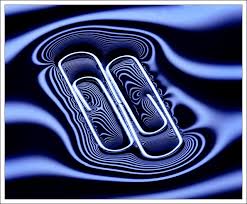
The tightness across the surface of water that enables paper clips to float is ____________.
a)
adhesion
b)
capillary action
c)
surface tension
d)
polarity
47.
When water molecules stick easily to other water molecules, this is called what?
a)
cohesion
b)
adhesion
c)
solution
d)
polar molecule
48.
The heart is an example of a(n) _________.
a)
Organ system
b)
Organ
c)
Organism
d)
Tissue
49.
The circulatory (cardiovascular) system is an example of a(n) _______.
a)
Organism
b)
Organ system
c)
Organ
d)
Cell
50.
A peach tree is an example of a(n) __________.
a)
Organ
b)
Organ system
c)
Tissue
d)
Organism
51.
Which of the following is an example of an organ system?
a)
Nervous sytem
b)
Computer system
c)
Intelligence system
d)
Healthcare system
52.
A red blood cell is an example of a(n) _________.
a)
Tissue
b)
Organism
c)
Cell
d)
Organ
53.
Organs are made up of ________.
a)
tissues
b)
organ systems
c)
organisms
d)
species
54.
Tissues are made up of ________.
a)
organs
b)
organ systems
c)
organisms
d)
cells
55.
The circulatory (cardiovascular) system is an example of a(n) _______.
a)
Organism
b)
Organ system
c)
Organ
d)
Cell
56.
A peach tree is an example of a(n) __________.
a)
Organ
b)
Organ system
c)
Tissue
d)
Organism
57.
Which of the following is an example of an organ system?
a)
Nervous sytem
b)
Computer system
c)
Intelligence system
d)
Healthcare system
58.
A red blood cell is an example of a(n) _________.
a)
Tissue
b)
Organism
c)
Cell
d)
Organ
59.
Organisms are made up of __________.
a)
species
b)
genus 
c)
organ systems
d)
domains
60.
What is the process by which populations change over time?
a)
Adaptation
b)
Phylogeny
c)
Evolution
d)
Biogeography
61.

When evolution occurs, what is evolving?

a)

individuals during their life time

b)

the living and non-living things in the environment

c)

populations over several generations

62.

How do you "win" at natural selection?

a)

survive

b)

go extinct

c)

survive & reproduce

63.

In Hidden Figures, what were Katherine, Christine, and Dorothy really good at?

a)

Reading

b)

Computers

c)

Mathematics

d)

Storytelling

64.

In 1943, what war was the US involved in?

a)

World War I

b)

World War II

c)

The Korean War

d)

Vietnam

65.

In 1943, what were computers?

a)

calculators

b)

counters

c)

people

d)

designers

66.
When a molecule has an opposite electrical charge on each end, it is known as what?
a)
cohesion
b)
polar molecule
c)
hydrogen bond
d)
solution
67.

What property of water allows for water to act as a temperature regulator for the world?

a)

Cohesive Behavior

b)

Expansion Upon Freezing

c)

High Specific Heat

d)

Universal Solvent

68.

What property of water causes these Alka-Seltzer tablets to dissolve?

a)

Universal Solvent

b)

Expansion Upon Freezing

c)

Cohesive Behavior

d)

High Specific Heat

69.

Sweating is an example of what property of water?

a)

Ability to Moderate Temperature

b)

Expansion Upon Freezing

c)

Cohesive Behavior

d)

Universal Solvent

70.

Why does water move from the roots to the leaves of plants?

a)

Water is pushed by solutes

b)

Water is pulled by gravity

c)

Capillary action pulls the water molecules like a chain

d)

Water's cohesion causes it to "pull" towards the leaves