
 Worksheets
3rd qtr scie review quiz <3
Total questions: 86
Worksheet time: 49mins
What does a safety symbol that resembles an electric plug remind you?
Wearing goggles in the lab.
The need to prevent injury to lab animals.
The hazards of working with breakable material.
The danger of working with electrical equipment
What does a safety symbol resembling a flame caution you?
Wear safety goggles.
Protect an animal from fire.
Sweep up broken glassware.
Be careful when working with material that is flammable.
Complete the phrase: The safety symbol of a razor blade reminds you to be careful when working with ____________
Chemicals
Glassware
Sharp Instruments
Laboratory Animals
True or False
The laboratory is an ideal place for practical jokes.
True
False
True or False
It is a good idea to show your independence by performing experiments that have not been approved by your teacher.
True
False
True or False
It is generally necessary to place your nose directly over a container to smell the material in the container.
True
False
True or False
The open end or mouth of a test tube should never be pointed toward you or anyone else.
True
False
True or False
It is necessary to report even minor laboratory accidents to the teacher.
True
False
True or False
The location of a fire extinguisher and fire blanket should be known by everyone in the laboratory.
True
False

crucible & cover
evaporating dish
clay dish
mortar & pestle
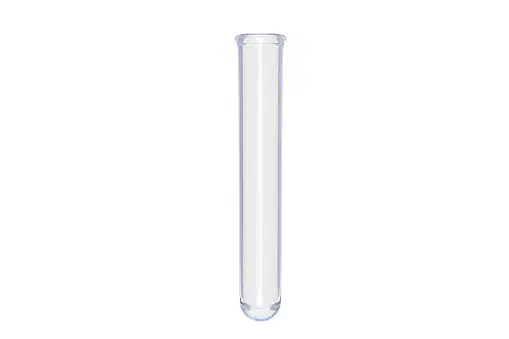
ignition tubes
test tubes
graduated cylinders
burets
TRUE or FALSE.
An element is a pure substance that contains only one type of atom.
true
false
TRUE or FALSE.
Pure gold is made up of 3 kinds of atoms
true
false
TRUE or FALSE.
When an atom is bonded to another different atom it is called an element.
true
false
TRUE or FALSE.
Compounds can be broken down into simpler substances.
true
false
TRUE or FALSE.
Elements are malleable and ductile while compounds are hard and brittle.
true
false
Ability of a material to allow the flow of electrical and heat energy.
Conductivity
Malleability
Hardness
Ductility
The ability of an object to be hammered into thin sheets.
Conductivity
Malleability
Hardness
Ductility
The resistance to scratching, denting, or bending of a material.
Conductivity
Malleability
Hardness
Ductility
The ability of an object to be drawn into wires.
Insulation
Malleability
Hardness
Ductility
Ability of a material to limit or restrict the flow of electrical and heat energy.
Insulation
Malleability
Hardness
Ductility
Shiny, hard material that conducts heat.
metal
non-metal
metalloid
Dull, does not conduct electricity.
metal
non-metal
metalloid
Known as semiconductor elements.
metal
non-metal
metalloid
An element that can be formed into an electric wire.
metal
non-metal
metalloid
An element that is a good insulator.
metal
non-metal
metalloid
Steps on how to use the bunsen burner:
connect the bunsen burner in the gas source using the rubber tube
light up the match/lighter
close the air hole
open the air hole to produce a working flame
turn on the gas valve
1,2,3,4,5
1,3,2,5,4
2,5,3,1,4
5,4,3,2,1
Solutions
homogenous
heterogenous
non-uniform
uniform
what is the universal solvent
(a)
in computing percent concentrations, what is the formula we use in mass?
% (m/m) = mass of solute/mass of solution x 100 %
% (v/v) = volume of solute/volume of solution x 100 %
% (m/v) = mass of solute (g)/volume of solution (mL) x 100 %
i dont know
in computing percent concentrations, what is the formula we use in volume?
% (m/m) = mass of solute/mass of solution x 100 %
% (v/v) = volume of solute/volume of solution x 100 %
% (m/v) = mass of solute (g)/volume of solution (mL) x 100 %
i dont know
in computing percent concentrations, what is the formula we use in mass/volume?
% (m/m) = mass of solute/mass of solution x 100 %
% (v/v) = volume of solute/volume of solution x 100 %
% (m/v) = mass of solute (g)/volume of solution (mL) x 100 %
i dont know
what is the ph level of acid
0-6.9
7
7.1-14
0-7
what is the ph level of neutral
0-6.9
7
7.1-14
0-7
what is the ph level of base
0-6.9
7
7.1-14
0-7
acid taste?
sour
bitter
idk
which of the following gives a soapy to touch?
acid
base
idk
When a solution is very concentrated, it has a high amount of _________ than _________.
solute, solvent
solvent, solution
solvent, solute
solution, solute
Vinegar is a mixture of about 5 mL of acetic acid in 95 mL of water. Therefore, the acetic acid is the solvent and the water is the solute.
true
false
metals
solids gas and malleable
good conductors
properties of both metal and non-metal
dull and brittle
ductile and mettalic luster
metals
(a)
metalloid
(a)
non-metal
(a)
solvent amount is equal with the solute
saturated
unsaturated
supersaturated
there is more solvent than solute
saturated
unsaturated
supersaturated
there is more solute than solvent
saturated
unsaturated
supersaturated
(a) scattering of a beam of light by a medium containing small particles
if no solution, ____ the solute and solvent together
add
subtract
divide
multiply
if no solute, ____ the solvent and solution
add
subtract
divide
multiply
conduct electricity
base
acid
neutral
idk
indicators
(a)
salt water is at the side of ____
acid
base
neutral
idk
have hydrogen (h) at the beginning of their chemical formulas.
Ex.
- carbonic acid (H2CO3)
- hydrochloric acid (HCl)
inorganic acid
organic acid
base
acid
have carbon and hydrogen (CH) in the beginning of their formulas (always).
Ex.
- acetic acids (C6H4O2)
- ascorbic acid (C6H8O6)
inorganic acid
organic acid
base
acid
- most _____ end in -OH or Hydroxide.
Ex.
- aluminum hydroxide = Al(OH)3
- calcium hydroxide = Ca(OH)2
- potassium hydroxide = KOH
aicd
base
neutral
idk
suspension
when left to stand, the SOLUTE and SOLVENT separate.
has tyndall effect
heterogeneous
homogeneous
light is unable to pass through COMPLETELY, but it has NO TYNDALL EFFECT.
true of false
oil is usually a solvent
(a)
Metal + Non-metals
Na + Cl = NaCl (table salt)
IONIC COMPOUNDS
COVALENT COMPOUNDS
idk
hatdog
Non-metals + Non-metals
H + O = HO
IONIC COMPOUNDS
COVALENT COMPOUNDS
idk
hatdog
sodium
elements
component
mixtures
acid
Glucose
elements
component
mixtures
acid
Chlorine
elements
component
mixtures
acid
water + salt
solution
suspension
colloid
idk
water + cornstarch
solution
suspension
colloid
idk
boiled water + suspension
solution
suspension
colloid
idk

explosive
flammable
corrosive
toxic

explosive
flammable
corrosive
toxic

explosive
flammable
corrosive
toxic

explosive
flammable
corrosive
toxic

Glassware Hazard
Electrical hazard/sparks:
Eye hazard
Flammable material
Poison
true or false
Never pour chemicals back into the original container
(a)
t or f
Wash eyes for 20 minutes immediately when exposed to chemicals
(a)

Glassware Hazard
Electrical hazard/sparks:
Eye hazard
Flammable material
Poison

Glassware Hazard
Electrical hazard/sparks:
Eye hazard
Flammable material
Poison

Hand safety
Poison
Flammable material
Need for protective clothing
Hand Protection
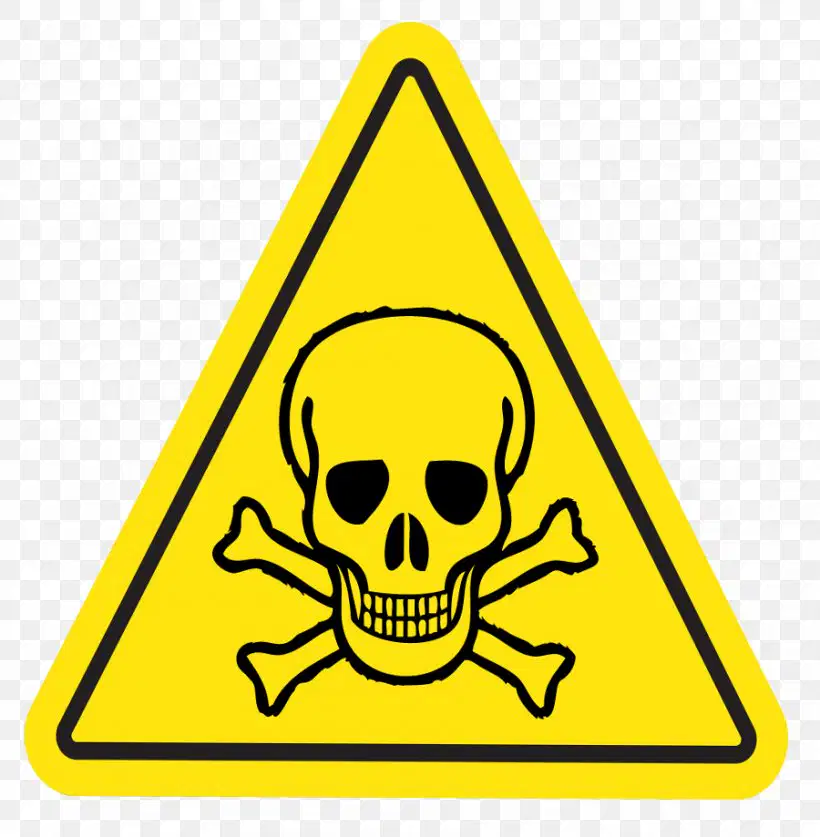
Hand safety
Poison
Flammable material
Need for protective clothing
Hand Protection

Hand safety
Poison
Flammable material
Need for protective clothing
Hand Protection
Hand safety
Poison
Flammable material
Need for protective clothing
Hand Protection
which of the following gives slippery and soapy to touch
acid
bases
idk
t or f
Not all bases are alkalis, but all alkalis are bases
(a)
which of the following Conduct electricity and soluble in water
acid
bases
idk
t or f
Ph meter is more accurate than Ph paper because Ph meter gives you the exact number/amount
(a)
weak acid
4 to 6.9
0 to 3.9
7.1 to 9.9
10.1 to 14
strongly acidic
4 to 6.9
0 to 3.9
7.1 to 9.9
10.1 to 14
weak basic
4 to 6.9
0 to 3.9
7.1 to 9.9
10.1 to 14
strongly basic
4 to 6.9
0 to 3.9
7.1 to 9.9
10.1 to 14

