
 Worksheets
Physical Science B Exam Review
Total questions: 64
Worksheet time: 49mins
Name
Class
Date
1.

If you were standing next to the barn, what object would appear to be moving?
a)
The water tower
b)
The plane
c)
The barn
d)
None would appear to be moving.
2.
A person jogs 3 miles, leaving her porch at 11 AM, then returns to her porch at 12 PM. What is her displacement? _____ miles
a)
0 miles
b)
3 miles
c)
6 miles
d)
It's not possible to determine
3.
When the distance something travels is divided by the time it takes. What is being calculated?
a)
Acceleration
b)
Speed
c)
Velocity
d)
Displacement
4.
When the speed of an object slows down, the acceleration is _________________.
a)
Negative
b)
Positive
c)
Unchanged
d)
Variable
5.
Acceleration is the change in _____.
a)
Speed
b)
Velocity
c)
Speed and Velocity
d)
Frame of Reference
6.
What is the difference between speed and velocity (the science definitions!)?
a)
velocity has direction
b)
speed has direction
c)
velocity has units of m/s2
d)
Nothing. They are exactly the same.
7.
Constant speed is:
a)
When the speed increases or decreases
b)
When the speed of the object does not change
8.
What is the difference between instantaneous speed and average speed?
a)
Average speed happens in a particular instant, Instantaneous speed is the speed of an object over a longer period of time.
b)
Instantaneous speed is never right, average speed is always right
c)
Instantaneous speed happens in a particular instant, Average speed is the speed of an object over a longer period of time.
9.
Relative motion
a)
the motion of an object in comparison to other objects in a specific frame of reference
b)
the point of view used to measure the position and movement of objects
c)
how fast something moves
d)
the distance
10.
A textbook is dropped from a second floor window and falls to the ground. What happens to the velocity as the book falls to the ground
a)
the velocity remain constant
b)
the velocity decreases
c)
the velocity increases
11.
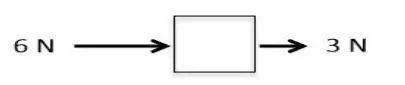
What is the net force in the example below?
a)
3 N Left
b)
3 N Right
c)
9 N Left
d)
9 N Right
12.
Forces can be described as
a)
Pushes
b)
Pulls
c)
Pushes and Pulls
d)
None of the above
13.
What unit is used to measure force?
a)
Newtons
b)
Pounds
c)
Kilogram
d)
Meters/second
14.
We can observe friction ____________
a)
anytime an object is moving.
b)
when an object is falling through the air.
c)
when an object is being dragged.
d)
when an object is being rolled.
15.
What is the equation for force from Newton's 2nd Law of Motion?
a)
F = mc
b)
F = mb
c)
F = ma
d)
F = m
16.
What force is caused by the masses of objects being attracted to each other (Hint: It's the force that pulls objects to the ground).
a)
Air resistance
b)
Gravity
c)
Sliding Friction
d)
Rolling Friction
17.
What is Newton's First Law
a)
F = ma
b)
An object at rest stays at rest, an object in motion stays in motion.
c)
Every action has an equal and opposite reaction
d)
Friction
18.
If net force acting on object is 0, then the force is considered to be..
a)
balanced
b)
unbalanced
c)
frictionless
d)
motionless
19.
Newton's third law states that any action will have a(n) _______ and ______ reaction
a)
Equal and similar
b)
Equal and different
c)
an equal and opposite reaction
d)
Greater and opposite
20.
Newton's First Law says that an object that is not moving will _____.
a)
stay at rest
b)
begin moving
c)
turn to a different direction
d)
move unpredictably.
21.
What is inertia?
a)
The amount of mass an object has.
b)
A reaction in an object.
c)
The resistance of any physical object to any change in its state of motion.
d)
The effect gravity has on an object.
22.
What direction does friction act relative to motion?
a)
The opposite direction of the motion.
b)
The same direction as the motion.
c)
Perpenicular to the motion.
d)
Parallel to the motion.
23.

Which type of friction is shown in the picture?
a)
Static
b)
Sliding
c)
Rolling
d)
Fluid
24.
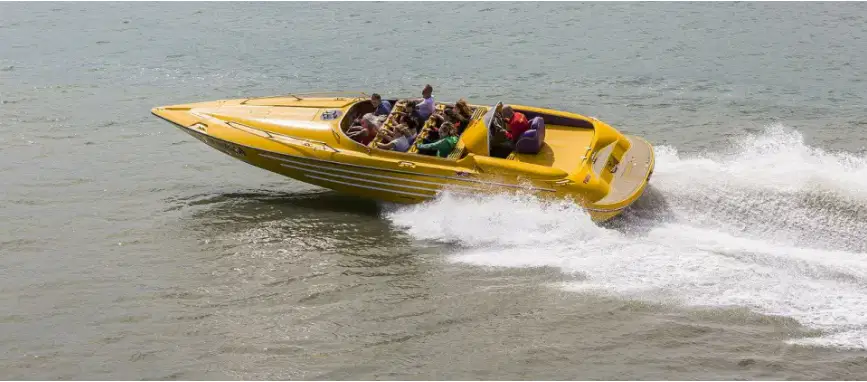
Which type of friction is shown in the picture?
a)
Static
b)
Sliding
c)
Rolling
d)
Fluid
25.
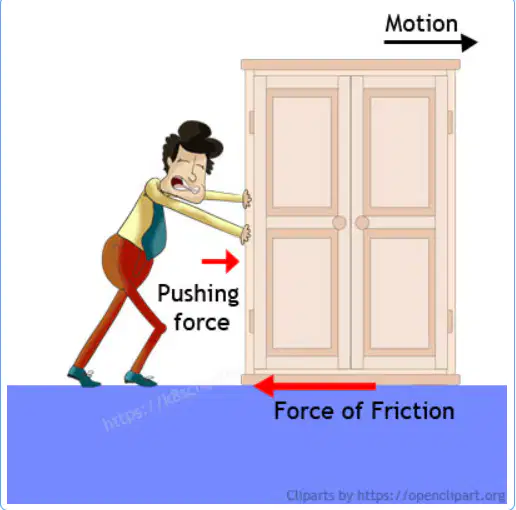
Which type of friction is shown in the picture? Hint: The object is NOT moving yet.
a)
Static
b)
Sliding
c)
Rolling
d)
Fluid
26.
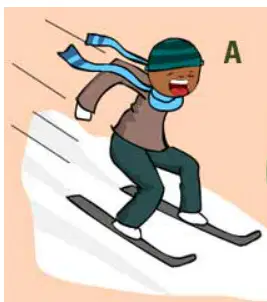
Which type of friction is shown in the picture?
a)
Static
b)
Sliding
c)
Rolling
d)
Fluid
27.
The ability to cause change or the ability to do work is...
a)
Work
b)
Fuel
c)
Energy
d)
Joules
28.
The amount of force used to move an object a specific distance is ...
a)
Work
b)
Fuel
c)
Energy Transfer
d)
Elastic
29.
This form of energy is energy that is in motion....
a)
Potential
b)
Kinetic
c)
Elastic
d)
Undefined
30.
Energy that is stored by an object due to its position above the ground. Depends on weight and height
a)
Elastic Potential Energy
b)
Falling Energy
c)
Gravitational Potential Energy
d)
Locational Energy
31.
Energy that is stored is....
a)
Potential
b)
Kinetic
c)
Elastic
d)
Undefined
32.
Energy and work are both measured in ...
a)
Newtons
b)
Kilograms
c)
Joules
d)
meters
33.
Which of these is NOT a source of chemical potential energy?
a)
sun
b)
food
c)
gasoline
34.
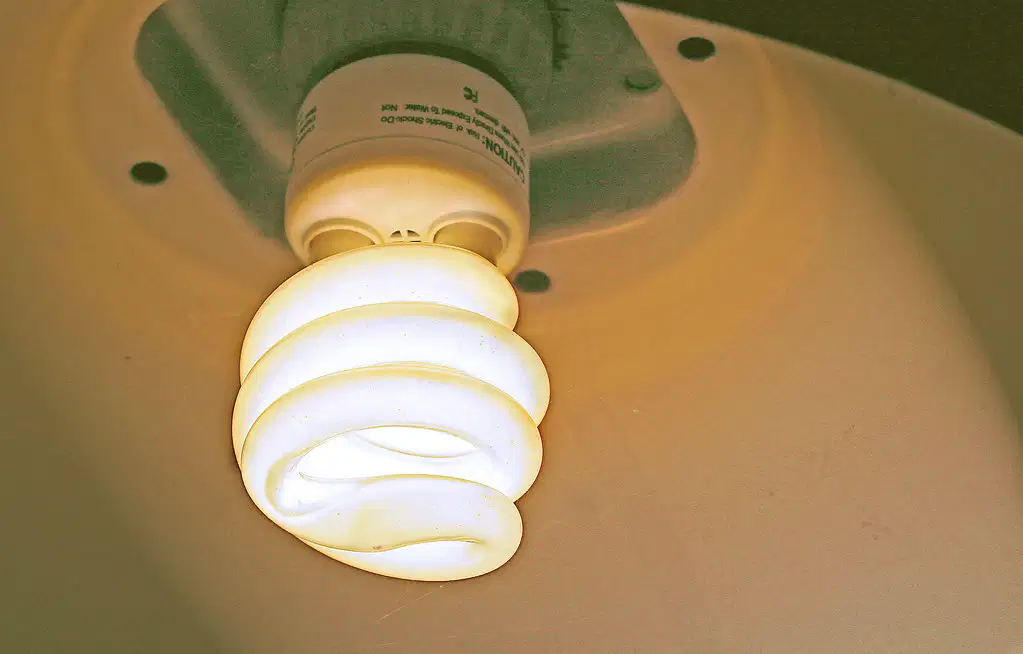
What type of energy conversion is being shown?
a)
gravitational potential energy to mechanical energy
b)
electrical energy to light energy
c)
sound energy to thermal energy
d)
electrical energy to thermal energy
35.
What type of energy conversions happens when a hairdryer is plugged in?
a)
electrical energy to sound, mechanical, and thermal energy
b)
electrical energy to thermal energy
c)
thermal energy to sound energy
d)
thermal energy to mechanical energy
36.
A rubber band that is stretched out has
a)
chemical potential energy
b)
positional energy
c)
gravitational potential energy
d)
elastic potential energy
37.

At which point will the riders experience the most potential energy?
a)
W
b)
X
c)
Y
d)
Z
38.
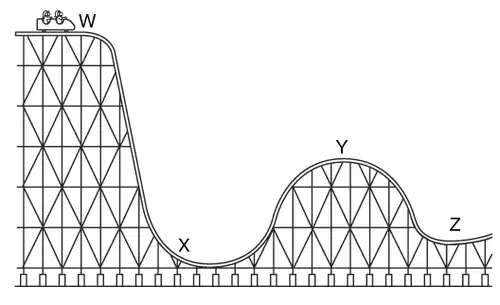
At which point will the riders experience the most kinetic energy?
a)
W
b)
X
c)
Y
d)
Z
39.
Stored energy is also called __________ energy.
a)
Potential
b)
Kinetic
c)
Elastic
d)
Undefined
40.
Moving (motion) energy is also called _____________ energy.
a)
Potential
b)
Kinetic
c)
Elastic
d)
Undefined
41.
Energy and work are both measured in...
a)
Newtons
b)
Kilograms
c)
Joules
d)
meters
42.
According to which law of energy, energy can't be created or destroyed?
a)
Newton's Laws of Motion
b)
Newton's Laws of Energy
c)
The Law of Conservation of Energy
d)
The Law of Conservation of Motion
43.
The total energy of all of the particles in a sample of matter is called
a)
thermal energy
b)
total energy
c)
kinetic energy
d)
particle energy
44.
Thermal energy is transferred from ________.
a)
a cooler object to a hotter one.
b)
a hotter object to a cooler one.
45.
The average kinetic energy of the particles in iced tea is _________ than the kinetic energy of the particles of hot tea.
a)
louder
b)
prettier
c)
higher
d)
lower
46.
Molecules with more kinetic energy move ________ than molecules with less kinetic energy.
a)
lower
b)
faster
c)
higher
d)
slower
47.
Heat transfer by conduction occurs when
a)
particles bump into each other.
b)
large number of atoms move from place to place.
c)
atoms give off heat in the form of electromagnetic waves.
d)
electromagnetic waves travel from place to place through s vacuum.
48.
When air is heated, what happens to its mass?
a)
increases
b)
decreases
c)
remains the same
49.
When air is heated, its density __________.
a)
increases
b)
decreases
c)
remains the same
50.
Convection takes place in
a)
solids only.
b)
liquids only.
c)
liquids and gases only.
d)
solids, liquids, and gases.
51.
Which of the following is NOT a method for heat transfer?
a)
radiation
b)
insulation
c)
conduction
d)
convection
52.
What do waves carry?
a)
Matter
b)
Motion
c)
Force
d)
Energy
53.
As wavelength goes up what happens to the frequency
a)
Frequency increases
b)
Frequency decreases
c)
Frequency does not change
d)
It depends on the wave
54.
As speed goes up what happens to wavelength?
a)
Wavelength increases
b)
Wavelength decreases
c)
Wavelength does not change
d)
It depends on the wave
55.
As amplitude goes up what happens to the frequency
a)
Frequency increases
b)
Frequency decreases
c)
Frequency does not change
d)
It depends on the wave
56.
As wavelength goes up what happens to the amount of energy
a)
Energy increases
b)
Energy decreases
c)
Energy does not change
d)
It depends on the wave
57.
True or false - Light can travel without a medium
a)
True
b)
False
58.
Calculate the speed of a dog running through a field if he is covering 23.7 meters in 54 seconds.
a)
0.43 m/s
b)
1,279.8 m/s
c)
1.21 m/s
d)
4.08 m/s
59.
What is the velocity of a car that traveled a total of 75 kilometers north in 1.5 hours?
a)
50 km/hr north
b)
50 km/hr south
c)
112.5 km/hr
d)
112.5 km/hr north
60.
How long would it take for a car to travel a distance of 200 kilometers if it is traveling at a speed of 55 km/hr?
a)
3.6 hours
b)
44 hours
c)
12.5 hours
d)
90 hours
61.

A box sliding down an inclined plane attains a velocity of 27 m/s in 3 seconds from rest. Find the acceleration.
a)
30 m/s
b)
24 m/s2
c)
9 m/s2
d)
81 km/hr
62.
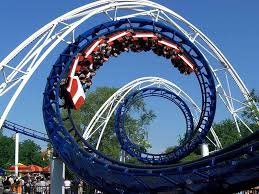
A roller coasters accelerates from an initial velocity of of 6.0 m/s to a final velocity of 70 m/s over 4 seconds. What's the acceleration?
a)
24 m/s2
b)
18 m/s2
c)
16 m/s2
d)
16 m/s
63.
What is the kinetic energy of a soccer ball which has a mass of 0.8 kg and is kicked with a velocity of 10 m/s?
a)
40 J
b)
41 J
c)
4 J
d)
80 J
64.
There is a clock at the top of a tower that is 45m high. The clock weighs 20 kg. Calculate its potential energy. Remember g=9.8 m/s
a)
8100 J
b)
9.8 m/s
c)
900 J
d)
8820 J
100 %

