
 Worksheets
Chapter 8 & 9 Review - Cells & Cell Transport
Total questions: 69
Worksheet time: 44mins
Which of the following statements about eukaryotic cells is true?
Do not contain a nucleus
Contain membrane bound organelles
Do not contain membrane bound organelles
Is less advanced than prokaryotic cells
H. pylori is a type of bacteria that is made of a prokaryotic cell. Which of the following would you NOT expect to find in H. pylori?
cytoplasm
cell membrane
hereditary material
nucleus & mitochondria
Plant and animal cells are BOTH
eukaryotic cells
prokaryotic cells
contain centrioles
contain chloroplasts
Which type of cells are human cells?
plant cells
animal cells
prokaryotic cells
bacteria
Which type of microscope uses a beam of electrons to magnify objects?
Leeuwenhoek microscope
simple light microscope
compound light microscope
electron microscope
Which scientist discovered cells in cork and coined the name “cells”
Schwaan
Schleiden
Hooke
Virchow
Which of the following ARE part of the cell theory?
Cell membranes let some things in and keeps others out
All living things are made of cells
Cells are the basic unit and structure of living things
New cells come from existing cells
Which scientist discovered that all animals are made up of cells?
Schleiden
Schwaan
Virchow
Hooke
What do viruses need in order to multiply?
nothing
carbohydrates
host cell
proteins
When a virus is ___________________, it causes the host cell to make new viruses.
latent
active/lytic
inactive
all of the options listed
Why aren’t scientists able to conclude that viruses are living things?
Because they do not contain hereditary material
Because they do not contain proteins
Because they are not able to reproduce unless they infect a host cell
All options listed
Which of the following is NOT a way viruses can be treated and/or prevented?
antibiotics
antivirals
good hygiene
vaccines
When a caterpillar goes through metamorphosis into a butterfly, which characteristic is this describing?
growth
development
reproducing
maintaining homeostasis
Which of the following is correctly matched?
The organism cactus belongs to the kingdom plant
The organism plant belongs to the kingdom plant
The organism amoeba belongs to the kingdom plant
The organism amoeba belongs to the kingdom animal
Which term describes the process of maintaining a stable internal environment?
binomial nomenclature
stimulus
homeostasis
response
Which describes an organism's response to a stimulus?
Young animals grow and mature
All living things use energy
The cat meowed when it heard the can opener because it knew it had food coming
The sun beat upon the rock and it became hot
There are many characteristics that describe living things. Which of the following is NOT a characteristic of living things?
it is made of cells
it is organized
it grows and develops
it must move
In which climate would you expect to discover the GREATEST VARIETY of different types of animals living?
warm and moist
cold and dry
cold and snowy
hot and dry
Which of these statements about cells is true?
All cells respond to light
They do NOT make up living things
They take in materials from their surroundings
They do NOT contain any hereditary material
Even though the weather is cold, a human maintains a constant body temperature. What is this trait called?
binomial nomenclature
spontaneous generation
biogenesis
maintaining homeostasis
What compound makes up 50 % or more of living things?
nitrogen
oxygen
carbon dioxide
water
Which scientist discovered that all plants are made up of cells?
Hooke
Schleiden
Schwaan
Virchow
Which scientist discovered that all cells come from other cells?
Hooke
Schieden
Schwaan
Virchow
Plants make their own food, but they need energy to do this. Where does the energy come from?
the Sun
water
carbon dioxide
oxygen
Which of the following would be found in prokaryotic cells (SELECT 2)
heredity material
cytoplasm
endoplasmic reticulum
nucleus
Which of the following is the closest relative of Homo sapiens (modern humans?
Acer rubrum
Bornean orangutan
Gorilla Beringie
Homo habilis
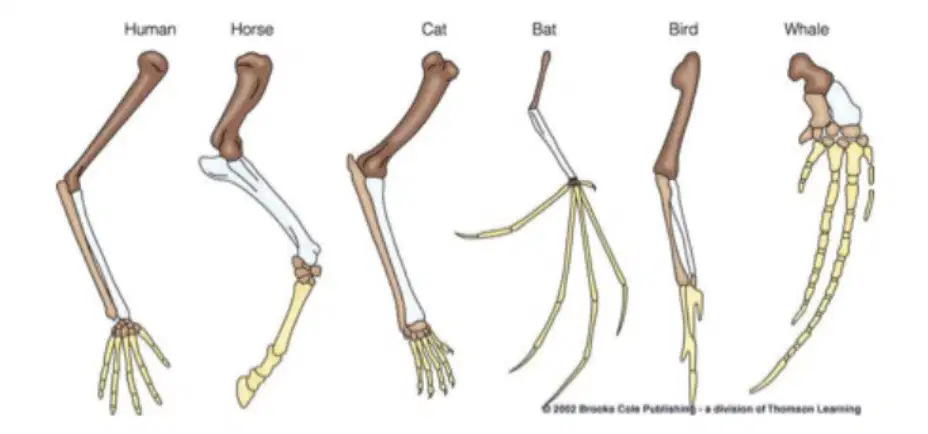
This diagram shows the bones structure of various organisms. Which two organisms have the most different phylogeny (evolutionary history) based on the bone structure?
whale and human
bird and human
bat and human
cat and human
Which of the following is/are types of passive transport?
exocytosis
osmosis
diffusion
facilitated diffusion
If energy is used to move a substance across a cell membrane, then ____________.
diffusion
passive transport
active transport
facilitated diffusion

The triangles represent different solutes within the cell and outside of the cell. The best explanation for the fact that there are more triangles inside than outside the cell is because
facilitated diffusion is causing there to be more triangles in the cell than outside the cell
diffusion is causing there to be more triangles in the cell than outside the cell
active transport is providing energy to make sure there are more triangles in the cell
osmosis is causing there to be more triangles inside the cell than outside the cell
What is the movement of water in an out of a cell to try to reach equilibrium between solvent and solute?
active transport
facilitated diffusion
diffusion
osmosis
_______________ occurs when there is an equal number of molecules between the outside and inside of a membrane.
active transport
osmosis
diffusion
equilibrium
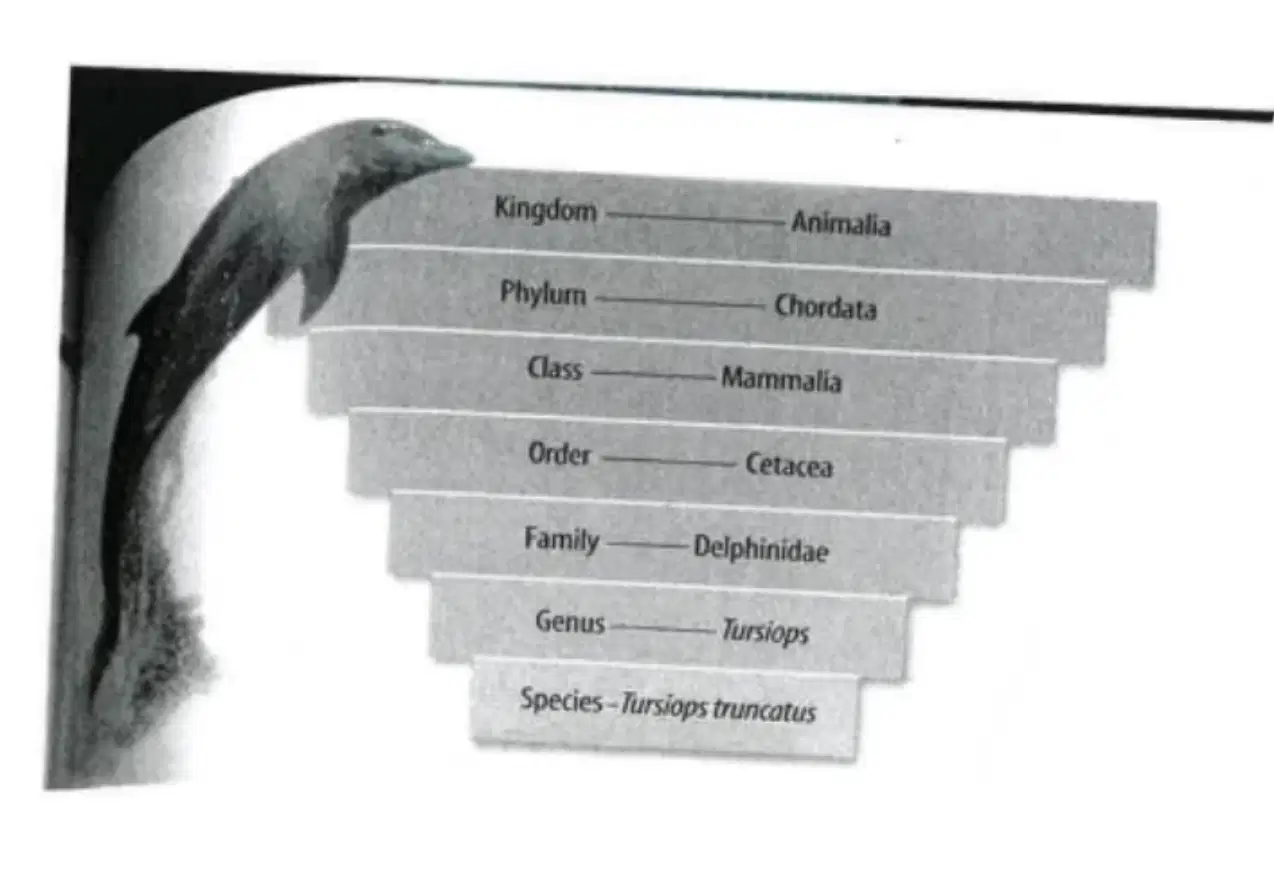
What phylum does the dolphin belong to?
Animalia
Chordata
Mammalia
Cetacea

The diagram shows red blood cells placed in various solutions. Which of the options correctly identifies which solution each cell was placed in?
Left - isotonic
Middle - hypertonic
Right -hypotonic
Left - hypertonic
Middle - hypotonic
Right - isotonic
Left - isotonic
Middle - hypotonic
Right - hypertonic
Left-hypotonic
Middle - hypertonic
Right - isotonic
Which of the following describes an organelle that is green, chlorophyll containing, found in plants that uses light energy to produce sugar from carbon dioxide and water?
ribosome
mitochondria
chloroplast
endoplasmic reticulum
Which of the following is an organelle that package cellular materials and transport them within the cell or out of the cell?
Nucleus
Vacuole
Endoplasmic reticulum
Golgi apparatus
Which of the following is a living cell in which a virus can actively multiply or in which a virus can hide until activated by environmental stimuli?
prokaryote
bacteria
host cell
eukaryote
Which of the following is a structure, such as a leaf, made up of different types of tissues that work together?
organ system
organelle
organ
cell
Which of the following is a cell organelle that organelle that breaks down food and releases energy?
lysosome
Golgi apparatus
cell membrane
mitochondria
Which of the following is a small cytoplasmic structure on which cells make their own proteins?
vacuole
Golgi apparatus
ribosome
endoplasmic reticulum
A group of similar cells that work together to do one job is ______
an organ
a tissue
an organ system
an organelle
What is a structure in the cytoplasm of a eukaryotic cell that carries out various functions
organelle
organ
organ system
tissue
Which organelle moves materials around in a cell and is made up of a complex series of folded membranes?
Endoplasmic reticulum
Vacuole
Lysosome
Mitochondria
Which of the following is the two word naming system used by scientists?
common name
binomial nomenclature
biogenesis
spontaneous generation
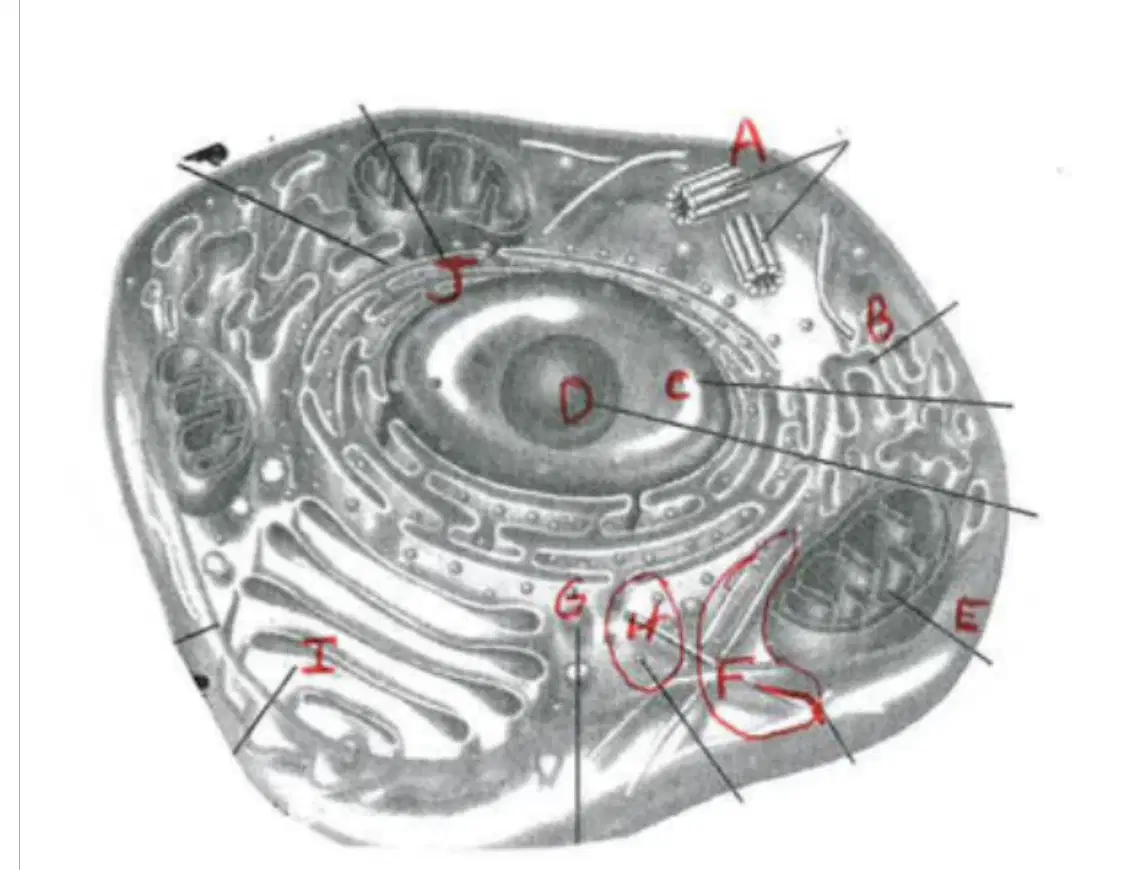
Which letter shows the centrioles?
(a)

Which letter shows the cytoskeleton?
(a)

Which letter shows the nucleus?
(a)

Which letter shows the smooth endoplasmic reticulum?
(a)

Which letter shows the mitochondria?
(a)

Which letter shows the part of the cell that makes ribosomes?
(a)

Which letter shows the Golgi apparatus?
(a)

Which letter shows the storage area of the cell?
(a)

Which letter shows the area of the cell that captures sunlight and makes sugar for the plant?
(a)

Which letter shows the part of the cell that provides strength and support?
(a)
The place an organism lives is its (a) .
The erroneous idea that living things can come from nonliving things is _____.
homeostasis
cell theory
biogenesis
spontaneous generation
The first word of a two word scientific name used to identify a group of similar species is ______.
kingdom
phylum
class
genus
Any living thing is called an (a) .
The smallest unit of an organism that can carry on life functions is the (a) .
The regulation of an organism's internal, life-maintaining conditions
growth
development
homeostasis
genetic material
The theory that living things come only from other living things is _____.
spontaneous generation
binomial nomenclature
biogenesis
homeostasis
Two-word naming system that ives organisms their scientific name is called _____.
biotic
spontaneous generation
biogenesis
binomial nomenclature
The evolutionary history of an organism is _____.
homeostasis
phylogeny
morphology
genetic material
Something external or internal that causes a response in a living thing is called ____.
phylogeny
a response
a stimulus
binomial nomenclature

Which number shows the polar head of the cell membrane?
(a)

Which number shows the transport protein?
(a)

Which number shows the nonpolar, hydrophobic tail?
(a)

Which number shows the carbohydrate tail?
(a)

Which make up the phospholipid bilayer?
7
8
9
10

