
Font size
 Worksheets
General Chemistry 2 Reviewer
Total questions: 50
Worksheet time: 48mins

Name the following alkane?
3-ethyl octane
2-ethyl hexane
3-ethyl heptane
5-ethyl heptane

Name the following alkane:
2-methyl pentane
1-methyl hexane
1,1-dimethyl pentane
1,2-dimethyl butane

Name the following alkane:
2-methyl 3-methyl butane
1,1,2-trimethyl butane
2,3-dimethyl butane
2,3-dimethyl pentane

Name the following alkane:
3-ethyl 2,2-dimethyl heptane
2,2-dimethyl 3-ethyl heptane
2-methyl 3-butyl pentane
5-ethyl 6,6-dimethyl heptane

Name the following alkane:
4-ethyl 2-methyl cyclohexane
1-methyl 3-ethyl cyclohexane
2-ethyl 4-methyl cyclohexane
1-ethyl 3-methyl cyclohexane

Name this molecule:
methane
ethane
propane
butane

Name this molecule:
methane
ethane
propane
butane

Name this molecule:
methane
ethane
propane
butane
Which is the structures with IUPAC nomenclature
2,2,4-trimethylpentane
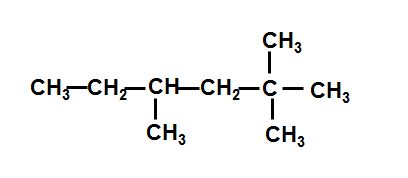
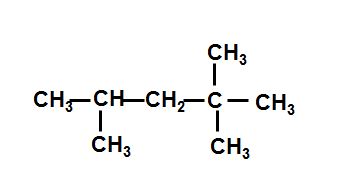
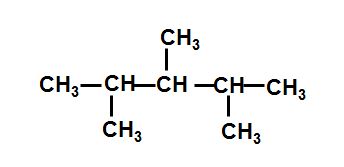
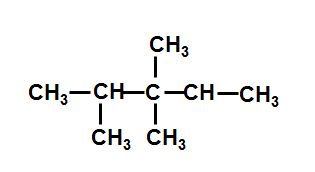


2,3-dimethylmethane
2-methylbutane
2-ethylpropane
pentane

5-methyl-4methyl-heptane
3-ethyl-4methyl-heptane
3-ethyl-4-methylheptane
4-methyl-5methylheptane
Methyl group has the molecular formula
CH4
CH3
CH
CH2

Name this molecule:
pentane
hexane
heptane
octane
In organic chemistry, commas separate....
numbers
names from numbers
In organic chemistry, dashes separate....
numbers
names from numbers
Which is the structures with IUPAC nomenclature
2,2,4-trimethylpentane


Give the IUPAC name for this compound
3-methyl-4-ethylhexane
3-ethyl-4-methylhexane
3-methyl-4-ethylheptane
3-ethyl-4-methylheptane
Which statement about the molecules in the gas carbon dioxide is correct?
The molecules are close together.
The molecules are diatomic.
The molecules move randomly.
The molecules all move with the same speed.
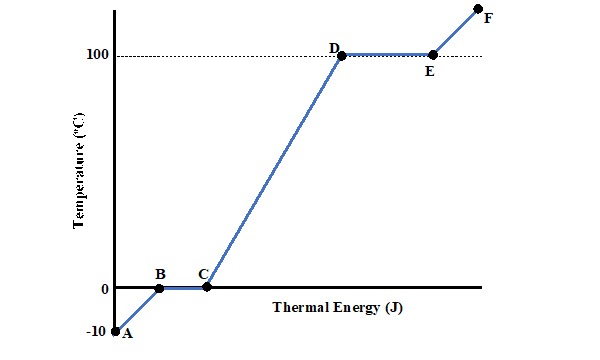
Between which points is water changing states of matter?
A <----> B
B <----> C
C <----> D
D <----> E
E <----> F
SELECT ALL THAT APPLY
When you add energy to matter...
...the particles move faster.
...it might change state.
...the temperature will increase.
...you remove cold energy.
All of the above.
Why do particles come closer together when they lose energy?
...the attractive forces between the particles pull them back together.
...they dissolve.
...they become a solid.
...they are more attracted to the solvent than the solute.


Which of the following is a correct description for solids?
closely arranged and in fixed positions
closely arranged and vibrate in fixed positions
far apart and in fixed positions
far apart and vibrate in fixed positions
Which of the following descriptions of solids are true?
Solids are rigid, have a fixed shape, and no fixed volume
Solids are not rigid, have a fixed shape, and no fixed volume
Solids are rigid, have a fixed shape, and a fixed volume
Solids are not rigid, have a fixed shape, and a fixed volume
A liquid is a state of matter that has ________?
no fixed volume or shape
no fixed shape but a fixed volume
fixed shape and volume
fixed volume but no fixed shape
Which of the following statements about the kinetic particle theory is not true?
The particles of a gas move faster than those of a liquid
The particles of a solid have more kinetic energy than those of a gas
The particles that make up matter are always moving
The forces of attraction between the particles of a solid are very strong
Which of the following statements about the particle of a gas is true?
Gases can be compressed because their particles are smaller than those of liquids or solids
Gases can be compressed because there is plenty of space between their particles
Gases can be compressed because they have low boiling points
Gases can be compressed because their particles are more elastic than those of liquids or solids
How will you describe the movement of gaseous particles?
Particles are sliding over each other
Particles are moving at high speeds in all direction
Particles are far apart and arranged randomly
Particles are far apart but arranged orderly
In which state of matter will there be the largest space in between particles?
solid
liquid
gas
What am I? I have a fixed mass, a fixed volume, I cannot be squashed and I have a shape that changes to fit the bottom of my container?
solid
liquid
gas

Which state of matter has particles arranged like this?
solid
liquid
gas
Which represents a decrease in entropy?
sublimation of CO2
boiling water
condensation of steam on cold glass
NaCl dissolving in water
Entropy is a measure of
accuracy
precision
the disorder of a system
the attraction of a nucleus for an electron
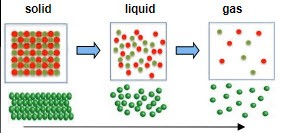
Which of the following statements best describes the Second Law of Thermodynamics?
The internal energy of the universe is constant.
Energy can be neither created nor destroyed.
When an isolated system undergoes a spontaneous change, the entropy of the system will increase.
At absolute zero, the entropy of a perfect crystal is considered to be zero.

