
Font size
 Worksheets
Cardiovascular System Review
Total questions: 39
Worksheet time: 21mins
Largest artery in the body
superior/inferior vena cava
coronary artery
aorta
arterioles
muscle layer of the heart
pericardium
epicardium
endocardium
myocardium
a septum is used to
prevent backflow of blood in the heart
separate chambers of the heart
provide blood to the heart muscle
carry blood around the heart
the blood vessels that bring blood to the heart muscle itself
aorta
arterioles
pulmonary arteries
coronary arteries
arteries have thicker walls than veins
true
false
arteries have valves to help with blood flow
true
false
arteries carry blood back to the heart
true
false
veins carry blood back to the heart
true
false
the pulmonary veins are the only veins in the body that
carry oxygenated blood
that carry deoxygenated blood
carry blood to the lungs
are under high blood pressure
arteries carry blood high in oxygen
true
false
an EKG / ECG is used to
measure blood pressure
measure the pulse
measure the cardiac conduction system
measure blood flow
which valves separate the atriums from the ventricles (multiple correct answers)
aortic semilunar valve
tricuspid
bicuspid
pulmonary semilunar valve
the job of the valves in the cardiovascular system is to
prevent backflow of blood
push blood through the heart
help move blood into the body
help arteries with blood pressure
arteries are under high blood pressure and veins are under low blood pressure
true
false
the systolic pressure (top/larger number on the blood pressure measurement) is measuring
blood pressure when the atrium contracts
the amount of blood flow in the aorta
blood pressure when the ventricles contract
the cardiac conduction system
what is the average blood pressure
100 / 50
180 / 100
200 / 90
120 / 80
what is the average pulse rate
100
90
50
70
the semilunar valves (aortic and pulmonary) prevent backflow of blood into the
atrium
ventricles
veins
arteries
The correct order of the cardiac conduction system is
av node - av bundle - sa node - purkinje fibers
purkinje fibers - bundle of his - av node - sa node
sa node - av node - av bundle (bundle of his) - purkinje fibers
bundle of his - sa node - av node - purkinje fibers
in the cardiac conduction system the main job of the av node is to
cause ventricular contraction
start the electric pulse
hold the electric pulse for a moment
allow the atriums to fill with blood
from your heart trace the path of blood back to the heart using blood vessels
arteries - arterioles - veins - venules - capillaries
arteries - arterioles - capillaries - veins - venules
arteries - arterioles - capillaries - venules - veins
venules - veins - capillaries - arterioles - arteries
tachycardia is when your heart rate is too low (below 60)
true
false
What prevents blood from flowing back into the atria when the ventricles contract?
semilunar valves
sinoatrial node
atrioventricular node
tricuspid and bicuspid valves
When blood leaves this chamber of the heart, it heads out to the body (not the lungs)
left atrium
right atrium
left ventricle
right ventricle
One of the body's largest blood vessels that transports blood from the body region below the diaphragm to the heart
superior vena cava
inferior vena cava
pulmonary trunk
pulmonary veins
This initiates the action potential that causes the heart to beat
Inferior vena cava
Atrioventricular node (AV node)
Superior vena cava
Sinoatrial node (SA node)
Which best explains why capillary walls are so thin?
because they do not need to pump blood
because they are found only in the smallest organs and tissues
because they maximize diffusion of nutrients
because blood only travels through them slowly
These carry blood away from the heart
Arteries
Veins
Which of the following is FALSE about pacemaker cells?
They allow the heart to beat on its own
They create their own electrical impulses
They are part of the sinoatrial node and the atrioventricular node
They require depolarizing stimulation from the brain
Why is coronary circulation necessary?
because blood needs to be pushed throughout the entire body
because the heart itself needs nourishment
because the scalp requires an exceptional amount of nourishment


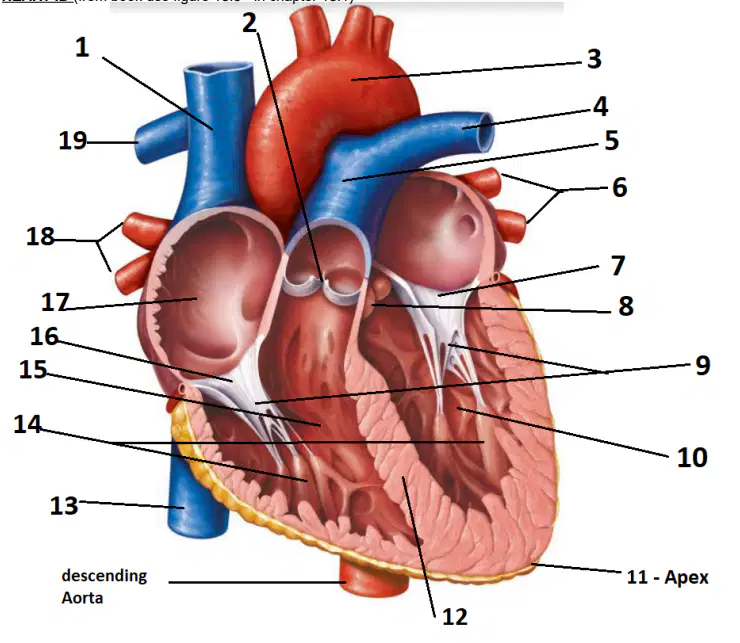
what structure is #2
Bicuspid valve
Tricuspid valve
Aortic Semilunar valve
Pulmonary Semilunar valve
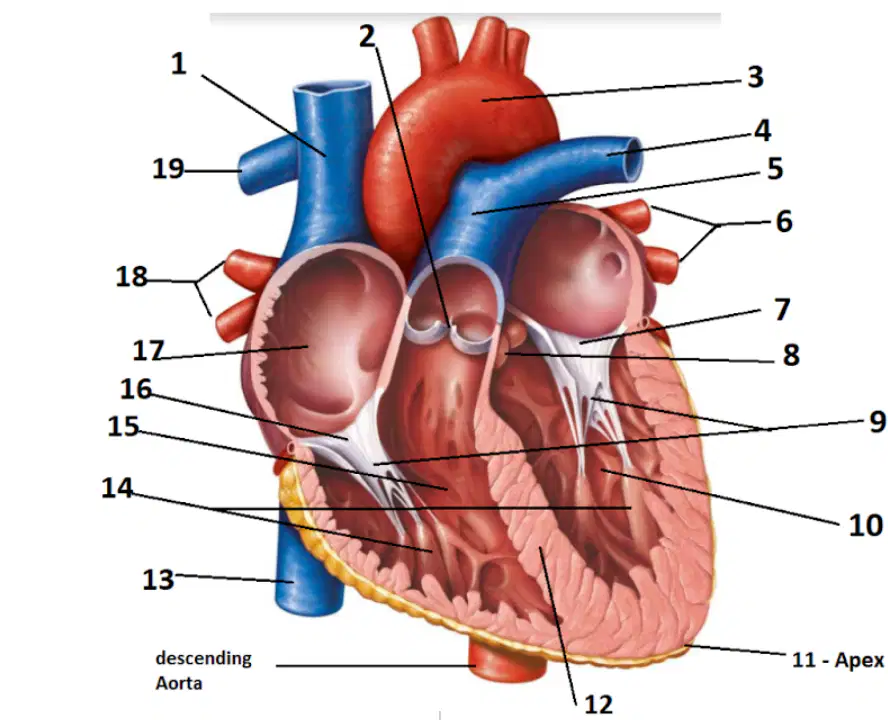
what is structure 17
left atrium
right atrium
left ventricle
right ventricle
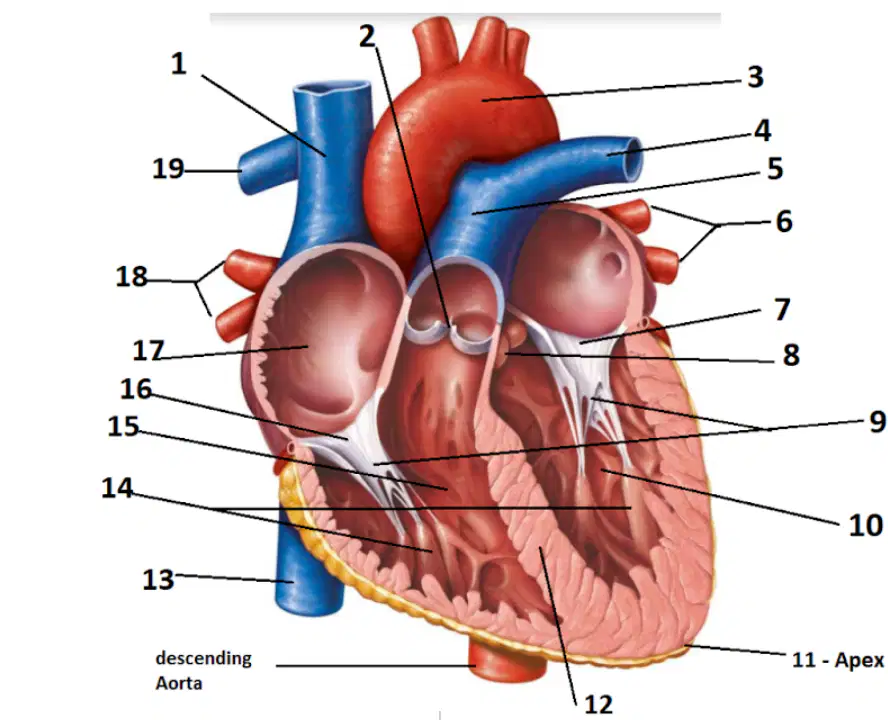
what is structure 9
interventricular septum
papillary muscle
chordae tendonae
pulmonary artery
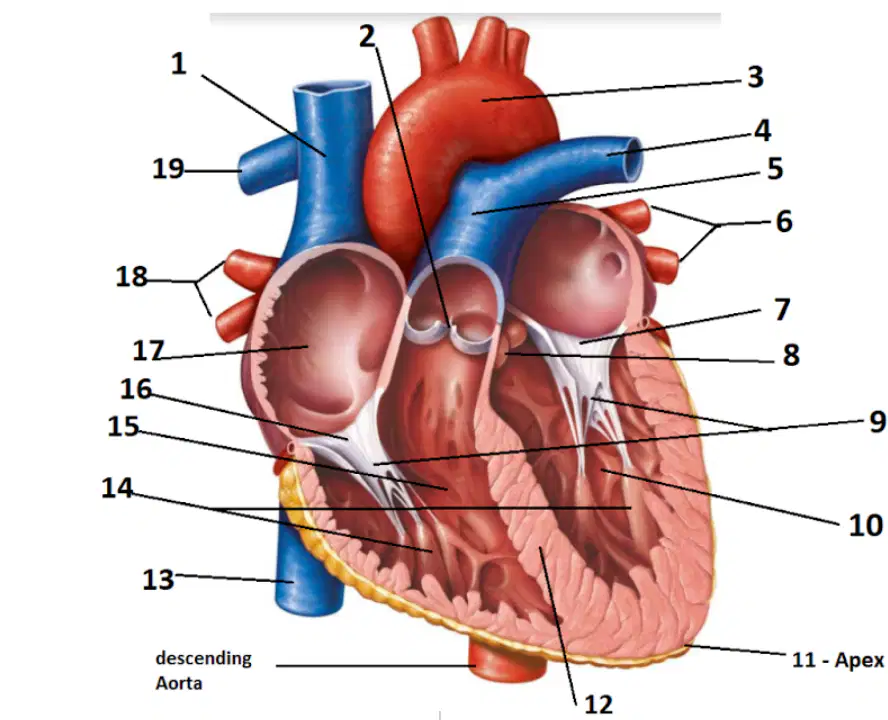
what is structure 3
superior vena cava
inferior vena cava
pulmonary vein
aorta
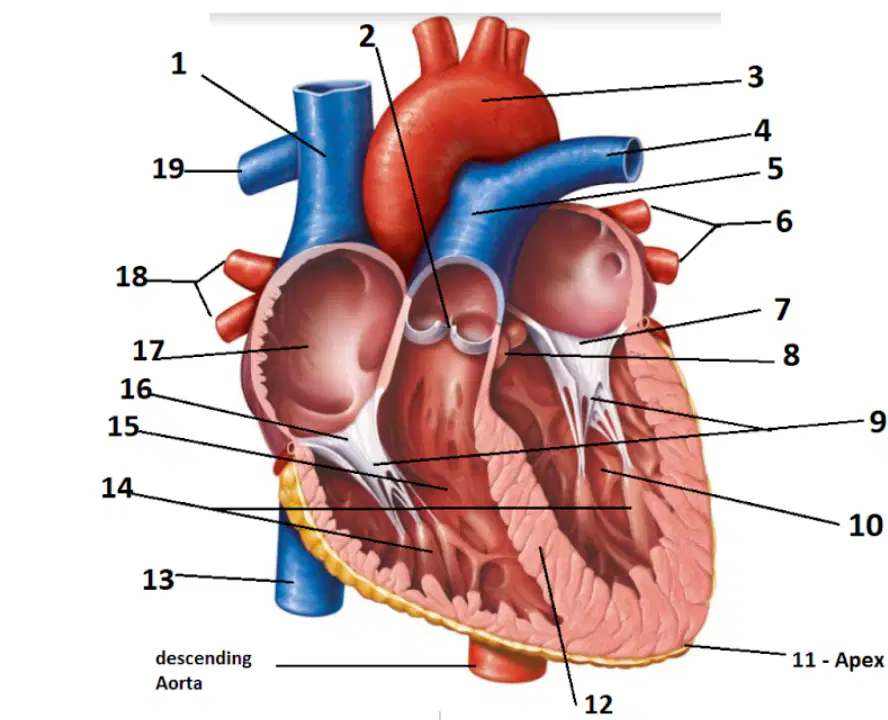
what is structure 18
LEFT pulmonary vein
LEFT pulmonary artery
RIGHT pulmonary vein
Right pulmonary artery

what is structure 8
aortic semilunar valve
pulmonary semilunar valve
tricuspid valve
bicuspid (mitral) valve

