
 Worksheets
Ch 13 & 14 & Meiosis Review
Total questions: 53
Worksheet time: 33mins
ATG TGA CAG


What is DNA
donuts need algea
did no algebra
do not answer
deoxyribonucleic acid
Why is DNA important?
It teleports cookies to my locker.
It carries the instructions for our cells.
It allows me to be invisible.
It gave us a snow day in August.
What does the structure of DNA resemble?
an airplane propeller
a twisted ladder
a twisted Christmas tree
a hippo in a tutu

A process in which DNA has the unique ability to make an exact copy of itself.
Replication
Translation
Transcription
Protein Synthesis

DNA replication
transcription
mitosis
translation


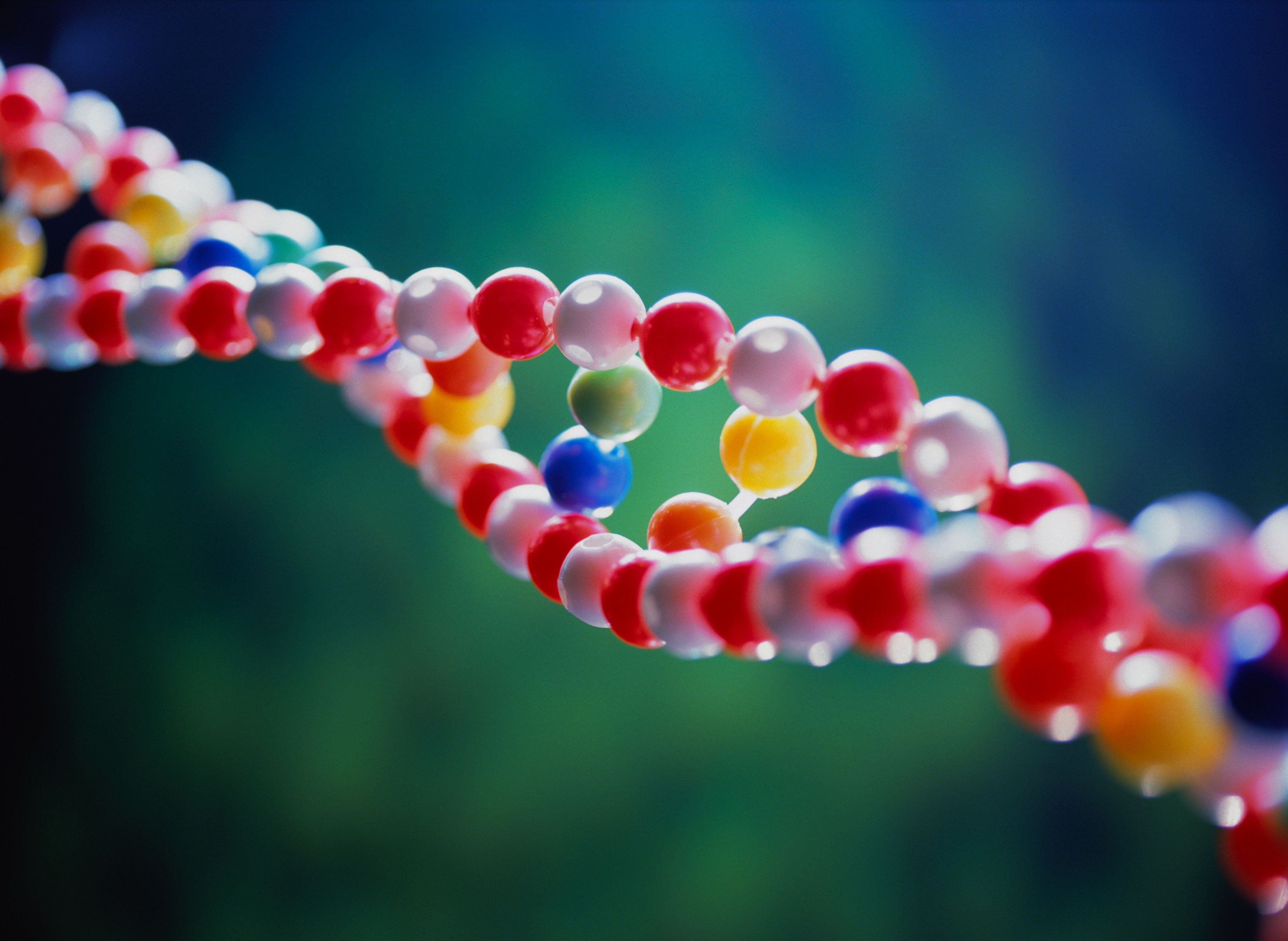

Which of the following are the bases for RNA?
adenine, uracil, thymine, and guanine
adenine, uracil, guanine, and cytosine
adenine, thymine, guanine, and cytosine
adenine, uracil, thymine, and cytosine
True or False: RNA uses deoxyribose sugar.
True
False
Transcribe the following DNA strand:
ATAGC
(a)
RNA and DNA are composed of different sugars. Which of the following statements are true?
RNA uses ribose and DNA uses deoxyribose.
RNA uses deoxyribose and DNA uses ribose.
DNA and RNA both use ribose sugars.
DNA and RNA both use deoxyribose sugars.

Through the process of transcription, DNA makes a complimentary strand of
DNA
RNA
CNA
PLB
After transcription mRNA goes from the nucleus to the _________.
Ribosome
Mitochondria
Endoplasmic Reticulum
Vacuoles
What is the order for Protein Synthesis?
Transcription -> Translation -> Protein
Translation - > Transcription -> Protein
Protein -> Transcription -> Translation
Translation -> Protein -> Transcription
Which organelle makes proteins?
ribosome
nucleus
mitochondria
chloroplast
What are the building blocks of proteins called?
Nucleic Acids
Glucose
Amino Acids
Phosphate Groups

In which stage of MEIOSIS does crossing over occur? (The exchange of genetic material between chromosomes in a tetrad.)
Anaphase I
Metaphase I
Prophase I
Telophase I
Check all of the following that DO occur during Telophase I and cytokinesis.
The separated homologous chromosomes are at opposite poles of the cell.
The cell divides in two.
The chromosomes do not uncoil, since they are getting ready for Meiosis II.
Sister chromatids are pulled away from each other.
At the start of Meiosis II, which of the following is NOT true?
There are two cells.
The cells are haploid.
The chromosomes are paired up as homologues.
DNA is present as two sister chromatids joined at the centromere.
How many cells are formed at the end of Meiosis II?
2
3
4
8
True or False. In Meiosis II, there are TWO cells that go through each phase at the same time.
true
false
The products of MEIOSIS have _______ number of chromosomes.
haploid
diploid
In which phase does crossing-over happen?
Prophase I
Prophase II
Metaphase I
Anaphase II
After meiosis II, which of the following is true about the cells that are produced?
Four cells are produced. They are identical to each other and each contains half the number of chromosomes that the parent cell has.
Four cells are produced. Each is unique and contains half the number of chromosomes that the parent cell has.
Four cells are produced. Each is unique and contains the same number of chromosomes that the parent cell has.
Two cells are produced. Each is unique and contains the same number of chromosomes that the parent cell has.
What effect does crossing over has in terms of traits of offspring?
Results in identical traits of offsprings.
Causes variation in the traits of offsprings.
It really does nothing to the traits of offspring.
The four cells that are produced after Meiosis are _______.
haploid because they contain just half the number of chromosomes as the parent cell.
diploid because they contain as many chromosomes as the parent cell.
diploid because they contain twice as many chromosomes as the parent cell.
How many cell divisions does meiosis have?
0
1
2
3
Which part of meiosis produces diversity in gametes?
DNA replication
Prophase
Crossing-over
Cytokinesis
Meiosis produces daughter cells that are genetically _________ each other.
identical to
different from
superior to
inferior to
The daughter cells produced by meiosis are also called __________.
somatic cells
stem cells
germ cells
gametes
What is the purpose of meiosis?
to help the organism grow
to repair damaged cells
to heal injuries
to create diversity in offspring

