
Font size
 Worksheets
PE 2
Total questions: 60
Worksheet time: 30mins
In team sports, ____ have to work together to
win the game.
teams
friends
colleagues
family
can be a great way to improve your focus,
confidence, and health.
Individual
Dual
Team
Combat
are activities that require physical actions and
skills performed under a set of rules.
Physical Activity
Combat Sports
Sports
Exercise
______ sport athletes are completely
responsible for every play
Dual
Individual
Team
Combat
When you are physically active, your mind is
distracted from daily _____
problems
thoughts
stressors
activity
can be defined as complete physical, mental and
social well being and not only the absence of
illness.
Well-being
Health
Overall Health
Physical Fitness
• Good posture
• Muscular strength and flexibility
• Absence of conditions such as osteoporosis and osteoarthritis
Physical Health
Emotional Health
Mental Health
Social Health
• Cooperation with other people in teams and groups
• A sense of belonging
• Making new friends throughout one’s life
Physical Health
Emotional Health
Mental Health
Social Health
Activities that are planned and structured
Exercise
Physical Activity
Workout
Physical Fitness
is the body’s ability to function efficiently and
effectively.
Fitness
Physical Fitness
General Fitness
Specific Fitness
is a state of health and well-being.
Fitness
Physical Fitness
General Fitness
Specific Fitness
ability to perform specific aspects of sports and occupation.
Fitness
Physical Fitness
General Fitness
Specific Fitness
lack of physical activity or too
little regular exercise.
Hypokinetic
Disease
Hypokinetic Disease
Hypocrite
Health-related Components:
your body’s ability to deliver oxygen to working muscles during exercise.
Body composition
Flexibility
Cardiovascular endurance
Muscular strength
Muscular endurance
Health-related Components:
your muscle’s ability to exert force repeatedly or for an extended period of time.
Body composition
Flexibility
Cardiovascular endurance
Muscular strength
Muscular endurance
Health-related Components:
your muscle’s ability to
exert a maximum amount of force in one effort.
Body composition
Flexibility
Cardiovascular endurance
Muscular strength
Muscular endurance
Health-related Components:
your body’s ratio of lean
muscle to stored fat.
Body composition
Flexibility
Cardiovascular endurance
Muscular strength
Muscular endurance
Health-related Components:
your muscles and joints’ ability to
move through their full range of motion.
Body composition
Flexibility
Cardiovascular endurance
Muscular strength
Muscular endurance
Meters is use for _____
______ is use for weight
height : kilograms
height : weight
weight : kilograms
height : grams
Skill-related components:
the ability to perform actions or cover
distance quickly.
Speed
Power
Agility
Balance
Coordination
• Feeling of satisfaction and happiness
• Good levels of self-esteem
• Absence of illnesses such as depression
• Aesthetic appreciation of the beauty of performance
Physical Health
Emotional Health
Mental Health
Social Health
Skill-related components:
the ability to combine both speed and
force in movements and actions.
Speed
Power
Agility
Balance
Coordination
Skill-related components:
the ability to quickly change direction
without losing speed or power.
Speed
Power
Agility
Balance
Coordination
Skill-related components:
the ability to stabilize the body both in
movement and when maintaining stillness.
Speed
Power
Reaction time
Balance
Coordination
Skill-related components:
the ability to use your senses in
combination with your actions when in
movement.
Speed
Power
Reaction time
Balance
Coordination
Skill-related components:
the ability to respond quickly to
what you feel, see, or hear.
Speed
Power
Reaction time
Balance
Coordination
how often you exercise
Frequency
Intensity
Time
Type
how long you exercise
Frequency
Intensity
Time
Type
what kind of exercise you do
Frequency
Intensity
Time
Type
how hard you exercise
Frequency
Intensity
Time
Type
DIFFERENT METHODS OF TRAINING
(give five) (first letter caps)
(a)
Is a recreation and sport that requires the use of
one’s entire body to move through water by
combined arm and leg motions and the natural
flotation of the body.
Swim
Dive
Swimming
Swimiming
1873 - John Arthur Trugen, introduced _______ called trugen stroke.
Back Crawl
Front Crawl
Breaststroke
Backstroke
competitive swimming started in _____, mostly using breaststrokes.
India
Columbia
Britain
England
swimming was part of the first modern
Olympic in Athens.
1896
1897
1898
1899
1908 - the world swimming association,
______ was formed.
FIINA
FUNA
FINA
FEONNA
Which one is NOT a benefit of swimming?
Coordination
Aerobics fitness
Flexibility
Muscle note
Body strength
also known as front crawl, this is the
classic swimming posture. It is the fastest
swimming stroke.
BUTTERFLY
BREASTSTROKE
BACKSTROKE
FREESTYLE
also known as back crawl. This
swimming style has the advantage of easy
breathing, but the disadvantage of swimmers
not being able to see where they are going.
BUTTERFLY
BREASTSTROKE
BACKSTROKE
FREESTYLE
performed by bringing your arms
up above your head, then pushing them down
into the water. Your legs perform a dolphin kick, in which they stay together and kick
simultaneously. This is a very difficult stroke to
learn.
BUTTERFLY
BREASTSTROKE
BACKSTROKE
FREESTYLE
also known as back crawl. This
swimming style has the advantage of easy
breathing, but the disadvantage of swimmers
not being able to see where they are going.
BUTTERFLY
BREASTSTROKE
BACKSTROKE
FREESTYLE
a way of swimming in which
the swimmer's face is in the water and the arms move in a large motion from front to back as the
feet kick outward.
BUTTERFLY
BREASTSTROKE
BACKSTROKE
FREESTYLE
is a racquet sport played using racquets to hit a
shuttlecock across a net.
Tennis
Badminton
Volleyball
Racquet sports
World Games: (badminton)
1980
1981
1982
1983
Badminton:
formerly called ____
foona
poona
poohna
pona
Badminton:
Invented in ____
Britain
India
Indonesia
Thailand
Highest Governing Body of Badminton
Badminton World Federation
Badminton World Olympic
Badminton World Association
Badminton Word Federation
Badminton:
_____ army officers learned the game about 1870
Indian
Filipino
British
American
Father Of Badminton:
PRAKASSH PADUKONE
PRAKASH PADUKONE
PRAKASH PHADUKONE
PHRAKASH PADUKONE
Badminton:
At 20 all, the side which gains a ___ point lead first,
wins that game.
1
2
3
4
Badminton:
A ___ minute interval between each game is
allowed.
1
2
3
4
a difficult rise in body temperature, which is an
effect of exercising in a very tropical
temperature.
Hypothermia
Hyperthermia
Overexertion
Dehydration
is one of the most essential weapon in all
aspect of resources that one holds, to avoid
injuries and emergencies.
First Aid
Emergency Kit
Safety
Safety Kit
refers to the harmful cause of risky physical
activities.
Hypothermia
Hyperthermia
Overexertion
Dehydration
refers to extreme low body temperature.
Hypothermia
Hyperthermia
Overexertion
Dehydration
refers to excessive loss of water from the body,
usually through perspiration or sweating and
urination.
Hypothermia
Hyperthermia
Overexertion
Dehydration
Improved Focus, Conflict Resolution Skills, Physical Activity, Self Defense Skills, Respect, Improved Social Skills, Perseverance, Confidence. These are reasons for learning?
Dual Sport
Team Sport
Individual Sport
Combat Sport
Calisthenics, Flexibility, Isokinetic, Isotonic, Muscle Fitness Exercise. These are types of?
Workout
Exercise
Physical Activity
Physical Fitness
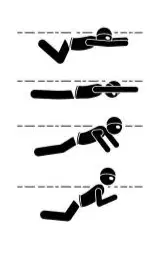
Identify the swimming stroke shown in the picture
BACKSTROKE
BREASTSTROKE
BUTTERFLY
FREESTYLE
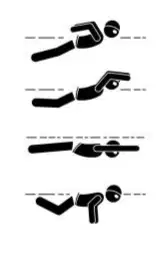
Identify the swimming stroke shown in the picture
BACKSTROKE
BREASTSTROKE
BUTTERFLY
FREESTYLE

