
NEW
Font size
 Worksheets
Promoting Healthy Eating Among Youth
Total questions: 64
Worksheet time: 32mins
Which Australian guide is a tool to promote healthy eating among youth?
The American Guide to Healthy Eating
The Australian Guide to Healthy Eating
The Adolescent Guide to Healthy Eating
The Asian Guide to Healthy Eating
What are the consequences of nutritional imbalance in youths' diet?
Short-term health and wellbeing only
Long-term health and wellbeing only
Both short- and long-term health and wellbeing
There are no consequences mentioned
What factors are either enablers or barriers to healthy eating among youth?
Economic and technological factors
Social, cultural, and political factors
Environmental and genetic factors
Educational and employment factors
What is the purpose of evaluating the sources of nutrition information?
To promote food products
To evaluate its validity
To understand food pricing
To learn cooking techniques
What are nutrients essential for?
Only for growth
Only for the maintenance of life
Both for the maintenance of life and for growth
Only for providing energy
How does the body use nutrients?
For digestion only
For energy production only
For many functions including the efficient functioning of the body and the prevention of many diet-related diseases
For muscle building only
What is the best way to maintain a balanced diet?
To eat as much food as possible
To eat a wide variety of foods
To eat only foods high in nutrients
To eat only organic foods
How much energy does 1 gram of carbohydrates provide?
37 kJ
17 kJ
16 kJ
4 kJ
How much energy does 1 gram of fats provide?
37 kJ
17 kJ
16 kJ
9 kJ
How much energy does 1 gram of protein provide?
37 kJ
17 kJ
16 kJ
4 kJ
What is the benefit of eating a variety of nutritious foods every day?
It is harmful to health and wellbeing.
It has no impact on health and wellbeing.
It is beneficial to health and wellbeing.
It decreases energy levels.
What is the role of Vitamin C in the body regarding collagen?
It breaks down collagen.
It helps the body produce collagen.
It prevents the body from using collagen.
It has no role in collagen production.
Why does the body need a daily intake of Vitamin C?
Because it is fat-soluble and stored in the body.
Because it is water-soluble and not stored in the body.
Because it is only needed once a week.
Because it can be synthesized by the body.
What is a known effect of Vitamin C as an antioxidant?
It increases the production of unwanted substances.
It has no impact on unwanted substances.
It helps remove unwanted substances from the body.
It converts unwanted substances into vitamins.
Which of the following is a function of Vitamin C related to the immune system?
It weakens the immune system.
It has no effect on the immune system.
It boosts the immune system and enhances wound healing.
It only enhances wound healing but does not affect the immune system.
What disease is caused by a deficiency of Vitamin C?
Diabetes
Scurvy
Arthritis
Anemia
What is vitamin A essential for?
Muscle growth
Cell growth, immune function, foetal development and vision
Blood clotting
Digestion
Which of the following is a symptom of vitamin A deficiency?
Increased growth rate
Improved vision
Skin and hair problems
Enhanced immune response
What is the purpose of food selection models for youth?
To help youth select foods that will meet their nutritional needs
To encourage youth to consume more energy dense foods
To provide youth with cooking skills
To promote weight loss among youth
Which of the following is NOT an example of a food selection model or tool?
Australian Guide to Healthy Eating
Health Star Rating System
Healthy Eating Pyramid
Nutritional Food Labeling
According to the Australian Guide to Healthy Eating, what percentage of a person's daily consumption should be grains?
10-12%
15%
30%
35%
What is the recommended daily percentage range for fruit consumption as per the Australian Guide to Healthy Eating?
10-12%
15%
30%
35%
Which food group should constitute the second largest portion of a person's diet according to the Australian Guide to Healthy Eating pie chart?
Dairy Products
Vegetables
Protein
Fruit
In the Australian Guide to Healthy Eating, dairy products should make up what percentage of daily food intake?
10-12%
15%
30%
35%
What percentage of a person's daily diet should be made up of protein according to the Australian Guide to Healthy Eating?
10-12%
15%
30%
35%
Who specifically adapted the Australian Guide to Healthy Eating to cater for the Aboriginal and Torres Strait Islander population group?
The Australian Government
The National Health and Medical Research Council
The Department of Education
The Aboriginal and Torres Strait Islander communities
What is the purpose of adapting the Australian Guide to Healthy Eating for the Aboriginal and Torres Strait Islander population?
To include more food options
To cater for their specific dietary needs
To make it more affordable
To promote international cuisine
Which group of people is the adapted guide especially meant for within the Aboriginal and Torres Strait Islander population?
Those living in urban areas
Those living in coastal regions
Those living in more remote areas of the country
Those living overseas

Identify some differences between the foods represented in each of the five food groups from the Aboriginal and Torres Strait Islander chart compared to the Australian Guide to Healthy Eating.
The foods in the Aboriginal and Torres Strait Islander chart are more culturally specific.
The foods in the Australian Guide to Healthy Eating are less nutritious.
The Aboriginal and Torres Strait Islander chart includes only processed foods.
The Australian Guide to Healthy Eating includes more food groups.
Choose one example from each food group and provide a reason why you think this food was included in the Aboriginal and Torres Strait Islander chart.
Kangaroo meat - because it is high in fiber.
Bush tomatoes - because they are a traditional food source.
Soda - because it is a common beverage in traditional diets.
Imported fruits - because they are easily available in the region.
What term is used to describe the suitability of food options in relation to the cultural practices and beliefs of a specific community?
Geographical location
Food security
Culturally appropriate
Nutritional value
Which term refers to the availability of food and individuals' ability to access it?
Geographical location
Food security
Culturally appropriate
Dietary diversity
What does the term 'geographical location' refer to in the context of food and healthy eating?
The cultural practices associated with food.
The nutritional content of the food.
The physical place where food is grown, harvested, or consumed.
The way food is prepared and served.
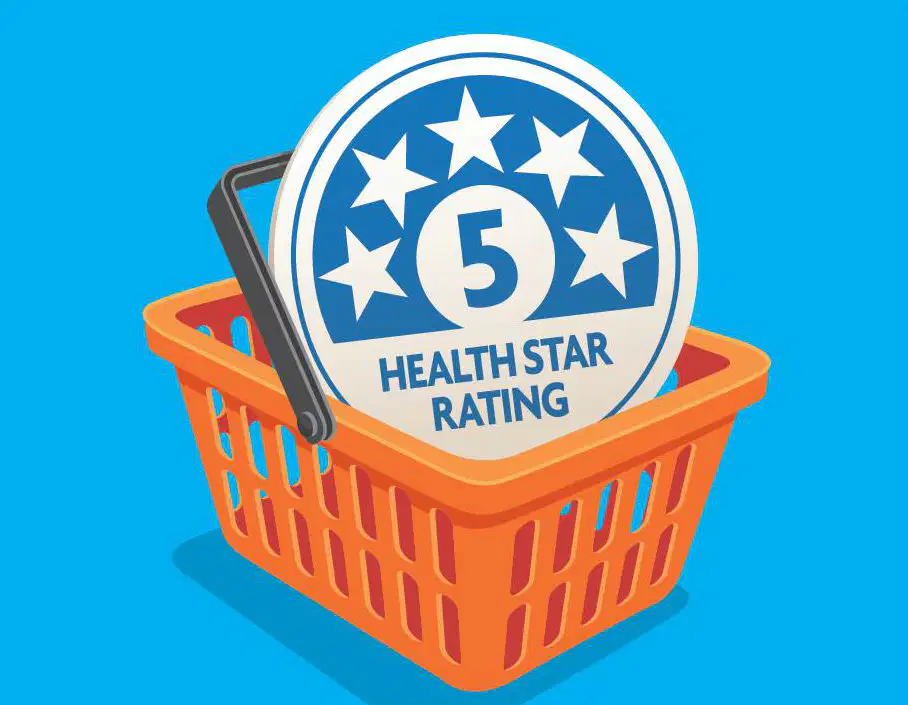
What does the Health Star Rating System rate?
The price of packaged foods
The overall nutritional profile of similar packaged foods
The weight of packaged foods
The brand popularity of packaged foods
How many stars does the Health Star Rating System use to rate foods?
From 1 to 5 stars
From 0 to 10 stars
From 1/2 a star to 5 stars
From 1 to 3 stars
What does the Health Star Rating System help consumers compare?
Taste, price, and brand
Energy, risk nutrients, and protective nutrients
Packaging size and color
Cooking time and expiration date
Is participation in the Health Star Rating System mandatory for companies?
Yes, it is mandatory
No, it is voluntary
Yes, but only for large companies
No, it is mandatory only for imported foods
What is the basis for comparison in the Health Star Rating System?
Per serving size
Per 100ml and 100g
Per calorie count
Per package
What does the Healthy Eating Pyramid represent?
A) A guide for daily exercise routines
B) Foods from the five basic food groups organized into four levels
C) A chart for tracking water intake
D) A list of unhealthy foods to avoid
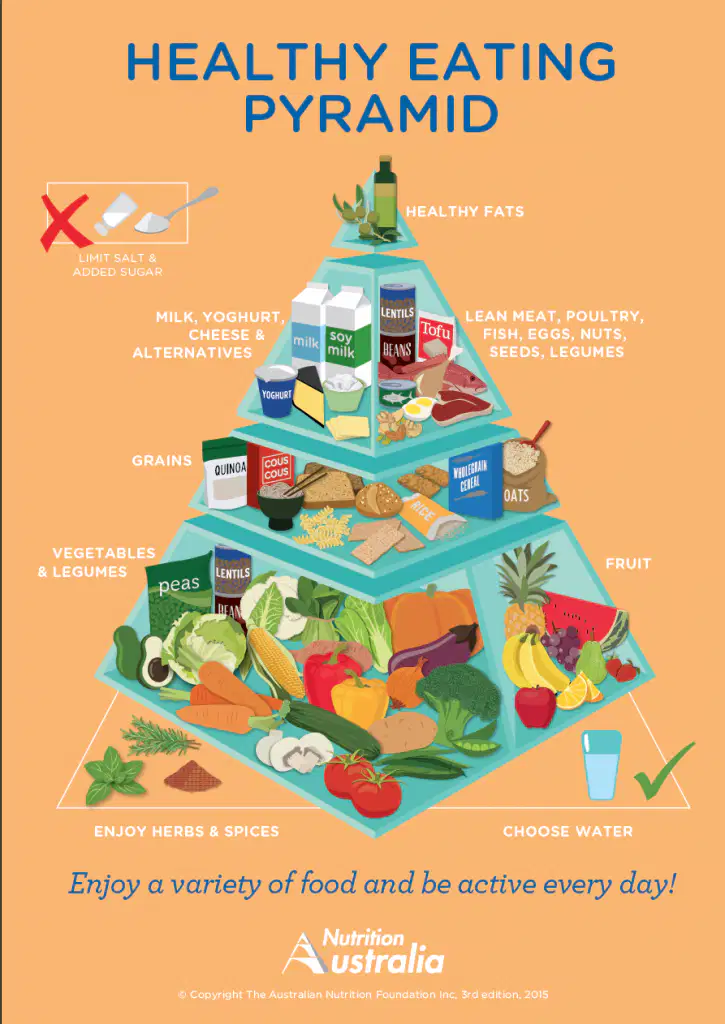
According to the Healthy Eating Pyramid, how should the quantity of food from each level be consumed?
A) Equal amounts from each level
B) The smaller the level, the more you should have in your diet
C) The bigger the level, the more you should have in your diet
D) Only foods from the top level should be consumed
How is the Healthy Eating Pyramid similar to the Australian Guide to Healthy Eating (AGHE)?
A) Both prioritize exercise over diet
B) Both are used to track calorie intake
C) Both do not take into consideration portions or combinations of foods
D) Both are focused on weight loss
Which of the following is NOT listed as an influence on youth food choices?
Cultural traditions
Family structure
Celebrity endorsements
Meal patterns
What health-related factor can influence youth food choices?
Health issues (allergies and intolerances)
Exercise frequency
Sleep patterns
Medication
According to the material, what aspect of daily life is mentioned as an influence on youth food choices?
School, work and leisure commitments
Social media usage
Peer pressure
Economic status
Why should young persons develop and maintain healthy eating habits?
To improve their academic performance only
To reach their full growth potential and have a strong immune system
To spend less time on cooking
To follow current food trends
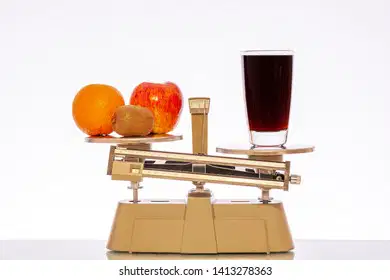
Which of the following is a short-term condition related to nutritional imbalances?
Obesity
Diabetes
Weight gain
Osteoporosis
What is a long-term consequence of not maintaining healthy eating habits?
Decreased energy levels
Thirst
Colorectal cancer
Insulin resistance
What can be a consequence of skipping meals, particularly breakfast?
Improved metabolic rate
Increased energy levels
Deficiencies in vitamin A, folate, fiber, iron, and calcium
Lower risk of osteoporosis later in life
How can restricting energy intake by skipping meals affect your body?
It can increase metabolic rate
It can lead to weight gain
It can improve energy levels
It can affect metabolic rate
What is a direct result of skipping meals on energy levels?
Increased energy levels
Stabilized energy levels
Reduced energy levels
No impact on energy levels
What is a consequence of higher KJ intake in fast foods according to the learning material?
Balanced KJ input/output
Unbalanced KJ input/output
Lower risk of obesity
Increased intake of vitamins
A diet high intake of saturated fat, sugar, and salt can lead to a higher risk of:
Improved cardiovascular health
Lower blood pressure
Obesity, diabetes, CVD
Enhanced athletic performance
What is a dietary consequence of eating more junk food?
Eating more fruits and vegetables
Drinking more milk
Eating less fruits and vegetables and drinking less milk
Increased intake of fibre
What does eating outside the home, particularly fast foods, lead to in terms of nutrient intake?
High intake of fibre, vitamins, and minerals
Low intake of fibre, vitamins, and minerals
Balanced diet
High intake of protein
What can be a consequence of inadequate intake of fruits, vegetables, and dairy?
Improved digestion
Reduced risk of chronic diseases
Greater risk of diseases such as heart disease and cancer
Increased energy levels
What are essential for all body functions and growth that might be missed out on with inadequate intake of fruits, vegetables, and dairy?
Carbohydrates and fats
Vitamins and minerals
Water and fiber
Proteins and amino acids
What are soft drinks primarily composed of in terms of nutrients?
Vitamins and minerals
Protein and fats
Sugar
Fiber
What can the consumption of soft drinks increase the urination of?
Vitamins B and D
Minerals like calcium, magnesium, zinc, and sodium
Water only
Proteins and amino acids
What are some health issues that can result from consuming soft drinks and energy drinks?
Improved digestion and metabolism
Dental decay, obesity, diabetes
Increased bone density
Enhanced immune system
What impact does reduced energy levels have on social health and well-being?
It improves social interactions
It has no impact on social health
It reduces social interactions
It increases social energy
How can reduced energy levels affect physical health and well-being?
It can lead to increased physical activity
It can improve physical endurance
It can decrease physical activity
It can enhance physical strength
What is the effect of reduced energy levels on mental health and well-being?
It enhances cognitive functions
It has no significant effect
It can lead to improved focus
It can impair cognitive functions
In terms of emotional health and well-being, what is a consequence of reduced energy levels?
It leads to more stable emotions
It can cause emotional instability
It increases emotional resilience
It has no effect on emotions
How does reduced energy levels impact spiritual health and well-being?
It strengthens spiritual connections
It has no impact on spirituality
It can weaken spiritual connections
It increases spiritual awareness

