
Font size
 Worksheets
Synovial Joints
Total questions: 60
Worksheet time: 30mins
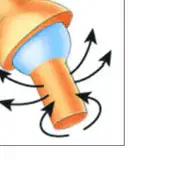
What type of joint allows for the greatest range of movement?
Ball and socket joint
Hinge joint
Pivot joint
Gliding joint
Where can ball and socket joints be found in the human body?
At the hip and shoulder
At the knee and elbow
At the wrist and ankle
At the neck and spine
Which of the following movements are allowed by a ball and socket joint?
Abduction
Extension
Flexion
Adduction
All of the above
Ball and socket joints can only be found at the knee and elbow.
True
False
A sporting example of how a ball and socket joint is used is:
Bowling a cricket ball
Kicking a football with the knee
Bending the elbow in weightlifting
Flexing the wrist in tennis
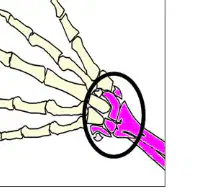
Where can condyloid joints be found in the human body?
Knee
Wrist
Ankle
Elbow
Which of the following movements are allowed by condyloid joints?
Flexion
Extension
Abduction
Adduction
Circumduction
Condyloid joints allow movement in ______ planes.
two
one
three
four
What does a condyloid joint allow a gymnast to do with their hand?
Put their hand flat on the apparatus in order to balance.
Bend their hand backwards completely.
Rotate their hand 360 degrees.
Lock their hand in a fixed position.
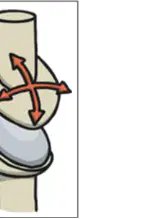
What is the main function of a gliding joint?
Allows rotation
Allows sliding or twisting
Allows bending
Allows stretching
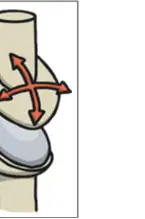
Where can gliding joints be found in the human body?
At the ankle and wrist
At the shoulder and hip
At the knee and elbow
At the neck and spine
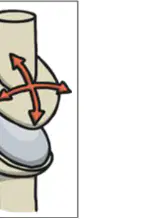
Gliding joints are also known as ________.
plane joints
hinge joints
pivot joints
ball and socket joints
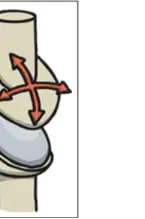
What action does a gliding joint allow in hockey?
Allows the hand action in hockey as you dribble
Allows jumping in hockey
Allows shooting in hockey
Allows running in hockey
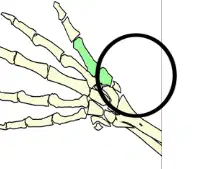
Where can the saddle joint be found?
In between the carpals and metacarpals at the thumb
In between the femur and tibia
In between the vertebrae
In between the ribs and sternum
The saddle joint allows for ________, extension, abduction, adduction and circumduction.
flexion
rotation
pronation
supination
Which of the following is a sporting example of the use of a saddle joint?
Kicking a football
Gripping a racquet and ball in tennis
Heading a soccer ball
Jumping over a hurdle
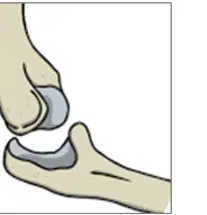
What type of motion does a hinge joint allow?
Only backwards and forwards motion like a door
Circular motion
Side to side motion
Rotational motion
Where can hinge joints be found in the human body?
At the knee and elbow
At the shoulder and hip
At the wrist and ankle
At the neck and spine
Which of the following movements are allowed by hinge joints?
Flexion, extension, dorsiflexion, and plantarflexion
Rotation and circumduction
Abduction and adduction
Opposition and reposition
Sporting Example: A hinge joint allows a volleyball player to bend their arm to serve the ball.
True
False
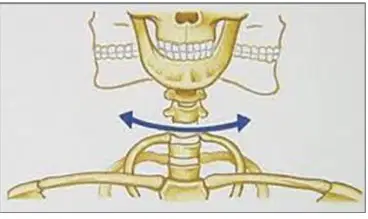
What is the main function of a pivot joint?
Allows us to rotate and twist
Allows us to bend and straighten
Allows us to slide bones past each other
Allows us to compress and expand
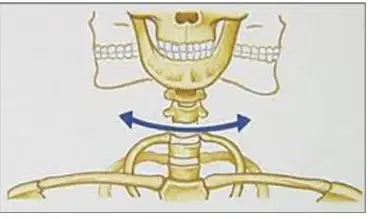
Where can pivot joints be found in the human body?
Neck and elbow
Knee and ankle
Shoulder and wrist
Hip and spine
A sporting example of a pivot joint is that it allows a footballer to perform a _______ header in football.
glancing
powerful
curved
backward
Pivot joints allow us to rotate and twist.
True
False
What is the definition of flexion?
Bending movement that decreases the angle between body parts.
Straightening movement that increases the angle between body parts.
Rotation of a body part around its axis.
Movement of a body part away from the midline.
Which of the following is a sporting example of flexion?
Kicking a football
A bicep curl in the gym
Jumping
Throwing a ball
Name any two joints that can provide flexion.
Shoulder and elbow
Skull and pelvis
Vertebrae and ribs
Tarsals and metatarsals
What is the definition of extension?
Straightening movement that increases the angle between body parts.
Bending movement that decreases the angle between body parts.
Rotation of a body part around its axis.
Movement of a body part away from the midline.
Extension can be provided by which of the following joints?
Shoulder
Hip
Elbow
All of the above
What is adduction? Adduction is a lateral movement towards the ______ of the body.
midline
side
extremity
surface
Which joints can provide adduction? Choose the correct answer:
Shoulder, hip, condyloid joint, and ball and socket joint
Elbow and knee
Wrist and ankle
Spine and ribs
What is abduction? Abduction is a lateral movement away from the ______ of the body.
midline
shoulder
spine
limb
Which joints can provide abduction?
Shoulder, hip, condyloid joint, and ball and socket joint
Elbow and knee
Wrist and ankle
Spine and ribs
What is a sporting example of adduction? A golfer on the tee swings the club ______ towards the ball.
down
up
sideways
back
What is circumduction? Circumduction is a circular motion that allows the ________ range of movement.
greatest
smallest
slowest
least
Which joints can provide circumduction?
Shoulder, hip, pivot joint, and ball and socket joint
Hinge, saddle, and gliding joints
Elbow, knee, and interphalangeal joints
Suture, syndesmosis, and gomphosis joints
Sporting Example: Circumduction is demonstrated by which of the following actions?
A cricketer bowling a ball
A footballer kicking a ball
A swimmer diving into a pool
A runner sprinting
What is rotation? Rotation is a circular motion that occurs when the bone at the joint turns around an ________.
axis
muscle
ligament
tendon
Which joints can provide rotation?
Shoulder, hip, pivot joint, and ball and socket joint
Elbow, knee, and hinge joint
Suture, syndesmosis, and gomphosis
Ankle, wrist, and gliding joint
What is Plantarflexion? Plantarflexion is the pointing of the foot ______ from the tibia.
away
towards
above
beneath
What is Dorsiflexion? Dorsiflexion is the pointing of the foot ______ the tibia.
towards
away from
above
below
Which of the following is a sporting example of Plantarflexion?
A sprinter positions their feet on the starting blocks
A floor gymnast points their toes
A basketball player jumps for a rebound
A swimmer dives into the pool
Which of the following is a sporting example of Dorsiflexion?
A floor gymnast points their toes
A sprinter positions their feet on the starting blocks
A tennis player serves the ball
A cyclist pedals uphill
What is the movement called when the spine moves away from the midline of the body from side to side?
Lateral flexion of the spine
Extension of the spine
Rotation of the spine
Flexion of the spine
Which joints and vertebrae can provide lateral flexion of the spine?
Cervical, thoracic and lumbar vertebrae, gliding joint and pivot joint
Sacral vertebrae and hinge joint
Coccygeal vertebrae and ball-and-socket joint
Thoracic vertebrae and saddle joint
Sporting Example – Performing a dumbbell side bend is an example of which movement of the spine?
Lateral flexion of the spine
Extension of the spine
Rotation of the spine
Flexion of the spine
What is the movement called when the extension of the spine causes the neck to move further away from the chest or the spine to move further away from the pelvis?
Hyperextension of the spine
Flexion of the spine
Rotation of the spine
Lateral bending of the spine
Hyperextension of the spine can be provided by the cervical, thoracic and lumbar vertebrae, gliding joint and pivot joint.
True
False
What is horizontal flexion?
A horizontal movement towards the midline of the body with the palm facing down and the elbow pointing out.
A vertical movement away from the midline of the body with the palm facing up.
A rotational movement of the forearm with the palm facing forward.
A downward movement of the arm at the shoulder joint.
Which joints can provide horizontal flexion?
Shoulder, hip, ball and socket joint, and condyloid joint.
Hinge, pivot, and saddle joints only.
Gliding and fixed joints only.
Suture and syndesmosis joints only.
Sporting Example: A discus thrower brings the arm through to release the discus. This is an example of which movement?
Horizontal Flexion
Horizontal Extension
Vertical Flexion
Vertical Extension
What is horizontal extension?
A horizontal movement away from the midline of the body with the palm facing down and the elbow pointing out.
A vertical movement towards the midline of the body with the palm facing up.
A rotational movement of the arm at the shoulder joint.
A forward movement of the leg at the hip joint.
Which joints can provide horizontal extension?
Shoulder, hip, ball and socket joint, and condyloid joint.
Elbow, knee, hinge joint, and pivot joint.
Ankle, wrist, saddle joint, and gliding joint.
Vertebral, costal, fibrous, and cartilaginous joint.
Which connective tissue connects bone to bone and provides stability?
Ligament
Tendon
Bursa
Synovial Membrane
What is the shiny, elastic material found on the ends of articulating bones that acts as a shock absorber and prevents rubbing and friction?
Articular Cartilage
Synovial Fluid
Bursa
Joint Capsule
A sac that surrounds the articular cavity, holds synovial fluid in place, and helps the joint stay lubricated and in place is called a _______.
Joint Capsule
Ligament
Tendon
Meniscus
Small fluid filled sacs that cushion the joint, reduce friction, and are found embedded in the synovial membrane are called _______.
Bursa
Ligaments
Tendons
Menisci
Which structure secretes synovial fluid and helps the joint to move freely?
Synovial Membrane
Ligament
Tendon
Articular Cartilage
A thick liquid that lubricates joints, provides nutrients, and removes waste products is called _______.
Synovial Fluid
Cerebrospinal Fluid
Plasma
Lymph
Connects bone to muscle and provides stability and strength.
Ligament
Tendon
Bursa
Synovial Fluid

