
 Worksheets
Compendial Requirements for Solid Dosage Forms (small letters)
Total questions: 56
Worksheet time: 1hrs 24mins
ICH or ___ ___ ___ ___ ___ ___ ___ ___ ___ ___ ___ ___
(a)
Enumerate the 4 guidelines of ICH.
(a)
Q6 or?
(a)
PDG or?
(a)
Select all that applies: PDG involves
European Pharmacopoeia
Japanese Pharmacopoeia
USP
International Pharmacopoeia
True or False: Procedures and acceptance criteria from JP, EP, and USP are considered equivalent according to the PDG.
True
False
The term that includes both the mass of the dosage form and the content of the active substance in the dosage form.
(a)
It is defined as the degree of uniformity in the amount of the drug substance among dosage unit.
(a)
It confirms uniformity of the dosage unit and therefore support product safety, identity and quality. It is allowed for hard capsules, uncoated tablets, and film-coated tablets containing 25 mg or more of the drug substance compromising 25% or more of the weight of the dosage unit.
(a)
It is based on the assay of the individual content of drug substance in several dosage units to determine whether the individual content is within the limits set.
(a)
It ensures that the strength of a therapeutic product remains within specified acceptance limits. It is applicable to dosage units with <25 or <25% of drug substance.
(a)
It is defined as that state in which any residue of the unit remain on the screen of the test apparatus or adhering to the lower surface of the disk, if used, is a soft mass having no palpably firm core.
(a)
It determines whether the tablet, capsule, or granules disintegrate within the prescribed time when placed in liquid medium.
(a)
Uncoated tablets are marked as PASSED in the disintegration test if (a) tablets are completely disintegrated.
If 1-2 uncoated tablets failed, repeat the test on additional (a) tablets.
Enteric coated tablets are marked as PASSED in the disintegration test if after (a) hours, no tablets disintegrated in acid stage.
Size of beaker used in the disintegration test.
100 mL
500 mL
1000 mL
10 L
True or False: Disintegration tester moves horizontally.
True
False
A test provided to determine compliance with the dissolution parameters for dosage form administered orally.
(a)
Apparatus 1
Basket Apparatus
Paddle Apparatus
Reciprocating Cylinder
Flow-through cell
Apparatus 4
Basket Apparatus
Paddle Apparatus
Reciprocating Cylinder
Flow-through cell
Apparatus 2
Basket Apparatus
Paddle Apparatus
Reciprocating Cylinder
Flow-through cell
Apparatus 3
Basket Apparatus
Paddle Apparatus
Reciprocating Cylinder
Flow-through cell
Most commonly used apparatus used in dissolution test.
Basket Apparatus
Paddle Apparatus
Reciprocating Cylinder
Flow-through cell
Type 1 media used in dissolution test: (a) rpm
Type 2 media used in dissolution test: (a) rpm
A condition wherein a sufficient media to ensure un-impaired dissolution.
(a)
A test that only applies to different types of tablets.
(a)
A test that compliments physical strength measurements, such as Hardness Test.
(a)
Friability Tester: (a) rotation per minute.
Brushing the fine particles adhering on each sample units in the Friability Test.
(a)
True or False: 1.0% is the minimum weight loss in Friability Test.
True
False
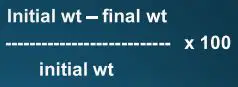
% Friability
Friability
Hardness
Angle of Repose
Hardness test applies the (a) that required the tablet to break or fail.
(a) is the crushing strength.
True or False: A tablet is of proper hardness if it was firm enough to break with a sharp snap when held between 2nd and 3rd fingers, using thumb as fulcrum.
True
False
Breaking force of tablets is dependent on its type, however, what is the universal breaking force for tablets?
1.5 to 4 mPa
15-50 Newtons
0.5 to 1 mPa
1.5 to 4 Newtons
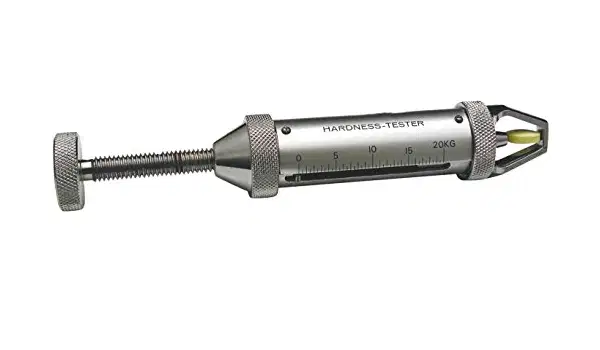
Identify the equipment.
Stokes Monsanto
Schleuniger Tester
Erweka Tester
Strong-Cobb
It is in-house, because the size of the tablets depend on the manufacturer.
Thickness
Particle size distribution
Thickness (and Diameter) is also called (a) Test.
Scale used in Vernier caliper for whole numbers.
(a)
Scale used in Vernier caliper for decimals.
(a)
A specific test for powders and granules.
(a)
A test used for the evaluation of the flow property and compressibility.
(a)
The most rapid technique of Particle Size Distribution.
(a)
Good granules:
Do not pass Mesh No. 20
Pass Mesh No. 20, do not pass Mesh No. 40
Both pass on Mesh No. 20 and 40
Coarse granules:
Do not pass Mesh No. 20
Pass Mesh No. 20, do not pass Mesh No. 40
Both pass on Mesh No. 20 and 40
It is defined as the maximum angle possible between the surface of a pile of powder and the horizontal plane.
(a)
It is a characteristic related to inter-particulate friction. It is AKA Fixed-funnel method.
(a)
These are the excipients in the compression of the powders.
(a)
It measures the flow property, the ability to settle, and the inter-particulate interaction.
(a)
An automated volumeter used in the bulk and tapped density that measures the amount of granules.
(a)
Flow character of 16-20% Compressibility Index and 1.19-1.25 Hausner Ratio.
Excellent
Good
Fair
Passable
Flow character of 21-25% Compressibility Index and 1.26-1.34 Hausner Ratio.
Excellent
Good
Fair
Passable
Flow property of 31-35 degrees of Angle of Repose.
Excellent
Good
Fair
Passable
Flow property of 46-55 degrees of Angle of Repose.
Passable
Poor
Very poor
Very, very poor

