
 Worksheets
MP3 Review (Protein Synthesis & Evolution)
Total questions: 66
Worksheet time: 41mins
The idea of evolution by natural selection was developed by
Charles Darwin
Charles Lyell
Jean Baptiste Lamarck
Albert Einstein
Darwin discovered 13 species of finch on the Galapagos. He noticed that they had different shaped beaks, and hypothesized that the different beaks developed due to
predators
their diet
the tortoise population
randomly developed
One of the requirements for natural selection to occur in a population is
all animals are the same
acquired traits
common ancestors
variation
Evolution is
a trait that helps an organism reproduce
the ability to survive and reproduce
changes in organisms over time
organisms that have better suited traits survive
What is an acquired trait?
a trait influenced by the environment
a trait you are born with
a trait that is in the DNA of an organism
a trait that is passed from parent to offspring
The ability to survive and reproduce is called
evolution
adaption
trait
fitness
What happens to organisms when there is a big change in their environment, like a forest fire?
organisms become extinct
organisms die
organisms with the best adaptations survive
nothing, they just go on with life
Natural selection is
a process where organisms better suited for their environment survive and reproduce
an inherited characteristic that benefits organisms
a process of change over time to a species
surviving and reproducing in an environment
Which of the following is a vestigial structure?
eyes
hip bones in whales
foot bones
lungs
Organisms are thought to come from species before them, these species are called
fossils
common ancestors
humanoids
siblings
Members of the same species competing for food, mates, and resources
struggle for existence
struggle for extinction
struggle for cardio fitness
struggle for extermination
Fossils provide evidence of evolution because
fossils do not provide evidence of common ancestors
fossils show how organisms lived
fossils show how current species are similar to ancestors
fossils come from rocks
A natural variation that benefits an organisms is called a(n)
fitness
evolution
adaptation
acquired trait
When a dairy farmer chooses to breed the cows that give the most milk, the farmers are demonstrating
artificial selection
natural selection
evolution
fitness
Darwin observed that many organisms seemed well suited to
being preserved as fossils.
providing humans with food.
swimming from South America to the Galápagos Islands.
surviving in the environments in which they lived.
Which of the following is NOT evidence of evolution?
embryology
biochemistry (DNA)
acquired traits
anatomy
When a farmer breeds two corn plants to produce the largest, sweetest corn on the cob, the farmer is using
artificial selection
natural selection
acquired traits
adaptations
Homologous structures
are structures that are similar in related organisms that have a common ancestor
do not exist in animals
are structures that are similar in different organisms
are structures that are exactly the same in organisms
A structure in a organisms that no longer functions
chromologous structure
analogous structure
homologous structure
vestigial structure
Analogous structures are
anatomically similar with similar functions
anatomically different with similar functions
anatomically similar with different functions
do not exist in animals
True or False: Two organisms that have DNA sequences (ATCG's) in common share a common ancestor.
True
False
Small changes over time
Gradualism
Punctuated Equilibrium
Rapid Evolution
Artificial Selection
Rapid bursts of speciation
Gradualism
Punctuated Equilibrium
Rapid Evolution
Artificial Selection
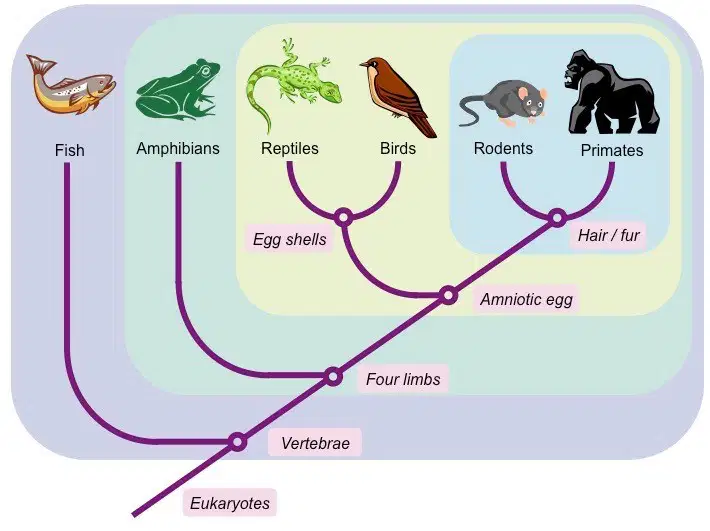
What trait separates amphibians from reptiles?
Vertebrate
Four limbs
Amniotic egg
Hair
What traits are shared between primates and amphibians?
Vertebrate
Four limbs
Amniotic egg
Hair

Which species is the out group?
Sharks
Amphibians
Rodents & Rabbits
Birds
Which two species have the strongest evolutionary relationship?
Sharks
Crocodiles
Rodents
Birds
Which two species have the weakest evolutionary relationship?
Sharks
Crocodiles
Rodents
Birds
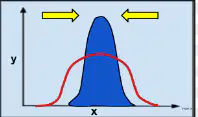
Which type of selection pattern is shown?
Directional
Disruptive
Stabilizing
Darwinian
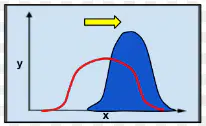
Which type of selection pattern is shown?
Directional
Disruptive
Stabilizing
Darwinian
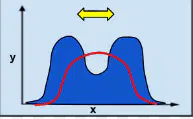
Which type of selection pattern is shown?
Directional
Disruptive
Stabilizing
Darwinian
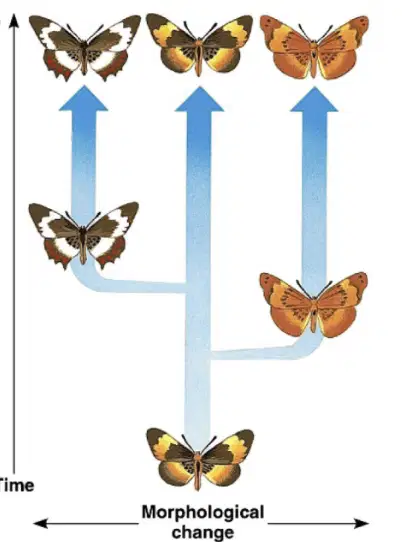
Which theory of natural selection is shown?
Gradualism
Punctuated Equilibrium
Stabilizing Selection
Disruptive Selection
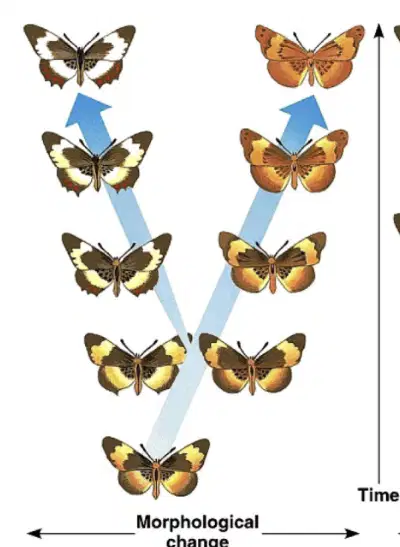
Which theory of natural selection is shown?
Gradualism
Punctuated Equilibrium
Stabilizing Selection
Disruptive Selection
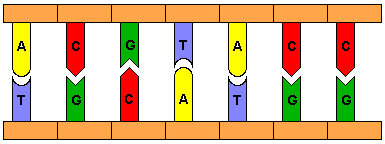
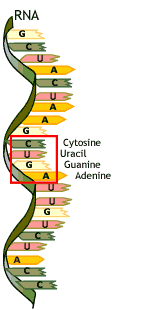


GTAGTCA
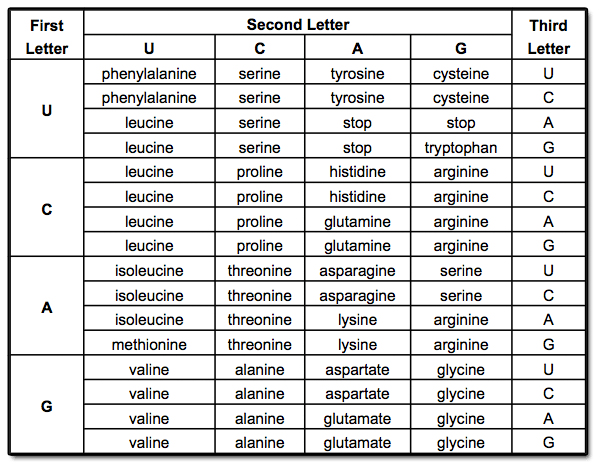

What is the correct amino acid sequence for the mRNA code AUGCCAGUAUGA
Met-Pro-Ala-Val
Met-Pro-Val
Tyr-Gly-His
Tyr-Gly-Arg-His
TGGCAAGTACGT
TGGCAAGTACGT
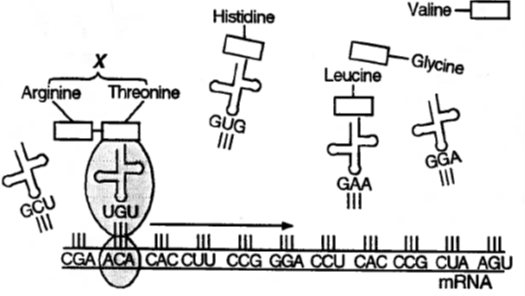

Which term best describes this process?
Natural Selection
DNA Replication
Meiosis
Central Dogma

What is the function of a chromosome?
Chromosomes contain thousands of genes
Chromosomes are found inside genes
Chromosomes are found in DNA
Chromosomes are found in mutations
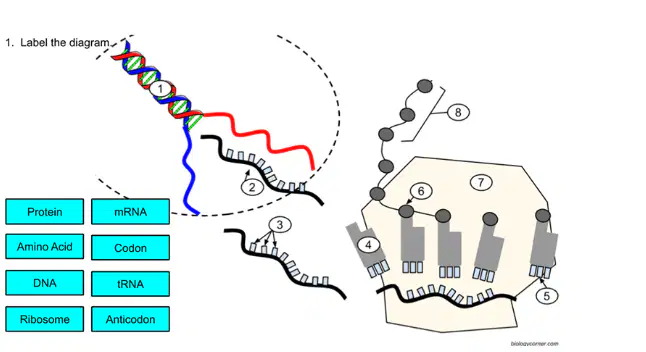
Label #1
mRNA
DNA
tRNA
Amino Acid
Label #2
mRNA
DNA
tRNA
Amino Acid
Label #3
Anticodon
Codon
tRNA
Amino Acid
Label #4
mRNA
Polypeptide
tRNA
Amino Acid
Label #5
Anticodon
Codon
Polypeptide
Amino Acid
Label #6
Anticodon
Protein
Polypeptide
Amino Acid
Label #8
tRNA
mRNA
Polypeptide
Amino Acid
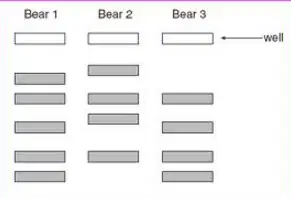
Using the DNA fingerprint, which two bear species are most closely related?
Bear 1 & 2
Bear 1 & 3
Bear 2 & 3
All are the same species
What is a benefit of cloning?
Cloning healthy organs
Cloning bacteria
Cloning food is healhtier
Cloning increases life span
Why is the Human Genome Project important?
Prevents mutations
Helps identify criminals with DNA fingerprinting
Identification of genetic diseases
Helps identify paternity of a child
True or False: GMO crops are always harmful to the environment and human health
True, they require more pesticides
True, they give food poisoning
False, we do not know long-term effects
False, they only harm nearby populations

