
 Worksheets
Chap. 7 Review - Cells
Total questions: 69
Worksheet time: 41mins

Which organelle is only in PLANT cells?
Cell Membrane
Mitochondrion
Nucleus
Chloroplast

This scientist is known for discovering the nucleus in plant cells.
Robert Brown
Robert Frost
Charlie Brown
Charles Dickens

This scientist is credited with proposing the Cell Theory in 1855.
Rudolf Reindeer
Robert Hooke
Rudolf Virchow
Robert Brown

The "brain" of the cell that controls the cell function is called the
Nucleus
Vacuole
Mitochondria
Cytoplasm

Cells with a nucleus and membrane-bound organelles are called ____________________.
prokaryotes
eukaryotes
bacteria
protists
Which of the following is NOT part of the cell theory?
cells must contain DNA
all living things are made from cells
cells can only come from other cells
cells are the basic unit of life

He discovered that all plants are made of cells:
Anton van Leeuwenhoek
Theordor Schwann
Robert Hooke
Mattias Schleiden

Who was the first person to see cells under the microscope and give them their name?
Mattias Schleiden
Robert Hooke
Theordor Schwann
Anton van Leeuwenhoek

Which of the following scientists was the first to observe bacteria under a microscope?
Anton van Leuwenhoek
Matthais Schleiden
Robert Hooke
Theodor Schwann
Prokaryotic cells include bacteria.
True
False
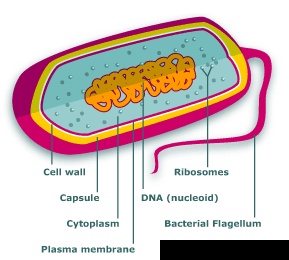
Which type of cell?
Prokaryote
Eukaryote
Has membrane bound organelles
Prokaryote
Eukaryote
both
Cells can only be seen with the help of a...
hand lens
kaleidoscope
3D glasses
microscope
What is multicellular?
one cell
no cells
many cells
no nucleus
Which of the following are NOT found in animal cells
chloroplasts and cytoplasm
chloroplasts and cell wall
cell wall and cell membrane
mitochondria and nucleus

Cells with a nucleus and membrane-bound organelles are called ____________________.
prokaryotes
eukaryotes
bacteria
protists
The diffusion of WATER across a semi-permeable membrane is
osmosis
diffusion
endocytosis
exocytosis
Diffusion is what type of membrane transport?
active transport
passive transport
cell division
cell mutation
Active transport requires
energy
the nucleus
chloroplasts
lysosomes
The mitochondria....
produces energy
causes cell division
is not an organelle
is found in a prokaryote
What organelle PRODUCES (or synthesizes) proteins?
ribosomes
centrioles
lysosomes
nucleus
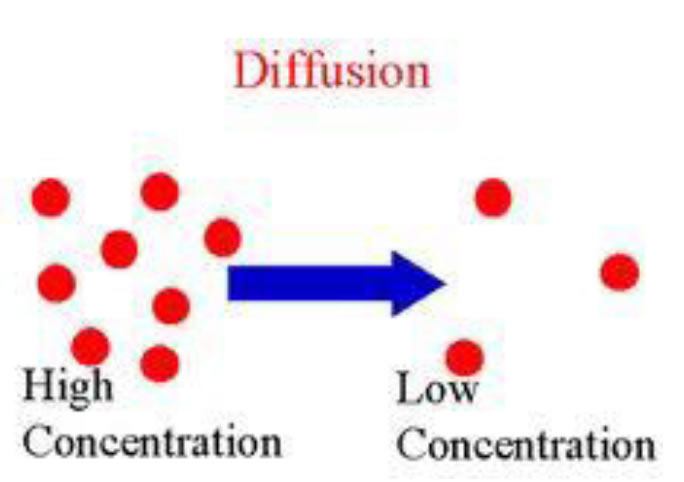
Movement of particles from high to low concentration.
Passive Transport
Active Transport
Osmosis is a form of ______________.
Passive Transport
Active Transport
Exocytosis is what type of membrane transport?
Passive Transport
Active Transport
Endocytosis is what type of membrane transport?
Passive Transport
Active Transport
Solutes move against the concentration gradient, therefore energy is needed.
Passive Transport
Active Transport
Sac within the cytoplasm that is full of fluid; plants have one large sac; stores food, water, etc.
vacuole
cell wall
lysosome
ribosome
Gives the cell a rigid, box-like shape; outside of the cell membrane; in plants.
cytoplasm
chromatin
cell wall
cell membrane
Consists of a jellylike substance that contains many organelles.
ribosomes
cytoplasm
chloroplasts
cell wall

I am a protein packaging and shipping machine! Who am I?
vacuole
ribosome
endoplasmic reticulum
golgi apparatus

What is this?
mitochondria
lysosomes
chloroplast
endoplasmic reticulum
The cell membrane is selectively permeable, which means...
All materials can enter and leave the cell
Certain things can enter while others cannot
The cell manually sorts through all materials
Only certain cells can interact with the cell.
What is it called when molecules move across the cell membrane from an area of high concentration to an area of low concentration through a carrier protein?
Diffusion
Osmosis
Active Transport
Facilitated Diffusion
What is the name of the process in which molecules move from an area of high concentration to an area of low concentration across a selectively permeable membrane?
Diffusion
Osmosis
Active Transport
Facilitated Diffusion
When molecules are spread evenly across the cell membrane, ______________________ is reached.
difference
transportation
equilibrium
solution
A cell will __________________ in a hypotonic solution.
swell and perhaps burst (lyse)
shrink
the size of the cell will not change
the size of the cell will change from large to small and from small to large

The cell below is in a _________ solution.
Hypotonic
Hypertonic
Isotonic

The cell below is in a _____________ solution.
Hypertonic
Hypotonic
Isotonic
I promise to look over my Quiz, study my vocab, and any other important notes so that I am prepared for this Test! (More than one answer may apply.)
Yes, of course, ma'am!
Definitely, ma'am!
Absolutely, ma'am!
Certainly, ma'am!
Which structures are found in every living cell?
cell membrane and cytoplasm
chloroplasts and mitochondria
a cell wall and nucleus
chloroplasts and cell wall
Cell organelles that are responsible for digesting food, worn out organelles and other cellular wastes are called ___________________.
Mitochondria
Vacuoles
Lysosomes
Chlororplasts
What is one basic function of the vacuoles?
circulating oxygen
producing food
controlling cell processes
storing water
All cells need energy to function. Which cell organelle is responsible for producing energy in the cell?
chloroplasts
mitochondria
nucleus
vacuoles
What is the function of a cell wall?
to protect and support the cell
to perform different functions in each cell
to prevent water from passing through it
to prevent oxygen from entering the cell
The _____________ holds the DNA, and controls the functions of eukaryotic cells.
Nucleus
Nuclear Membrane
Mitochondria
Chloroplast
The _____________ is a gel-like fluid that fills plant and animal cells. It holds the organelles in place and gives each cell its shape.
Cytoplasm
Cell Membrane
Cell Wall
Chloroplast
Cell organelles work together to maintain
homeostasis
eukarya
prokarya
organisms
Movement of materials through a vesicle into the cell that requires energy is
exocytosis
endocytosis
osmosis
simple diffusion
What is an isotonic solution?
When solutions are in equilibrium
When the solution has more solute
When the solution has less solute
Has a greater pressure

This picture show the molecules getting help across the membrane. The vocabulary word that best describes this is
diffusion
osmosis
facilitated diffusion
active transport
Energy-requiring process that moves material across a cell membrane against a concentration gradient.
Active transport
Passive transport
Facilitated diffusion
osmosis
A cell in a hypertonic solution will...
lose water and shrivel
gain water and burst
not change at all
experience water movement in both directions
Smallest unit that is capable of performing life functions; basic structural and functional unit of all living organisms
Lysosome
Ribosome
Vacuole
Cell
Nucleus
Selectively permeable membrane that helps control what enters and leaves the cell; outer membrane of the cell
Cell Theory
Plasma Membrane
Endoplasmic Reticulum
Golgi Apparatus
Cytoplasm
Moves materials around in the cell and can be a site for ribosome attachment; the pleats and folds provide a large amount of surface area for cellular functions
Vacuole
Golgi Apparatus
Endoplasmic Reticulum
Plasma Membrane
Cytoplasm
Uses transport proteins to move other ions and small molecules across the plasma membrane; no energy required
Transport Proteins
Active Transport
Osmosis
Exocytosis
Facilitated Diffusion
When a cell is in a solution that has a lower concentration of a solute; more water outside the cell; cell can swell and burst
Isotonic Solution
Hypertonic Solution
Hypotonic Solution
Endocytosis
Exocytosis

What is the structure labeled #5?
(Click on the picture to enlarge.)
Vacuole
Chloroplast
Mitochondria
Lysosome

Name structure #6.
(Click on the picture to enlarge.)
rough ER
Golgi body
Smooth ER
cytoplasm

What is the structure labeled #9?
(Click on the picture to enlarge.)
Cell Wall
Cytoplasm
Chloroplast
Mitochondria

What is the structure labeled #10?
(Click on the picture to enlarge.)
Cell membrane
Cell wall
Cytoplasm
Centriole

What is plant cell #11 pointing to?
(Click on the picture to enlarge.)
Mitochondria
Lysosome
Vacuole
Cytoplasm

Prokaryotic cells are usually _______ and do not contain a ______
Multicellular, Nucleus
Unicellular, Nucleus
Eukaryotic cells have a membrane-bound ______ which holds the _______
mitochondria,
RNA
mitochondria
DNA
Nucleoid
DNA
Nucleus,
DNA

Which cell types have DNA?
Prokaryotic
Eukaryotic
Both Cell Types
Moves materials around in the cell and can be a site for ribosome attachment; the pleats and folds provide a large amount of surface area for cellular functions
Vacuole
Golgi Apparatus
Endoplasmic Reticulum
Plasma Membrane
Cytoplasm
Vesicles that contain substances that digest excess or worn-out organelles and food; Transports undigested material to the cell membrane for removal
Nucleus
Vacuole
Lysosome
Ribosome
Cytoplasm

