
 Worksheets
BIOCHEMICAL TESTING: ENTEROBACTERIACEAE
Total questions: 115
Worksheet time: 58mins
Name
Class
Date
1.
All Enterobacteriaceae spp. are Oxidase negative except:
a)
Plesiomonas shigelloides
b)
Shigella dysenteriae
c)
Erwinia
d)
Pantoea agglomerans
2.
All Enterobacteriaceae spp. are Catalase positive except:
a)
Plesiomonas shigelloides
b)
Shigella dysenteriae
c)
Erwinia
d)
Pantoea agglomerans
3.
All Enterobacteriaceae spp. reduce nitrate to nitrite except:
a)
Plesiomonas shigelloides
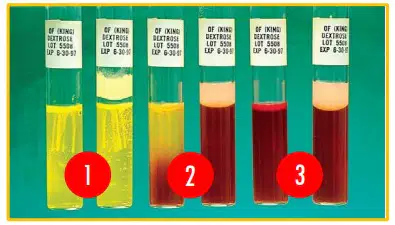
b)
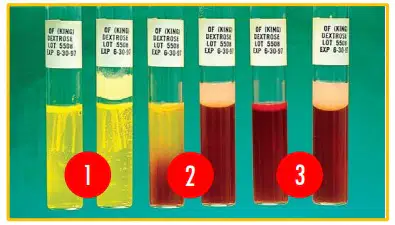
Shigella dysenteriae
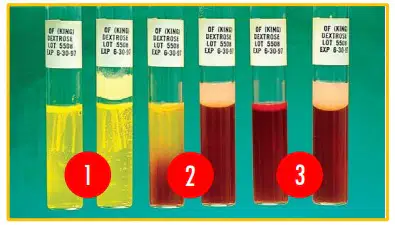
c)
Erwinia
d)
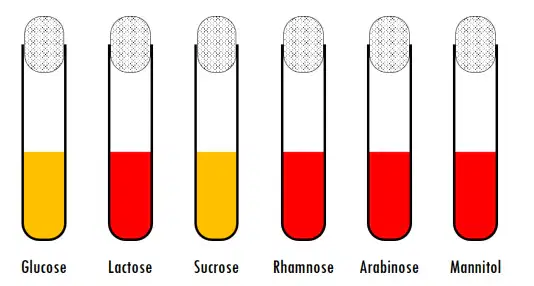
Pantoea agglomerans
4.
Principle/purpose: Detects the presence of cytochrome oxidase
a)
Oxidase test
b)
Nitrate reduction
c)
ONPG test
d)
Oxidation/Fermentation (Hugh-Leifson) test
5.
Principle/purpose: Detects the presence of nitrate reductase/nitrosoreductase.
a)
Oxidase test
b)
Nitrate reduction
c)
ONPG test
d)
Oxidation/Fermentation (Hugh-Leifson) test
6.
Principle/purpose: Detects the presence of β-galactosidase. Determines the presence of late and slow lactose - fermenting strains
a)
Oxidase test
b)
Nitrate reduction
c)
ONPG test
d)
Oxidation/Fermentation (Hugh-Leifson) test
7.
Principle/purpose: Determines whether an organism utilizes carbohydrates anaerobically (fermentation) or aerobically (oxidation)
a)
Oxidase test
b)
Nitrate reduction
c)
ONPG test
d)
Oxidation/Fermentation (Hugh-Leifson) test
8.
Oxidase test Reagent
a)
Tetramethyl-p-phenylenediaminedihydrochloride
b)
p-Aminodimethylanilineoxalate
c)
Tetramethyl-p-phenylenediaminedihydrochloride w/ tetramethyl sulfoxide
9.
Oxidase test Reagent
a)
Tetramethyl-p-phenylenediaminedihydrochloride
b)
p-Aminodimethylanilineoxalate
c)
Tetramethyl-p-phenylenediaminedihydrochloride w/ tetramethyl sulfoxide
10.

Oxidase test: Development of dark purple color within 10s [ Indophenol (purple)]
a)
POSITIVE
b)
NEGATIVE
11.
Nitrate reduction Reagent
a)
N,N-dimethyl-α-naphthylamine
b)
Sulfanilic acid
12.

Nitrate reduction: [From the left] FIRST TUBE
a)
Positive, no gas
b)
Positive, with gas
c)
Positive, no color after adding Zn dust
d)
Uninoculated tube with inverted Durham tube
13.

Nitrate reduction: [From the left] SECOND TUBE
a)
Positive, no gas
b)
Positive, with gas
c)
Positive, no color after adding Zn dust
d)
Uninoculated tube with inverted Durham tube
14.

Nitrate reduction: [From the left] THIRD TUBE
a)
Positive, no gas
b)
Positive, with gas
c)
Positive, no color after adding Zn dust
d)
Uninoculated tube with inverted Durham tube
15.

Nitrate reduction: [From the left] FOURTH TUBE
a)
Positive, no gas
b)
Positive, with gas
c)
Positive, no color after adding Zn dust
d)
Uninoculated tube with inverted Durham tube
16.
Nitrate reduction: Inverted tube that traps gas
a)
Durham tube
b)
Inverted tube
c)
Slant Tube
d)
Nitrate Tube
17.
Nitrate reduction: Medium
a)
Peptone Broth with KNO3
b)
MR-VP Broth
18.
ONPG test Reagent:
a)
o-nitrophenyl-β-D-galactopyranoside
b)
Tetramethyl-p-phenylenediaminedihydrochloride
c)
N,N-dimethyl-α-naphthylamine
19.
ONPG test: Medium
a)
ONPG tablets or disks
b)
Sterile distilled water
20.
ONPG test: Medium
a)
ONPG tablets or disks
b)
Sterile distilled water
21.
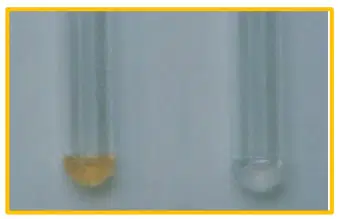
ONPG test: POSITIVE RESULT
a)
Left Tube (Yellow in 20 minutes to 24 hrs)
b)
Right Tube (Colorless after 24 hrs)
22.
ONPG test: With lactose permease and β-galactosidase
a)
RAPID LACTOSE FERMENTERS
b)
LATE LACTOSE FERMENTERS
c)
NON LACTOSE FERMENTERS
23.
ONPG test: With β-galactosidase
a)
RAPID LACTOSE FERMENTERS
b)
LATE LACTOSE FERMENTERS
c)
NON LACTOSE FERMENTERS
24.
ONPG test: ONPG negative
a)
RAPID LACTOSE FERMENTERS
b)
LATE LACTOSE FERMENTERS
c)
NON LACTOSE FERMENTERS
25.
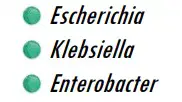
ONPG test: EKE
a)
RAPID LACTOSE FERMENTERS
b)
LATE LACTOSE FERMENTERS
c)
NON LACTOSE FERMENTERS
26.
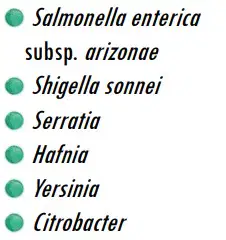
ONPG test: SaSsSeHaYeCi
a)
RAPID LACTOSE FERMENTERS
b)
LATE LACTOSE FERMENTERS
c)
NON LACTOSE FERMENTERS
27.
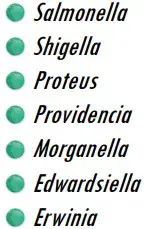
ONPG test: SaShiPP MoEdEr
a)
RAPID LACTOSE FERMENTERS
b)
LATE LACTOSE FERMENTERS
c)
NON LACTOSE FERMENTERS
28.
Oxidation/Fermentation (Hugh-Leifson) test: INDICATORS
a)
Phenol red
b)
Bromthymol blue
29.

Oxidation/Fermentation (Hugh-Leifson) test: Interpret
a)
Aerobic
b)
Anaerobic
30.

Oxidation/Fermentation (Hugh-Leifson) test: Interpret
a)
Aerobic
b)
Anaerobic
31.
Oxidation/Fermentation (Hugh-Leifson) test: Interpret TUBES 1
a)
Fermenter & oxidizer
b)
Nonfermenter – Oxidizer
c)
Nonfermenter/non-oxidizer – Non-utilizer
32.
Oxidation/Fermentation (Hugh-Leifson) test: Interpret TUBES 2
a)
Fermenter & oxidizer
b)
Nonfermenter – Oxidizer
c)
Nonfermenter/non-oxidizer – Non-utilizer
33.
Oxidation/Fermentation (Hugh-Leifson) test: Interpret TUBES 3
a)
Fermenter & oxidizer
b)
Nonfermenter – Oxidizer
c)
Nonfermenter/non-oxidizer – Non-utilizer
34.
Principle/Purpose: Determines whether an organism is able to ferment carbohydrates
a)
Fermentation tests
b)
4-Methylumbelliferyl-β-d-Glucuronide (MUG) test
35.
Principle/Purpose: Detects the enzyme β-glucuronidase. To determine the ability of the organism (E. Coli) to produce enzyme BETA-D-GLUCORINIDASE.
a)
Fermentation tests
b)
4-Methylumbelliferyl-β-d-Glucuronide (MUG) test
36.
Fermentation tests: Indicator
a)
Phenol red
b)
Methyl Red
37.
Fermentation tests: Interpret
a)
Only glucose and sucrose are fermenters
b)
Only lactose, rhamnose, arabinose, and mannitol are fermenters
38.
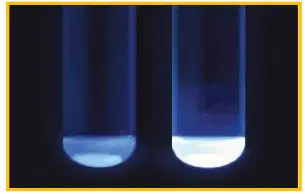
4-Methylumbelliferyl-β-d-Glucuronide (MUG) test: POSITIVE RESULT (Left)
a)
Blue fluorescence
b)
Clear
39.
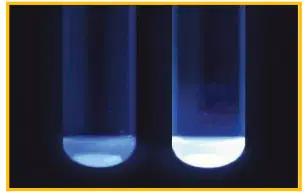
4-Methylumbelliferyl-β-d-Glucuronide (MUG) test: POSITIVE RESULT (Left) indicates into what organism?
a)
E. coli
b)
P. aeruginosa
40.
Purpose/Principle: Detects the production of hydrogen sulfide (H2S) gas
a)
SIM: Sulfide
b)
SIM: Indole test
c)
SIM: Motility test
41.
Purpose/Principle: Detects the presence of tryptophanase
a)
SIM: Sulfide
b)
SIM: Indole test
c)
SIM: Motility test
42.
Purpose/Principle: Determines whether an organism is motile or nonmotile. Flagellated organisms move away from the point of inoculation. Useful in the ID of NONE-MOTILE ENTERICS
a)
SIM: Sulfide
b)
SIM: Indole test
c)
SIM: Motility test
43.
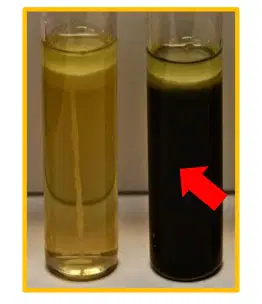
SIM: Sulfide: Right Tube
a)
Positive (black precipitate)
b)
Negative
44.
SIM: Sulfide: H2S PRODUCERS (SPACEd)
a)
Salmonella
b)
Proteus
c)
Arizona (now Salmonella enterica subsp. arizonae)
d)
Citrobacter
e)
Edwardsiella
45.
SIM/IMVIC: Indole test: REAGENT in PDAB
a)
p-dimethylaminobenzaldehyde (PDAB/DMAB)
b)
KOVAC's reagent
c)
Ehrlich's regent
d)
p-dimethylaminocinnamaldehyde
46.
SIM/IMVIC: Indole test: REAGENT in Rapid/Spot indole test
a)
p-dimethylaminobenzaldehyde (PDAB/DMAB)
b)
KOVAC's reagent
c)
Ehrlich's regent
d)
p-dimethylaminocinnamaldehyde
47.
SIM/IMVIC: Indole test: Medium
a)
Typtophan Broth
b)
Peptone Broth
48.
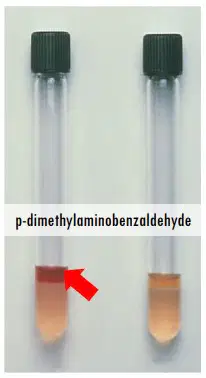
SIM/IMVIC: Indole test: p-dimethylaminobenzaldehyde (PDAB) FIRST TUBE result
a)
Positive (red ring)
b)
Negative (no color development)
49.

SIM/IMVIC: Indole test: p-dimethylaminocinnamaldehyde POSITIVE result
a)
blue color
b)
no color development
50.

IDENTIFY: May PEKPec PO?
a)
INDOLE POSITIVE
b)
METHYL RED POSITIVE
c)
VP POSITIVE
d)
CITRATE POSITIVE
51.
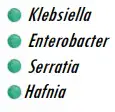
IDENTIFY: KESH
a)
INDOLE POSITIVE
b)
METHYL RED POSITIVE
c)
VP POSITIVE
d)
CITRATE POSITIVE
52.
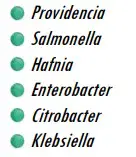
IDENTIFY: Pro - CHEKS
a)
INDOLE POSITIVE
b)
METHYL RED POSITIVE
c)
VP POSITIVE
d)
CITRATE POSITIVE
53.
SIM: Motility test: Reagent
a)
Triphenyl tetrazolium chloride (TTC)
b)
ONPG
54.
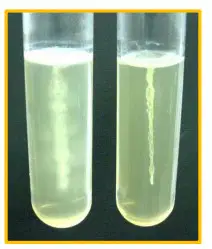
SIM: Motility test: FIRST TUBE - growth is outside the line of streak
a)
MOTILE
b)
NON-MOTILE
55.
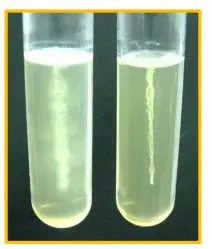
SIM: Motility test: SECOND TUBE - growth is at the line of streak
a)
MOTILE
b)
NON-MOTILE
56.
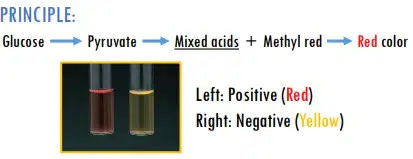
Principle/Purpose: Detects the presence of glucose metabolic by-products via the MIXED ACID (lactic, acetic, formic, & succinic) fermentation pathway
a)
Methyl Red test
b)
Voges-Proskauer test
c)
Citrate utilization test
57.
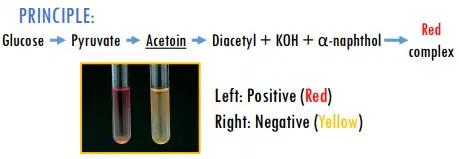
Principle/Purpose: Detects the presence of glucose metabolic by-products (ACETOIN or acetylmethylcarbinol) via the butylene glycol pathway
a)
Methyl Red test
b)
Voges-Proskauer test
c)
Citrate utilization test
58.
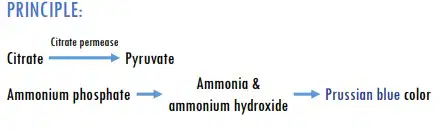
Principle/Purpose: Determines whether an organism can utilize citrate (citrate permease) as the sole carbon source and inorganic ammonium salts as the sole nitrogen source
a)
Methyl Red test
b)
Voges-Proskauer test
c)
Citrate utilization test
59.

Citrate utilization: LEFT TUBE (Prussian blue)
a)
Positive
b)
Negative
60.
Methyl Red test: Reagent
a)
Methyl red
b)
40% Potassium hydroxide (KOH)
c)
5% α-naphthol
61.
Voges-Proskauer test: Reagent
a)
Methyl red
b)
40% Potassium hydroxide (KOH)
c)
5% α-naphthol
62.
Methyl Red test: + Red Color pH
a)
<4.5
b)
>4.5
63.
Methyl Red: Media
a)
MRVP Broth
b)
Clark Lubb's Broth
c)
Peptone Glucose Broth
64.
Voges-Proskauer test: Media
a)
MRVP Broth
b)
Clark Lubb's Broth
c)
Peptone Glucose Broth
65.
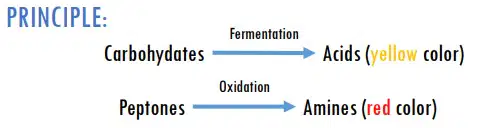
Used primarily to differentiate members of the Enterobacteriaceae family from other Gram negative rods
a)
Triple Sugar Iron (TSI)
b)
Lysine Iron Agar (LIA)
66.
Used to differentiate Gram negative bacilli based on the decarboxylation or deamination of lysine and H2S production
a)
Triple Sugar Iron (TSI)
b)
Lysine Iron Agar (LIA)
67.
Triple Sugar Iron (TSI): pH INDICATOR
a)
Phenol red
b)
Ferric ammonium citrate (Sodium thiosulfate as Sulfur source)
c)
Bromcresol purple
68.
Triple Sugar Iron (TSI): H2S INDICATOR
a)
Phenol red
b)
Ferric ammonium citrate (Sodium thiosulfate as Sulfur source)
c)
Bromcresol purple
69.
Triple Sugar Iron (TSI): CARBOHYDRATES
a)
Lactose (1%)
b)
Sucrose (1%)
c)
Glucose (0.1%)
70.
Lysine Iron Agar (LIA) : CARBOHYDRATES
a)
Lactose
b)
Sucrose
c)
Glucose
71.
Triple Sugar Iron (TSI): lactose and/or sucrose fermenter
a)
Slant
b)
Butt
72.
Triple Sugar Iron (TSI): glucose fermenter
a)
Slant
b)
Butt
73.
Triple Sugar Iron (TSI): cracks, bubbles, displacement
a)
Gas (+)
b)
H2S (+)
74.
Triple Sugar Iron (TSI): blackening of the medium
a)
Gas (+)
b)
H2S (+)
75.
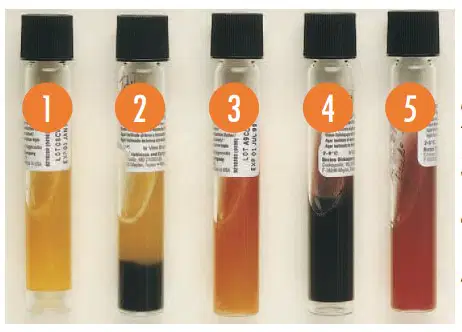
Triple Sugar Iron (TSI): INTERPRET TUBE 1
a)
A/A, gas (+)
b)
A/A, H2S (+)
c)
K/A
d)
K/A, gas & H2S (+)
e)
K/K
76.
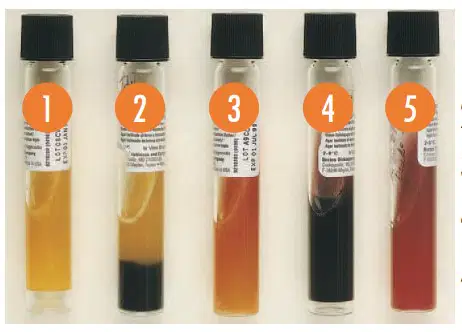
Triple Sugar Iron (TSI): INTERPRET TUBE 2
a)
A/A, gas (+)
b)
A/A, H2S (+)
c)
K/A
d)
K/A, gas & H2S (+)
e)
K/K
77.
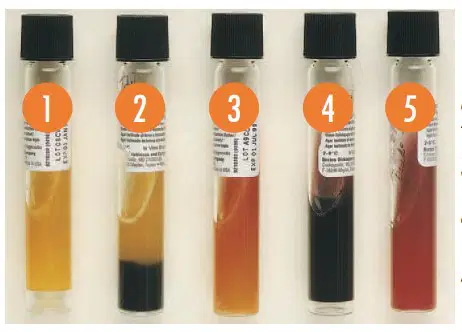
Triple Sugar Iron (TSI): INTERPRET TUBE 3
a)
A/A, gas (+)
b)
A/A, H2S (+)
c)
K/A
d)
K/A, gas & H2S (+)
e)
K/K
78.
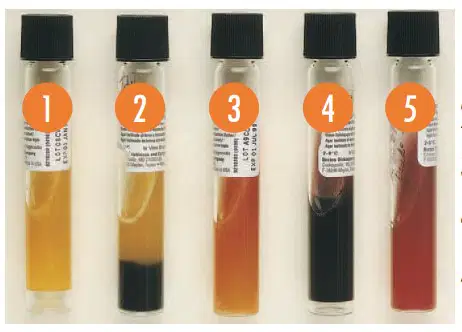
Triple Sugar Iron (TSI): INTERPRET TUBE 4
a)
A/A, gas (+)
b)
A/A, H2S (+)
c)
K/A
d)
K/A, gas & H2S (+)
e)
K/K
79.
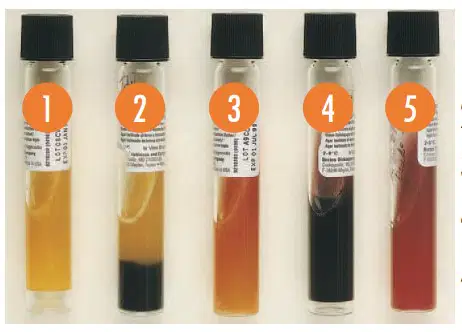
Triple Sugar Iron (TSI): INTERPRET TUBE 5
a)
A/A, gas (+)
b)
A/A, H2S (+)
c)
K/A
d)
K/A, gas & H2S (+)
e)
K/K
80.
Triple Sugar Iron (TSI): Escherichia coli, Klebsiella, Enterobacter (EKE)
a)
A/A or A/AG; H2S–
b)
A/A or A/AG; H2S+
c)
K/A or K/AG; H2S+
d)
K/A; H2S–
e)
K/K; H2S–
81.
Triple Sugar Iron (TSI): Citrobacter
a)
A/A or A/AG; H2S–
b)
A/A or A/AG; H2S+
c)
K/A or K/AG; H2S+
d)
K/A; H2S–
e)
K/K; H2S–
82.
Triple Sugar Iron (TSI): Salmonella, Proteus
a)
A/A or A/AG; H2S–
b)
A/A or A/AG; H2S+
c)
K/A or K/AG; H2S+
d)
K/A; H2S–
e)
K/K; H2S–
83.
Triple Sugar Iron (TSI): Shigella
a)
A/A or A/AG; H2S–
b)
A/A or A/AG; H2S+
c)
K/A or K/AG; H2S+
d)
K/A; H2S–
e)
K/K; H2S–
84.
Triple Sugar Iron (TSI): Pseudomonas aeruginosa; nonfermenters (not a member of Enterobacteriaceae
a)
A/A or A/AG; H2S–
b)
A/A or A/AG; H2S+
c)
K/A or K/AG; H2S+
d)
K/A; H2S–
e)
K/K; H2S–
85.
Lysine Iron Agar (LIA): pH INDICATOR
a)
Bromcresol purple
b)
Ferric ammonium citrate (Sodium thiosulfate as Sulfur source)
c)
Phenol red
86.
Lysine Iron Agar (LIA): H2S INDICATOR
a)
Bromcresol purple
b)
Ferric ammonium citrate ((Sodium thiosulfate as Sulfur source)
c)
Phenol red
87.
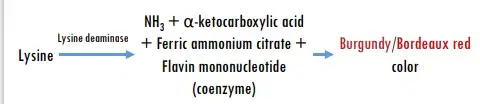
Lysine Iron Agar (LIA): IDENTIFY: Burgundy/Bordeaux red (R) +
a)
Lysine deamination (slant)
b)
Lysine decarboxylation (butt)
88.

Lysine Iron Agar (LIA): IDENTIFY: Purple (K) +
a)
Lysine deamination (slant)
b)
Lysine decarboxylation (butt)
89.
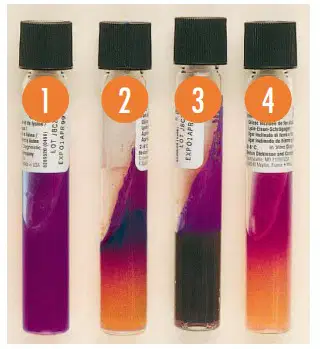
Lysine Iron Agar (LIA): IDENTIFY: TUBE 1
a)
K/K
b)
K/A, H2S (+)
c)
K/K, H2S (+)
d)
R/A
90.

Lysine Iron Agar (LIA): IDENTIFY: TUBE 2
a)
K/K
b)
K/A, H2S (+)
c)
K/K, H2S (+)
d)
R/A
91.

Lysine Iron Agar (LIA): IDENTIFY: TUBE 3
a)
K/K
b)
K/A, H2S (+)
c)
K/K, H2S (+)
d)
R/A
92.
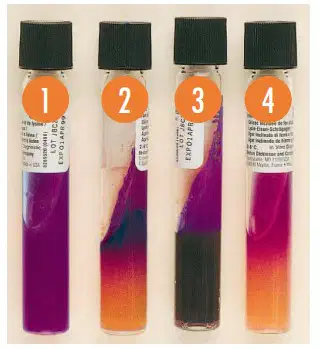
Lysine Iron Agar (LIA): IDENTIFY: TUBE 4
a)
K/K
b)
K/A, H2S (+)
c)
K/K, H2S (+)
d)
R/A
93.
Lysine Iron Agar (LIA): Salmonella
a)
K/K; H2S+
b)
K/A; H2S+
c)
K/A; H2S -
d)
R/A; H2S -
94.
Lysine Iron Agar (LIA): Citrobacter
a)
K/K; H2S+
b)
K/A; H2S+
c)
K/A; H2S -
d)
R/A; H2S -
95.
Lysine Iron Agar (LIA): Shigella
a)
K/K; H2S+
b)
K/A; H2S+
c)
K/A; H2S -
d)
R/A; H2S -
96.
Lysine Iron Agar (LIA): Proteus, Providencia, Morganella
a)
K/K; H2S+
b)
K/A; H2S+
c)
K/A; H2S -
d)
R/A; H2S -
97.
Lysine Iron Agar (LIA): Although Proteus produces H2S, LIA is not sensitive to its production
a)
True
b)
False
98.
Principle/Purpose: Used to differentiate Gram negative bacilli based on the decarboxylation of ornithine
a)
Ornithine decarboxylase test
b)
Arginine decarboxylase/dihydrolase test
99.
Principle/Purpose: Used to differentiate Gram negative bacilli based on the decarboxylation or hydrolysis of arginine
a)
Ornithine decarboxylase test
b)
Arginine decarboxylase/dihydrolase test
100.
Ornithine decarboxylase test - Arginine decarboxylase/dihydrolase test: pH INDICATOR
a)
Bromcresol purple
b)
Phenol Red
101.
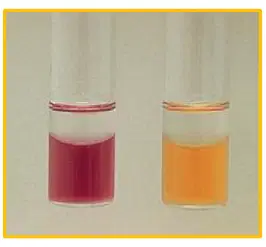
Ornithine decarboxylase test - Arginine decarboxylase/dihydrolase test: POSITIVE RESULT
a)
Purple
b)
Yellow
102.
Decarboxylase/Dihydrolase Test Results: LDC:+ / ODC:- / ADH:-
a)
Klebsiella pneumoniae
b)
Klebsiella oxytoca
c)
Plesiomonas shigelloides
103.
Decarboxylase/Dihydrolase Test Results: LDC:+ / ODC:+ / ADH: +
a)
Klebsiella pneumoniae
b)
Klebsiella oxytoca
c)
Plesiomonas shigelloides
104.
Decarboxylase/Dihydrolase Test Results: LDC:+ / ODC:+ / ADH: -
a)
Enterobacter aerogenes
b)
Enterobacter cloacae
c)
Pantoea agglomerans
105.
Decarboxylase/Dihydrolase Test Results: LDC: - / ODC:+ / ADH: +
a)
Enterobacter aerogenes
b)
Enterobacter cloacae
c)
Pantoea agglomerans
106.
Decarboxylase/Dihydrolase Test Results: LDC: - / ODC: - / ADH: -
a)
Enterobacter aerogenes
b)
Enterobacter cloacae
c)
Pantoea agglomerans
107.
Principle/Purpose: Used to differentiate Gram negative bacilli based on the deamination of phenylalanine
a)
Phenylalanine deaminase test
b)
Urease test
108.
Principle/Purpose: Detects the presence of urease
a)
Phenylalanine deaminase test
b)
Urease test
109.
Phenylalanine deaminase test Reagent
a)
10% Ferric chloride (FeCl3)
b)
Sodium Chloride
110.
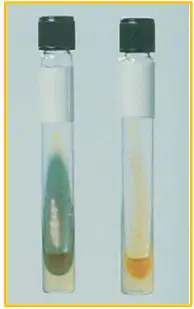
Phenylalanine deaminase test: POSTIVE RESULT COLOR
a)
Green
b)
Nothing change
111.
PHENYLALANINE DEAMINASE POSITIVE
a)
Proteus
b)
Providencia
c)
Morganella
112.
Urease test: pH INDICATOR
a)
Phenol red
b)
Bromcresol purple
113.
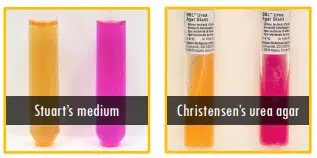
Urease test: Bright Pink/Magenta
a)
POSITIVE
b)
NEGATIVE
114.
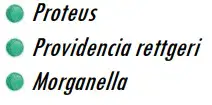
Urease test: IDENTIFY (PPM)
a)
RAPID UREASE PRODUCERS
b)
SLOW UREASE PRODUCERS
115.
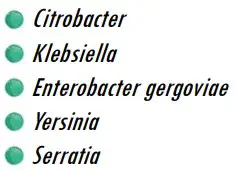
Urease test: IDENTIFY (CKEYS)
a)
RAPID UREASE PRODUCERS
b)
SLOW UREASE PRODUCERS
100 %

