
Font size
 Worksheets
Structure & History of Atom
Total questions: 55
Worksheet time: 41mins
The three subatomic particles are
proton, neutron, electron
proton, nucleus, electron
protein, neutron, electricity
proton, neutral, electives
99.9% of the atom's mass is found where?
nucleus
protons
electron cloud
neutrons
Electrons are
negative
positive
neutral
Protons are
negative
positive
neutral
Neutrons are
negative
positive
neutral
When an atom contains more electrons than protons, it is
a neutral atom with no charge
an ion and negatively charged
an ion and positively charged
an isotope and has more mass
When an atom contains more neutrons than another atom, it is
a neutral atom with no charge
an ion and negatively charged
an ion and positively charged
an isotope and has more mass
The nucleus is ____________ charged.
positively
negatively
neutral
The area around the nucleus of an atom where the atom's electrons are most likely to be found is called
electron cloud
quark
electron
nucleus
If a carbon atom has six protons and has a mass of 13 amu, how many neutrons are in that carbon atom?
5
6
7
8
If a neutral atom has 8 protons, how many electrons does it have?
7
8
9
10
A chemical symbol represents the _________ of an element.
name
structure
reaction
type
Atoms of the same element with different numbers of neutrons are called
metalloids
transition elements
radioactive
isotopes
A certain atom has 26 protons, 26 electrons, and 30 neutrons. What is its mass number?
26
30
52
56

What is 'E' pointing to?
electron cloud
electron
nucleus
proton
neutron

Electrons can best be described as having a
large size, positive charge.
very small size, positive charge.
large size, negative charge.
very small size, negative charge.

Electrons are subatomic particles that exist
inside the nucleus.
in simultaneous dimensions.
in parallel universes.
outside the nucleus.

Neutrons (discovered by James Chadwick in 1932) are neutral subatomic particles that are located
in and outside the nucleus.
in the nucleus.
just outside the nucleus.
in alternate universes.

Neutrons have almost exactly the same mass as
electrons.
positrons.
protons.
quarks.

James Dalton proved that the true nature of the atom could best be described as resembling "plum pudding."
True
False

Rutherford proved the existence of protons located in a very small nucleus by using a crude particle accelerator in 1911.
True
False

The atomic number (#) of an element is equal to the
weight of an electron.
# of neutrons in a single atom of that element.
weight of a neutron.
# of protons in a single atom of that element.

Atoms of different elements have
the same # of protons.
the same general properties.
a different # of protons.
the same # of electrons.

Because atoms are neutral, each positive charge is
the same as a neutral charge.
balanced by a negative charge.
the same as no charge.
balanced by a neutral charge.

Which statement best describes the mass number (#) of an atom?
the sum of electrons and neutrons in the nucleus
the sum of protons & neutrons in the nucleus
the difference in mass between protons & neutrons
the difference in mass between electrons and neutrons

Since atoms are balanced with equal #'s of positive & negative charges, the atomic # is also
the same as the # of electrons.
the # of neutrons in a single atom.
the same as the # of neutrons.
the # of electrons in a single atom.

If you know the atomic number (or # of protons) and mass number of an atom, you can find the
number of electrons by adding to the mass number.
number of neutrons by adding to the mass number.
number of neutrons by subtracting from the mass number.
total atomic weight of an atom.

If the atomic mass of an element is 32 and the atomic # is 16, then
the number of neutrons is also 16.
the element most likely has isotopes.
the number of electrons is also 16.
the number of protons is also 32.

Every neutral atom has the same number of protons and electrons, however
they may not have the same # of neutrons.
they cannot combine with other atoms.
they cannot form isotopes.
they may also have the same atomic mass.

Which statement best describes an isotope of an element?
they share an equal amount of neutrons
they have the same atomic #'s but with different mass #'s
they have the same mass #'s but with different atomic #'s
they have a different # (number) of protons

How many neutrons are in the isotope pictured above?
29
34
63
92

What is the number of protons in phosphorus-31?
15
16
31
46

Element Q has 56 protons and 18 neutrons.
Element R has 56 protons and 17 neutrons. These elements are:
different elements
isotopes
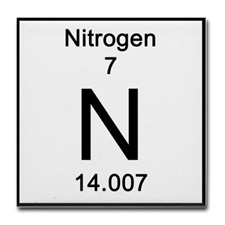

Mass minus Atomic Number Equals (M-A=?)
Neutrons
Protons
Nucleus
Atom
The electron is not included in the calculations for the atomic mass because
It has negative charge
It is located in the outer energy levels of the atom
It is nearly massless
It attracts neutral particles
AMU is the abbreviation for...
atoms mostly unseen
atomic mass unit
atomic minded universe
atom mixture unit

What is the number of protons (atomic number) for this element?
10
20
20.180
30

What is the number of protons (atomic number) for this element?
167
167.26
68
28
Which subatomic particle determines the identity of an element? (how we tell which element is which)
protons
neutrons
electrons

Whose model suggested that negative particles were mixed in with positively charged material - like seeds in a watermelon?
J.J. Thomson
Ernest Rutherford
Niels Bohr
Albert Einstein
Who discovered that the atom had an small, dense, positively charged center?
Ernest Rutherford
J.J Thomson
Robert Millikan
John Dalton
Place the following atomic models in order, from earliest to latest:
A) Rutherford B) Thomson C) Dalton
B, C, A
C, A, B
A, C, B
C, B, A
Who named the positive center of the atom the "nucleus?"
Democritus
Dalton
Thomson
Rutherford
Which scientists believed an atom was indivisible? (Choose all correct responses.)
Democritus
Dalton
Thomson
Rutherford
Which scientist believed that elements differed from one another because their atoms had different mass?
Democritus
Dalton
Thomson
Rutherford
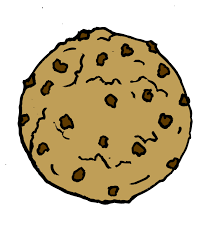
In the atomic model nicknamed the "plum pudding" model, what do the plums represent?
the nucleus
the atom
the electrons
the positive material
Which scientist proposed a new atomic model after discovering the electron in 1897?
Dalton
Thomson
Rutherford
Bohr
Who discovered that atoms are mostly empty space?
Dalton
Thomson
Rutherford
Bohr
In the model nicknamed "the solar system model" what are the electrons like?
the sun
the nucleus
the planets
the moon
Who proposed that electrons move around the nucleus in circular orbits?
Dalton
Thomson
Rutherford
Bohr

