
 Worksheets
Introduction
Total questions: 26
Worksheet time: 20mins
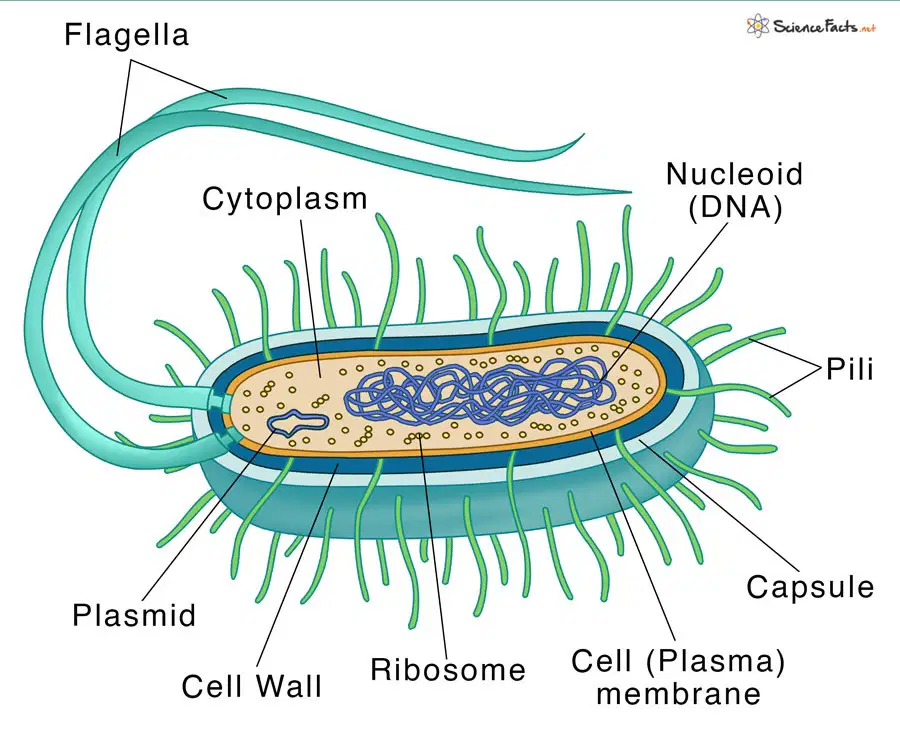
What type of cell is it?
Prokaryote
Eukaryote
Virus
A prokaryote has...
Organelles
Nucleous
Ribosomes
Cytoplasmic membrane
Nucleoid
No pathogenic _____ has been discovered so far.
archaea
bacteria
virus
fungi
protist
The cell walls of Archaea...
lack of peptidoglycan
is mostly composed of chitin
is 95% peptidoglycan
is mostly composed of cellulose
Every affirmation is true, except:
Microrganisms help maintain a balance between living organisms and the environment
Microorganisms can be used commercially
Microbes are absent from animals' and humans' intestines
Only a small portion is pathogenic
Why can many bacteria rapidly grow under the correct nutrient and environmental conditions?
They have more efficient enzymes than higher organisms
They are small and have a high surface area/volume ratio
They divide by binary fission
They have more efficient DNA transciption mechanisms
What is a photoautotroph?
An organism that gets its carbon from carbon dioxide
An organism that gets its carbon from carbon dioxide and its energy from light
An organism that gets its energy from light, its carbon from carbon dioxide and uses oxygen as electron acceptor
An organism that gets its energy from light
Microorganisms having the ability to adapt readily to the often rapid changes in O2 availability are...
Facultative aerobes
aerotolerant anaerobes
microaerophiles
all are correct
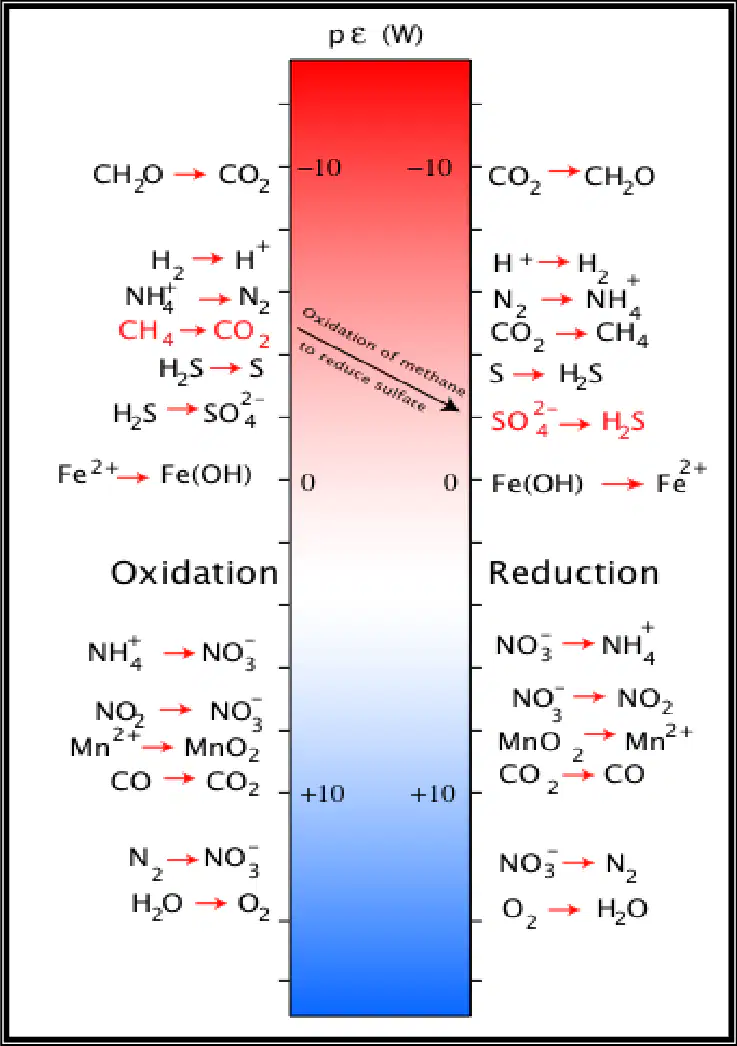
With which metabolism is a higher amount of energy in the form of ATP obtained?
Sulfate reduction
(H2+SO42-)
Methanogenesis
(H2+CO2)
Sulfur oxidation and nitrate reduction
(SH2+NO3-)
Iron oxidation and nitrate reduction
(Fe2+ + NO3-)
What process generates the most ATP?
Anaerobic cellular respiration
Fermentation
Aerobic cellular respiration
Photosynthesis
All living things get their energy from the sun (all primary producers in an ecosystem are photosynthetics)
True
False
Which of the following compounds from plant material is the most resistant to biodegradation?
Proteins
Celullose
Hemicelullose
Lignin
DNA
In a prokaryotic cell the electron transport chain happens...
in the cytoplasm
on the inner mitochondrial membrane
on the plasma membrane
in the mitochondrial matrix
In the electron transport chain, molecules in the membrane pass electrons in redox reactions and ______ are/is pumped across the membrane
oxygen
carbon dioxide
protons
water
Membranes are made up of two layers of what?
Proteins
Carbohydrates
Lipids
Phospholipids
What is the function of the cell membrane?
It controls what enters and leaves the cell
It protects the inner components of the cell
It essential to provide energy to the microorganisms
All answers are correct
The movement of a substance (solvent) against its concentration gradient (from low to high concentration) through a carrier protein is called...
Active transport
Osmosis
Facilitated diffusion
Selective permeability
Enzymes are an example of...
Lipids
Protein
Nucleic acid
Carbohydrate
What is denaturation?
the joining together of lots of denatured proteins molecules, which changes the appearance and texture of the food.
process modifying the molecular structure of a protein/DNA, involves the breaking of many of the weak linkages, or bonds (e.g., hydrogen bonds)
bonds that hold large protein molecules together in compact, folded bundles
What is the purpose of an enzyme?
give permission for the reaction
raise activation energy
control how many reactions occur
speed up reactions
Without the presence of enzymes, the reactions necessary to sustain life would require ___________________ to occur
higher concentration of subtrate
higher temperatures
higher pH
lower energy
The maintenance of an organism’s internal environment is called:
compensating
homeostasis
balancing
routine
What is the pressure increase per 10 metre depth increase in the ocean?
20 atmospheres
1 atmosphere
10 atmospheres
2 atmospheres
What is "bioremediation"?
Process where organic things are used to break down pollution
Process where you watch bacteria break things down
When you modify biological things
When you use biology to meditate
Water activity (aw)...
(mark the wrong answer)
...is the partial vapor pressure of water in a solution divided by the standard state partial vapor pressure of water
...is a measure of the available quantity of water
...is a measure of total water in an environment
... is an important consideration for food product design and food safety.
Which of the following is true about biofilms?
Typically composed of a single species of microorganism
Unlike the planktonic lifestyle, biofilms cannot offer protection for bacteria against environmental, chemical, and mechanical stresses.
Encased microcolonies of bacterial cells detached from a surface of polysaccharides
Aggregation of microorganisms marked by the excretion of a protective and adhesive matrix

