
 Worksheets
Revision Test 1
Total questions: 160
Worksheet time: 2hrs 50mins

What is a cell?
A prison
The basic unit of structure in all living things
A part of a cell
Something incledibly tiny

What are these called?
Organs
Shapes
Organelles
Pieces of a cell

What is this?
Cell Wall
Cell Membrane
Cytoplasm
Mitochondria

What is this?
Cell Wall
Cell Membrane
Choloroplast
Nucleus

What is this?
Nucleus
Chromosome
Vacuole
Cytoplasm

What is this?
Vacuole
Mitochondria
Chloroplast
Nucleus

What is this?
Vacuole
Nucleus
Mitochondria
Chromosome

What is this?
Cytoplasm
Mitochondria
Chloroplast
Chromosome

What is this?
Vacuole
Chromosome
Mitochondria
Chloroplast

What is the function of the Cell Membrane?
Keeps the cell healthy
Is the shape of the cell
Holds a cell together and seperates it from its surroundings
Doesn't have a funtion

What is the function of the Cell Wall?
Supports and protects a plant cell
Has no function
Makes the cell weak
Is the shape of the cell

What is the function of the Cytoplasm?
Makes the cell soft and fluid
Is a jellylike substance that help the cell stay healthy
Has no function
Keeps the cell intact

What is the function of the Nucleus?
Has no functionj
Moves the cell
Directs a cells activity
Keeps the cell in one place

What is the function of the Vacuole?
Stores food, water, or wastes
Makes energy for the cell
Has no funtion
Supports and protects the cell

What is the function of the Chloroplast?
Has no function
Makes water for the cell
Makes food for the cell
Stores waste

What is the function of the Mitochondria?
Releases energy from nutrients
Has no function
Supports and protects the cell
Directs a cells activity
Surrounds the plant cell and maintains the cell shape and structure.
Cell wall
Cell membrane
Nucleus
Ribosome
Makes food for the plant cell.
Ribosome
nucleus
chloroplast
cytoplasm
The "garbage can" of the cell; digestion and waste removal.
cell wall
cell membrane
lysosome
nucleus
Controls what goes in and out of the cell.
cell membrane
cell wall
organelle
cell
Houses gel-like fluids that support cell organelles and holds them in place.
cytoplasm
endoplasmic reticulum (e.r.)
golgi bodies
nucleus
The control center for the cell.
ribosome
cytoplasm
nucleus
cell membrane
Place where materials are processed and moved around inside the cell.
endoplasmic reticulum (e.r.)
mitochondria
cytoplasm
chloroplast
Makes protein for the cell.
ribosome
mitochondria
endoplasmic reticulum
cell membrane
Storage space for water, wastes, food, and other cellular material
mitochondria
cell membrane
cell wall
vacuoles
The "powerhouse" of the cell; breaks down food to make energy for the cell.
organelles
cell
mitochondria
cytoplasm
Packages and transmits cellular materials throughout the cell.
golgi bodies
plant cell
endoplasmic reticulum
organelles
The basic unit of structure and function in living things.
cell
cell wall
plant cell
cell membrane
What is something that prevents heat, electricity, sound, light...to pass through it?
insulator
conduction
heat transfer
conductor
What is something that readily conducts heat, electricity, sound...
insulator
conduction
thermal equilibrium
conductor
the transfer of heat in a fluid (gas or liquid) by means of up & down movements called convection currents
conduction
convection
radiation
the transfer of heat through a vacuum (empty space)
conduction
convection
radiation
the transfer of heat through a medium (material) by direct contact of molecules
conduction
convection
radiation
What is the total energy of particles in a substance; more particles=more energy?
conductor
radiator
thermal energy
heat transfer
How does heat move?
from cold to hot
from hot to cold
What is the concept in which two objects in contact with each other transfer heat until they are equal?
thermal equilibrium
thermal energy
thermal equality
thermal heat
What is a measure of the average kinetic energy of the individual particles in an object?
heat
volume
kineticism
temperature
What is energy caused by the internal movement of molecules; measured in joules?
conduction
heat
radiation
insulator
Sunbathing is an example of...
conduction
convection
radiation
Burning your feet on the hot sand is an example of...
conduction
convection
radiation
Feeling the warm breeze from the ocean is an example of...
conduction
convection
radiation
Cooking pizza in the microwave is an example of...
conduction
convection
radiation
Steam rising from hot soup is an example of...
conduction
convection
radiation
Cooking pancakes on a griddle is an example of...
conduction
convection
radiation
Light travels
around corners
in a straight line
in the air
in water

If light hits something transparent , it will...
make a shadow
pass through
stop
When the sun gets higher in the sky, shadows get ______.
longer
gone
shorter
darker
Which is NOT a source of light?
firefly
ball
sun
torch

1. What is the only form of energy we can see?
prism
light
mirror
Which of the following is a man made source of light?
A book
A car
A torch
A poster
Which of the following objects reflect light?


What does dark mean?
The night
Absence of light
Too much light
The Moon
Butter (tracing) paper is _____________ which will let some light pass through it.
Translucent
Transparent
Opaque
Light
______________ light can be separated into a rainbow of colors.
White
Ultraviolet
Polarized
Fluorescent
Jagriti is drinking a glass of appy. She looks through the glass and the objects behind it look fuzzy. This is because the appy is .
opaque
translucent
transparent
Madhav is pushing the door closed. He cannot see through the door because it is-
opaque
translucent
transparent
If we observe closely, we will find that the Moon changes in its appearance everyday, this is due to
the Sun light that falls on the Moon
the Sun's Shadow that falls on the Moon
The Earth's shadow that falls on the Moon
The Moon's own light
When the Moon comes between the Sun and The Earth, it blocks the light from the Sun and causes
Lunar Eclipse
Solar Eclipse
In a Lunar eclipse the shadow of _________________________ is formed on the Moon
Earth
Sun
Mercury
Venus
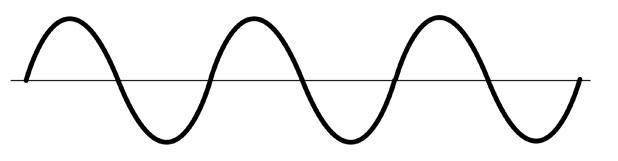


What is a medium?
Solid
Liquid
Gas
All of the above
Sound waves can travel through a vacuum.
True
False
A place where no sound exists is
in the air
space
under water
all of the above
Which sentence BEST describes how sound moves?
Sound can move through solids, liquids, or gases.
Sounds can move through solids and liquids, but not gases.
Sound can move through an empty space and through matter.
Sound can move through liquids and gases, but not through solids.


In which medium sound can't travel?
solid
liquid
gas
vacuum
What is an echo
deflected sound
refracted sound
reflected sound
diffracted sound
What is the range of frequencies audible to the human ear
lower than 20 Hz
20 Hz - 20.000 Hz
higher than 20.000 Hz
0 Hz - infinite Hz
What is ultrasound?
Sound with a frequency higher than 20.000 Hz
Sound with a frequency lower than 20 Hz
Sound with a frequency 20 Hz
sound with a frequency 20.000 Hz

The temperature of the Earth depends on...
Altitude, latitude and distance from sea.
Altitude, lithosphere and distance from mountains.

What is latitude?
The location of a point to east or west from the Equator.
The location of a point to north or south from the Equator.
The location of a point to north or south from the Prime Meridian.
The location of a point to east or west from the Prime Meridian.

As we move from the Equator, the temperature is..
Warmer
Colder
Temperate
All are correct

Sun's rays hit the Earth at a direct angle in...
The Tropic of Cancer
The Tropic of Capricorn
Equator
Artic circle

The hot zones are located between...
The artics
The tropics
The latitudes
My legs

The Temperate zones are located between...
The tropics and the Equator
The Equator and the tropics
The tropics and the artics
The artics and the Equator

The Cold zone is located in...
The Equator and the tropics.
The tropics and the artics.
The artic and antartic circles.
The distance from sea

The air closer to the surface is...
Warmer
Colder
Depends on your clothes
Depens on the seasons

Temperature drops the higher we are.
True
False

We find rain forest in the temperate climate.
True
False

You can find deserts in all the Earth´s climates.
True
False

You can find taiga forest in the hot climate.
True
False

Savanna is the type of vegetation you can find in...
Hot climates
Cold climates
Temperate climates
Africa

Seas and oceans regulate the temperature.
True
False
Only seas
Only oceans
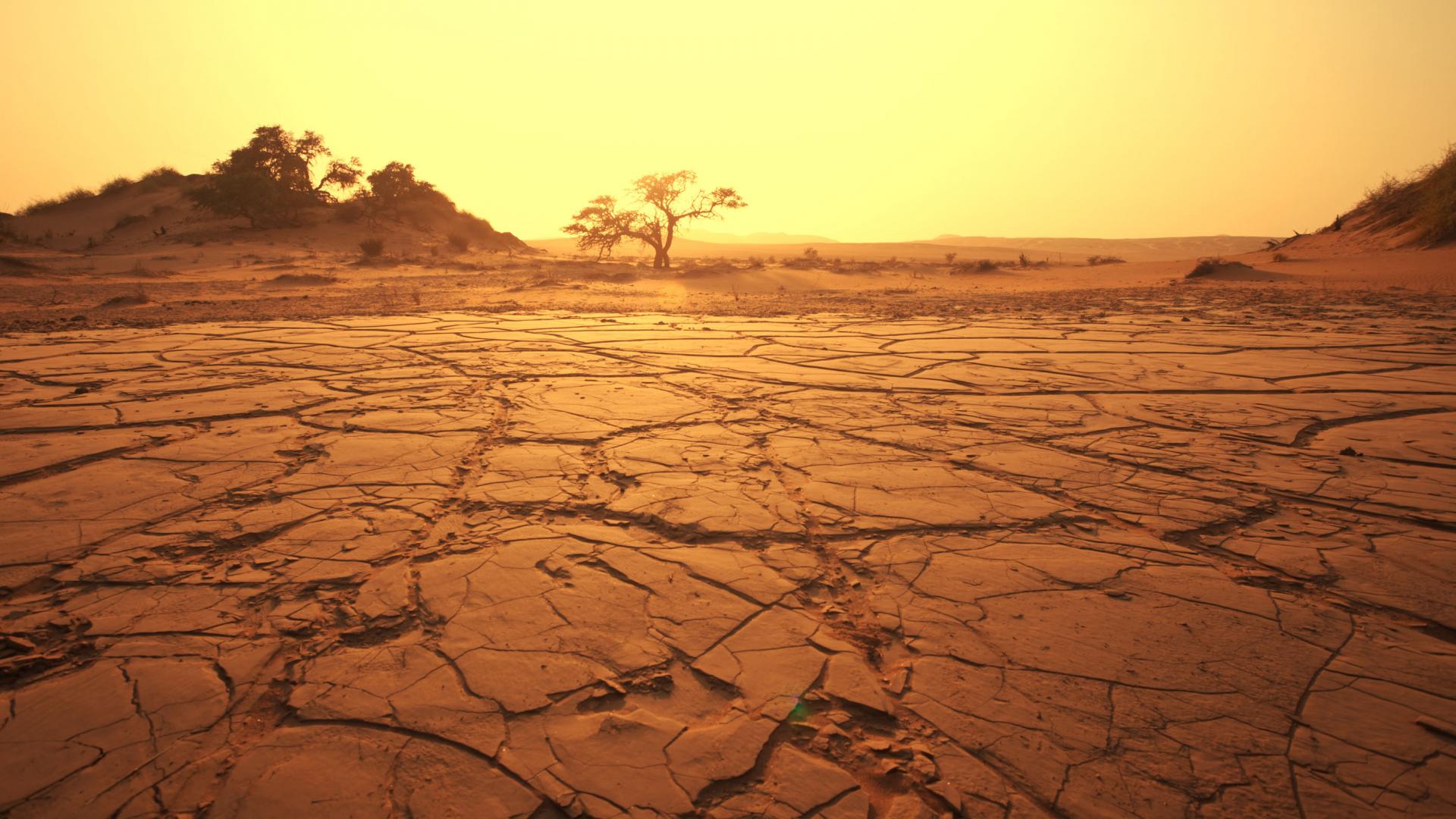
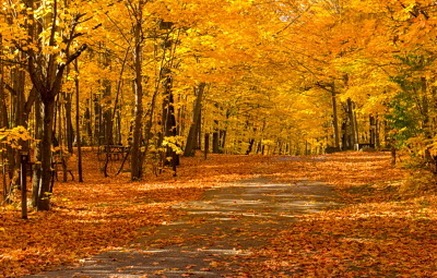
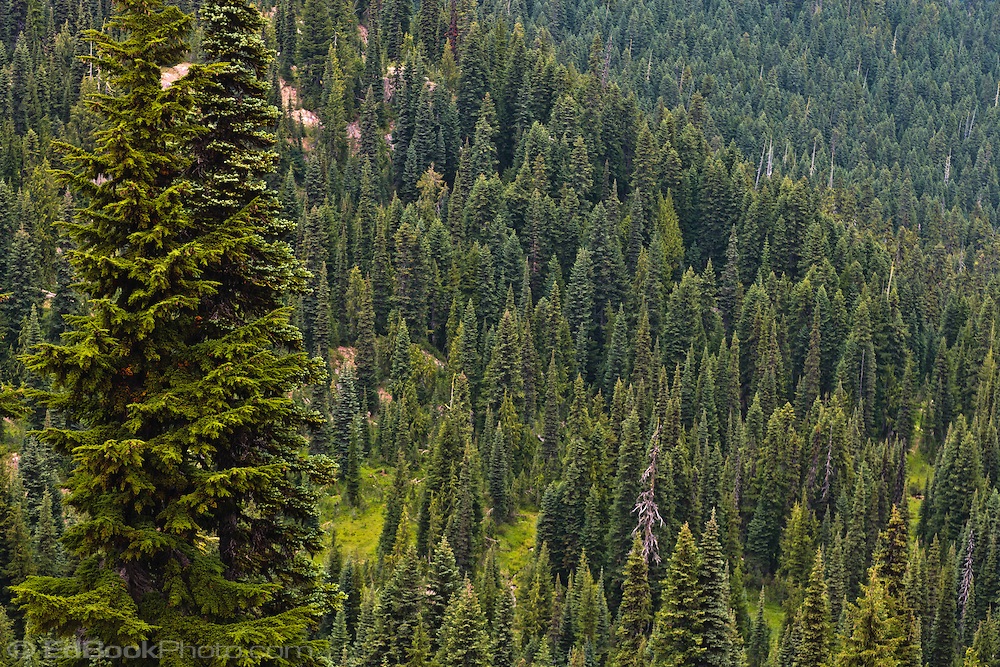




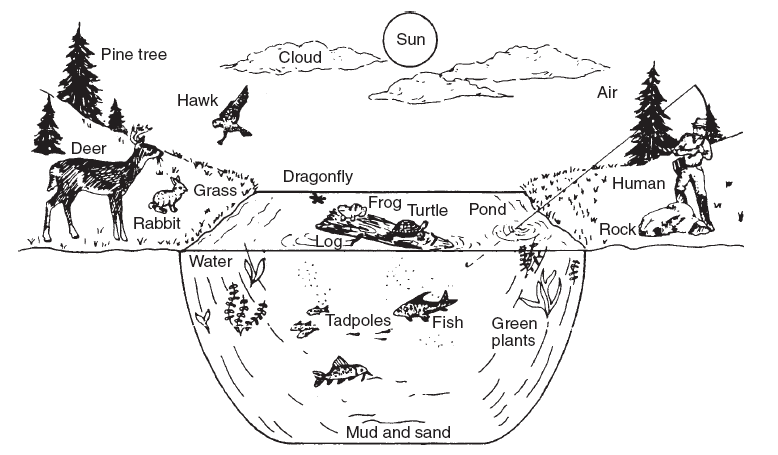
What is the primary source of energy for the ecosystem pictured above?
Grass and Green plants
Hawks and Deer
Tadpoles and Fish
Sun
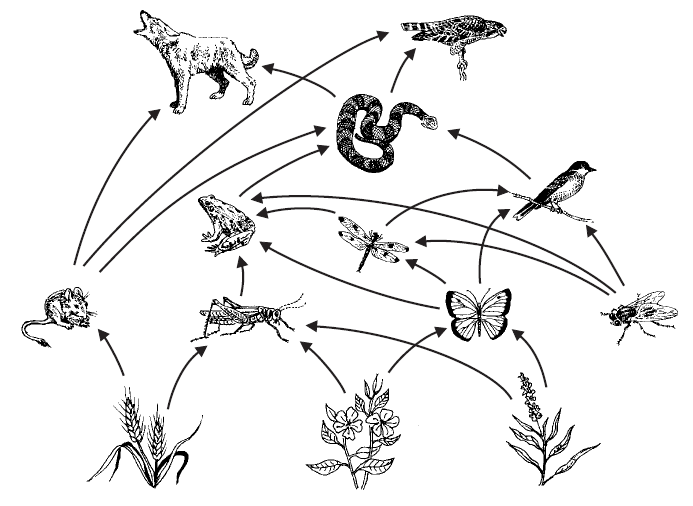
In this food web, which of the following organisms eats the largest variety of different producers?
Mouse
Grasshopper
Dragonfly
Butterfly

How much energy is available to be passed on to the next level in a food web?
100%
10%
50%
75%

1. What is weathering?
The movement of sediment
The breaking of sediment
The dropping of sediment
Q1. What is a major cause of soil erosion?
Running Water
Overgrazing
Agricultural Activities
Q7. What is soil erosion?
A naturally occurring process that affects all land forms
Type of soil
A time period
The wearing away of top soil
What is deposition?
The movement of sediment
The breaking of sediment
The dropping of sediment
Small pieces of rock that have been weathered from a larger rock are known as...
sand
sediment
soil
What is soil?
It is the loose material in which plants can grow in the upper layer of Earth.
It is the leaf that grows on the plant.
It is the food that can be found inside the seed.
True or False: Soil takes very little time to form.
True
False
Humus is:
the part of soil made up of decayed parts of once-living things.
a dip that is made of garbanzo beans.
a bone that can be found in the upper arm.
a sound people make when their lips are together.
What kind of soil is good for growing plants?
topsoil
sand
clay
a child's stinky shoe
Wind blowing sand from one location to another is called
deposition
soil erosion
weathering
What are the common factors of soil erosion?
wind and water movements
plate tectonics
earthquakes
What is taken away during erosion?
soil
water
trees
How does wind weather a rock?
The wind slowly drills a hole in the side of a rock.
The wind smashes big rocks against each other.
The wind shakes the big rock and makes it weak.
The wind blows tiny pieces of rock against a big piece of rock. The tiny pieces slowly break the big piece.
What can help protect against wind erosion?
Rocks
Sand
Plants
People

The very top layer of soil is mostly made of
Solid rock
Clay and mineral deposits
A mixture of minerals and organic material
Mostly organic material (humus)

Which layer of soil is on the bottom?
topsoil
subsoil
bedrock
bottomsoil

What is the layer of soil just below the topsoil?
soil
subsoil
topsoil
terrace farming

What happens to soil if no plants are in them and it rains?
soil erosion
soil absorbs the water
soil becomes mud
soil becomes sand

