
 Worksheets
Chemistry Identifying Reaction Types
Total questions: 50
Worksheet time: 49mins

Identify the type of chemical reaction
Synthesis
Decomposition
Single replacement
Double replacement
Combustion

Identify the type of chemical reaction
Synthesis
Decomposition
Single replacement
Double replacement
Combustion

Identify the type of chemical reaction
Synthesis
Decomposition
Single replacement
Double replacement
Combustion

Identify the type of chemical reaction
Synthesis
Decomposition
Single replacement
Double replacement
Combustion

Identify the type of chemical reaction
Synthesis
Decomposition
Single replacement
Double replacement
Combustion
Identify the type of chemical reaction
Synthesis
Decomposition
Single replacement
Double replacement
Combustion
Identify the type of chemical reaction
Synthesis
Decomposition
Single replacement
Double replacement
Combustion
Identify the type of chemical reaction
Synthesis
Decomposition
Single replacement
Double replacement
Combustion
Identify the type of chemical reaction
Synthesis
Decomposition
Single replacement
Double replacement
Combustion

Identify the type of chemical reaction
Synthesis
Decomposition
Single replacement
Double replacement
Combustion
Identify the type of chemical reaction
Synthesis
Decomposition
Single replacement
Double replacement
Combustion

Identify the type of chemical reaction
Synthesis
Decomposition
Single replacement
Double replacement
Combustion

Identify the type of chemical reaction
Synthesis
Decomposition
Single replacement
Double replacement
Combustion
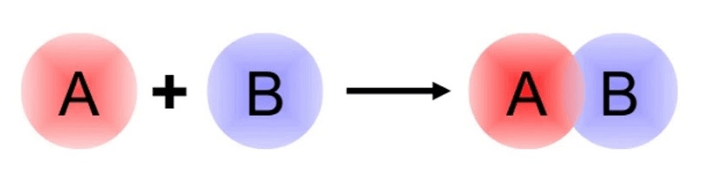
What is the type of reaction shown above?
Synthesis
Decomposition
Single Replacement
Double Replacement
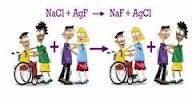
Identify the reaction type for the following equation:
K + F2 --> KF
Double replacement
Single Replacement
Synthesis
Decomposition
Identify the type of reaction:
ZnCl2 + Mg --> Zn + MgCl2
Precipitate
Single Replacement
Double Replacement
Decomposition
Identify the reaction type:
NaCl + KOH --> KCl + NaOH
Double replacement
Combustion
Synthesis
Decomposition
Identify the reaction type:
H2O2 --> H2O + O2
Decomposition
Synthesis
Combustion
Acid Base
Pb(NO3)2 --> PbO + NO2 + O2
Synthesis
Decomposition
Single replacement
Combustion
Double replacement
Cu + 2Ag(NO3) → 2Ag + Cu(NO3)
Synthesis Reaction
Decomposition Reaction
Single Replacement Reaction
Double Replacement Reaction
P4 + 3 O2 ----> 2 P2O3
Synthesis
Decomposition
Single replacement
Double replacement
Combustion
Cl2 + 2 SnI4 → I2 + SnCl4
Single Replacement
Decomposition
Double Replacement
Synthesis
Combustion
What is the general reaction scheme for a single replacement reaction?
A + B --> AB
AB --> A + B
A + CD --> C + AD
AB + CD --> CB + AD
What is the general reaction scheme for a combination reaction?
A + B --> AB
AB --> A + B
A + CD --> C + AD
AB + CD --> CB + AD
What is the general reaction scheme for a double replacement reaction?
A + B --> AB
AB --> A + B
A + CD --> C + AD
AB + CD --> CB + AD
What is the general reaction scheme for a decomposition reaction?
A + B --> AB
AB --> A + B
A + CD --> C + AD
AB + CD --> CB + AD
Which of the following is the general formula for a synthesis reaction?
A + B → AB
AB → A + B
AB + C → AC + B
AB + CD → AC + BD
Which of the following is the general formula for a single replacement reaction?
A + B → AB
AB → A + B
AB + C → AC + B
AB + CD → AC + BD
Which of the following is the general formula for a double replacement reaction?
A + B → AB
AB → A + B
AB + C → AC + B
AB + CD → AC + BD
Which of the following reactions is a synthesis reaction?
N2 + 3 F2 -> 2 NF3
2 NaHCO3 -> Na2CO3 + CO2 + H2O
Cu + 2 AgNO3 -> Cu(NO3)2 + 2 Ag
FeCl3 + 3 NaOH -> 3 NaCl + Fe(OH)3
Which of the following reactions is a decomposition reaction?
N2 + 3 F2 -> 2 NF3
2 NaHCO3 -> Na2CO3 + CO2 + H2O
Cu + 2 AgNO3 -> Cu(NO3)2 + 2 Ag
FeCl3 + 3 NaOH -> 3 NaCl + Fe(OH)3
Which of the following reactions is a single replacement reaction?
N2 + 3 F2 -> 2 NF3
2 NaHCO3 -> Na2CO3 + CO2 + H2O
Cu + 2 AgNO3 -> Cu(NO3)2 + 2 Ag
FeCl3 + 3 NaOH -> 3 NaCl + Fe(OH)3
Which of the following reactions is a double replacement reaction?
N2 + 3 F2 -> 2 NF3
2 NaHCO3 -> Na2CO3 + CO2 + H2O
Cu + 2 AgNO3 -> Cu(NO3)2 + 2 Ag
FeCl3 + 3 NaOH -> 3 NaCl + Fe(OH)3
H2, F2, O2, I2, Cl2, Br2, N2 are all
polyatomic ions
diatomic molecules
noble gases
transition metals
indicates substance is a liquid
g
s
aq
l
The symbol for a substance dissolved in water (in solution) is
(s)
(l)
(g)
(aq)
H2 + O --> H2O
indicates substance is a gas
g
s
aq
l
indicates substance is a solid
g
s
aq
l
Identify the type of reaction:
2 H2 + O2 --> 2 H2O
Single Replacement
Decomposition
Double Replacement
Synthesis
Which of the following is the general formula for a combustion reaction?
AB + C → AC + B
AB → A + B
A + B → AB
Hydrocarbon + O2 → CO2 + H2O
Identify the type of chemical reaction:
CaCO3 --> CaO + CO2
Synthesis
Decomposition
Single Replacement
Double Replacement

