
 Worksheets
EOC review
Total questions: 114
Worksheet time: 2hrs 13mins
Earthquakes - Some countries, such as Japan, or parts of a country, like California in the United States, have a lot of earthquakes. In these places it is a good practice to build houses and other buildings so they will not collapse when there is an earthquake. This is called seismic design or "earthquake-proofing".
What words signal the author's organizational pattern?
Which type of text structure is the following book probably written in?
The History of the Cell Phone
Cause and effect
Compare and contrast
Chronological order
Description
Problem and solution
Date Match by Scott Waterlog:
Diego looked over the edge. He thought about how far the ground was. The wind gusted. Whitney turned to him and said, "It's beautiful up here, huh?" Diego could not think about beauty. All he could think about was not falling off the edge. He said, "Yeah, Whitney, it really is beautiful. Hey, how long do you want to stay up here?" Whitney laughed and said, "Let's stay up here the rest of our lives!" Diego grimaced. He was afraid that this scenario was all too likely.
first person
second person
third person objective
third person limited
third person omniscient
Lone Wolves and Other Frontier Tales by S. Goodson:
Red looked across the prairie. He didn't see anything concerning. He wondered why Texas Joe had hollered like that. Texas Joe turned to him. The ghost that Texas Joe had just seen was gone. Texas Joe swatted at the air. Now he felt crazy. "You have to believe me, Red. It was just here," said Texas Joe. Red scowled at him in disbelief. "What was just here, Joe?" he asked. Red was angry with Texas Joe for disturbing his sleep for no apparent reason
first person
second person
third person objective
third person limited
third person omniscient
Without a Net: Life of a Circus Performer by Brett Reyes: The trapeze artist stood high on the platform. The whole crowd was silent. The trapeze artist rubbed his hands on his knees, grabbed the flying trapeze, and sprung into the air. Just as the trapeze had swung its full length, the trapeze artist released his grip and did a triple flip. He narrowly caught a second trapeze bar and swung from it by his legs. The crowd cheered. Another trapeze artist ascended the platform.
first person
second person
third person objective
third person limited
third person omniscient
Tumbleweed by Scotty Prost:
Butch dug his spurs into his horse and she kicked up dust. "Giddy up!" he said. I was riding right behind him, but I was a much less capable rider. "Butch, could you wait up for me?" I asked. He didn't. I kicked my horse and tried to get her to move faster. She whinnied and bucked me off her. As I landed with my posterior in a mud puddle, Butch laughed. Then he kept riding. "Butch!" I shouted, "Wait up!" He didn't.
first person
second person
third person objective
third person limited
third person omniscient
Do you like going on international trips for free? Do you get along with a lot of people from your graduating class? If you answered "yes" to these questions, you may want to be a class representative for Fun Class Trips Inc. Here's how it works: you get 10 or more of your classmates to purchase class trips through the program and you get a free trip. Go to the website and sign up today. Remember, life's a beach!
first person
second person
third person

This advertisement is using what technique to persuade a viewer?
Pathos
Logos
Ethos

This advertisement is an example of:
Pathos
Logos
Ethos
This term refers to an argument that appeals to one's emotions.
Pathos
Ethos
Logos
This technique tries to convince an audience of the author's credibility or character.
Pathos
Logos
Ethos
This term refers to an argument that appeals to logic or reason.
Pathos
Ethos
Logos
What type of statement is this?
One glass of Mr Juicy orange juice contains 75% of your daily Vitamin C needs.
Pathos
Logos
Ethos
This cold, Winter's night, where will Queensland's homeless be sleeping?
This statement is an example of:
Pathos
Logos
Ethos
If facts, evidence and statistics are used to influence a reader or viewer, this is an example of:
Pathos
Ethos
Logos

This advertisement attacks another company's product. It demonstrates:
Logos
Ethos
Pathos

Two techniques used in this ad are:
Ethos and Pathos
Logos and Pathos
Ethos and Logos

Which answer best describes the tone of this picture?
Humourous
Cynical
Humourous and mocking
Cynical and mocking

What is the mood of the writer behind this headline?
Annoyed
Frustrated
Optimistic
Angry

Which word from this headline suggests the author is trying to persuade us of something?
This
must
election
climate crisis
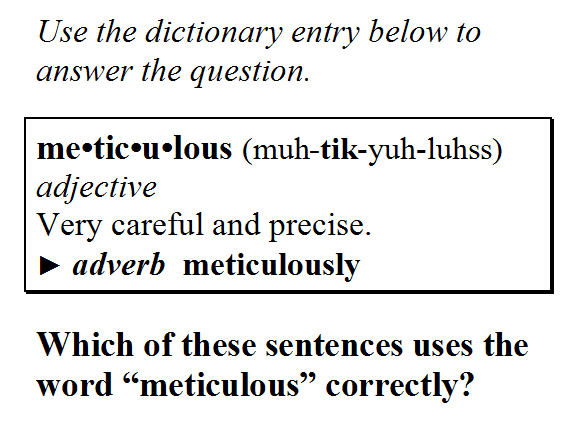
I felt a little apprehensive the first time I traveled alone.
The construction truck parked on the freeway often obstructs traffic during rush hour.
On a hill an old man stood, there was a great deal of moss. He began to tear it from the ground and roll it into a great ball. When he had gathered all he needed, he shouldered the load and started for the shore of the lake, staggering under the weight of the great burden. Finally, the townsfolk saw him coming with his load of moss and began to swim away from the shore.
v. 1. To push with or as if with the shoulder, especially roughly
2. To take upon, support, or carry on as if on the shoulder or shoulders
3. To assume a responsibility
4. The command to should arms
What are the fears and insecurities that a protagonist has to overcome in order to get what they want called?
internal conflict
external conflict
plot
antagonist
What is the set up of the story that tells a little bit about the character, the setting, and conflict?
introduction
inciting incident
exposition
plot
What are the events or actions that happen throughout a story called?
climax
conflict
plot
resolution
Life is one long, adventurous roller coaster.
She is so smart. She is a walking dictionary.
The ice crunched under my feet.
What can you infer about this character through indirect characterization? Whenever anyone tries to speak to Diana, she says, "You don't know me," rolls her eyes, and walks away.
Dee has a difficult home life.
Dee is rude and thinks she is better than everyone else.
Dee has eye problems.
Dee has a lot of friends.
Read the following passage and decide if it is a better example of direct or indirect characterization.
Because Joe is an honest guy, he decided to return the chocolate bar he did not pay for.
Direct
Indirect
Read the passage and determine if it is direct characterization or indirect characterization: "After rolling up his sleeve, the sailor revealed several tattoos on his arm."
Direct characterization
Indirect characterization
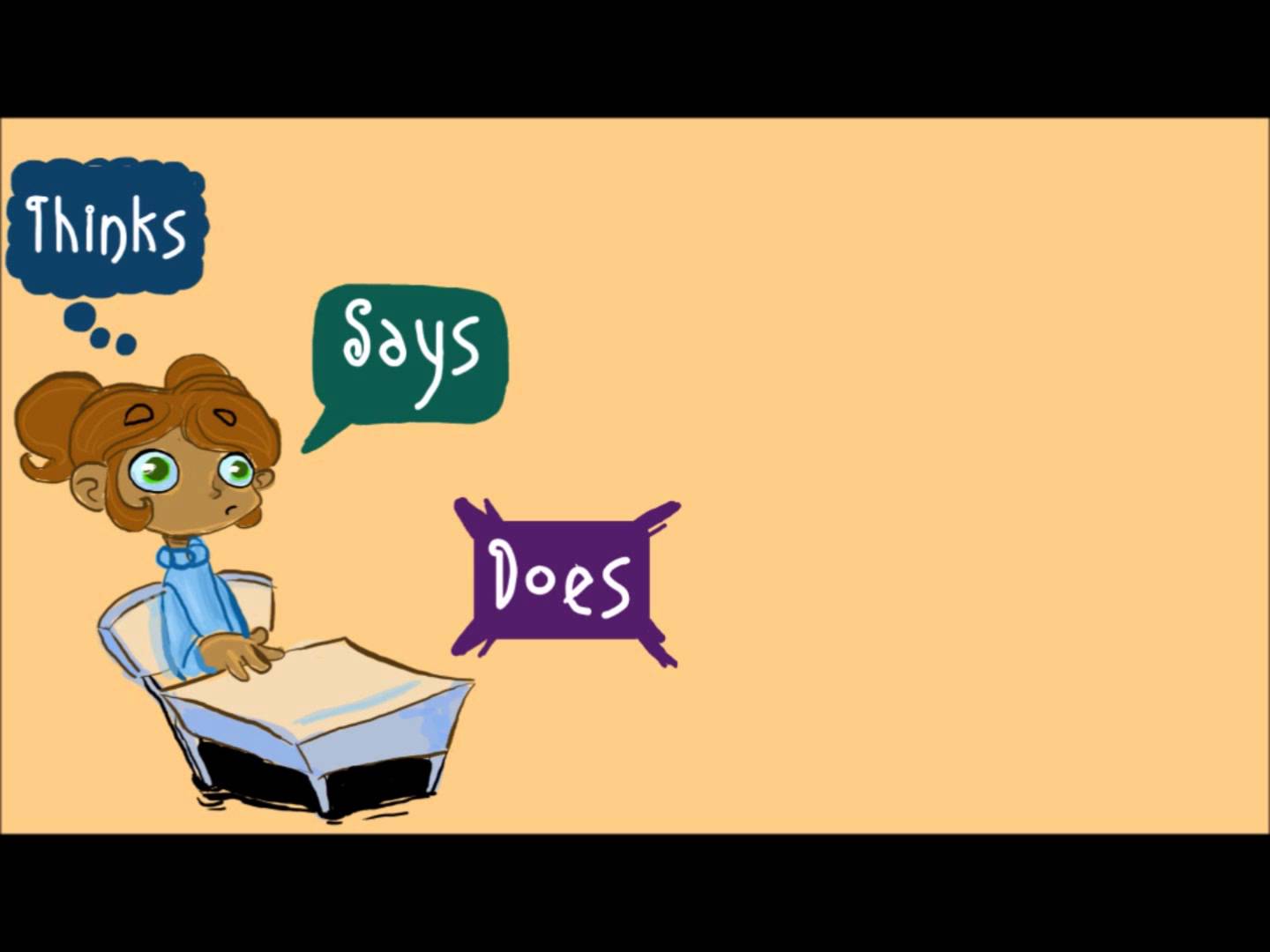
"I regretted it the instant the words passed my lips."
-Ungifted by Gordon Korman
"My heart, which has been pounding like a conga drum, is about to burst through my chest and run itself home."
-Countdown by Deborah Wiles
True or false: a satire uses humor to critique something that is wrong with society
True
False

Which of the following is NOT an example of irony?
A tall man is nicknamed “Shorty.”
A best-selling author tells boring stories at dinner parties.
The school valedictorian ends up homeless.
A left-handed person is nicknamed “Lefty.”
Jimmy “the Lock” was a master safe cracker. He could bust open any safe in the world in under an hour using a crow bar, stethoscope, drill, and sledgehammer. No lock could hold Jimmy, and that's why they called him "the Lock." Jimmy was scheduled to do a six-year stretch in Statesville for a bank job that got messy in suburbs, but he picked the lock to his cell and escaped. Now Jimmy was set up to get
the score of his life. He had the blueprints all laid out to do a job on an armored car diamond delivery. Gathering up all of his tools and gear, Jimmy headed out the door to meet his contact, Bobby the Rat. But when he got to his car, he couldn't find his keys. He patted down his pockets before he realized that he must have left them on his dresser. Jimmy went back to get his keys, but the door wouldn't open. Jimmy “the Lock” had locked himself out of his house and missed his opportunity to catch the
armored car.
satire
sarcasm
situational irony
understatement
causing great misfortune
calamitous
belated
overbearing
pert
late, tardy
appease
conventional
belated
judicious
in line with accepted ideas or standards; trite
conventional
cite
gallantry
judicious
to lure into a trap; a person or thing used to lure into a trap
decoy
mediate
impart
calamitous
to dig; to search deeply and thoroughly into
gallantry
delve
milieu
outlandish
to follow in order, come immediately after, and as a result
delve
conventional
appease
ensue
using or showing good judgment, wise, sensible
mediate
milieu
outlandish
judicious
strange, freakish, weird, foreign-looking; out-of-the-way, geographically remote; exceeding reasonable limits
mediate
judicious
outlandish
decoy
high-spirited; lively; bold, saucy; jaunty
appease
pert
cite
ensue
In the question, "Which paragraph best develops the central idea?", the word "best" tells me that...
one of the paragraphs in the passage is the author's favorite passage, which is why it's the best.
I have to find the best central idea in the passage.
more than one answer could be correct, but I have to find the answers that is the most correct.
In the question, "Which paragraph best develops the central idea?", I am being asked...
which paragraph is the most important in the passage.
which paragraph best introduces the main idea of the passage.
which paragraph best builds or adds on to the main idea of the passage.
which paragraph best builds or adds on to the theme of the passage.
In the question, “What can you conclude about the protagonist in the story?", the word CONCLUDE means...
infer
think
guess
ask
In the question, "Which of these best summarizes the plot of the story?", I am being asked to summarize...
the theme of the story
the central idea of the story
the conflicts in the story
the main events in the story
In the question, "Which of these best summarizes the plot of the story?", I am being asked...
to state the central idea of the story and provide supporting evidence.
to describe the main conflict the characters face in the story.
to give a short, opinionated retelling of main events in the story.
to give a short, objective retelling of the main events in the story, in chronological order.
In the question, "Which of the following details best supports the theme of the story?", I need to determine....
the main conflict in the story
the central idea of the story.
the message, moral, or lesson of the story.
the author's perspective or point of view.
In the question, "Which of the following details best supports the theme of the story?", the word SUPPORTS means...
develops
reinforces or backs up
restates or repeats
explains


Her hardest hue to hold.
Her early leaf's a flower;
But only so an hour.
Then leaf subsides to leaf,
So Eden sank to grief,
So dawn goes down to day
Nothing gold can stay.
What is the central theme of this poem?
What is the theme?
the tendency to favor one side too much; prejudice
bandwagon
motive
bias
plot
the reason an author writes a text
author's viewpoint
author's purpose
drama
convey
the person who wrote the play/drama
poet
author
playwright
director
to join what appears to be the winning side or successful movement
bias
bandwagon
motive
symbolism
the words directly before or after the word you are trying to define
main idea
fluency
context clues
paraphrase
prediction based on events from the reading
context clues
convey
inference
motive
a break in the series of events to introduce some earlier event of a scene
foreshadowing
flashback
convey
motive
to say the opposite; to disagree
convey
bias
bandwagon
contradict
off the subject; doesn't belong
inference
irrelevant
motive
flashback
hints or clues to warn the reader of something in the future
flashback
fluency
foreshadowing
symbolism
a person, place, or thing that represents something beyond its literal meaning
symbolism
hyperbole
idiom
metaphor
An interview with an eyewitness would be considered a
primary source
secondary source
An interview with an eyewitness would be considered a
primary source
secondary source
This uses which type of context clue?
Which type of context clue is used?
What type of context clue is this?
What launches the protagonist into the adventure, ready or not?
exposition
rising action
inciting incident
climax
Bob and Tom, rivals since 3rd grade, are competing in SMS' 3rd annual cook-off. Bob has lost to Tom EVERY year. This year, he vows to finally beat him. When the chili bowls are put in their spots, Bob sneaks in and dumps a jar of spicy pepper flakes into Tom's bowl. When it comes time for judging, the teacher explains that the chili bowls were moved down one spot because someone did not enter. Bob actually sabotaged his OWN bowl, and he loses to Tom for the 4th year in a row. This is an example of -
foreshadowing
irony
imagery
simile
The kids caught a contagious cold. This is an example of-
alliteration
repetition
rhyme
onomatopoeia
•Which situation could best be described as ironic?
Though they met in a tent-hospital, Henry and Clara Barton were both educators before the war.
Though Caleb George and Woodrow Hinnant were from the same town, only one of them was injured in the war.
Though Henry was a professor before the war, two uneducated youths taught him how to survive the experience.
Though he is unable to write to his mother, Henry has dictated his letter to a
volunteer nurse.

Maya Angelou said, "Self-pity in its early stage is as snug as a feather mattress. Only when it hardens does it become uncomfortable."What is the purpose of this simile?
Which TWO words are synonyms for "controversial"? Legalizing marijuana is a controversial topic. While some agree it should happen, many others do not agree.
debatable
offensive
problematic
current
remarkable
Which WORDS are used to show a cause and effect relationship?
yet
so
therefore
consequently
however
A character who doesn't change throughout the story is a
static character
round character
flat character
dynamic character
A character who changes or grows over the course of the story is a
dynamic character
round character
static character
flat character
At the beginning of the story, Mrs. Smith is very upset that she must teach kindergarten this year. She is worried that she won’t know how to treat the young students. At the end of the story, Mrs. Smith is sad that she won’t be teaching kindergarten next year, because this was the best school year she’s ever had. Mrs. Smith is a _______________ character.
Static
Dynamic
Flat
Antagonist
In this story, the bus driver’s name is Al. The reader knows his name, and that he drives the bus every day. Al doesn’t participate in the plot other than driving the bus. Al is likely a _________________ character.
Flat
Round
Protagonist
Dynamic
John is a doctor working against the clock to find a cure for a disease that is threatening the human race. Despite all odds, he meets the challenge. John is the
protagonist
antagonist
static character
minor character
the character who causes the conflict the main character must face
antagonist
protagonist
round character
static character
In this story, Bryan is the main character’s brother. At the beginning of the story, he makes fun of the main character because of her hair cut. At the end of the story, he continues to make fun of the character. Bryan is most likely a
static character
dynamic character
protagonist
flat character

