
 Worksheets
Root Cause Analysis
Total questions: 10
Worksheet time: 4mins

What is the purpose of root cause analysis?
To identify and evaluate the underlying causes of a problem
To provide a solution to a problem
To mitigate the effects of a problem
To create a framework for analyzing problems

What is the main point of correction in root cause analysis?
The effects of the problem
The people involved in the problem
The origin of the problem
The potential solutions to the problem

What are the three main types of causes that root cause analysis looks at?
People, physical, and organizational
Human error, lack of training, and equipment failure
Process design, facility, and structure
Reactive, proactive, and corrective

What is a strength of using Root Cause Analysis?
It helps to identify the symptoms of a problem
It provides immediate solutions
It involves stakeholders in the analysis
It can be used to prevent future problems

Which of the following is an output of Root Cause Analysis?
A list of potential solutions to the problem.
A prioritized list of identified root causes.
A risk management plan.
A stakeholder analysis.
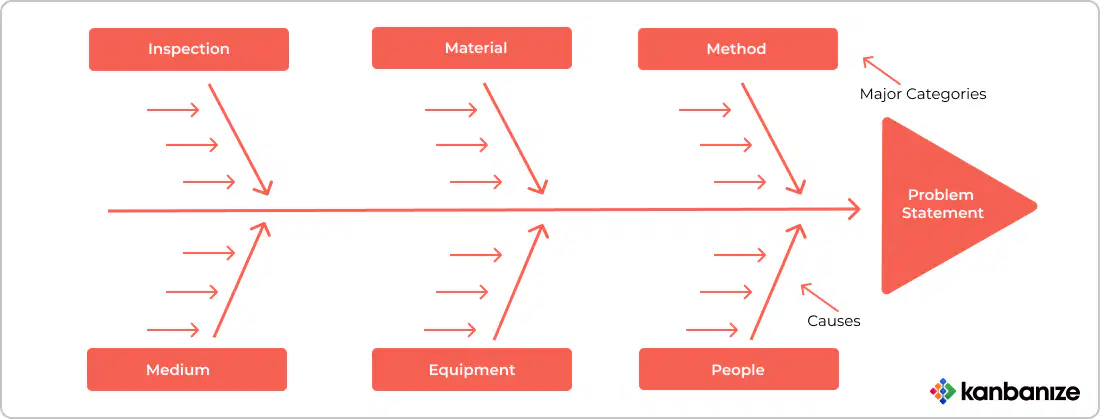
What are the categories typically used in a Fishbone Diagram?
People
Process
Product
Profit
Inputs
Processes
Outputs
Feedback
Equipment Materials
Methods
Environment
People
Resources
Time
Scope
Cost

What are the steps to develop a fishbone diagram?
Analyzing the results
Data collection
Primary cause Secondary cause
Capturing the issue or problem
Brainstorming categories and potential causes
Analyzing the results Brainstorming potential solutions
Reactive analysis
Proactive analysis
Primary cause Secondary cause
Cause identification Action identification
Data collection Problem statement definition
Which of the following is an example of proactive Root Cause Analysis?
Conducting a post-mortem analysis after a major outage occurs
Conducting a safety audit to identify potential hazards in the workplace
Investigating a software bug that caused a production outage
Analyzing customer complaints to identify the root causes of their dissatisfaction

In which of the following scenarios is Root Cause Analysis most commonly used?
To determine the best project management methodology to use for a new project
To identify the most effective marketing strategy for a new product launch
To investigate the cause of a major software system outage
To select the optimal vendor for a new hardware procurement project
What is a limitation of using Root Cause Analysis?
Difficult to use for complex problems
It does not provide immediate solutions
It does not involve stakeholders in the analysis
It cannot be used to prevent future problems

