
Font size
 Worksheets
AP_WH - Unit 6
Total questions: 200
Worksheet time: 5hrs 0mins






Which action in Japanese history occurred during the Meiji Restoration?
Japan modernized its economy.
Mongols invaded the islands of Japan.
The Japanese government adopted an isolationist policy
Buddhism became the official religion of Japan
What was one impact of industrialization on Japan during the Meiji Restoration?
Japan became more isolated from world affairs
Demand for natural resources increased
Japan became a colonial possession of China
Traditional practices of Bushido were reintroduced
In the years following the Meiji Restoration in Japan and the unification of Germany in the 19th century, both nations experienced
an increase in military production and strengthened military forces
a reduction in tensions with neighboring nations
a restructuring of government that included popularly elected monarchs
a decrease in the reliance on industrialization and trade
The Meiji Restoration in Japan was prompted in part by
a fear that Japan would be colonized by western nations
the failure of Japanese expansion
the Shogun’s conversion to Christianity
a desire to stay isolated
Why were the Opium Wars significant?
It forced China to change to a democratic government
It forced Great Britain to recognise the importance of Confucian values
It forced China to open its doors to trade with the western world
It forced Great Britain to open its doors to trade with the Qing dynasty.
Imperialism is __________.
when a powerful nation uses its resources to help a weaker nation
when a weaker nation invites a powerful nation to help it industrialize
when a powerful nation takes control of the economy and government of a weaker nation
When city-states come together to form a nation.
What is Spheres of Influence?
Replacing local leaders with foreigners
Putting local leaders in charge (with guidance from foreigners)
Controlling a country through trade and economy
A partnership that benefits both sides, with equal treaties
What term describes America's desire to trade with China but NOT to form colonies there?
Red, White, and Trade
Open Door Policy
A Square Deal
Partnership Agreement
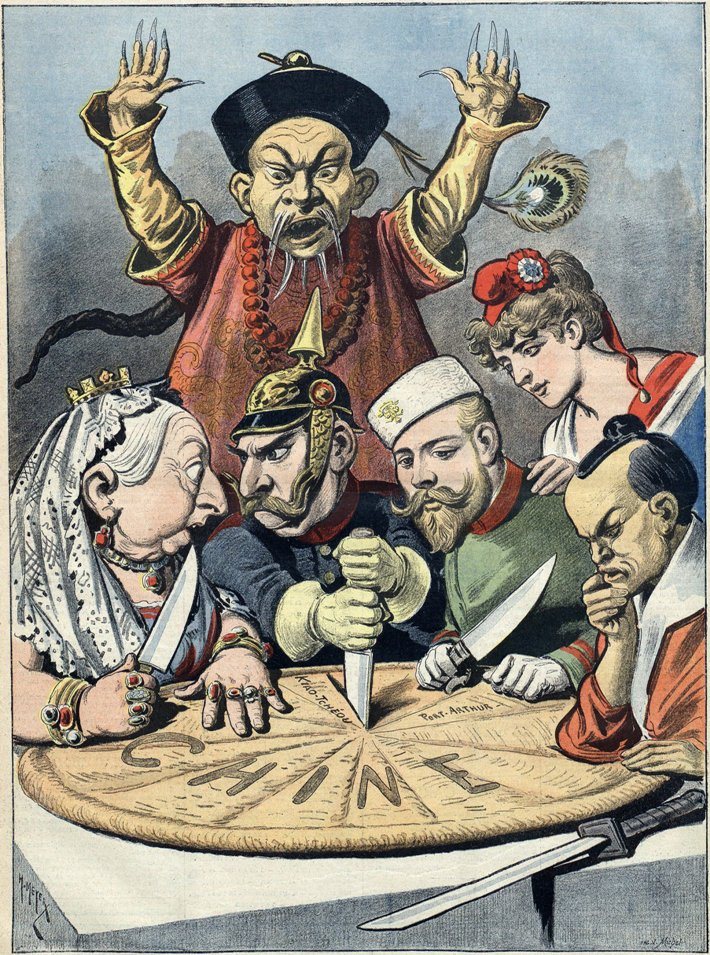
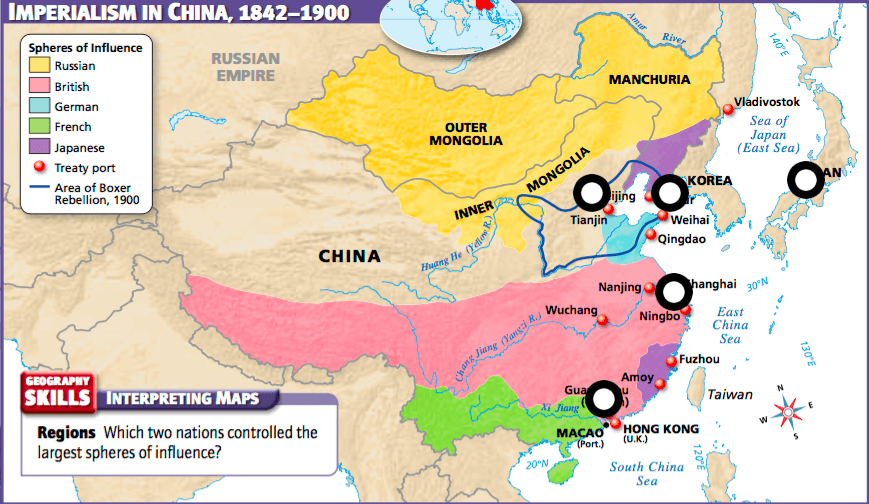
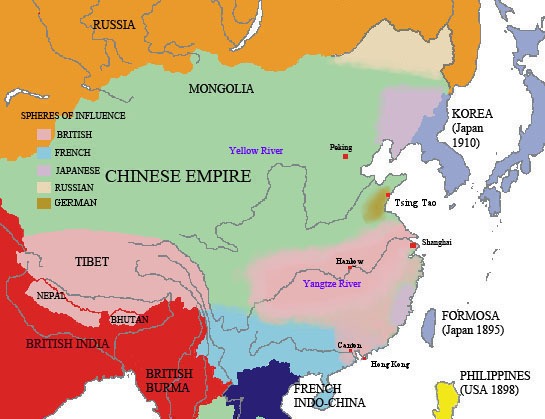
China successfully resisted imperialism
China modernized and became imperialist
China was divided into spheres of influence by imperialist powers
China working together with other nations
Which Asian country grew more powerful after interacting with the West?
China
Japan
Korea
Philippines
Which Asian country became less powerful after interaction with the West?
China
Japan
Korea
Philippines
Which was NOT a result of the first Opium War?
China had to open more ports to foreign trade
Britain received compensation for the destroyed opium
Britain took control of the island of Hong Kong
China became a British colony
When the Chinese government did this, the British responded with military force.
Attacked Britain
Destroyed millions of dollars worth of opium
Sent diplomats to Britain to discuss trade
Began selling opium to Japan
Prior to Peter the Great, Russia was all of the following except
Most people were poor agricultural serfs
Feudal and agrarian
A major European power
Backwards technologically
Peter the great was able to westernize Russia by
implementing policies that forced Russians to dress in Western European clothes
Forcing Russian males to shave their beards or pay a tax
Constructing St. Petersburg in Western European architecture
All of the above
Peter the Great was able to Modernize Russia in all of the following ways EXCEPT
Hiring foreign experts to modernize Russia's military and economy
Building western style schools with focus on science, mathematics, and medicine.
Implementing a meritocracy system of government with the table of Ranks
Giving unprecedented power to the boyars for their support in his reforms
St. Petersburg was significant to the Russian Empire under Peter the Great for all of the following reasons EXCEPT
It cemented Russia's isolationism policy from the rest of Europe
The warmer waters of the Baltic allowed Russian uninhibited international trade
Allowed closer ties between Russia and Western Europe
The city became Russia's new capital, replacing Moscow
The Table of Ranks was a
System of laws Peter created to end the Russian Orthodox Church's privilege of selecting clergy members
A set of ranks and criteria for promotion within the multiple duties of the Russian state
A list of top Russian industrial companies with tax exemption status
Ranks of people based on their heights & weights
The Table of Ranks helped Peter centralize authority and Modernize Russia by
Anyone could be promoted to rank of noble based on their service, even peaasants
Promoting government and military leadership positions based on ability rather than traditional social status
Boyars had to work for the state to keep the privilege of their land and position
All of the above
The following would have followed what motive: Control Trade
Economic Interest
Political and Military Interest
Exploratory
Religious Goals
Social Darwinism/ Ideological/ Humanitarian
The following would have followed what motive: Find investments
Economic Interest
Political and Military Interest
Exploratory
Religious Goals
Social Darwinism/ Ideological/ Humanitarian
The following would have followed what motive: Desire to make money
Economic Interest
Political and Military Interest
Exploratory
Religious Goals
Social Darwinism/ Ideological/ Humanitarian
The following would have followed what motive: Hire cheap labor
Economic Interest
Political and Military Interest
Exploratory
Religious Goals
Social Darwinism/ Ideological/ Humanitarian
The following would have followed what motive: Create New Markets
Economic Interest
Political and Military Interest
Exploratory
Religious Goals
Social Darwinism/ Ideological/ Humanitarian
The following would have followed what motive: Gain power in comparison to other countries
Economic Interest
Political and Military Interest
Exploratory
Religious Goals
Social Darwinism/ Ideological/ Humanitarian
The following would have followed what motive: Territorial Expansion
Economic Interest
Political and Military Interest
Exploratory
Religious Goals
Social Darwinism/ Ideological/ Humanitarian
The following would have followed what motive: Prestige
Economic Interest
Political and Military Interest
Exploratory
Religious Goals
Social Darwinism/ Ideological/ Humanitarian
The following would have followed what motive: Nationalism (Pride in one’s country)
Economic Interest
Political and Military Interest
Exploratory
Religious Goals
Social Darwinism/ Ideological/ Humanitarian
The following would have followed what motive: Increased Competition and political tension
Economic Interest
Political and Military Interest
Exploratory
Religious Goals
Social Darwinism/ Ideological/ Humanitarian
The following would have followed what motive: Naming countries, finding new spaces
Economic Interest
Political and Military Interest
Exploratory
Religious Goals
Social Darwinism/ Ideological/ Humanitarian
The following would have followed what motive: Medical Advancements
Economic Interest
Political and Military Interest
Exploratory
Religious Goals
Social Darwinism/ Ideological/ Humanitarian
The following would have followed what motive: Spread Christianity through missionary work
Economic Interest
Political and Military Interest
Exploratory
Religious Goals
Social Darwinism/ Ideological/ Humanitarian
The following would have followed what motive: Assimilate European values and beliefs into other cultures
Economic Interest
Political and Military Interest
Exploratory
Religious Goals
Social Darwinism/ Ideological/ Humanitarian
The following would have followed what motive: End slave trade in Africa
Economic Interest
Political and Military Interest
Exploratory
Religious Goals
Social Darwinism/ Ideological/ Humanitarian
The following would have followed what motive: Based on the belief that the white race was superior and other cultures were primitive
Economic Interest
Political and Military Interest
Exploratory
Religious Goals
Social Darwinism/ Ideological/ Humanitarian
The following would have followed what motive: "White race had the duty to civilize or modernize the rest of the world"
Economic Interest
Political and Military Interest
Exploratory
Religious Goals
Social Darwinism/ Ideological/ Humanitarian
The following would have followed what motive: Social Darwinism- Only the strongest nations will survive
Economic Interest
Political and Military Interest
Exploratory
Religious Goals
Social Darwinism/ Ideological/ Humanitarian
The following would have followed what motive: Disrupts the current way of life for indigenous people
Economic Interest
Political and Military Interest
Exploratory
Religious Goals
Social Darwinism/ Ideological/ Humanitarian
How did the Industrial Revolution spur (increase) Europeans' desire to colonize Africa?
They needed more land.
They wanted to control everything.
They needed more raw materials.
They want to engage in friendly relations.
What was the purpose of the Berlin Conference?
To establish rules for claiming land without conflict.
To provide Germany with land in Africa.
To give Great Britain and France land in Africa.
To provide Africans a platform to voice their concerns.

Which of the following is an accurate observation of both maps?
The Portuguese controlled parts of Northern Africa on both maps.
The second map shows Europeans controlled the majority of Africa.
The first map shows Europeans controlled the majority of Africa.
Southern Africa was controlled by France on both maps.

Which two European nations controlled the most land in Africa?
Belgium and Portugal
Germany and France
Italy and France
France and Great Britain

Based on the article, who is most likely the man holding the knife in the image?
Adolf Hitler
Napoleon Bonaparte
Otto von Bismarck
King Leopold II

What is the most likely reason the man with the knife has an angry look on his face?
He is frustrated with all the fighting.
He hates Africa.
He wants all the land for himself.
He is not happy with having to be in charge.

What two nations fought for control of the bottom tip of Africa?
Portugal and Italy
France and Great Britain
Belgium and Holland
Holland and Great Britain

Why do you the leaders are shown in this way?
They were tired of fighting the Africans.
Each of them wanted to get the most land for their nation.
Each of them were under a lot of pressure.
They were all working together.
Which European country was King Leopold II from?
England
Belgium
Germany
France
What name did King Leopold II give to his African colony?
Kingdom of Congo and Tanzania
Congo Trade Empire
Congo Free State
Congo Nation
Why did the desire for rubber increase dramatically in the 1800s?
tires for bicycles and cars
rafts
trains
footwear
What is the definition of "quota"?
a fixed minimum or maximum number of an item or group
the name of the largest river in the Congo
the name of the area in Africa where the Congo is located
A term for foreigners that live in Congo for more than a year
What was the most infamous punishment given to Congolese workers who failed to meet "quotas"?
Imprisonment
Exiled
Cutting off hands
Banishment
After the Belgium government took over control of the Congo free state what did they rename the area?
Leopold's Congo
Kingdom of Congo
Belgian Congo
Congo Nation
What is the definition of "ethnocentrism"?
judging a culture based on your belief of the superiority of your own culture
believing all ethnicities are equal
Belief that every country should be independent of foreign influence
Criticizing sects for indoctrination

Who does the snake represent?
President William McKinley
King Leopold II
Queen Victoria
Emperor Meiji
Which resources did King Leopold want from Congo?
(Select all that apply)
Rubber
Copper
Diamonds
Gold
Oil
American planters living in what area overthrew the local government and subsequently requested annexation to the United States?
Cuba
Nicaragua
Hawaii
Philippines
Industrialists supported U.S. imperialism because they were interested in finding new:
defenses.
markets.
imperialism.
allies.
As a result of the Spanish-American War, the United States acquired control over all of the following territories EXCEPT:
Puerto Rico
Cuba
Mexico
Philippines
The Panama Canal...
linked the Atlantic Ocean and the Indian Ocean.
linked the Mississippi River with the Gulf of Mexico.
linked the Atlantic Ocean and Pacific Oceans.
linked the Gulf of Mexico with the Mediterranean Sea.


What does the term imperialism refer to?
A policy of giving away a country’s power to another nation as a gift
A policy of extending a country’s power and influence through diplomacy or military force
A policy of trading goods between two states or nations
A policy in which the government debates over paying someone to purchase another country
The belief that the United States was destined to control the continent from the Atlantic to the Pacific is best described as _________________.
Protestant Reformation
Gilded Age
Manifest Destiny
The Crusades
The _______________ was a foreign policy statement issued in 1823 stating that the U.S. would oppose any intervention by European nations to control nations in the Western Hemisphere.
Monroe Doctrine
Articles of Confederation
Mayflower Compact
Treaty of Paris
The ___________________ was signed in 1898, ending the Spanish-American War and rewarding the United States with the islands of Guam, Puerto Rico, and the Philippines.
Treaty of Paris
Treaty of Versailles
Treaty of Velasco
Treaty of Guadalupe Hidalgo
Japan’s increased foreign trade during the Meiji Restoration was closely related to its
need to maintain a traditional society
desire for a modern industrialized society
colonization by Western nations
encouragement of foreign investment
One reason for Japan’s rapid industrialization during the Meiji Restoration was that Japan had
rejected Western ideas
used its access to the sea for fishing
relied on traditional isolationist policies
reformed its political and economic systems
The Meiji Restoration in Japan was prompted in part by
a fear that Japan would be colonized by western nations
the failure of Japanese expansion
the Shogun’s conversion to Christianity
a desire to stay isolated
Fro 1185-1868, who had the political power in Japan?
The Daumyo
The Emperor
The Shogun
The Samurai
Which group in Japan undermined the shogunate, effectively weakening it by attacking foreigners in Japanese ports and causing uprisings against the shogunate?
The Daimyo
US naval forces
The Samurai
The Emperor
Who did the samurai support in opposition to the shogunate?
the emperor
the Americans
the Chinese
the Daiymo
One of the many reforms carried out by the Meiji Emperor was of the military.
(Select all of the following that helped Japan build a modern military)
industrialization
reliance on traditional Japanese military tactics
created national army
based military on Western examples
How long did the Tokugawa Isolation last?
400 years
200 years
999 years
36 years
The political policy of realpolitik under Otto von Bismarck, led to the rise of which European power as a nation-state?
Austria
France
Spain
Germany
Both Emperor Meiji and Otto Von Bismarck promoted this idea.
Communism
Nationalism
Laisse Faire
Democracy
Helped unite Italy by getting a volunteer group of over 1,000 teenagers to march north through the country from Sicily.
Giuseppe Mazzini
Count Cavour
Victor Emmanuel II
Giuseppe Garibaldi
Which of the following is the best definition for realpolitik?
Politics based on practical and material factors rather than on theoretical or ethical objectives.
Advocating class war and leading to a society in which all property is publicly owned and each person works and is paid according to their abilities and needs.
The action or process of settling among and establishing control over the indigenous people of an area.
A political tradition and a branch of liberalism that advocates free market and laissez-faire economics; civil liberties under the rule of law with especial emphasis on individual autonomy, limited government, economic freedom, political freedom and freedom of speech.
Who most likely said the following: "it is not by speeches and majority resolutions that the great questions of the time are decided – that was the big mistake of 1848 and 1849 – but by iron and blood."
Giuseppe Garibaldi
Camillo Benso di Cavour
Tokugawa Ieyasu
Otto Van Bismarck
In a communist society...
the government controls the means of production
the individual owns the means of production
wealth is distributed evenly amongst society
there is no wealth or private property
One problem with socialism is...
the rich will continue to get richer.
people will only work as hard as they need to.
those that don't work hard enough do not reap the benefits.
the government keeps all of the wealth.
What was the intended purpose of the Open Door Policy?
Develop American-style democratic institutions and practices in China
Prevent Japan and powerful European nations from locking the United States out of trade monopolies in China
Establish a strong American military presence on the Chinese mainland
Support Japanese efforts to industrialize farming and mass production techniques
During the late 19th and early 20th Centuries, what was the strongest motivation for United States intervention in Latin America?
Protecting its growing foreign investments
Encouraging trade with Europe
Putting an end to growing independence movements
Reducing the influence of Communism
Which foreign policy position was held by both President James Monroe and President Theodore Roosevelt?
Trade with other nations should be sharply reduced.
The United States should follow a policy of isolationism.
The United States should increase its role in Latin American affairs.
The United States should send troops to aid revolutionary movements in European nations.
During the early 1900s, how did MOST Latin Americans feel about United States involvement in Central and South America?
Relieved; the United States was providing much-needed protection.
Resentful; the United States was making unwelcome policy decisions for the region.
Nervous; the United States made repeated threats to annex parts of South America.
Happy; United States cotton investments would help the Latin American economy.
In the late 19th and early 20th centuries, United States intervention in Latin America was motivated mainly by the United States desire to
Ensure the safety of its growing investments in the area
Counteract Spain's economic domination of the area
Reduce the influence of Communism
Suppress Latin American movements for national independence

The Spanish-American War (1898) marked a turning point in American foreign policy because the United States-
developed a plan for peaceful coexistence
emerged as a new world power with an overseas empire
pledged neutrality in future European conflicts
refused to become a colonial power

In the late 1800s, an increased demand for raw materials and a desire for new markets contributed to the United States adopting a policy of
isolationism
collective security
imperialism
pacificism

A. The United States claims the Hawaiian Islands.
B. Puerto Rico becomes a United States territory.
C. The United States fights an insurrection in the Philippine Islands.
D. The United States Senate ratifies the Panama Canal treaty.
Which is the best heading for the actions above?
Rise of American Imperialism
Causes of World War I
Enforcement of the Monroe Doctrine
Trade Expansion in East Asia

As a result of the Spanish-American War, the United States saw the need to build the Panama Canal because
new colonies had been acquired in Africa
Spanish opposition to the canal had ended
the United States navy could then move more quickly between oceans
United States railroads could not transport enough manufactured goods

In the 1890s, the main goal of those who supported United States imperialism was to
bring self-government to areas under United States control
obtain overseas markets and naval bases
defend against attacks by enemy nations
spread democracy to Africa and Latin America
Which of these is not a factor that caused America to begin expanding its borders overseas?
more sources of raw materials
more markets to sell goods
God-given right to expand across the sea
other countries were threatening to attack America
Why did the U.S. annex Hawaii during the Spanish-American war?
to move captured Spanish soldiers there
to hide weapons from the Spanish
to add more land to the U.S.
to use it as a fueling station for the Navy


After the Scramble for Africa, what percent of Africa was controlled by European nations?
5%
15%
25%
90%
Which of these was NOT a reason European powers colonized Africa and Asia?
They wanted to acquire power and prestige
They wanted to gain access to natural resources such as gold, rubber, timber, and metals
They had a mission to civilize "inferior races"
They wanted to protect weaker nations from other foreign influences
What made possible the exploration of the interior of Africa?
The Model T
The steam boat
Railroads
Rubber wheels
Some Europeans believed that their industrial progress and wealth (being fit) allowed them to take advantage of those areas of the world not industrialized or civilized (the unfit). This concept is called
Nationalism
Assimilation
Imperialism
Social Darwinism
Why did the Industrial Revolution begin in Great Britain?
Mercantilism
Abundant natural resources
The free market economy
They were a bunch of bad dudes who knew how to boogie
How did the industrial revolution change the economy in Europe?
It fell to communism
Mercantilism remained strong
Production moved from the countryside to factories
Less goods were produced leading to inflation
Which Group would agree with the philosophy of Capitalism?
Aristocrats
Factory owners
Karl Marx
Absolutists
Which of the following doesn't relate to a "Free Market" economy?
Laissez faire
Private Ownership
Public ownership
Adam Smith
Which of the following described history as a conflict between the "haves" (bourgeoisie) and the "have-nots" (proletariat)?
Adam Smith
John Stuart Mill
Voltaire
Karl Marx
Which market is known as a 'mixed economy,' with aspects of both free-market and command economies?
Mercantilism
Capitalism
Socialism
Communism
What enabled European powers to control Asiatic colonies and territories with more ease?
Cash Crops
The Strait of Gibraltar
The Panama Canal
The Suez Canal
Which of the following was a reaction to a rumor that the British were greasing their magazines with pig and beef fat?
The Salt March
The Sepoy Mutiny
The Raj
The Indian Rebellion
Which group did not take part in the Sepoy Mutiny?
The Sepoys
The Hindus
The Muslims
The Sikhs
Which was a negative effect British Imperialism had on India?
Railroads
Cash crop centered economy
Improved education
A common language
What is a treatment for Malaria?
Death
Quinine
Quality water
OFF mosquito repellant


Which Chinese dynasty tried to limit European expansion into China in the early 1800's?
Ming
Manchu
Qing
Koryo

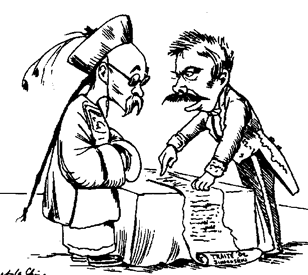
The Treaty of Nanking (1842) did all of the following EXCEPT
gave the British control over Hong Kong
allowed opium to be imported into China
China had to pay $100 million in reparations
gave other Europeans equal access to China

The treaty that opened Japan to Western ideas was signed in 1853. It was called the
Treaty of Amiens
Treaty of Wanghia
Treaty of Kanagawa
Treaty of Nanking

Which of these ideas was NOT true of European immigration in the 19th century?
Jews were the largest group to move within Europe
most immigrants were middle aged & had stable families
most were small peasant landowners
immigrants tended to settle with those from their region of origin

The Tanzimat reforms in the Ottoman Empire,
reorganized
education
established railways and telegraph systems
resulted in a constitution based on
European prototypes
Occurred between 1839 and 1876
All of the above
The completion of the Suez Canal in 1869 did what?
allowed railroads to replace sailing vessels
Made it easier for Russia to attack Great Britain
Caused France to go bankrupt
shortened the distance by sea between
Europe and Asia


What is the similarity between the Sepoy Rebellion of India and Menelik II in Ethiopia?
Both were led by rich, upper class citizens
Both were led by the government
Both resisted foreign influence over their nation
Both welcomed foreign control by the West

Native Indians who served in the British East India Co. as soldiers.
Raja
Viceroy
Sepoy
Varna
The British direct control in India from 1757 until 1947
Indian National Congress
Meiji
Raj
Muslim League
Ruler in India during the Raj
Sepoy
Governor
Viceroy
Raja
How does industrialization relate to imperialism?
Industrialized countries need markets and resources which can be gained through imperialism.
Imperialism pushed for industrial development in Africa due to all the resources on the continent.
Imperialism convinced industrial countries to increase the production of goods.
Industrialized countries needed more trade partners. Imperialism provided greater opportunities for global trade.
What happened as a result of the Berlin Conference?
European and African nations went to war with each other.
The European leaders allowed the African leaders to be apart of the governing process of the colonies.
Imperialism in Africa ended.
Europeans divided Africa into colonies without considering the cultural and ethnic differences of the African people.
Which 2 areas of Africa remained independent during this colonial period?
Madagascar
Ethiopia
Liberia
Egypt
Congo
What were some of the internal factors that contributed to imperialism in Africa?
Africans had a need to trade with Europe for raw materials.
Africans had a desire to convert to Christianity.
Africans had a variety of cultures and languages, making it difficult to unite.
Africans had strong leadership among the various ethnic groups

The Suez Canal opened in ______ in 1869?
Egypt
Ethiopia
Zimbabwe
Morroco
What was the impact of Imperialism?
(Select all that apply)
Africa and Asian countries were exploited
European countries became rich
Tensions grew around the world
The native populations loved the Europeans
What is the difference between involuntary and voluntary migration?
Involuntary migration refers to the movements of refugees and internally displaced people (displaced by conflict) as well as people displaced by disasters or development projects. Voluntary migration is based on the initiative and the free will of the person
Involuntary migration refers to the movements of people because of someone else's decision. Voluntary migration is based on the decision of the person
Involuntary migration is the movement of underprivileged people who are forced by someone to move out of their place of residence. Voluntary migration comes after a person's is given a choice by someone
They are the same thing

Which was a state regulation of immigration during the nineteenth century?
Chinese Exclusion Acts
Congo Free State
White New Zealand Policy
Jim Crow Laws

Which of the following descriptions is an accurate change over time in the period c. 1750-1900?
Once the leader in scientific and economic development, China fell behind Europe
Once the leading producer of porcelain, China fell behind India
Once a country that maintained an isolationist policy, China participated in the Scramble of Africa
Once a country that actively sought foreign converts to Buddhism, China became an atheist state

How were people able to migrate cheaper and faster?
New more affordable methods of transportation
Horses became more affordable for the common people
The elite paid for the lower class to migrate out of their country
Free trade policies made people wealthy in the countries

Why did European powers turn to indentured servants for labor?
The abolition of the slave trade
The shift in control in India to the British
The growth of industrialization in China
The success of the Atlantic revolutions

In the time period c. 1750-1900, where did migrant workers typically seek work?
Industrial cities
Tropical plantations
Small grain farms
Uncharted territory, such as the Great Plains

What was a negative effect of migrants moving to new societies looking for work?
They would receive prejudice and racism from the people
They would lose their culture because of enclaves
They would return to their home societies after saving enough money
They would loss their connections to their home societies
Select all of the accurate migration patterns in the time period c. 1750-1900.
British: prisoners, to Australia
Indian: indentured servants, to the Caribbean
Japanese: voluntary laborers, to South America
West Africans: slaves, to North America
Irish: plagued by famine, to America
Which of the following is a pull factor?
War and violence cause people to leave Syria
Florida has warm weather
New York City can be too busy for some people
People stay in their own countries because of their families
Which of the following is a push factor?
People move to Chicago because it has many varieties of food
Coastal cities are populous because they are on the water
Italy has a highly-praised health care system
Severe droughts cause people to leave their country
What is urbanization?
The pollution of major cities
An increase in poor people
The flow of people from rural to urban areas
A place with low population denstiy
The average number of people living in a defined area such as a square mile or square kilometer
population density
birth rate
death rate
population

Which country had the largest sphere of influence in Latin America during the Age of Imperialism?
United States
Spain
Mexico
England

Select ALL of the following tactics used in the Scramble for Africa.
Racially segregated concentration camps
European diplomacy through the Berlin Conference
Militarization of European troops
Equal opportunity trading alliances with local leaders

Which company took over other European states colonies in India?
British East India Company
British West India Company
Dutch East India Company
French East India Company

Why did European powers divide Africa by diplomatic agreements between each other?
Fear of going to war because of fierce competition
Rapid population increase in European colonies in Asia
Atlantic revolutions lead Europeans states to seek new troops
Creation of transnational business fostered exchange of raw materials
The poem, "The White Man's Burden" by Rudyard Kipling, represents the belief that European culture was _______.
superior to other cultures
misunderstood by Americans
the oldest culture in the world
a replica of Ancient Greek culture

The economic system that prevailed from c. 1750-1900 was
Capitalism
Communism
Socialism
Mercantilism

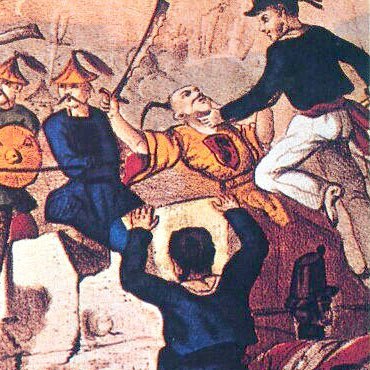
What caused the Taiping and Boxer rebellions?
Foreign economic involvement in China
British selling opium to China
Indians refusing to touch the gunpowder pouches
Americans moving into West North America
Conflict in South Africa between British and Afrikaners was known as . . .
Opium Wars
Boer Wars
Civil Wars
Berlin Wars
Which of the Following was an economic belief of 19th century Liberalism?
Limited government
Free trade
Anarchism
Unions
What is the radical version of socialism?
Capitalism
Feminism
Nationalism
Communism
Which of the following best explains the movement of women into the teaching profession in the nineteenth century?
The increasing professionalization of nonindustrial jobs pushed men away from teaching positions.
The education of children in schools was increasingly seen as a respectable occupation for women.
The teaching profession was becoming increasingly open to working-class women.
The use of domestic paid labor declined over the course of the century.
Which of the following was a major demographic change in Western Europe between 1850 and 1914?
A dramatic shift of population to urban areas
A rapidly increasing birth rate
A rapidly increasing death rate
A pronounced trend toward larger families
What idea did Thomas Malthus contribute to Darwin's hypothesis?
Species evolve by using or losing their traits
Human population will increase faster than food and other resources
Natural selection is the driving force to evolution
That Earth changes at a constant rate by natural processes

