
 Worksheets
Communication skills
Total questions: 118
Worksheet time: 58mins
True or False: Communication is more than just talking face to face?
True
False
What is Body Language?
Postures, gestures, and facial expressions.
The exchange of information through the use of words.
Your words say one thing but your body language say another.
Speak from your point of view.
The exchange of information through the use of words or actions is
Active listening
Body language
Communication
Aggressive
Which of the following is considered a speaking skill?
Make clear, simple statements
Paying attention
Rereading your words before you send a message

Two types of communication are:
Verbs and Nouns
Verbal and information
Verbal and non-verbal
Happy and sad

An example of verbal communication is:
Phone conversation
Posture
Eye contact
Writing an email
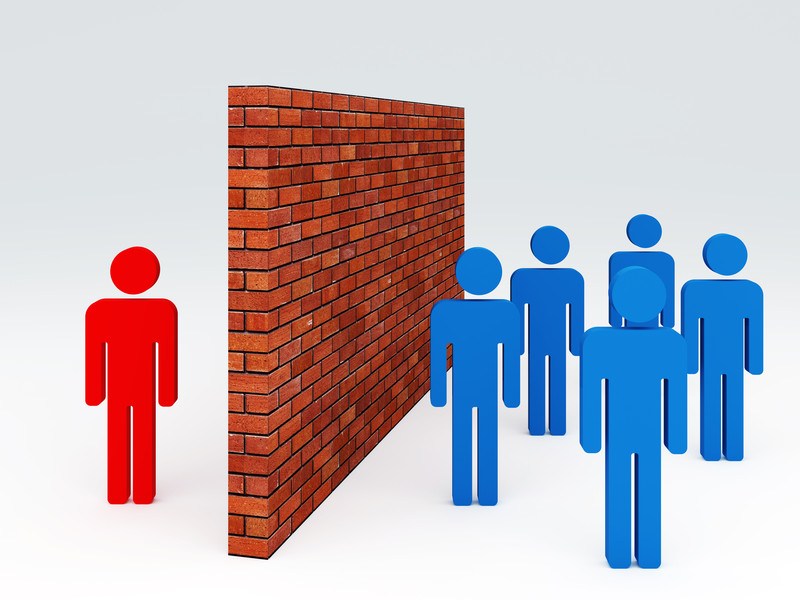
Which of the following is a barrier to communication?
Message is not clear
Not listening
Lack of language skills
All of the above

Which is NOT important in effective communication?
Wearing a red tie
Making eye contact
Using appropriate body language
Using the appropriate tone

A good, clear speaker…
Understands what he/she wants to say
Considers the audience and the setting
Checks to assure understanding, and listens to responses
All of the above

We communicate by:
Speech (Telephone call, conversations, etc)
Visuals (Body language, facial expressions)
Writing (Letter, emails, newsletters, etc)
All of the above

Includes gestures, facial expressions, and body positions
Feedback
Verbal Communication
Dance
Non-Verbal Communication

The use of sounds and words to express yourself
Non-Verbal Communication
Customer Service
Interpretive Dance
Verbal Communication

An example of non-verbal communication is:
Sleeping
Face-to-face conversation
Telephone conversation
Eye Contact

Good customer service is the ability of an organisation to constantly and consistently exceed:
The speed of sound
The customer's expectations
The rainfall in South America
Their competitor's sales

True or False: Communication skills are vital to individuals and businesses
True
False
Two types of communication are:
Verbs and Nouns
Verbal and information
Verbal and non-verbal
Happy and sad
An example of verbal communication is:
Phone conversation
Posture
Eye contact
Writing an email
An example of non-verbal communication is:
Sleeping
Face-to-face conversation
Telephone conversation
Eye Contact
Which of the following is a barrier to communication?
Message is not clear
Not listening
Lack of language skills
All of the above
Which is NOT important in effective communication?
Wearing a red tie
Making eye contact
Using appropriate body language
Using the appropriate tone

In order to comprehend a message, you must be:
In the conference room
Wearing a suit or dress
Using a telephone
Actively listening

All of the following are examples of active listening, EXCEPT:
Showing interest in the message
Staring out the window
Making eye contact with the messenger
Not interrupting the messenger
Good customer service is the ability of an organisation to constantly and consistently exceed:
The speed of sound
The customer's expectations
The rainfall in South America
Their competitor's sales
True or False: Communication skills are vital to individuals and businesses
True
False
A good, clear speaker…
Understands what he/she wants to say
Considers the audience and the setting
Checks to assure understanding, and listens to responses
All of the above

A good, active listener…
Remains quiet while listening
Interrupts the speaker
Answers his/her cell phone during the presentation
Makes fun of the speaker

Which of the following is an example of a professional email address?
justinbeiberismyhero@mail.com
George.Washington@mail.com
ilovedogs@mail.com
What.What@mail.com

Which of the following is NOT an example of proper telephone etiquette in the workplace?
Helping the caller even if it isn't your job
Identifying yourself and your company when answering a call
Rushing the caller to get off the phone
Answering the phone before the third ring
We communicate by:
Speech (Telephone call, conversations, etc)
Visuals (Body language, facial expressions)
Writing (Letter, emails, newsletters, etc)
All of the above

When is it NOT appropriate to shake hands with someone?
In the middle of a presentation
Upon meeting someone for the first time
At the start of an interview
After a meeting to show agreement

When shaking hands, you should always:
Wear heavy cologne or perfume
Make eye contact
Make sure your hand is sweaty
Shake repeatedly until the person begs you to stop

communicating non-verbally through conscious or unconscious gestures and movements is called?
Attitude
Gratitude
Sign Language
Body Language

A statement that a situation is unsatisfactory or unacceptable
Character
Complaint
Compliment
Cover letter

Building a relationship with a customer is called:
Friendship
Chatting
Rapport
Dating
Includes gestures, facial expressions, and body positions
Feedback
Verbal Communication
Dance
Non-Verbal Communication
The use of sounds and words to express yourself
Non-Verbal Communication
Customer Service
Interpretive Dance
Verbal Communication
Which of the following is positive body language to use when speaking?
Fold your arms or cross your legs
Stand behind a lectern and keep your body hidden
Keep your arms open and use open gestures
Dont make eye contact
Which of these is a best way to ask questions?
Use open questions that encourage a full response
Ask only a question that requires yes/no response
Use leading words to suggest the response you require
Ask something that you wouldn't want to answer
Which of the following are parts of active listening? Tick whichever applies.
Clarifying
Interrupting
Rephrasing
Being quiet
The use of words or phrases that are disrespectful towards others is called
assertive behaviour
passive behaviour
aggressive behaviour
dormant behaviour
A friend tells you,"I'm afraid my classmate is telling bad things about me behind my back. I don't know what to do. I am so upset about this." Which of the following response is a paraphrase?
You are feeling very upset because your close friend has betrayed you.
Dont be hasty. First confirm if the information is true and then you can confront him. It might be a rumor.
You are afraid that your classmate is telling bad things about you behind your back. You dont know what to do and you are very upset about this.
I think you have very low self esteem. That is why you think others are talking behind you. You need to be more confident about yourself.
If Meena had come, she would have won.
If she hadn't won, she'd have come.
Meena did not win because she did not come.
When Meena came, she always won.
Meena didn't come, but she won anyway.
John is English but Anne isn't; She's American.
Anne is English.
John isn't English.
John isn't American.
John and Anne aren't English.
You can't come without a ticket.
You mustn't go with a ticket.
You can come if you have a ticket.
You dont need a ticket to come.
You cannot buy a ticket now.
Is Coca-Cola or Pepsi better? Choose the STRONGEST claim:
Coke is better than Pepsi because more people in the world like it.
I believe Pepsi is better because it tastes better than Coke.
Coca-Cola is better a drink than Pepsi
Coca-Cola has more sales and flavor options, and therefore, is better than Pepsi.
What is the best synonym for 'meticulous'?
moderate
careful
needing attention
conscientious
what is the synonym of the word 'piety'?
faith
honor
integrity
honesty
How many students in your class ___________ from Japan?
comes
came
come
are coming
There ________ a load of laundry to do.
is
are
If it's worrying you, you should ________ your mind.
speak
talk
either speak or talk can be used
neither speak nor talk can be used
Where _________ Anitha and Maria at 6 p.m yesterday?
was
were
is
was
How confident are you with your communication skills?
Very confident
I am ok
Average
Not very confident
Need to improve a lot
Complete the sentence using the correct question word.
Elsa : __________ is Ann?
Elwis : She is a manager at M&S.
Who
Where
Which
When
Complete the sentence using the correct question word.
Richard: _______ have they done?
Salman : They broke the window.
Which
Whom
Who
What
A pronoun is a word that takes the place of a noun.
A personal pronoun is used to substitute the names of people or things that perform actions.
Common Personal Pronouns include: I, me, he, she, it, him, her, you, we, they, them.
Mother and father are at home. _________ are sleeping.
She
He
We
They
A pronoun is a word that takes the place of a noun.
A personal pronoun is used to substitute the names of people or things that perform actions.
Common Personal Pronouns include: I, me, he, she, it, him, her, you, we, they, them.
The plates are still dirty. You need to wash ________ again.
he
she
them
you
Choose the expressions of agreeing.
That's so true..
I prefer coffee to tea..
I totally agree with you.
You are absolutely right.
Choose the expressions of disagreeing.
I'm afraid I disagree.
I don't think so.
I couldn't agree more.
He would prefer to take English.
Making suggestions:
Hi David. We are going to the mountains. Why __________ come with us.
don't you
doesn't you
do you
are you
Making suggestions:
It's getting late. I suggest we _______ a taxi
take
took
taking
to take
Asking for clarifications:
Which sentence is correct sentence?
I no understand
I not understand
I don't understand
I'm sorry. I didn't _________ what you said.
catch up
catch
catch out
What is the definition of communication?
Act of transferring information from one person to another.
Sending a letter to another person.
Transmission of facial expression.
A good communication must include which of the following elements?
Sender, Talking, Writing
Sender, Writing, Discussion
Sender, Message, Recipient
Which of the following is NOT the category of communication?
Written communication
Eye contact
Non - verbal communication
Which of the following is NOT a skill needed to be a competent communicator?
Good vocabulary
Attentiveness
Coordination
Which of the following is NOT the nature of interpersonal communication.
Involves verbal and non-verbal
Involves interdependent individuals
Must be face to face communication
Which of the following is NOT part of the listening process?
Receiving
Looking into another persons eyes
Responding
Process of evaluating involves?
Judging the value of message
Giving feedback to another person
Remembering a message
Which of the following is NOT a type of feedback?
Formative feedback
Summative feedback
Informative feedback
What is the primary tool involved in the receiving process?
Notebook
Ears
Communication
Process of understanding involves...
Communicating with proper vocabulary
Focusing on the speaker
Learning the meaning of the message
How important are communication skills in your profession
Very important
important
less important
not at all important
Good listening skills include:
a message, a sender, and a reveiver.
labeling, cultural sensitivity, and talking slowly.
verbal message, written communication and a receiver
showing interst, hearing the message, and not interrupting
It is a communication between individuals in a personal relationship which builds through time and involves their thoughts and feelings to a certain level.
Intrapersonal communication
Public communication
Interpersonal communucation
Small group communication
In this type of communication you think and learn about yourself, talk and reason with yourself, and evaluate yourself.
Public communication
Interpersonal comunucation
Online communication
Intrapersonal communication
You meet with your group mates to talk about your project. What type of communication do you have?
Intrapersonal communication
Interpersonal communication
Small group communication
Public communication

Essence of communication is
intent implementation impact
thoughts feelings and emotions
sharing caring and progressing
interaction and reaction
Emotional intelligence is ________________________________.
being smart about emotional situations
the ability to understand, use, and manage our emotions.
never getting angry
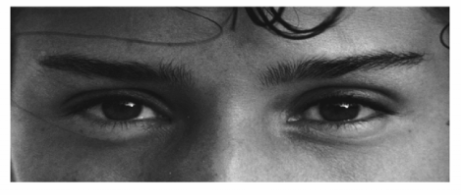
What emotion are the eyes showing?
Playful
Comforting
Irritated
Boring
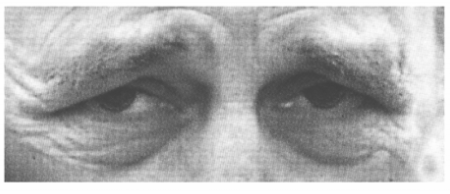
What emotion are the eyes showing?
Terrified
Upset
Arrogant
Annoyed
Listening improves business or career by
Increases interpersonal trust
Encourages timely feed back
Increases perceptions of integrity
improves costumer service and loyalty
All of the above
What are the characteristics for effective business communication
Consideration
Feedback Skills
Modify the message according to the audience
Courtesy
Public Speaking Skills can connect with an audience through telling a story
True
False
"Use simple language and easy sentences structure in composing message" this statement refers to?
Make effective use of grapevine
Clarity of Purpose
Feedback
Multiple channels of communication
Interpersonal Communication Skills is exchange of information through verbal and non- verbal methods
True
False
Postures, gestures, and facial expressions, to send messages is called (a) .
Nonverbal communication is getting messages across without using words.
True
False
Expressing feelings, thoughts, or experiences with words , either by speaking or writing.
Nonverbal Communication
Verbal Communication
Communication
Body Language
Communication is a (a) way process or exchanging of information between the sender and the receiver of the message.
Which of the following is an example of oral communication ?
Newspapers
Letters
Phone Call
Which of the following skills are important to communicate properly ?
Reading
Writing
Speaking
All of the above
What are the types of words we should use for verbal communication?
Acronyms
Simple
Technical
Jargons
Which of these is a positive (good) facial expression?
Frowning while concentrating
Maintaning eye contact
Smiling continuously
Rolling up your eyes
Which of the following statement is true about communication?
50% of our communication is non-verbal
20% communication is done using body movements, face, arms, etc.
5% communication is done using voice, tone, pauses, etc.
7 % communication is done using words
Keeping a good posture is important because
customers may be judging you
it helps show the customer you are confident and have a good attitude
you may stretch your uniform and have to pay for another one
it will help the customer understand that you are a health conscious person
Tone of voice can reveal your true feelings
True
False
Act of moving one's body parts, usually arms, hands, legs, as a means of expression is called as
gestures
facial expressions
Vocal distractions
fluency
The gesture of crossed arms means that the person is most likely _____________ .
protecting themselves
angry
selfish
upset
Voice modulation can make communication
Boring
Artificial
Interesting
Monotonous
A good communication should be
Clear, concise and coherent
Loud, fast and coherent
Slow, monotonous and coherent
Loud, monotonous and concise
What is the standard acceptable distance between conversational partners in Canada?
300 cm
200 cm
60 cm
15 cm
What is communication?
process of transmitting the information
process of changing information
process of sharing thought, ideas and feeling
According to Keyton, communication is....?
process of transmitting information and common understanding
process of exchanging information
process of sharing thought and ideas
Which is not the Model of Communication
Laswell Model
Aristotle Model
Brain Model
Message is a _________.
visual image
verbal utterance
verbal utterance, visual image, and non-verbal behaviour
Channel is one of the _____________ of communication.
tool
route
way
Feedback is a _____ and _________ to a message.
idea and thought
reaction and response
idea and understanding
What is intrapersonal communication?
talking to yourself
talking to other
speaking in public
What is interpersonal communication?
talking to yourself
talking to other people
talking to public
Aristotle model of communication is ?
speaker -speech-audience
speaker-message-audience-feedback
speaker -message-audience-feedback-response
Laswell communication model is?
communicator-message-medium-receiver-response
communicator-message-medium-receiver-feedback
communicator -message-medium-receiver
The following are the barriers in communication, Except.
role
culture
tool
Why culture is one of the barriers in communication?
because different people have different culture
because people have the same culture
because living in one place
Disabilities can be one barrier in communication because.
people dont understand sign language
people are able to understand disable people
people are not understand disable people and their language
in communication process, the most important things that you need to understand is?
language
action
response
Effective communication may lead you to a successful ____________.
speaker
audience
listener

