
 Worksheets
Big Acid-Base Review
Total questions: 80
Worksheet time: 2hrs 30mins
What would be considered the weakest alkali? ( Hint: lowest [OH-] )
8
14
7.8
11.6
What was phenolphthalein used as in the titration? Does it show an exact pH or a range?
as an acid, exact
as a base, exact
as a titrant, range
as an indicator, range
Acids produce _________ ions when they break down or dissociate.
Hydroxide (OH-)
Water
Chlorine (Cl-)
Hydrogen (H+) or Hydronium (H3O+)
All are examples of Arrhenius bases except
NaOH, KOH, LiOH, HCl
NaOH
KOH
LiOH
HCl


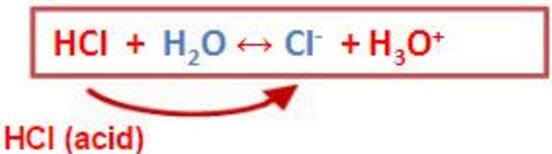
What is the conjugate base in the following reaction?
HCO3-
HCl
H2CO3
Cl -
A substance that remains when a base has accepted an H+ ion is... (Hint: What does the base turn into?)
An acid
A Base
A Conjugate Acid
A Conjugate Base
If a solution is alkaline which ion will be more present?
H+
K+
OH-
H-
A substance that remains when an acid has donated an H+ ion is... (Hint: What does the acid turn into?)
An acid
A Base
A Conjugate Acid
A Conjugate Base
If the pOH of a substance is 5, what is the pH? Is it an acid or an alkali?
5 : Acid
9 : Alkali
-5 : Acid
9 : Acid
If a solution has a [H+] of 1E-10 M (same as 1x10⁻¹⁰ M) What is it's pH? What is it's pOH?
pH= 10 / pOH= 4
pH= 4 / pOH= 10
pH= 10 / pOH= 10
pH= 4 / pOH= 4
If a solution has a [H+] of 1E-2 M (same as 1x10⁻² M) What is it's pH? Is it acidic or alkaline?
2, acidic
-2, acidic
12, alkaline
12, acidic
If something has equal concentrations of hydrogen/ hydronium ion and hydroxide ion, what pH would it be?
10
2
7
5
What is the acid in the following equation?
PO43-
HNO3
NO3-
HPO42-
What is the base in the following equation?
PO43-
HNO3
NO3-
HPO42-
A Limitation of the Bronsted- Lowry is that.....
it cannot describe a base without OH-
It cannot describe an acid- base reaction that has no proton (H+) transfer
It cannot describe an acid with the H at the end
it only works with solutions containing water.
Limitations of the Arrhenius Model are that....
it cannot describe a acid without H+
It cannot describe a base without OH-
Arrhenius' name is hard to spell
it only works with solutions containing water.

Which represents a strong acid?
The left one, the acid is 100% disassociated
The left one, the acid is partially disassociated
The right one, the acid is 100% disassociated
The right one, the acid is partially disassociated

Which of the above, I, II, or III, show a strong acid? (HA is the original acid)
I
II
III
I and II

Using this graphic, why do strong acids have a single arrow?
Weak acids always have some of the original acid, this is because weak acids never fully disassociate.
Weak acids never have some of the original acid, this is because weak acids fully disassociate.
Strong acids always have some of the original acid, this is because weak acids never fully disassociate.
Strong acids never have some of the original acid, this is because strong acids fully disassociate.

Phenolphthalein is an ___________ it turns from ____________ to ______________ in a base.
indicator/ colorless/ pink
indicator/ pink/ colorless
acid/ colorless/ pink
base/ colorless/ pink
Which of the following are polyprotic acids? (Hint: poly means many)
HClO3
H3PO4
H3P
H2SO4
HCl
Which of the following are monoprotic acids?
HClO3
H3PO4
H3P
H2SO4
HCl
Which of the following are oxyacids acids?
HClO3
H3PO4
H3P
H2SO4
HCl
Which of the following are binary acids?
HClO3
H3PO4
H3P
H2SO4
HCl
What is the name of this acid: HCN
hydrocyanic acid
cyanic acid
cyanous acid
What is the name of this acid: HClO4
hydroperchloric acid
perchloric acid
perchlorous acid
What is the name of this acid: H3PO3
hydrophosphoric acid
phosphoric acid
phosphorous acid
What is the name of this base: Fe(OH)3
Iron (III) hydroxide
Iron hydroxide
ferrium hydroxide
Fe three hydroxide
30mL of NaOH is neutralized by 12.3mL of 0.2M HCl. What is the concentration of the NaOH.
82 mol/l
0.82 mol/l
0.49 mol/l
0.082 mol/l
What is the endpoint in a titration?
When the indicator is added
When neutralization occurs and the color of the indicator is a soft light pink
When the standard solution is prepare
When neutralization occurs and the color of the indicator is violently bright pink

Identify the products of the chemical equation
3LiOH + H3PO4 →
Li3PO4 + 3H2O
LiPO4 + 3H2O
Li(PO4)3 + 3H2O
LiPO43 + 3H2O
The __________ of a titration occurs when you have added just enough of the one solution to completely react with the other solution.
endpoint
neutralization
base
acid
A reaction between an acid and base is called...
decomposition
single displacement
neutralization
salt & water
NaCl is...
an acid
a base
a salt
Which has more OH ions? A solution with a pH of 4 or a pH of 10?
pH of 4
pH of 10
Which of the following will not react with an acid?
NaOH
CaCO3
Mg
Acids will react with all of these
A strong acid and a strong base are misced together, assuming they are the same concentration... What ratio will create a neutral solution?
1:1
2:1
1:2
coronal mass ejection
Main difference between an amphoteric substance and a buffer?
only buffers regulate small changes in pH
only amphoteric substances can act as an acid or as a base
only buffers have small amounts of conjugate acid and conjugate base
ALL of these are the main difference!
If the [H3O+] of a solution is 1 x 10⁻³ M, the pH is
11
-3
3
1
A pH of 8 is how many times more acidic than a pH of 11?
3
30
100
1000
Which pH has the most hydrogen ions (H+)?
2
7
10
13
Which of the following formulas is used to determine the pH of a solution?
pH = –log[H+]
pH = log[H+]
pH = log[OH+]
pH = [OH–]
CH3CH2COOH(aq) + H2O(l) ⇄ CH3CH2COO─(aq) + H3O+(aq)
Is this a strong or Weak Base... why?
Strong, double arrow
weak, double arrow
Strong, single arrow
Weak, single arrow
What is a mixture of chemicals that react with a base/acid to keep pH in a narrow range?
catalyst
amphoteric
water
buffer

Bleach is a strong base, how many times stronger (more basic/concentrated) is bleach than Milk of Magnesia?
3
10
100
1000

Which substance has the most hydrogen ions?
bananas
lemon juice
orange juice
Milk of Magnesia
When H+ concentration is greater than OH- concentration, [H+] > [OH-] , the solution is
basic
neutral
acidic
alkaline
When OH- concentration is greater than H+ concentration, [H+] < [OH-] , the solution is
alkaline
acidic
neutral
amphoteric
Each change of a single pH unit signifies a ________ change in the concentration of the hydrogen ion.
onefold
hundredfold
tenfold
As the concentration of the hydrogen or hydronium ion increases, the concentration of the hydroxide ion
remains the same
decreases
increase
As phenolphthalein loses its hydrogen ion (proton), the indicator turns
colorless
pink
purple
yellow
As the H+ or H3O+ ion concentration of a solution increases, the pH of the solution
decreases
increases
remains the same
Which substance has the least hydrogen ions?
bananas
lemon juice
orange juice
Milk of Magnesia
Which substance has the most hydroxide ions?
bananas
lemon juice
orange juice
Milk of Magnesia
Which substance has the least hydroxide ions?
bananas
lemon juice
orange juice
Milk of Magnesia
Acid rain is a weak acid, how many times weaker (less acidic/concentrated) is acid rain than hydrochloric acid?
3
10
100
1000
Write the formula of the following compound.
Nitrous acid
HN
HNO2
HNO3
Write the formula of the following compound.
Hydrochloric acid
HCl
HClO2
HClO3
What is the formula for nitric acid?
HNO3
HNO2
HNO4
NO
The suffix -ite in the name of a polyatomic ion becomes ______ in the acid name.
-ous acid
-ate acid
-ide acid
-ic acid
What prefix is used to name binary acids?
per-
hydro-
hypo-
bi-
The suffix -ate in the name of a polyatomic ion becomes ______ in the acid name.
-ous acid
-ite acid
-ide acid
-ic acid

Titration: Where on the graph is the midpoint/ equivalence point?
The center of the vertical line with a pH of 7
The top of the vertical line with a pH of 7
The bottom of the vertical line with a pH of 7
The end of the top line where the graph stops, with a pH of 7

According to one acid-base theory, the water acts as
a base because it accepts an H+
a base because it donates an H+
an acid because it accepts an H+
an acid because it donates an H+

According to one acid-base theory, the reactant that donates an H+ ion in the forward reaction is


In which forward reaction is water acting only as a proton acceptor?


When using the Arrhenius model, what types of ions indicate that a compound is an acid?
H+
OH-1
When using the Bronsted Lowry definition of acids and bases, the acid will ______________ a hydrogen proton.
donate
accept
Which of the following correctly identifies a conjugate Pair?
HH4+ , OH-
H2O , OH-
CaCO3 ,CaCl2
HNO3 , H2SO4
Which of the following shows the correct conjugate pair?

