
 Worksheets
Energy - Transfer and Transformation
Total questions: 97
Worksheet time: 1hrs 4mins
What kind of energy does a marble at the top of a hill have?
gravitational potential
chemical potential
kinetic
thermal
If the marble had a mass of 0.3kg and the hill was 2.3 m tall, how much potential energy did it have at the top of the ramp?
2.3 J
0.23 J
6.9 J
5.2 J
What is the correct unit for energy?
meters (m)
kilogram meters per second (kg m/s)
Newtons (N)
Joules (J)
If the 0.3 kg marble was moving at 6 m/s at the bottom of the ramp, how much kinetic energy did the marble have?
5.4 J
1.8 J
3 J
6 J
What does conservation of energy mean?
Total energy increases
Total energy decreases
Total energy in the system stays the same
If the marble had 6.9 J of (potential) energy at the top of the hill and 5.4 J of (kinetic) energy at the bottom of the hill, was energy conserved and why?
No because total energy in the universe decreased
Yes because the total energy in the universe changed
Yes because the total energy in the system stayed the same
Yes, but energy left the system
If the marble hits a basketball which makes the tennis ball roll across the lab table, what kind of energy transfer happened?
kinetic-potential
kinetic-kinetic
kinetic-electrical
kinetic-thermal
If the 1.2 kg basketball rolls at 3 m/s, what is it's kinetic energy?
2.7
5.4
3.6
9
What does conservation of energy mean?
Total energy increases
Total energy decreases
Total energy stays the same
The marble had 5.4 J of kinetic energy and then hit the stationary basketball. The basketball started rolling and the marble stopped rolling. The rolling basketball now has 5.4 J of kinetic energy. Was energy conserved and why?
Yes because the total energy stayed the same
Yes because the total energy changed
No because the total energy stayed the same
No because the total energy changed
It takes 20 N of force to move a box a distance of 10 m. How much work is done on the box in Joules?
200 J
20.0 J
100 J
10 J
Factors that determine work are
size of the force, the displacement, and the angle between the force and the displacement
size of the force, and type of force
mass, and displacement
If you do 40 joules of work lifting a 10N box, how high is the shelf you moved it to.
400m
40m
50m
4m
What is the connection between work and energy
There is no connection between work and energy
The energy in a system (Em) stays the same UNLESS work is done to add or remove energy from the system
Work always adds energy to a system
Work always removes energy from a system
The original amount of mechanical energy in a system was 100 J, the final amount of mechanical energy was 50 J, how much work was done to the system
+50 J of work
-50 J of work
no work was done
it is impossible to say
Explain why a frictional force will remove energy from a system... (more than one answer possible)
friction exerts a force in the opposite direction of the displacement and cos (180) = -1
there is no explanation
Energy is removed from the system
friction is a force that opposes displacement and therefore removes energy from the system
An 86 kg boulder rests at the top of a 90 m cliff and falls to the bottom, how much energy leaves the system as heat and sound?
77,400 J
It is impossible to determine
7486 J
95,000 J
On the Giant Drop at Six Flags, the mass of one of the carts plus the passengers is 1200 kg. The height of the tower is 115 m tall, how fast are the passengers going right before they stop?
155 m/s
1200 m/s
1380000 m/s
how high up was an object that is 8 kg, if right before it hit the ground it had a velocity of 18 m/s?
16.2 m
28 m
1296 m
impossible to determine
Which type of energy has to do with objects in motion?
Potential
Kinetic

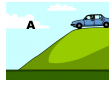
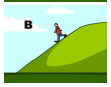
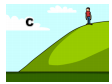
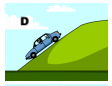
Which of these has the most potential energy.
A
B
C
D
If a football player wants to become better at tackling by increasing his or her kinetic energy, how can the player do this?
Increase his/her height
Increase his/her speed
Increase his/her mass
Decrease his/her speed
As potential energy decreases kinetic energy
(a)
As potential energy decrease Kinetic energy
(a)
The Law of Conservation of Energy states, "Energy is never created or destroyed only change." How does the relationship between potential and kinetic energy illustrate this?
What is energy?
The ability to do work
Movement and motion
Heat and motion
Which of the following is stored energy?
Kinetic Energy
Potential Energy
Which of the following is energy of motion?
Kinetic Energy
Potential Energy
Which is an example kinetic energy?
A parked car
A car racing on the track
What type of energy is a person diving into a pool?
Kinetic Energy
Potential Energy
What type of energy is a rubber band being stretched back?
Kinetic Energy
Potential
What type of energy is a baseball after it is hit by the bat?
Kinetic Energy
Potential Energy
Where does the waterfall have more potential energy?
At the very top of the waterfall, right before the water falls down.
As the water is falling down the waterfall.
What type of energy is an arrow zooming toward a target?
Kinetic Energy
Potential Energy
What type of energy is an arrow that is about to be released?
Kinetic Energy
Potential Energy

At which point is potential energy greatest?
W
X
Y
Z
What kind of energy is stored energy?
Potential
Kinetic
None of the above
All of the above
The faster an object moves, the ________ kinetic energy it has.
more
less
none of the above
same


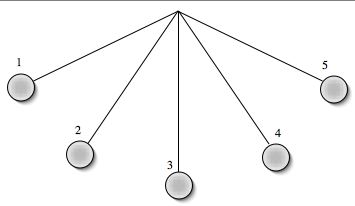
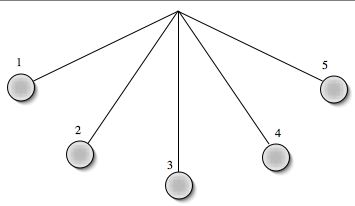

The picture is an example of _____ .

The picture is demonstrating an example of ______ .

An apple sitting on the edge of the table.
Potential
Kinetic

An apple rolling on a table
potential
kinectic
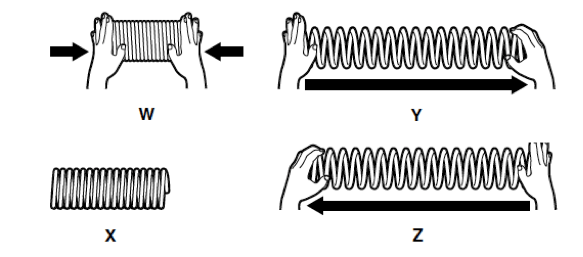
Elastic potential energy is energy stored in an object, such as a spring, due to the object being stretched or compressed. In which position is it most likely that the spring has lost its elastic potential energy?
W
Y
X
Z
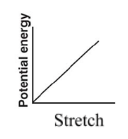
What potential energy is this graph representing?
Electric
Elastic
Magnetic
Gravitational
What is potential energy?
The energy an object has due to its position or condition.
The energy an object has due to its motion.
The energy an object has due to its chemical composition.
The energy as object has due to its atomic structure.
The (a) done to stretch or compress the spring is (b) in the spring as (c) (d) energy.
As the ball hits the ground, ..................energy is transferred to ....................... enrgy.
gravitational to kinetic
kinetic to chemical
kinetic to elastic
kinetic to gravitational
When the ball is falling down, the gravitational energy is transferred to .................................... energy.
potential
kinetic
elastic
chemical

An airplane circling in preparation for a landing

A mousetrap set and ready to spring

A pile of coal that will be used for fuel

A flag blowing in the wind

A box stored on the top shelf of a closet

A dam holding back a river’s water

An unlit firecracker

A marble rolling down the aisle of your science classroom

A hammer held above a nail

A new car battery

An ant crawling across a sandwich at a picnic



When you compress a spring, you are storing __________ energy.
sound
elastic
light
chemical


Which passenger has the most potential energy?
A
B
C
D

The formula for calculating the gravitational potential energy in an object is shown above. Which object will have the largest value for its GPE
If these are all moving at the same speed, the vehicle with the greatest KE would be
(Think about their sizes)


Determine whether the following example is Potential Energy (PE) or Kinetic Energy (KE):
flashlight turned off
Potential Energy
Kinetic Energy


