
Font size
S
M
L
XL
 Worksheets
Unit 2 Evaluation MASTER TE From IQWST How Can I Smell Things
Total questions: 105
Worksheet time: 9hrs 45mins
Name
Class
Date
1.
How does an odor get from a source to your nose?
a)
It moves around the container and stays there. We need to be close to the container to smell the odor.
b)
It travels through the air. When it gets to our noses, we smell it as we take in air.
c)
The odor radiates outward from the source in straight lines in all directions.
d)
The odor moves from object to object until it reaches your nose.
2.
Why does it make a difference if the lid is on or off the container?
a)
The lid kept the smell from moving.
b)
The odor can go through the lid.
c)
With the lid on, the odor must go through the sides of the container.
d)
With the lid off, the odor can reach just above where the lid would be.
3.
What does it mean that an odor got out of the container?
a)
It moved into the air in the room from the container.
b)
It stays in the container.
c)
It moved in a straight line through the container opening.
d)
It hovers just above the container opening.
4.
Think back to the activity with the ball. How would you convince someone who is absent today that air has mass? (MS-PS1-1)
a)
I would say that the air goes into the ball, so it must have mass.
b)
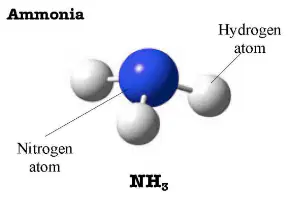
I would say that we can tell that air has mass because we measured the mass of a ball when it was inflated and when it was deflated. We found that the mass of the inflated ball was more than the mass of the deflated ball.
c)
I would say that the pump has mass, so it made the ball have more mass.
d)
I would say that the ball is bigger when inflated, so the air must have mass.
5.
The liquid and the wooden block take up space. Was anything taking up space in the plastic bowl before the liquid was poured in? If so, what was taking up the space? (MS-PS1-1)
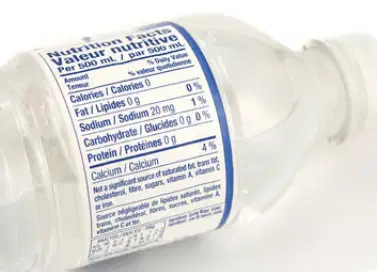
a)
Nothing was in the plastic bowl.
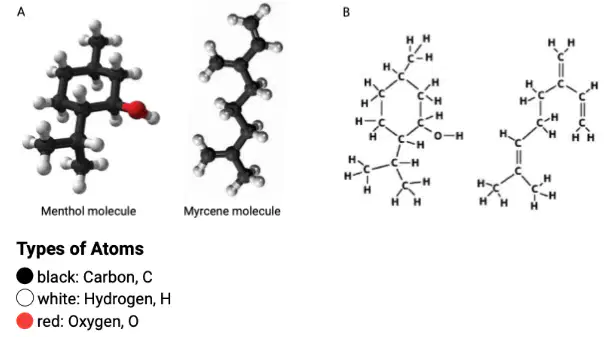
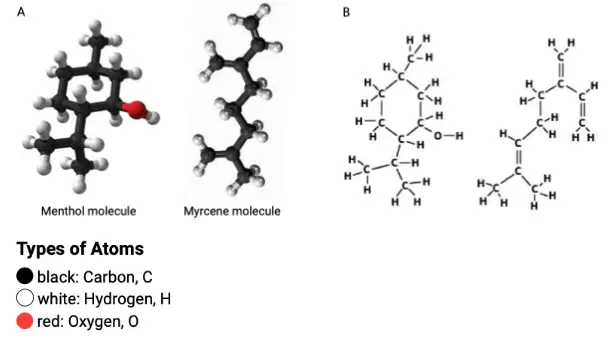
b)
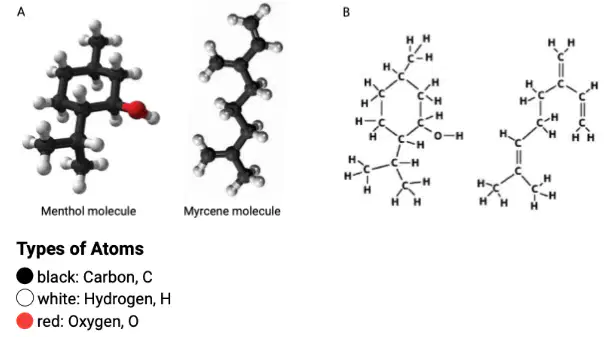
Air was taking up the space.
c)
There was a vacuum in the plastic bowl.
d)
Air took up part of the space but left space for the liquid to be poured in.
6.
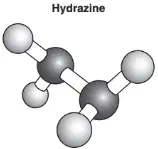
Think about the plastic bag with air. What is in the bag? Does air also take up space? (MS-PS1-1)
a)
Air was in the bag and it takes up space.
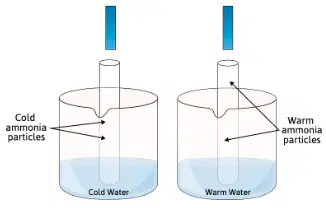
b)
Nothing was in the bag.
c)
There was a vacuum in the bag.
d)
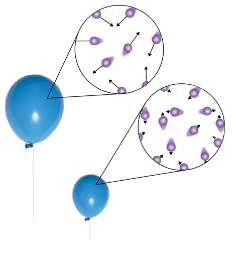
Air was in the bag, but it doesn’t take up space.
7.
What about the air around you? What space is it “taking up”? (MS-PS1-1)
a)
The air around me is taking up space in the room.
b)
The air around me is not taking up space.
c)
The air around me is taking up some space but leaves gaps for more things to come near me.
d)
The air around me takes up space, but only up to a certain height.
8.
Students in another science class had a sealed plastic bag full of air. The students had to decide whether the air in the bag had mass. Here are the answers that four students wrote:
a. Air does not have mass because the bag does not feel heavy.
b. Air does not have mass because the air keeps moving around.
c. Since I cannot actually measure it, air cannot have mass.
d. Air has mass, but it is probably very, very small.
Which of these answers do you agree with? Explain your ideas. (MS-PS1-1)
a)
OptiI agree with letter a. The bag is not heavy, so air does not have mass.
b)
I agree with letter b. The air is moving around, so it doesn’t have mass.
c)
I agree with letter c. Air can’t have mass since I can’t measure it.
d)
I agree with letter d. Our evidence when we filled up the ball with air shows that air has mass since the ball had more mass when air was added. The mass was not much, but it still was an increase.
9.
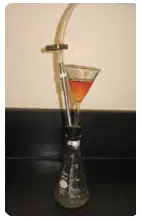
How did the demonstration that your teacher did with the empty flask provide evidence that air takes up space? (MS-PS1-1)
a)
Air does not take up space.
b)
The air went into the flask through the first hole when the clamp was on the tube.
c)
The air did not go into the flask through the first hole when the clamp was on the tube because the air in the flask took up all the space.
d)
The air did not go into the flask through the first hole when the clamp was on the tube because the hole was too small.
10.
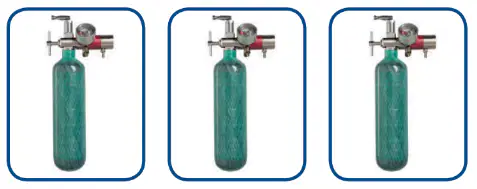
Imagine three 2L metal bottles. One of the containers is completely full of oxygen gas, one is half-full, and one is completely empty. All three containers look the same. Which investigation would help you to determine which container is full of gas, which is half-full, and which is empty? Explain the results that you would get with your investigation. (MS-PS1-1)
a)
I would pick up the bottles and shake them to see which one had the most oxygen. Since oxygen has mass, the one with the most oxygen would be the easiest to shake.
b)
I would find the mass of each metal bottle. The one with the most mass would be the container that is full, the one with the least mass would be the one that is empty. The one that is in the middle would be half-full. Since oxygen has mass, the one with the most oxygen would have the most mass.
c)
I would find the mass of each metal bottle. The one with the most mass would be the container that is empty, the one with the least mass would be the one that is full. The one that is in the middle would be half-full. Since oxygen has mass, the one with the most oxygen would have the most mass.
d)
I would find the mass of each metal bottle. The one with the most mass would be the container that is half-full, the one with the least mass would be the one that is full. The one that is in the middle would be full. Since oxygen has mass, the one with the most oxygen would have the most mass.
11.
Can menthol exist in more than one form? Use observations from the activity as evidence to support your response. (MS-PS1-1)
a)
Menthol cannot exist in more than one phase.
b)
Menthol can exist in solid and liquid forms, but not a gas. I saw it as a solid and a liquid, but did not see it as a gas.
c)
Menthol can exist in all three forms. We saw it as a solid and then when we heated it, it became a liquid. Then some liquid turned into gas and hardened into a solid.
d)
Menthol can be a solid, a liquid, and a gas all at the same time.
12.
You have now heated and cooled menthol and water. Based on what you have observed, can one kind of matter (like menthol or water) exist in three different states? Explain. (MS-PS1-1)
a)
Matter cannot exist in all three states. I haven’t seen any type of matter in all three states.
b)
Matter exists in all three states for water, but not menthol since I didn’t see the menthol gas.
c)
Matter exists in all three states since I have seen water in all three states, solid, liquid, and gas. The menthol turned into crystals after being in the gaseous state and it had melted from a solid to a liquid.
d)
All matter exists in all three states at the same time.
13.

The chart below shows 10 different substances identified as a solid, liquid, or a gas. Use the table to answer the following questions. (MS-PS1-1)
a)
The solids keep their shape.
b)
The solids can flow.
c)
The solids can go through the air by themselves.
d)
The solids change shape on their own.
14.

How are the materials on your liquids list similar?
a)
The liquids keep their shape wherever they are.
b)
The liquids take the shape of their container and can be poured.
c)
The liquids can go through the air by themselves.
d)
The liquids are transparent.
15.
When modeling air in a flask, what characteristics of gases did you observe? Choose all that apply. (TWO) (MS-PS1-1)
a)
Air stays in one place.
b)
Air stays the same shape.
c)
Air can be added and removed from a flask.
d)
Air takes the shape of its container.
16.
How do your models show that air takes the shape of the container it is in? Choose all that apply. (TWO) (MS-PS1-1)
a)
Air takes the shape of its container because gases spread to take the shape of their container.
b)
If the air was a solid, it would have a fixed shape and not be able to fit into certain containers.
c)
Air takes the shape of a container because air stays in one place.
d)
When the shape of a container is a basic square or circle shape, air will spread out; however, if the container is many-sided or an otherwise odd shape, the air is not able to spread out.
17.
Describe what happens to the air as you blow up an inflatable beach toy or an air mattress. Imagine that you are trying to describe the process to another student who was absent from school and does not know what you know about air. Choose all that apply. (MS-PS1-1)
a)
There is empty space between the air, so it is compressed when you add more air to the air mattress..
b)
When you add air to an air mattress, the air mattress will get bigger since air has volume.
c)
The pieces of air get smaller as you blow up an air mattress.
d)
Air has mass and volume, so the air mattress gets bigger and has more mass when air is added to it.
18.
Use your model to describe to a friend what compression means. Choose all that apply. (TWO) (MS-PS1-1)
a)
Compression means squishing the air together and having the same mass in a smaller volume. My model shows this by having the air close together.
b)
Compression means squishing the air together and having the same mass in a larger volume. My model shows this by having the air far apart.
c)
Compression means that you take something and fit it into a very small space. My model shows this by having all the air in a small space.
d)
Compression means that you take something and fit it into a larger space. My model shows this by having all the air in a large space.
19.
Use your model to describe to a friend what expansion means. Choose all that apply. (TWO) (MS-PS1-1)
a)
Expansion is when you give a gas less space to have it take up. My model shows this by the air being in a small area.
b)
Expansion is when you give a gas more space to have it take up. My model shows this by the air being spread out.
c)
Expansion means decreasing the volume of a sample, making the volume less. My model shows this in that there is less space between the air particles.
d)
Expansion means increasing the volume of a sample, making the volume bigger. My model shows this in that there is more space between the air particles.
20.
Is a sponge a good model of air? Why or why not? Choose all that apply. (TWO) (MS-PS1-1)
a)
A sponge is not a good model for air because it can be compressed. It expands when you are not pressing on it.
b)
A sponge is a good model for air because it can be compressed because of all the small spaces in it. It expands when you are not pressing on it.
c)
A sponge is not a good model for air because a sponge does not show how air can be added to or taken away from a container.
d)
A sponge cannot be a model because it has a specific use and design.
21.
How does the pieces model help you explain expansion and compression? Choose all that apply. (MS-PS1-1)
a)
If air is made of tiny pieces, then there can be spaces between the pieces. The tiny pieces are particles.
b)
If air is made of tiny pieces, then there cannot be spaces between the pieces. The tiny pieces are particles.
c)
When I pushed the syringe, the air compressed. My model can show that by showing the particles are closer together.
d)
When I pushed the syringe, the air did not compress. My model can show that by showing the particles are farther apart.
e)
Because the same number of particles were squeezed into a smaller space, the pressure on my finger increased. So I felt this as a push back on my finger.
22.
How does a particle model help me explain how the odor gets from the source to my nose? (MS-PS1-1)
a)
There are squiggles of the odor going from the container to the air to my nose.
b)
When I was smelling the odor, I was smelling particles that started in the container, but then changed into a gas and moved into the air.
c)
The particles were in the air all the time and then moved to my nose.
d)
Once the air particles get to our nose, it has a chemical reaction with our nose and then we smell the odor.
23.
It takes the shape of the container and can flow. It has a constant volume. (MS-PS1-1)
a)
Solid
b)
Liquid
c)
Gas
d)
All of the above.
24.
When it’s not in a container, it keeps its shape. It has a definite shape and volume.
a)
Solid
b)
Liquid
c)
Gas
d)
All of the above.
25.
It has no definite shape or volume and can be added to or taken out of a container. It can expand and be compressed.
a)
Solid
b)
Liquid
c)
Gas
d)
All of the above.
26.
Which is not a characteristic of all matter? (MS-PS1-1)
a)
All matter has mass.
b)
All matter takes up space.
c)
All matter is made of atoms.
d)
All matter has color.
27.
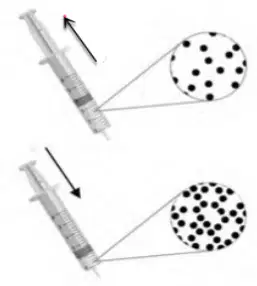
The model below shows a gas being compressed and expanded in a syringe. Use the model to explain what happens to particles when a material is compressed or allowed to expand in a closed space. (MS-PS1-1)
When an area of air is compressed, the molecules:
a)
Get closer together.
b)
Get further apart.
c)
Compression does not affect molecules.
d)
The pressure of compression makes the molecules get smaller and smaller.
28.
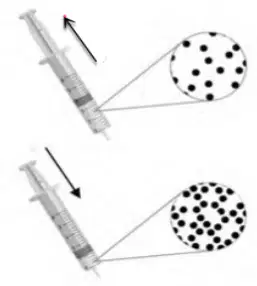
The model below shows a gas being compressed and expanded in a syringe. Use the model to explain what happens to particles when a material is compressed or allowed to expand in a closed space. (MS-PS1-1)
When an area of air is expanded, the molecules:
a)
Get closer together.
b)
Get further apart.
c)
Expansion does not affect molecules.
d)
Expansion allows the molecules to enlarge and take up more space.
29.
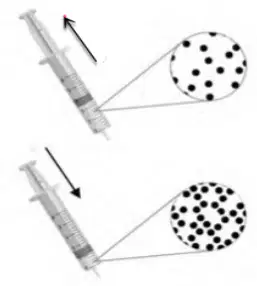
The model below shows a gas being compressed and expanded in a syringe. Use the model to explain what happens to particles when a material is compressed or allowed to expand in a closed space. (MS-PS1-1)
What happens to the motion of the molecules when the gas is compressed?
a)
Compression does not affect the motion of the molecules.
b)
They go slower.
c)
They continue to move and collide with each other and the side of the container.
d)
All of the pressure slows the molecules down until they eventually stop moving.
30.
Chris has two tanks of helium gas. She wants to find out which tank has the most gas in it, so she can blow up balloons for a party. Chris thinks that measuring the masses of the two tanks will help her identify which one contains the most gas. Will comparing the mass of the tanks help Chris know which one has the most gas in it? Why or why not? (MS-PS1-2)
a)
Chris cannot tell the difference between the tanks by measuring the mass because gas doesn’t have mass that can be measured.
b)
Chris can tell the difference between the tanks of gas since the one that has the most gas in it will have the most mass. Gas has mass.
c)
Chris can tell the difference between the tanks of gas since the one that has the least gas in it will have the most mass.
d)
Chris cannot tell the difference between the tanks by measuring the mass because gas does not have mass.
e)
The diagram shows models of a methane molecule and a carbon tetrachloride molecule.
31.
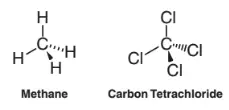
An atom of chlorine, Cl, has more mass than an atom of hydrogen, H. Both methane and carbon tetrachloride are gases at 100°C. (MS-PS1-2)
Part 1: Use the provided information to predict how the mass of a liter of methane gas compares to the mass of a liter of carbon tetrachloride gas at 100°C and the same pressure.
a)
Carbon tetrachloride gas will have less mass per liter than methane gas at the same temperature and pressure.
b)
Carbon tetrachloride gas will have the same mass per liter than methane gas at the same temperature and pressure.
c)
Carbon tetrachloride gas will have more mass per liter than methane gas at the same temperature and pressure.
32.
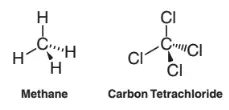
An atom of chlorine, Cl, has more mass than an atom of hydrogen, H. Both methane and carbon tetrachloride are gases at 100°C. (MS-PS1-2)
Part 2: Support your prediction with evidence from the information.
a)
Both molecules have the same number of carbon atoms (1) and the same number of atoms attached to the carbon atom (4), but because a chlorine atom has more mass than a hydrogen atom, a liter of carbon tetrachloride gas will have more mass than a liter of methane gas.
b)
Both molecules have the same number of carbon atoms (1) and the same number of atoms attached to the carbon atom (4), but because a hydrogen atom has more mass than a chlorine atom, a liter of carbon tetrachloride gas will have more mass than a liter of methane gas.
c)
Both molecules have the same number of carbon atoms (1) and the same number of atoms attached to the carbon atom (4), but because a chlorine atom has more mass than a hydrogen atom, a liter of methane gas will have more mass than a liter of carbon tetrachloride gas.
d)
Both molecules have the same number of carbon atoms (1) and the same number of atoms attached to the carbon atom (4), but because a hydrogen atom has more mass than a chloride atom, a liter of methane gas will have more mass than a liter of carbon tetrachloride gas.
33.
What Makes Paper Change Color?
Describe how your model can be used to explain what happened in the activity. Choose all that apply. (TWO) (MS-PS1-1)
a)
Some of the liquid becomes a gas and evaporates into the air.
b)
The liquid is in the container and stays there.
c)
The paper changes color.
d)
The particles of ammonia in the air caused the indicator paper to change color.
34.
What Makes Paper Change Color?
What is a model of the paper in a flask unable to show? Choose all that apply. (TWO) (MS-PS1-1)
a)
That the paper changed color.
b)
How the paper changes color.
c)
All of the movement of the particles in the flask.
d)
That the ammonia changed into a gas.
35.
What makes the paper change color? (MS-PS1-1)
a)
The paper changes color in the light.
b)
The paper changes color because some of the liquid evaporates and becomes a gas. The gas travels to the paper and causes it to change colors.
c)
The paper changes color because some of the liquid goes up the sides of the container and reaches the paper. This causes it to change colors.
d)
The paper does not actually change color. The gas modifies how we see the paper.
36.
Why is it important to understand particles in order to invent detectors? Choose all that apply. (TWO) (MS-PS1-1)
a)
Particles stay in place.
b)
Particles move.
c)
Particles can sometimes hurt us, so we need to have detectors to tell us that they are around us since we can’t see them.
d)
Particles are constantly changing in unpredictable ways.
37.
Do you know an adult who drinks coffee, tea, or soda pop? Think about that person and picture them in your mind. Choose a description that helps that person understand how they can smell their favorite beverage even though it is a liquid. Choose all that apply. (TWO) (MS-PS1-1)
a)
There are particles in your coffee that get into the air and travel to your nose.
b)
There are particles in your coffee that stay in the coffee and so you can smell them if you get close.
c)
Your nose is a detector and detects the particles when they get into the air.
d)
You see the coffee and it makes you smell it.
38.
What evidence do you have that gases are different? (MS-PS1-1)
a)
We can see that they are different.
b)
They have different names.
c)
They behave differently when they give off light.
d)
Some gases move faster or slower than others.
39.
Why do the different gases give off different colors of light? (MS-PS1-1)
a)
The gases are made up of different particles.
b)
Light is absorbed by the gas.
c)
The gas makes the light be different colors.
d)
The speed of the movement of gases determines which color of light the gas gives off.
40.
Do you think odor is a property? Choose all that apply. (TWO) (MS-PS1-1)
a)
I do not think that an odor is a property.
b)
I think that an odor is a property because different odors smell differently.
c)
I think that an odor is a property because it is the same smell whether you have a small or a large piece of the substance.
d)
I think that an odor is a property because the odors from different substances can smell the same.
41.
Write a summary of what you think are the most important things a new student should know about properties in order to catch up with your class. Choose all that apply. (MS-PS1-1)
a)
Properties are always the same for a substance.
b)
Properties help tell substances apart.
c)
Examples of properties are color, texture, hardness, and malleability.
d)
Properties can be different for different sizes of the same substance.
e)
Properties of different substances can be all the same.
42.
Do some elements have common properties? What is your evidence? (MS-PS1-2)
a)
Two substances were both rollable [malleable], but one was harder than the other using the scratch test.
b)
Elements do not have common properties.
c)
Some elements have the same mass and volume.
d)
We can breathe in the elements of oxygen and carbon dioxide.
43.
Based on your investigation (data table), can you determine what a substance is by looking at one property? Choose all that apply. (TWO) (MS-PS1-2)
a)
You can tell what a substance is by looking at one property like hardness.
b)
You can tell what a substance is by looking at a combination of properties like hardness and color.
c)
You can tell what a substance is by looking at a combination of properties like hardness and malleability.
d)
Properties are not enough data to identify a substance.
44.
Can some elements share all properties? What is your evidence? Choose all that apply. (TWO) (MS-PS1-2)
a)
Gold and Fool’s gold share all the same properties, but they are different substances.
b)
If they share all the same properties, they would be the same substance.
c)
My evidence is that all of the metals that we tested had at least one property that was different.
d)
Some elements can share all properties, so they are difficult to tell apart.
45.
What is the difference between an atom and an element? Choose all that apply. (TWO) (MS-PS1-1)
a)
An atom is a particle that makes up all matter. Atoms are different types and each of these types is a different element.
b)
An element is what the substance is and an atom is made of different elements.
c)
For example, a block of gold is made of particles called atoms. Gold is an element because it is only made up of gold atoms.
d)
Atoms and elements are essentially the same things, elements are actually combined of different atoms.
46.
Gold is an element because (MS-PS1-1)
a)
it has 1,077 sextillion atoms in a small block.
b)
it is a metal.
c)
it is made up of only gold atoms.
d)
It can be used to make jewelry.
47.
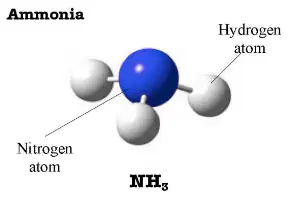
What does this model show? Choose the best answer. (MS-PS1-1)
a)
It shows that 3 nitrogen atoms and 1 hydrogen atom make up ammonia.
b)
It shows that ammonia is made of different molecules.
c)
It shows that a molecule of ammonia is made of three hydrogen atoms and one nitrogen atom. They are connected together.
48.
What does this model not show or how is it different from a real atom? Choose all that apply. (MS-PS1-1)
a)
OpIt does not show that ammonia is made of millions of molecules.
b)
Atoms are different from this model because they float around in the air not touching anything.
c)
Atoms are not different colors.
d)
It shows that atoms don’t move around.
e)
It does not show that atoms move.
49.
Is air a pure substance? Why or why not? Choose the best answer. (MS-PS1-1)
a)
Air is a pure substance because it is made of air molecules.
b)
Air is not a pure substance. It is made of different kinds of molecules like carbon dioxide, nitrogen, oxygen and water.
c)
Air is not a pure substance because it is made of the same kind of molecules throughout.
d)
Air is not a substance, it is matter in the gas phase.
50.
Think about the physical models and the simulation. Choose the best answer for each question. (MS-PS1-1)
Part 1: What are the advantages of the simulation?
a)
The simulation shows the particles as they move, bouncing off each other.
b)
The simulation shows the particles staying in the same place.
c)
We are able to get a good understanding of size and scale of the particles.
d)
We are able to visualize the exact speed of the particles moving.
51.
Think about the physical models and the simulation. Choose the best answer for each question. (MS-PS1-1)
Part 2: What are the advantages of the consensus model?
a)
The consensus model does not include everyone’s ideas.
b)
The consensus model can show the empty space between the particles and that the odor starts from a source.
c)
The consensus model shows that there is no empty space between the particles and that the odor is everywhere.
d)
The consensus model only shows what the teacher says is the correct answer.
52.
Think about the physical models and the simulation. Choose the best answer for each question. (MS-PS1-1)
Part 3: What are the disadvantages of the simulation?
a)
None of the things in the simulation are how things happen in real life.
b)
The simulation cannot show how the particles move around.
c)
The simulation does not show that the odor starts from a source.
d)
The simulation is not based on current scientific understanding.
53.
Think about the physical models and the simulation. Choose the best answer for each question. (MS-PS1-1)
Part 4: What is a disadvantage of the consensus model?
a)
The consensus model cannot show the movement of the particles as it happens.
b)
The consensus model doesn’t have sound.
c)
The consensus model shows the particles staying in the same place.
d)
A consensus model does not use color and design principles.
54.
Look closely at the label of this bottle of water. Are you drinking a substance or drinking a mixture? Choose the best answer. (MS-PS1-1)
a)
You are drinking a substance because it is water.
b)
You are drinking a mixture. Pure water (a substance) has only water as an ingredient. This label shows that there is sodium and calcium in the water.
c)
You are drinking a mixture since this bottle has different kinds of water in it.
d)
You are drinking a substance. Sodium and calcium are elements found in all substances.
55.
Why do different substances have different odors? Choose all that apply. (TWO) (MS-PS1-1)
a)
Different substances have different odors because one substance can give off different atoms into the air.
b)
Different substances have different odors because the atoms combine in different ways (each has a different arrangement).
c)
Different substances have different properties because if they were the same they would be the same substances.
d)
Different substances can have the same odor.
56.
How is a menthol molecule similar to a myrcene molecule? Choose all that apply. (MS-PS1-1)
a)
They are both made of carbon and hydrogen atoms.
b)
They are made of all the same atoms.
c)
They have a somewhat similar shape, but not exactly.
d)
They both have carbon atoms that have three hydrogen atoms connected.
57.
How is a menthol molecule different from a myrcene molecule? Choose all that apply. (MS-PS1-1)
a)
The menthol molecule has an oxygen atom while the myrcene molecule does not.
b)
The carbon atoms are in a ring in the menthol molecule while the carbon atoms in the myrcene molecule do not quite make a ring.
c)
There are more carbon atoms and hydrogen atoms in the menthol molecule than the myrcene molecule.
d)
The myrcene molecule has an oxygen atom while the menthol molecule does not.
e)
The carbon atoms are in a ring in the myrcene molecule while the carbon atoms in the menthol molecule do not quite make a ring.
58.
Which model (A or B) would you use to help someone understand how menthol is different from myrcene?
What do you think makes that model best for explaining that menthol and myrcene are different substances? (MS-PS1-1)
a)
I think that model A would be best because you can see that the two types of atoms are the same shape.
b)
I think that model B would be best because you can see that the shapes are the same.
c)
I think that model A would be best because you can glance at it and see that the two types of atoms are different shapes.
d)
I think that model B would be best because you can easily count the number of carbon, hydrogen and oxygen atoms and see that they are different in the two molecules. You can also see that the shapes are different.
59.
Your class is studying metallic elements. Your teacher gives you two metal strips. You need to determine if they are the same element or not. What are three different properties that would help you determine whether the strips are the same? (MS-PS1-2)
a)
Mass, color, and hardness
b)
Malleability, melting point, and hardness
c)
Shape, color, and melting point
d)
Volume, hardness, and malleability
60.

Cho bought a bottle of distilled (pure) water. Here is a model of a water molecule: (MS-PS1-2)
Part 1: What would it look like if she drew a model of the molecules in the water bottle using a “special instrument” that would allow her to see the smallest parts of water?
a)
There would be a few of these molecules (model above) in the bottle along with the water.
b)
There would only be (model above) molecules throughout the bottle.
c)
There would be (model above) as well as other molecules in the bottle.
d)
There would be (model above) as well as air molecules in the bottle.
61.

Cho bought a bottle of distilled (pure) water. Here is a model of a water molecule: (MS-PS1-2)
Part 2: How would this compare to water that Cho collected from a pond near her house?
a)
The water in the bottle would have minerals in it just like the pond water.
b)
The water in the bottle would have a different type of water molecule in it because it is safe to drink.
c)
The water in the bottle would only have water molecules and the pond water would have many other things like minerals and tiny living things in it.
d)
The water in the bottle would be the same as the pond water.
62.
Calcium and nitrogen are both elements. What makes one element different from another element? (MS-PS1-2)
a)
They are different colors and sizes.
b)
They have different properties and are found in different places.
c)
They have different properties and are made of different types of atoms.
d)
They are made of different types of atoms and have the same properties.
63.
The model shown represents one molecule of hydrazine, a chemical in rocket fuel. MS-PS1-3
The black spheres represent nitrogen atoms, the white spheres represent hydrogen atoms. Based on the model, what is the atomic composition of hydrazine?
a)
1 atom of nitrogen and 1 atom of hydrogen.
b)
4 atoms of nitrogen and 2 atoms of hydrogen.
c)
2 atoms of nitrogen and 2 atoms of hydrogen.
d)
2 atoms of nitrogen and 4 atoms of hydrogen.
64.
How did the ammonia molecules get to the paper? Choose all that apply. (TWO) (MS-PS1-4)
a)
Some of the ammonia molecules traveled up the side of the container.
b)
Some of the ammonia molecules move or travel through air.
c)
The ammonia molecules evaporated and went into the air.
d)
The ammonia molecules condensed and went into the air.
65.
How is using your model to predict similar to using your model to explain? How is it different? Select all that apply. (MS-PS1-4)
a)
Both tell about phenomena. Both are backed by evidence.
b)
When you use a model to predict, you are trying to figure out what is going to happen based on what you already know.
c)
When you use a model to explain, it is based on what happened, or based on evidence.
d)
Both tell about phenomena. Evidence is used only when you use your model to explain.
e)
When you use a model to predict, you are trying to figure out what happened.
66.
A friend who was absent missed seeing what happened in this activity. (MS-PS1-4)
Look at this model that explains how ammonia behaved in the two conditions.
Use your model to explain to your friend how the ammonia in this activity behaved in the two conditions. Choose all that apply. (TWO)
a)
The ammonia particles in the hot water bath reached the indicator paper faster than the molecules in the cold water bath.
b)
The ammonia particles in the hot water bath reached the indicator paper slower than the molecules in the cold water bath.
c)
The evidence for this is that the indicator changed color slower over the hot water bath, indicating that the molecules that make up the ammonia had traveled up and out of the flask as they were heated and turned from gas to liquid.
d)
The evidence for this is that the indicator changed color faster over the hot water bath, indicating that the molecules that make up the ammonia had traveled up and out of the flask as they were heated and turned from liquid to gas.
67.
What does the temperature of a substance tell about the speed of the particles? Choose all that apply. (TWO) (MS-PS1-4)
a)
When you heat a substance, the particles in that substance move slower.
b)
When you heat a substance, the particles in that substance move faster.
c)
When you cool down a substance, the particles in that substance move faster.
d)
When you cool down a substance, the particles in that substance move slower.
68.
How does cooling/heating affect the speed of molecules? Choose all that apply. (TWO) (MS-PS1-4)
a)
When you cool a substance, the speed decreases.
b)
When you cool a substance, the speed increases.
c)
When you heat a substance, the speed decreases.
d)
When you heat a substance, the speed increases
69.
How does cooling/heating affect the number of collisions? (MS-PS1-4)
a)
When you cool a substance, the number of collisions increases. When you heat a substance, the number of collisions decreases.
b)
When you cool a substance, the number of collisions decreases. When you heat a substance, the number of collisions increases.
c)
Different temperatures do not affect the number of collisions.
d)
When heat is added, some of the empty space between the molecules is used up so that the molecules are forced to be closer to together so there are more collisions due to the crowding of molecules.
70.
How does the temperature affect how hard the molecules hit the surface of the balloon? (MS-PS1-4)
a)
If the balloon is cooled, then the molecules would not hit the surface of the balloon as hard. If the balloon is heated, then the molecules would hit the surface of the balloon harder.
b)
If the balloon is heated, then the molecules would not hit the surface of the balloon as hard. If the balloon is cooled, then the molecules would hit the surface of the balloon harder.
c)
Different temperatures do not affect how hard the molecules hit the surface of the balloon.
d)
When the temperature of the balloon is increased, the balloon gets softer so that the collisions do not appear to impact the balloon as much as when the balloon is cooled.
71.
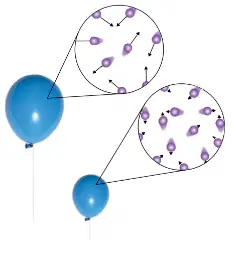
Look at the following model. (MS-PS1-4)
Part 1: Which model is a balloon that is warm?
a)
The large balloon
b)
The small balloon
c)
Neither balloon shows a temperature
d)
Both of the balloons are the same.
72.
Look at the following model. (MS-PS1-4)
Part 2: What do the purple circles represent?
a)
Movement
b)
Air particles
c)
Empty space
d)
Oxygen elements in the air
73.
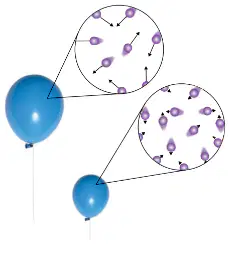
Look at the following model. (MS-PS1-4)
Part 3: What do the arrows represent?
a)
Movement
b)
Air particles
c)
Empty space
d)
The temperature of the air molecules
74.
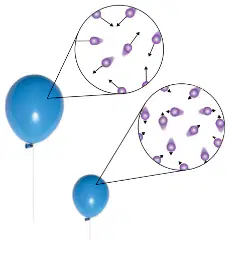
Look at the following model. (MS-PS1-4)
Part 4: What is between the purple circles and arrows?
a)
Empty space
b)
Other air particles
c)
Movement
d)
Bacteria and viruses in the air
75.
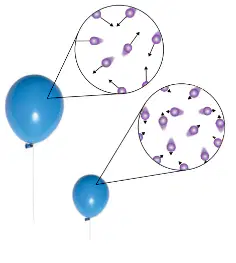
Look at the following model. (MS-PS1-4)
Part 5: What statements are true about this model? Choose all that apply. (TWO)
a)
Air molecules hit the outside of the balloon harder than the molecules on the inside of the balloon causing the balloon to shrink.
b)
Air molecules hit the outside of the balloon harder than the carbon dioxide molecules on the outside of the balloon causing the balloon to get bigger.
c)
The molecules inside the balloon (at a higher temperature) have less energy and collide less forcefully, pushing the balloon harder.
d)
The molecules inside the balloon (at a higher temperature) have more energy and collide more strongly, pushing the balloon harder.
76.
What would you expect to happen to the molecules inside the balloon if the balloon sat in a warm room all day? Explain your ideas. (MS-PS1-4)
a)
If the room stays at the same warm temperature, the molecules inside the balloon and outside the balloon would move in the same way. But, if the room started to cool off, the molecules would speed up, and the balloon would get smaller. If the room started to warm up, the molecules would move slower, and the balloon would get bigger.
b)
If the room stays at the same warm temperature, the molecules inside the balloon and outside the balloon would move in the same way. But, if the room started to cool off, the molecules would slow down, and the balloon would get bigger. If the room started to warm up, the molecules would move faster, and the balloon would get smaller.
c)
If the room stays at the same warm temperature, the molecules inside the balloon and outside the balloon would move in the same way. But, if the room started to cool off, the molecules would slow down, and the balloon would get smaller. If the room started to warm up, the molecules would move faster, and the balloon would get bigger.
d)
The molecules in the balloon are protected from changes in the temperature by the latex in the balloon. The balloon can be heated, stay at room temperature, or even be cooled, and the air inside of it will be the same. That is why a balloon looks the same at the beginning of the day and a few hours later.
77.
Why do you think the liquids evaporated faster on your hand than on the desk? (MS-PS1-4)
a)
The liquid spread out farther on my hand.
b)
My hands are warmer, so energy transfer is faster.
c)
The desk is colder, so energy transfer is faster.
d)
The desk is warmer, so energy transfer is faster with the desk.
78.
What do we notice as we compare our models of matter for gases and liquids? (MS-PS1-4)
a)
Particles in the gas phase are farther apart and move slower than in the liquid phase.
b)
Particles in the gas phase are closer together and move faster than in the liquid phase.
c)
Particles in the gas phase are farther apart and move faster than in the liquid phase.
79.
Part 1: What do we know about temperature and how molecules move in a gas? (TWO) (MS-PS1-4)
a)
In the gaseous state, an increase in temperature indicates that the gas molecules are moving slower.
b)
In the gaseous state, an increase in temperature indicates that the gas molecules are moving faster.
c)
In the gaseous state, a decrease in temperature indicates that the gas molecules are moving faster.
d)
In the gaseous state, a decrease in temperature indicates that the gas molecules are moving slower.
80.
Part 2: What do we know about the distance between molecules as we cool a substance in the gaseous state?
a)
They slow down and move closer together, or condense.
b)
They speed up and move closer together, or condense.
c)
They slow down and move farther apart, or condense.
d)
They speed up and move farther apart, or condense.
81.
Using the particle model, explain why water forms on the outside of a cold can of soda pop. (Hint: Be sure to tell where the water on the outside of the can comes from.) Choose all that are a part of the process. (TWO) (MS-PS1-4)
a)
The water molecules in the air near the cup lose energy.
b)
The water molecules in the air near the cup gain energy.
c)
During condensation, the gas water molecules become liquid molecules on the outside of the cup.
d)
During evaporation, the gas water molecules become liquid molecules on the outside of the cup.
82.
How do the trails behind airplanes form? Explain what happens with the molecules being released from the airplane. (MS-PS1-4)
a)
One of the substances that jet engines make is water that is released into the air in the gaseous state. The air high up in the sky is very cold. When cold air and gaseous water meet, the water molecules slow down, get closer together and lose energy. They condense into a lot of tiny drops of liquid water which are the contrails.
b)
One of the substances that jet engines make is carbon dioxide which is released into the air in the gaseous state. The air high up in the sky is very cold. When cold air and carbon dioxide meet, the carbon dioxide molecules slow down, get closer together and lose energy. They make tiny drops of liquid water which are the contrails.
c)
One of the substances that jet engines make is water that is released into the air in the gaseous state. The air high up in the sky is very cold. When cold air and gaseous water meet, the water molecules speed up, spread apart, and gain energy. They condense into a lot of tiny drops of liquid water which are the contrails.
d)
One of the substances that jet engines make is water that is released into the air in the liquid state. The air high up in the sky is very cold. When cold air and liquid water meet, the water molecules slow down, get closer together and lose energy. They condense into a lot of tiny drops of gaseous water which are the contrails.
83.
Use your particle model to explain your data. (How can the physical model you used in class help you explain what happened?) (MS-PS1-4)
a)
Liquids contract when heated because the molecules move closer together to each other at higher temperatures. They collide with each other and can occupy less space in their container. The physical model shows how the beads collide with one another and how the spaces between the molecules decrease as the temperature increases.
b)
Liquids expand when cooled because the molecules move farther apart from each other at lower temperatures. They collide with each other and can occupy more space in their container. The physical model shows how the beads collide with one another and how the spaces between the molecules increase as the temperature decreases.
c)
Liquids expand when heated because the molecules move farther apart from each other at higher temperatures. They collide with each other and can occupy more space in their container. The physical model shows how the beads collide with one another and how the spaces between the molecules increase as the temperature increases.
d)
Liquids expand when cooled because the molecules move closer at lower temperatures. They collide into each other and can occupy less space in their container. The physical model shows how the beads collide into one another and how the spaces between the molecules increase as the temperature decreases.
84.
What does an increase in temperature tell you about the movement of molecules in a liquid? (MS-PS1-4)
a)
The molecules in a liquid are moving faster.
b)
The molecules in a liquid are moving slower.
c)
The molecules in a liquid are moving at the same speed.
d)
The molecules are not moving.
85.
How does this compare to what you learned about gases? (MS-PS1-4)
a)
A decrease in temperature tells me the molecules in a liquid are moving faster. This is the same for a gas—the lower the temperature, the faster the gas molecules are moving. This is different for gases because they are farther apart and don’t collide as hard against the surface of their container.
b)
An increase in temperature tells me the molecules in a liquid are moving faster. This is the same for a gas—the higher the temperature, the faster the gas molecules are moving. This is different for gases because they are farther apart and collide harder against the surface of their container.
c)
An increase in temperature tells me the molecules in a liquid are moving slower. This is the same for a gas—the higher the temperature, the slower the gas molecules are moving. This is different for gases because they are farther apart and don’t collide as hard against the surface of their container.
d)
A decrease in temperature tells me the molecules in a liquid are moving slower. This is the same for a gas—the higher the temperature, the slower the gas molecules are moving. This is different for gases because they are farther apart and don’t collide as hard against the surface of their container.
86.
Explain how the model helped you to understand what you observed in this activity. (MS-PS1-4)
a)
The physical model can show what color the molecules are.
b)
The physical model can show how the molecules avoid hitting each other.
c)
The physical model can show the movement of the molecules and collisions between them.
d)
The physical model was developed using liquids and liquids behave differently than gases do when they are heated.
87.
How does this activity connect to the computer simulation that was used in Lesson 11? (MS-PS1-4)
a)
Both the physical model and the computer simulation can show movement.
b)
Neither the physical model nor the computer simulation can show movement.
c)
Both the physical model and the computer simulation can show what molecules are made of.
d)
The physical model shows movement but the simulation only shows speed.
88.
Why do you think you can smell menthol when it is solid? (MS-PS1-4)
a)
The menthol becomes a liquid and then evaporates into the air.
b)
Some of the menthol molecules making up the solid decrease their movement to where they are no longer in an organized arrangement. They move closer together and are now in a gaseous state.
c)
The menthol stays solid and you smell it.
d)
Some of the menthol molecules making up the solid increase their movement to where they are no longer in an organized arrangement. They move farther apart and are now in a gaseous state.
89.
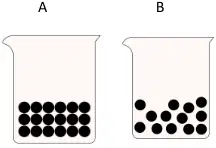
Imagine that you have a special instrument that would allow you to see the molecules of the solid wax up close. Which model shows the molecules of a solid? (MS-PS1-4)
a)
A
b)
B
90.
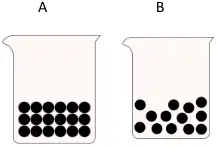
Imagine that you have a special instrument that would allow you to see the molecules of the liquid wax up close. Which model shows the molecules of a liquid? (MS-PS1-4)
a)
A
b)
B
91.
Imagine that a friend was looking at your model of wax. Describe how your model explains what happened when it melted. (MS-PS1-4)
a)
As the temperature of the wax molecules increased, their motion decreased to a point where the molecules became more organized. The molecules moved closer together (with continuous motion) and are now in a liquid state of matter.
b)
As the temperature of the wax molecules increased, their motion increased to a point where the molecules were no longer in an organized arrangement. The molecules moved farther apart (with continuous motion) and are now in a liquid state of matter.
c)
As the temperature of the wax molecules decreased, their motion increased to a point where the molecules were no longer in an organized arrangement. The molecules stayed in the same place and are now in a liquid state of matter.
d)
As the temperature of the wax molecules decreased, their motion decreased to a point where the molecules were no longer in an organized arrangement. The molecules stayed in the same place and are now in a liquid state of matter.
92.
Explain why scientists would think an increase in temperature would cause glaciers to get smaller. Remember that glaciers are huge pieces of ice. Use ideas you learned in this lesson, including melting, freezing, and water molecules. (MS-PS1-4)
a)
The warm air makes the water molecules from the glaciers move faster, and that makes the glaciers melt. If the temperature rises, more ice will melt and less water will freeze.
b)
The warm air makes the water molecules from the glaciers move slower, and that makes the glaciers melt. If the temperature rises, more ice will melt and more water will freeze.
c)
The warm air makes the water molecules from the glaciers move faster, and that makes the glaciers melt. If the temperature decreases, more ice will melt and more water will freeze.
d)
The warm air makes the water molecules from the glaciers move slower, and that makes the glaciers freeze. If the temperature rises, more ice will melt and more water will freeze.
93.
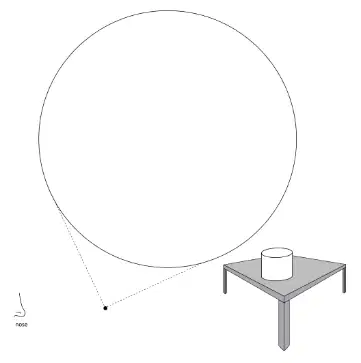
Imagine that you have a special instrument that allows you to see what makes up an odor. The large circle in the drawing represents a spot that is magnified many times, so you can see it up close. Create a model of what you would see if you could focus on one tiny spot in the area between the container and your nose. Label the parts of your model.
4 lines
94.
Imagine a friend of yours from a different science class was looking at your model. Describe for your friend how your model helps to explain how he or she smells odor from across the room.
4 lines
95.
How is this model different from the ones you created during Lessons 1 and 5? How has your model changed?
4 lines
96.
Jackson claims that odor molecules can diffuse more quickly in warm temperatures than in cool temperatures. Which of the following is part of a description of a model that Jackson could use to support his claim? Choose all that apply. (MS-PS1-4)
a)
Jackson drew two models, one at a higher temperature and the other at a lower temperature.
b)
There should be a symbol to represent an odor.
c)
Jackson represented how fast the odor moves by using the length of an arrow. A longer arrow means faster movement.
d)
The object that represents an odor should have a long arrow in warm temperatures and a short arrow in cold temperatures.
e)
Jackson drew one model for both lower and higher temperatures.
97.
A pot of water is placed on a hot stove. Small bubbles begin to appear at the bottom of the pot. The bubbles rise to the surface of the water and seem to pop or disappear. (MS-PS1-4)
What are the bubbles made of?
a)
Air
b)
Gaseous oxygen and hydrogen
c)
Gaseous water
d)
None of the above
98.
The pot of water on the hot stove begins to boil rapidly. A tight fitting glass lid is placed on the pot and water droplets begin forming on the inside of the lid. How can you explain what is happening? (MS-PS1-4)
a)
Steam cooled and water molecules moved closer together.
b)
Water from outside leaked into the pot.
c)
Hydrogen and oxygen combined to form water.
d)
Steam combined with the air to wet the inside of the lid.
99.
A student drew a model of two liquids: One hot and one cold. How would the student draw this? Choose all that apply. (MS-PS1-4)
a)
Models should show two separate containers of liquid.
b)
There should be something to represent molecules in the liquid.
c)
The student should put shorter arrows on the cold liquid and longer arrows on the warm liquid. The arrows show the speed of the molecular movement.
d)
There should be a key to tell what the arrows represent and how the molecules are represented.
e)
Models should show one container of liquid.
100.
How are temperature and movement of the liquid molecules are related? (MS-PS1-4)
a)
The movement of molecules is not related to the temperature.
b)
The faster the movement of the molecules, the higher the temperature of the liquid.
c)
The slower the movement of the molecules, the lower the temperature of the liquid.
d)
The movement is not different between the two temperatures.
101.
How would your model of two liquids change if it needed to represent the same two liquids after you put the containers in the freezer overnight? Choose all the answers that apply. (MS-PS1-4)
a)
The two models should be the same.
b)
When something freezes, the molecules get very close together.
c)
The molecules have long arrows to show that they are moving quickly.
d)
The molecules don’t move much but vibrate in place.
102.
How does thermal energy affect the movement of molecules? Choose all the answers that apply. (MS-PS1-4)
a)
When the containers are put in the freezer, the thermal energy transfers from the hot liquid to the cold freezer compartment.
b)
The molecules speed up because of the cold.
c)
The molecules slow down because of the cold.
d)
The molecules are slowed down so much that they don’t slide past each other, but only move in place. The liquids become solids.
e)
When the containers are put in the freezer, the cold freezer makes the molecules in the hot liquid move faster. They bump into each other and stop each other from moving.
103.
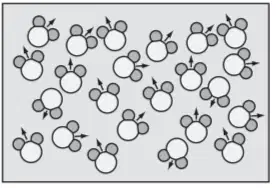
A student drew this molecular model to represent liquid water at 10oC. How should the student change the model to best represent water at 20oC? (MS-PS1-4)
a)
Show the water molecules packed more tightly together.
b)
Show some of the chemical bonds in the water molecules breaking.
c)
Show some of the water molecules forming chemical bonds with each other.
d)
Show the water molecules with longer arrows to represent an increase in motion.
104.
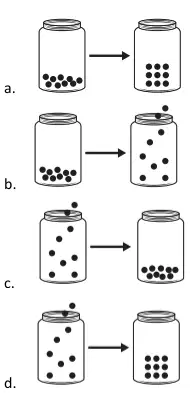
Which model best represents a change that results from adding thermal energy to a substance in a jar? MS-PS1-4
a)
A
b)
B
c)
C
d)
D
105.
Which of the following is a true statement? (MS-PS1-1)
a)
A water molecule in the gas phase is smaller than a water molecule in the solid phase.
b)
A water molecule in the gas phase is lighter than a water molecule in the solid phase.
c)
A water molecule in the gas phase is larger than a water molecule in the solid phase.
d)
A water molecule in the gas phase is the same as a water molecule in the solid phase.
Reset

