
 Worksheets
ECAP 1: Thermodynamics
Total questions: 120
Worksheet time: 1hrs 7mins

The system where there is an exchange of matter and energy with its surroundings is called:
Open system
Closed system
Isolated system

The system where there is only energy exchange and not matter is determined:
Open system
Closed system
Isolated system

The system where there is no exchange of matter or energy is called:
Open system
Closed system
Isolated system
The boundaries where the system remains constant are called:
Fixed boundaries
Mobile boundaries
Adiabatic boundaries

The borders that allow the exchange of work and energy with your neighborhood are called:
Fixed boundaries
Mobile boundaries
Adiabatic boundaries

The thermodynamic properties that depend on the size of the system are called:
Extensive properties
Intensive properties
Equilibrium state
An open system is one in which
Heat and work cross the boundary, but the mass does not
Mass crosses the boundary, but the heat and work do not
Heat, work and mass cross the boundary
None of heat, work and mass cross the boundary
Which of the following is an intensive property of a thermodynamics systems?
Volume
Temperature
Mass
Energy
Which of the following is the basis of temperature measurement?
Zeroth law of thermodynamics
First law of thermodynamics
Second law of thermodynamics
Third law of thermodynamics
The absolute zero pressure will be
When molecular momentum of the system becomes zero
at sea level
at a temperature of -273.15 K
under vacuum conditions
The standard fixed point of the thermometry is the
ice point
triple point of water
boiling point water
sulphur point
A definite area or space where some thermodynamic process takes place is known as
thermodynamic system
thermodynamic cycle
thermodynamic process
thermodynamic law.
An open system is one in which
heat and work cross the boundary of the system, but the mass of the working substance does not
mass of working substance crosses the boundary of the system but the heat and work do not
both the heat and work as well as mass of the working substances cross the boundary of the system
neither the heat and work nor the mass of the working substances cross the boundary of the system
An isolated system
is a specified region where transfer of energy and/or mass take place
is a region of constant mass and only energy is allowed to cross the boundaries
cannot transfer either energy or mass to or from the surroundings
is one in which mass within the system is not necessarily constan
none of the above.
An isolated system
is a specified region where transfer of energy and/or mass take place
is a region of constant mass and only energy is allowed to cross the boundaries
cannot transfer either energy or mass to or from the surroundings
is one in which mass within the system is not necessarily constan
none of the above.
In an extensive property of a thermodynamic system
extensive heat is transferred
extensive work is done
extensive energy is utilised
none of the above
Which of the following is the extensive property of a thermodynamic system ?
Pressure
Volume
Temperature
Density.
When two bodies are in thermal equilibrium with a third body they are also in thermal equilibrium witheach other. This statement is called
Zeroth law of thermodyamics
First law of thermodynamics
Second law of thermodynamics
Kelvin Planck’s law.
The temperature at which the volume of a gas becomes zero is called
absolute scale of temperature
absolute zero temperature
absolute temperature
none of the above.
The absolute zero pressure will be
when molecular momentum of the system becomes zero
at sea level
at the temperature of – 273 K
under vacuum conditions
at the centre of the earth.
Absolute zero temperature is taken as
– 273°C
273°C
237°C
– 373°C
The heating and expanding of a gas is called
thermodynamic system
thermodynamic cycle
thermodynamic process
thermodynamic law.
A series of operations, which take place in a certain order and restore the initial condition is known as
reversible cycle
irreversible cycle
thermodynamic cycle
none of the above.
In an irreversible process, there is a
loss of heat
no loss of heat
gain of heat
no gain of heat.
When the molecules of a substance vibrate faster, the
Temperature reduces
internal energy increases
internal energy decreases
molecules have lower potential energy
When a cold object is placed beside a hot one, heat flow is from
Cold to hot
hot to cold
both cases as above
nothing happens between them
Which of these is not synonymous with thermal agitation?
Internal energy
heat energy
thermal energy
gravitational energy
In which of these substances would the molecules vibrate fastest when exposed to same heat energy ?
Diamond
wood
cotton wool
mercury
Which of these is not a consequence of increase of heat energy?
Expansion
Change of state
increase in temperature
Change in mass
Change of state from ice to water is an example of the application of
force
heat
light
power
Which of these has the molecules expand most at same heat energy ?
solid
liquid
gas
all of the above
Change of state from steam to water is called
Condensation
melting
sublimation
deposition
Fusion is change of state from
Liquid to solid
solid to liquid
liquid to gas
gas to liquid
On which of the following is the design of the thermostat of an electric iron based?
Apparent expansion of a body
expansion of metals when heated
change in resistance of a body on heating
thermoelectric effect
In which of the following is the expansion of solids a disadvantage?
Fire alarms
the thermostat
the bimetallic strip
the fitting of wheels in rims
A metal lid fits tightly on a glass jar.
Which process makes it easier to remove the lid from the jar?
cool the lid only
put the jar and lid in a refrigerator
warm the jar only
warm the lid only

A wooden wheel can be strengthened by putting a tight circle of iron around it.
Which action would make it easier to fit the circle over the wood?
Cooling the iron circle
heating the iron circle
heating the wooden wheel and cooling the iron circle
heating the wooden wheel but not heating or cooling the iron circle

At a constant temperature, a solid has a fixed shape and a fixed volume.
Which row describes the shape and the volume of a liquid at constant temperature?
A
B
C
D

A long thin bar of copper is heated evenly along its length. What happens to the bar?
It becomes lighter
it becomes longer
it becomes shorter
it bends at the ends

An engineer wants to fix a steel washer on to a steel rod. The rod is just too big to fit into the hole of the washer. How can the engineer fit the washer onto the rod ?
Cool the washer and put it over the rod
cool the washer and the rod to the same temperature and push them together
heat the rod and then place it in the hole
heat the washer and place it over the rod

A glass jug is designed so that it does not break when boiling water is poured into it. What sort of glass should be used?
A
B
C
D

The diagrams show a bimetallic strip when it is at room temperature and after it has been cooled.
The change in shape occurs because
Brass contracts more than invar
brass expands when it cools down
invar and brass contract by equal amounts
invar contracts more than brass

A person cannot unscrew the lid of a pot of jam. He finds that the lid can be unscrewed after it has been held under hot, running water for a few seconds. Why is this?
The air pressure in the jar falls
The glass expands
the jam melts
the lid expands

Weather Patterns
Conduction
Convection
Radiation

Feet on Hot Sand
Conduction
Convection
Radiation

Heat Lamps
Conduction
Convection
Radiation

Microwaving Food
Conduction
Convection
Radiation
Physical quantity that expresses the hotness or coldness of an object or a system. It is a measure of the average kinetic energy of the particles that make up the object or system.
Heat
Temperature
Pressure
Volume
Is defined as the force exerted by the molecules of a matter on the walls of the container in which it is contained. The pressure is proportional to the average kinetic energy of the molecules and their number density.
Volume
Heat
Temperature
Pressure
Is defined as the total space occupied by the total amount of molecules. Is a measure of the physical size of the container in which the matter is contained.
Volume
Heat
Temperature
Pressure
Scale of temperature that was originally defined by setting 0 (zero) as the temperature at which water freezes and 100 as the temperature at which water boils at sea level atmospheric pressure.
Réaumur
Fahrenheit
Celsius
Kelvin
On this scale, a scientist used a mixture of ice, water, and ammonium chloride to define his zero value, then assigned a temperature of 96 to the human body temperature, which he measured using a thermometer placed under his arm.
Kelvin
Réaumur
Fahrenheit
Rankine
Defined his temperature scale (SI unit of temperature) based on the concept of thermodynamic temperature. He used the idea of an "absolute zero" temperature, which is the temperature at which all molecular motion stops.
Kelvin
Rankine
Réaumur
Celsius
Is the tendency of materials to change in volume, length, or shape in response to a change in temperature. When materials are heated, their particles begin to move more quickly and occupy a larger space, leading to an increase in volume or length.
Sensible heat
Latent heat
Heat
Thermal expansion
Is defined as the transfer of energy from a hotter object to a colder object, resulting in a temperature change.
Latent heat
Sensible heat
Heat
Thermal expansion
It refers to the amount of heat energy required to change the state of a substance without changing its temperature. During a phase change, the energy added or removed from the substance goes towards breaking or forming intermolecular bonds between the molecules rather than increasing or decreasing the kinetic energy of the substance.
Latent heat
Thermal expansion
Heat
Sensible heat
Is the heat transfer associated with a change in temperature of a substance without any phase change. In other words, it is the heat transferred when the temperature of a substance changes, but it remains in the same phase.
Thermal expansion
Sensible heat
Heat
Latent heat
Transfer mechanism of heat between objects in direct contact, such as a metal spoon placed in a hot cup of coffee. In this process, heat is transferred from the hotter object to the cooler one by the transfer of kinetic energy between the molecules of the objects.
Convection
Radiation
Conduction
Advection
Transfer mechanism of heat through the motion of fluids, such as air or water. When a fluid is heated, its density decreases and it rises, while cooler, denser fluid sinks. This creates a “circular” motion which transfers heat from one location to another.
Radiation
Advection
Conduction
Convection
Transfer mechanism of heat through electromagnetic waves, such as the heat we feel from the sun or a fire. In this process, heat energy is emitted from a hotter object in the form of electromagnetic waves and is absorbed by cooler objects. Does not require a medium to transfer heat and can occur through a vacuum.
Conduction
Convection
Radiation
Advection
This law of thermodynamics states that if two objects are in thermal equilibrium with a third object, then they are in thermal equilibrium with each other. This means that if you touch two objects and they feel the same temperature, and each of these objects is also in thermal equilibrium with a third object, then all three objects are at the same temperature.
Zeroth law
First law
Second law
Third law
This law of thermodynamics states that energy cannot be created or destroyed, only transferred, or transformed. This means that the total amount of energy in a system remains constant, even if the energy is transferred from one object to another or transformed into a different form of energy.
Zeroth law
First law
Second law
Third law
This law of thermodynamics states that in any energy transfer or transformation, the total entropy of a closed system always increases over time. This means that energy tends to spread out and become more disordered over time, and that it is impossible to convert all heat energy into work without some of it being lost as waste heat.
Zeroth law
First law
Second law
Third law
25 °C in kelvins
298.45 K
248.15 K
298.15 K
What does R stand for
Ideal gas constant
Real gas constant
Temperature constant
Ideal gas law
Which of the following equations represents the Ideal Gas Law?


The 1st law of Thermodynamics
Energy can not be created or destroyed. It just changes forms.
Energy can only be created by the sun
Some energy is lost to the environment.
1200 J of heat are added to a sample of gas while 400 J of work is done by the gas. What is the change in internal energy of the gas?
800 J
1600 J
-800 J
-1600 J
500 J of energy is applied to a gas, if 200J of work is done by the gas. What is the change of internal energy in calories?
300cal
71.7cal
700cal
167.4cal
The internal energy of a system decreases by 40cal. What work is done by the gas, if the system absorbs 150J of heat?
317.2J
17.2J
190J
110J
The internal energy of a system increases by 50cal while 350J of work is done by a gas. Determine the change in heat .
559J
400J
141J
300J
if 600J of heat is needed to increase the internal energy from 15cal to 45cal. What work will the system produce?
474.6J
570J
535.4J
630J
1234 J are how many calories
1234cal
295.21cal
5158.12cal
4321cal
1234cal are how many joules
4321J
5158.12J
295.21J
1234J
At what temperature would the Celsius and the Fahrenheit reading be the same?
-10°
-20°
-30°
-40°
Room temperature is often identified as 68℉. What temperature is this on the Kelvin scale?
263.16 K
273.16 K
283.16 K
293.16 K
Which temperature scale does not have a negative values?
Celsius
Fahrenheit
Kelvin
all of the above
Dry ice has a temperature of −110. 2℉. What would be its temperature in Celsius scale?
-79℃
-80℃
-81℃
-82℃
Before entering a mall, the security guard checks your temperature and it is
99.6℉. What is this in Celsius?
37.56℃
47.56℃
57.56℃
67.56 ℃
Which law states that if two systems or objects are in thermal equilibrium with a third system or object, then they are in thermal equilibrium with each other?
First law
Second law
Third law
Zeroth law
Two thermometers, one calibrated in the Celsius scale and the other one in the Fahrenheit scale, are used to measure the same temperature. What is the numerical reading on the Fahrenheit thermometer?
Greater than that on the Celsius thermometer
Less than that on the Celsius thermometer
Proportional to that on the Celsius thermometer
May be greater or less than that on the Celsius thermometer
What is the value of absolute zero temperature?
273 K
-273℃
0℃
-32℉
What temperature scale is the Fahrenheit counterpart of the Kelvin scale?
Celsius
Kelvin
Rankine
none of the above
The Zeroth Law of Thermodynamics deals with:
Heat
Thermal energy
Thermal equilibrium
Is define as the collection of objects we examinate.
Surroundings
System
Diathermic
Adiabatic
Do not allow heat to flow in and out
Diathermic
Adiabatic
System
Surroundings
Represent environment surrounding the system (the rest of the universe)
System
Thermal Equilibrium
Surroundings
Diathermal walls
Allow heat to flow in and out of the system
Thermal energy
Diathermic
Adiabatic
Equilibrium
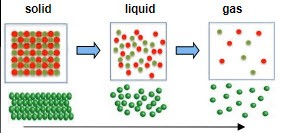

Many thermodynamic processes in nature occurs in one direction but not the opposite
True
False
Maybe
I do not know
Heat flow from a cool body to a hot body would not violate the 1st Law, energy would be still conserved
True
False
Maybe
Sometimes
Which of the following is the best definition of entropy?
increase in disorganization within a system
an energetically favorable reaction
increase in the concentration of a substance in a solution
a friction-free system
increase in organization within a system

