
 Worksheets
EOC Review 22-23
Total questions: 50
Worksheet time: 25mins
What was the purpose of Reaganomics?
To reduce limits on immigration which eliminate the federal quotas for immigrants coming from middle-eastern nations
To develop a system of social welfare improvements to expand Great Society that would improve conditions
To provide tax cuts for the wealthy that would trickle down to the working class by increasing wages.
To encourage the policy of stagflation to boost the economic conditions of people experiencing poverty
Which represents an impact of the Civil Rights Act of 1964?
expanded the rights of women by including the Equal Rights Amendment
extended the Brown v. Board of Education ruling to all public facilities
protected African American suffrage, guaranteed by the 15th Amendment
lowered the voting age to eighteen, partly due to protests regarding the draft
Which program is associated with the vision expressed by Nixon in the quote?
“We are gaining an increasingly sophisticated understanding of the way economic,institutional, and legal forces shape our surroundings for good or ill; the next step islearning how to turn such forces to environmental benefit.”
Environmental Protection Agency
War Powers Act
Strategic Arms Limitation Talks
Title IX of the Education Amendments
Which development was demonstrated by events at Rosewood in 1923?
growth of the Ku Klux Klan escalated violence in Florida.
the absence of agricultural employment in southern communities
racial tensions in northern cities in the years after World War I
the continuing prevalence of discrimination against Native Americans
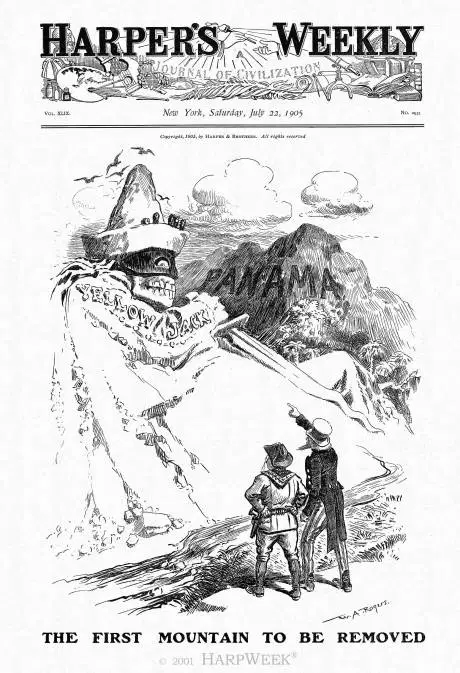
Which statement summarizes the message of the cartoon?
Roosevelt had to defeat his opponent in the upcoming election before he could begin construction on the Panama Canal.
Rough Riders needed to engage in guerrilla warfare in order to get to Panama.
The United States introduced yellow fever in Panama to weaken the native population.
America needed to address the spread of diseases before progress could be made constructing the canal.
Which summarizes the collective impact of Progressive reforms?
They banned corruption in local politics associated with political machines.
They changed the Constitution by decreasing the legislative power of Congress.
They expanded democratic ideals by increasing the power of citizens’ voices.
They restored economic opportunities that had been lost during Industrialization.
Which historical event best represents a goal of the Granger Movement?
Bankers began charging higher interest rates for loans.
The completion of the Transcontinental Railroad increased shipping rates.
In Wabash v. Illinois, the Court ruled against state government regulation of interstate railroads
The Interstate Commerce Act regulated railroad company prices.
How did the Dawes act of 1887 mark a departure from early federal Native American policy?
It required Native Americans to withdraw private plots from the tribal reservations
Led to conflicts between settlers and Plains Native Americans
Moved Native Americans still on the Great Plains to reservations further west
Encouraged the shooting of buffalo herds from new railroad lines
Which was a direct consequence of the Civil War?
Suffrage was extended to African American men and women.
African Americans were not allowed to run for political office.
There was an increase in the number of United States citizens.
Former Confederate states were no longer represented in Congress.
Which was a consequence of the Civil War?
The President advocated for prioritizing suffrage over citizenship for landowners
The majority in Congress voted for the Presidential Reconstruction plan proposed by Andrew Johnson
The President advocated for equal protection of formerly enslaved people through the passage of the 15th Amendment
The majority in Congress supported the agenda of the Radical Republicans to support civil rights
After the Civil War, which proposal was made to address economic damages in the South?
to abolish the practice of lynching in the South.
to form a Freedmen’s Bureau to work off debts from enslavement
to end Southern sharecropping and debt peonage practices
to shift from an agrarian economy to a “New South” based on industry
This statement could likely be attributed to which of the following groups at the beginning of Reconstruction?
"The Confederate States chose to secede of their own free will. Now that they have been defeated, those former states belong to the U.S. government as federal territory. Thus, it is the role of Congress to determine how and when those territories will be readmitted to the Union and who will be allowed to represent the newly admitted states."
Free Soilers
Southern Democrats
Northern Democrats
Radical Republicans

Based on the illustration, which conclusion can be drawn about the Freedmen's Bureau in the South during Reconstruction?
It was run by former Confederates
It exposed violent acts committed by freedmen.
It formed to terrorize African Americans throughout the South.
It lacked the resources and authority to effectively combat racial violence.
What do the following have in common?
-Military Districts
-Punishment for former Confederates
-Ratifying the Reconstruction Amendments
-Loyalty Oaths
They are issues dividing Republicans during Reconstruction
They are Issues uniting Democrats and Republicans in Congress
They are Issues leading to the election of President Andrew Johnson
They are Issues contributing to the impeachment of President Lincoln
Which statement describes the circumstances leading up to Mr. McGee's communication with Governor Ames?
"Bolton, [Mississippi,] October 13, 1875 Gov. Ames: I am here in Jackson and cannot leave. The white peoples is looking for me on every train and have got men on every road watching for me. They have sworn to take my life because I am president of the club at Bolton. I wish you would, if please, protect me. I am in a bad fix, with about 6 bales of cotton in the field and 150 bushel of corn to gather; no one to tend to it when I am gone. Tell me what to do, if you please. Lewis McGee President of Bolton's Republican Club"
Governors worked together to protect the rights and lives of freedmen in their states.
The Ku Klux Klan committed acts of terror against African Americans and their allies.
Governors worked together to punish African Americans who had not paid their debts.
The White League partnered with the Freedmen's Bureau to protect African Americans.
Charles Schenck was found guilty of violating which federal Act by sending anti-draft circulars through the mail?
Espionage & Sedition Act
Selective Service Act
War Bonds Act
Lend-Lease Act
Based on this speech, what did Bryan demand in his subsequent campaign for the Presidency?
"Having behind us the producing masses of this nation and the world, supported by the commercial interests, the laboring interests, and the toilers everywhere, we will answer their demand for a gold standard by saying to them: 'You shall not press down upon the brow of labor this crown of thorns; you shall not crucify mankind upon a cross of gold.’ " - William Jennings Bryan's speech at the Democratic Convention of 1896
The acquisition of colonies to increase employment opportunities.
The creation of a national park system to protect the nation's wildlife.
A policy of bimetallism that would help farmers by increasing inflation and raising crop prices.
Higher tariffs to protect American manufacturers from foreign competition.
Which was Truman’s goal when developing the Marshall Plan and the formation of the North Atlantic Treaty Organization (NATO)?
end the Korean War
limit the spread of communism
provide aid to Asian nations
promote an isolationist foreign policy
What was the name given to the 1940s policy of providing economic and military support to “free people” fighting against “outside pressures?”
Marshall Plan
Truman Doctrine
Declaration of Human Rights
SALT
The top-secret mission of creating the atomic bombs was known as what?
The GI Project
The Nuclear Project
The Atomic Project
The Manhattan Project
What security measures are being referred to in this case?
“The properly constituted military authorities feared an invasion of our West Coast and felt constrained to take proper security measures… Congress, reposing its confidence in this time of war in our military leaders - as inevitably it must - determined that they should have the power to do just this.” - Supreme Court ruling in Korematsu v. United States (1944)
Internment of Japanese Americans
Dropping of atomic bombs on Japan
Deportation of all recent immigrants from Japan
Exclusion of Japanese Americans from the draft
Who was our representative at the creation of the United Nations Charter?
President FDR
President Eisenhower
Mary McLeod Bethune
Jane Addams
Which set of historical events is related to the poem?
One Way Ticket“I am fed upWith Jim Crow laws,People who are cruelAnd afraid,Who lynch and run,Who are scared of meAnd me of them.I pick up my lifeAnd take it awayOn a one-way ticketGone Up NorthGone Out WestGone!”- Langston Hughes, 1926
the Great Migration and the Harlem Renaissance
the Harlem Renaissance and the Great Depression
the Fundamentalist Movement and the Great Migration
the Temperance Movement and the Fundamentalist Movement
Which concept was established by the war crimes trials in Nuremberg and Tokyo following World War II?
nations could be made to pay for wartime damages
pardons should be granted to all accused war criminals
those convicted should be given shorter sentences than ordinary criminals
individuals could be held accountable for their actions in a war
What did groups like CORE and the NAACP work to do?
Combat against the injustices of Jim Crow Laws
Provide jobs in Congress for African Americans
Give charity donations to underprivileged communities
Provide immigrants with equal citizenship
What was a result of the Servicemen’s Readjustment Act of 1944 (GI Bill)?
Millions of veterans received a college education.
Women kept their factory jobs after World War II.
Jobs were created by the Manhattan Project.
Veterans were exempted from gasoline rationing.
Which factor is most closely associated with McCarthyism?
buildup of Soviet missiles in Cuba
the media creating hysteria throughout the nation
creation of the Warsaw Pact by the Soviet Union
rise of the Communist Party in China
Which of the following issues most directly relates to the Kansas-Nebraska Act?
The right of northerns to own slaves
The sale of federal lands to slave owners
The idea of popular sovereignty in states
The return of slaves who had escaped from the South
Which of the following was the final event that pushed the US to declare war on Germany in WWI?
The assassination of Archduke Ferdinand
The passing of the Sussex Pledge
The interception of the Zimmerman Telegram
The attack on Pearl Harbor
Which is true of the Chinese Exclusion Act?
It halted Chinese Immigration into the US
It halted Japanese Immigration into the US
It deported Chinese Immigrants back to China
It allowed only skilled Chinese Workers into the US
The War Powers Act of 1973 was intended to affect the balance of power between the President and Congress by accomplishing which of the following?
placing limitations on the president’s ability to keep troops in hostile situations
permitting the president to enter treaties without Senate approval
requiring the president to remove all United States troops from Southeast Asia
allowing troops to be sent overseas without the president’s consent
What was the primary purpose of President Nixon’s policy of détente?
expand United States military involvement in Southeast Asia
assure an adequate supply of oil from the Middle East
ease tensions between the United States and the Soviet Union
maintain a favorable balance of trade with China
Which best describes lunch counter sit-ins and the actions of Freedom Riders?
steps taken in support of the Americans with Disabilities Act
programs dealing with affirmative action
violent acts by the Black Panthers
nonviolent attempts to oppose segregation
Which statement is expressed by President Johnson below?
“… For the war against poverty will not be won here in Washington. It must be won in the field, in every private home, in every public office, from the courthouse to the White House…” - President Lyndon B. Johnson, State of the Union Address, January 8, 1964
entire country must help fight poverty
problem of poverty is easily solved
court system must be held accountable for poverty
federal government is solely responsible for the war on poverty
Which development resulted from the construction of the interstate highway system?
reduced air pollution
increased suburbanization
decreased fuel consumption
growth of long-distance passenger train service
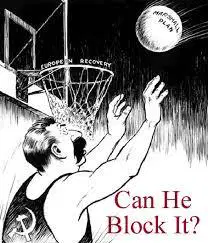
Which United States effort is the Soviet Union responding to in this cartoon?
a commitment to rebuild the League of Nations
a plan to join with other nations to reduce military spending
an effort to improve United States–Soviet relations
an attempt to stabilize the economy of Western Europe
Which of the following was a direct result of United States involvement in World War II?
an increase in the production of consumer goods
the entry of more women and minorities into the workplace
a decrease in industrial activity
a decrease in federal control over the economy
The policy of Cash and Carry and the Lend-Lease Act were all designed to accomplish what goal?
contribute to the success of the Axis powers
relieve unemployment caused by the Great Depression
guarantee a third term to President Franklin D. Roosevelt
aid the Allies without involving the U.S. in the war
How did FDR want to ease the Great Depression?
by expanding the role of government in citizens’ lives
by expanding the authority of legislative representatives
by regulating the stock purchases by individual investors
by restricting the spending by government on domestic projects
Which of the following statements best describes the reason W. E. B. Dubois’ criticism of Booker T. Washington?
Dubois believed Washington should cooperate more with government officials.
Dubois felt Washington was too aggressive in seeking equal rights for African Americans.
Dubois thought Washington should focus more on making sure African Americans were receiving quality education.
Dubois did not feel Washington was aggressive enough in seeking equal rights for African Americans.
In the 1920s, what did the controversies over Prohibition, the National Origins Act, and the Scopes trial all reflect disagreement over?
effects of demobilization
cultural values between the Modernists and Fundamentalists
role of the federal government in the economy
influence of labor unions on American life
What conclusion can be drawn from this timeline of U.S. tariff policies?
-May 1921- Emergency Tariff increases import taxes on agricultural products
-September 1922- Fordney-McCumber Tariff raises tariffs on farm and manufactured goods
-June 1930- Smoot-Hawley Tariff increases tariff levels to record high level
Crop prices and corporate profits increased steadily during the 1920s as a result of government policy.
During the 1920s, the United States shifted from an export-based economy to an import-based economy.
During the 1920s, Congress supported domestic producers with a protective trade policy.
The American economy was almost entirely self-sufficient throughout the 1920s.
What did the Washington Naval Conference and the Kellogg-Briand Pact have in common?
They secured formal alliances with Germany and Japan.
They promoted militarism by expanding the United States Navy.
They disrupted global economies, leading to the Great Depression.
They attempted to maintain international peace without joining the League of Nations.
Which statement describes the role played by the U.S. journalists during the Spanish-American war?
Journalists provided frequent reports of the fighting, allowing the public to follow a foreign war closely for the first time.
Journalists exaggerated events to build support for the war, giving the president and Congress little chance to resolve the conflict diplomatically.
Journalists focused on bad news rather than good news in order to criticize the decisions made by the president and military leaders.
Journalists ignored the signs of impending war until it was too late to inform the public of the government’s intentions to declare war on Spain.
What was Jane Addams’ motivation to open ‘Hull House’ in Chicago?
to end child labor while providing mandatory education to children
to promote reforms in factories and improve working conditions
to promote reforms in factories and improve working conditions
to promote social reform and provide the poor and immigrants with new opportunities
What made Tammany Hall so successful in its efforts?
Political Machines were backed by rich people.
Political Machines helped candidates win votes.
Political Machines were smart with their money.
Political Machines used money to help immigrants.
Why was the American Federation of Labor more successful than many of the other unions from the Gilded Age?
The AFL employed unskilled workers who had the most demands.
The AFL employed skilled workers who were more difficult to replace.
The AFL employed men and women, gaining the support of the Progressive Party.
The AFL employed both unskilled and skilled, thus representing the entire laboring class.
Which of the following statements about the Homestead Strike is correct?
Members of an anti union organization infiltrated a group of striking Carnegie Steel workers and assassinated the workers' leader during a protest.
A demonstration led by Carnegie Steel workers in Chicago protesting for an eight-hour workday ended when dynamite was thrown into the crowd of protesters.
Carnegie's company lowered wages for workers at a Carnegie Steel plant in Pennsylvania, leading to a violent conflict between workers and local managers.
Carnegie Steel workers organized a boycott of the company's products and refused to end their standoff until working conditions in Carnegie's factories improved.
Which of the following was a strategy used by late 19th century industrialists?
Eliminate competition in their particular industries
Use newspapers and media to exploit the perils of society
Increase the number of members in industrial unions
Conquer territories in the west

Which of the following
statements is true concerning the map?
The Union thought that by blockading the southern ports they could easily win the war.
The Union wanted to shut the south off from all possible help in an attempt to squeeze the Confederacy into submission.
The snake's head begins in the Union's capital and tail ends in the Confederate capital to mark the journey the soldiers would face during the war.
The Union knew that the Confederacy had the industrial advantage so they were attempting to cut off any exportation of goods.

