
 Worksheets
Training for Performance Diagnostic
Total questions: 12
Worksheet time: 6mins
What does cardiovascular endurance do for your body?
Increase your lung capacity
Make your legs stronger
Help you be able to reach your toes
Increase your brain function
What does Flexibility help your body with?
Improves your ability to lift heavy objects
Increases brain funciton
Improves your range of possible body movements
Helps make walking more comfortable
What is co-ordination
The ability for you to lift heavy things up and down repeatedly
The ability for you to complete more than one movement, often combining hands, eyes and feet
The ability to move fast
The ability for you to change directions quickly
What are examples of activities that improve your cardiovascular endurance
Basketball, skipping, eating
Walking, stretching, juggling
Running, school work, video games
Running, skipping, cycling
Agility is the ability to change directions while running, quickly as possible.
True
False
When an athlete is weight training, what component of fitness are they working?
Speed
Flexibility
Muscular Strength
Cardiovascular Endurance

Which sport requires an athlete to have a high level of Flexibility?
Gymnastics
Rugby Union
AFL
Golf
The 20-metre shuttle run (beep test) is often used to measure cardiovascular endurance. True or false?
True
False
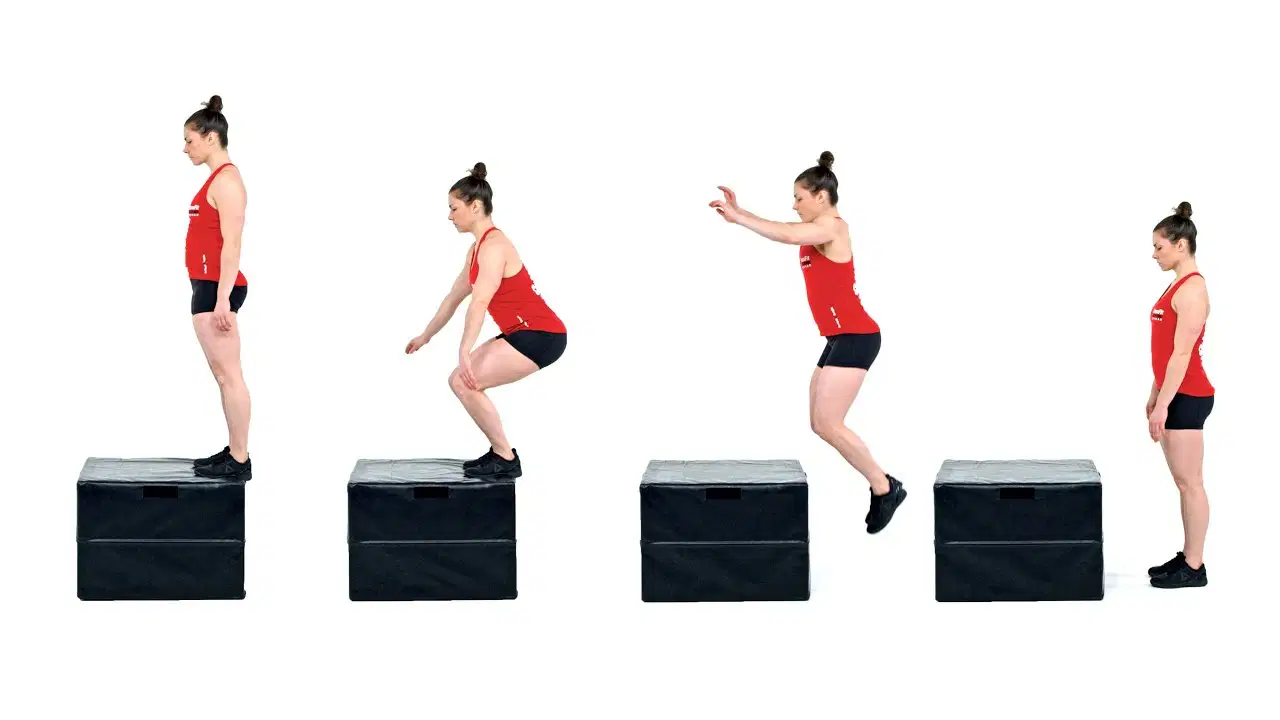
Which fitness component is being trained in the exercise shown in the image below?
Agility
Muscular Power
Speed
Balance

Which component of fitness is required for marathon running?
Speed
Cardiovascular Enduance
Agility
Muscular Strength
In the Fitness world, Intensity means....
The amount of Kilometers that is added to an athletes next scheduled run
The amount of effort or exertion during exercise
The amount of time you are working on an exercise
True or False. Progressive Overload is the decrease in training load.
False
True

