
 Worksheets
Question Bank for Grade 11 History
Total questions: 154
Worksheet time: 2hrs 44mins
What is the policy of extending a country's power by taking over a smaller, weaker nation?
Militarism
Alliance
Imperialism
Nationalism
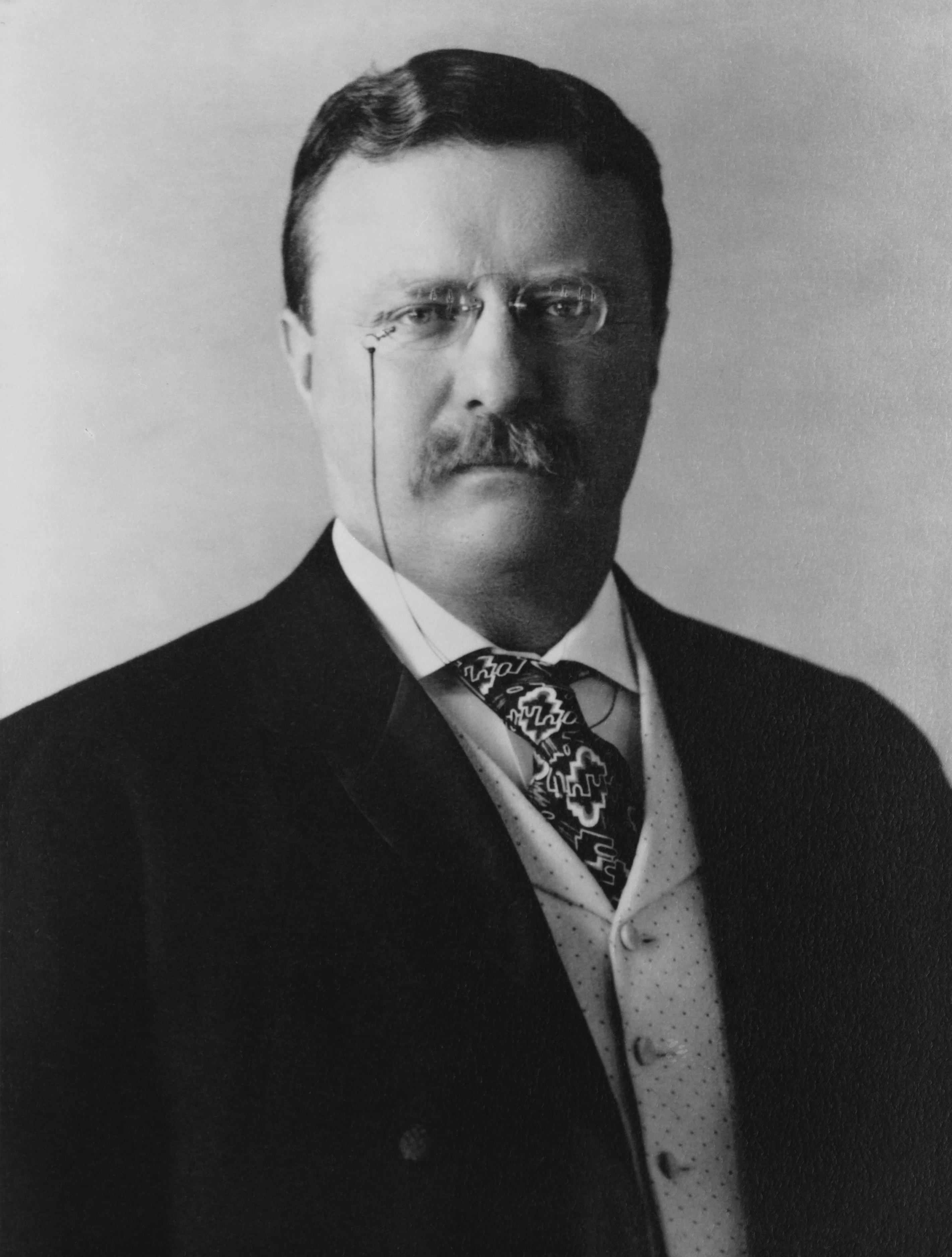


What new lands did the US take over because of the Spanish American War?
Spain
Cuba
Guam
Phillipines
Puerto Rico

This foreign policy by Theodore Roosevelt was used to secure the Panama Canal. The US will negotiate, but we also have a "Great White Fleet".
Moral Diplomacy
Big Stick Policy
Roosevelt Corollary
Dollar Diplomacy
Open Door Policy

This foreign policy made the US a "police force" of the Western Hemisphere.
Moral Diplomacy
Big Stick Policy
Roosevelt Corollary
Dollar Diplomacy
Open Door Policy

The Spanish-American War (1898) marked a turning point in American foreign policy because the United States-
developed a plan for peaceful coexistence
emerged as a new world power with an overseas empire
pledged neutrality in future European conflicts
refused to become a colonial power
Why did the U.S. annex Hawaii during the Spanish-American war?
to move captured Spanish soldiers there
to hide weapons from the Spanish
to add more land to the U.S.
to use it as a fueling station for the Navy
Who was blamed for the sinking of the U.S.S Maine ship?
Cuba
China
Great Britain
Spain
Where did a revolution take place that drew the US into the Spanish-American War in 1898?
Cuba
America
Hawaii
Spain

This diplomatic policy helped bring US economic interests into China.
Dollar Diplomacy
Open Door Policy
Moral Diplomacy
Big Stick Diplomacy
Who was President of the United States when the Great Depression began?
Herbert Hoover
Franklin D. Roosevelt
Warren G. Harding
Theodore Roosevelt
In the 1920s, Americans purchased many new time-saving appliances, such as the --
Washing machine
Cooking stove
Model-T
All of the above
In the 1920s, this person famously used the assembly line to assemble the Model-T.
Herbert Hoover
Theodore Roosevelt
Babe Ruth
Henry Ford
Americans purchased consumer goods using credit.
True
False
Americans purchased consumer goods using credit and typically paid back their loans.
True
False
When farmers produced too many crops, the prices of their crops __________, leading to economic hardships.
increased
decreased
Investing money into the stock market in hopes of making a profit is called --
Credit
Buying on margin
Speculation
Consumerism
Investing borrowed money (credit) into the stock market in hopes of making a profit is called --
Consumerism
Gambling
Speculation
Buying on margin
Unemployment rose to --
50%
10%
25%
100%
Due to expensive machines and falling crop prices, many farms were --
taken by the government
taken by unions
taken by private businesses
taken by banks
The Bonus Army marched on Washington, D.C. because --
it wanted to end Prohibition
it demanded suffrage for women
it wanted civil rights for black Americans
it wanted early payment for WWI veterans
During the Great Depression, Mexicans were repatriated in order to --
provide Mexicans with more jobs
provide white Americans with more jobs
offer more homes to white Americans
give black Americans with more jobs
What was the most damaging effect of bank failures?
People who worked in banks lost their jobs.
People who had deposited money did not get it back.
People who needed to cash checks were unable to do so.
People who owed money to banks did not have to pay it.
What is Tuesday October 29th 1929, referred to as?
Red Tuesday
Blue Tuesday
Black Tuesday
Bankrupt Tuesday
What 2 events led to the Great Dust Bowl?
Rise of Hitler
Long Drought
Over farming the land
Election of Roosevelt
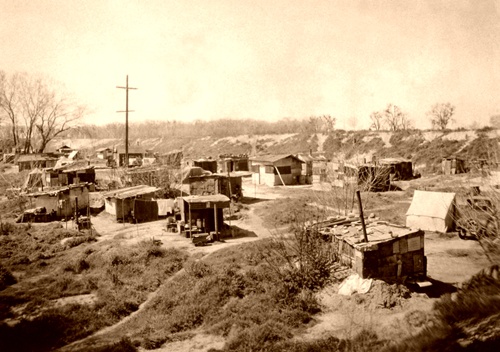
How did railroads impact Westward Expansion?
It made it easier for Native Americans to survive, because they had easier access to food sources
It made it harder because land in the west was too expensive
It made it harder for food and resources to be shipped west
It made it easier by shrinking the time it took to travel out west by weeks

I. Many Americans went westward believing in Manifest Destiny, the idea that-
All Americans had an equal chance making a fortune out west
The United States was destined by God to expand westward
That all who immigrated to the US should be treated equally
That Native Americans could be peacefully assimilated
How did the Homestead Act impact settlement out West?
Land was too expensive, so only the wealthiest Americans could afford it
Made land available for more Americans, who then moved Westward
Allowed Native American to claim new territories
It made it harder for settlers to move west
Boarding schools are an example of what vocabulary word that means forcing minority individuals to adopt the native culture?
Nativism
Assimilation
Merging
Isolation

2) How did the U.S. try and assimilate the Native Americans and immigrants?
They educated the groups in schools before allowing them into the country
They forced them to speak English and adopt American customs
They kidnapped children of these groups and educated them in foster homes
They did not try and assimilate the groups
Which of the following was a social effect of westward expansion on the Native Americans?
NA could not get enough supplies and this led to poverty
NA were forced to live on reservations, which separated them from white pioneers
NA could no longer access the rich mineral deposits found in the Black Hills
NA culture became widely accepted by white settlers

2) Which describes the Dawes Act?
It offered free land to settlers
It forced the Native Americans to assimilate or be moved to reservations

3) What was the economic impact of the Transcontinental railroad?
It made shipping farmer's goods and traveling across the country cheaper
Conflicts with the Native Americans increased
The US government made millions from the Homestead Act
It caused a decrease in taxes on big business

What were the living conditions like for immigrants during the Gilded Age?
Cramped Apartments, no bathroom
Might not have an apartment at all, so you live in the streets
Poor hygiene, lots of disease
All the above

6) Which if these describes Tenements?
New prison cell structures
Containment camps for newcomers
Dirty-single room apartments many immigrants families lived in
Reservation rooms for Native Americans

6) Which of these best explains why many immigrants came to the United States cities during the Gilded Age?
They were imported as forced labor for infrastructure projects
They were brought in to boost a declining population
They were drawn in by the offer of free land from the Homestead Act
They saw opportunity for a better life and factories needed workers

8) What happened to the population of cities as they expanded (urbanization)?
It decreased as a need for farmers drew people westward
It increased as factories grew and needed more workers

8) How did industrialization effect children?
Children got jobs and were managers in short time
Many children were taken for farming jobs
Children got low paying jobs and injuries instead of going to school
Children were banned from working factory jobs

9) Why are Captains of Industry such as Rockefeller and Carnegie also known as Robber Barons?
They were secretly criminal masterminds
They used ruthless business tactics to get rid of their competition
They secretly controlled major government industries
They stole millions from government and international agencies

9) How did the Bessemer Process allow cities to grow rapidly?
It allowed factories to stay open longer
It allowed for instant long-distance communication
It allowed for steel to be made quickly

What legislation allowed the government to regulate big businesses like railroads and dissolve monopolies?
Pure Food and Drug Act & Chinese Exclusion Act
Civil Rights Act 1964 & Voting Rights Act 1965
Homestead Act & Dawes Act
Sherman Anti-Trust Act & Interstate Commerce Act
What did Thomas Edison invent?
Uses for peanuts
Telephone
Light bulb
Moving assembly line
How did Cornelius Vanderbilt build his wealth?
Automobile Industry
Railroad and Shipping Industry
Oil Industry
Steel Industry
Who owned Standard Oil and is considered the wealthiest American of all time?
John D. Rockefeller
Andrew Carnegie
Samuel Gompers
JP Morgan
Which of the options below would correctly describe the working conditions during the Gilded Age? (choose all that apply)
long hours & low wages
child labor
Plenty of vacation & sick days
often unsafe working conditions
Andrew Carnegie and John D Rockefeller created monopolies. What is a monopoly?
When one person or company controls a market
a board game created by Rockefeller and Carnegie
a law that gave them advantages in business
Workers stick together to fight for better pay and working conditions. This is known as a:
trust
union
monopoly
industry
Which of the following was a direct result of immigration during the Gilded Age?
Overcrowded Rural areas
Overcrowded Cities
Decreased Nativism
Improved working conditions

What were the main reasons for the passage of the Chinese Exclusion Act? (choose all that apply)
Increased nativist feelings in the U.S.
Increased immigration into the U.S.
Increased economic prosperity
Low job availability in the U.S.

What did the United States institute to help rebuild Europe and Japan and prevent the spread of communism after World War II?
Reconstruction
League of Nations
Cold War
Marshall Plan

What body was created for the nations near the end of World War II to try to prevent future global wars?
League of Nations
Allied Powers
Axis Powers
United Nations

The state of tension between the United States and the Soviet Union without actual fighting that divided the world into two camps was the what?
Policy of containment
Warsaw Pact
Cuban Missile Crisis
Cold War
Which two superpowers competed against each other during the Cold War?
Great Britain and United States
Soviet Union and Great Britain
France and United States
United States and Soviet Union

Which of the following was created by the communists in response to the formation of NATO?
Axis Powers
United Nations
League of Nations
Warsaw Pact
The purpose of the Marshall Plan was to give aid to
Western Europe to increase political ties with the Communist Eastern Europe
Eastern Europe to aid the Soviet Union
lessen the danger of Western Europe falling to Communism
Eastern European countries trying to have a revolution
During the Cold War, what policy did the U.S. follow to stop the spread of communism?
Open Door Policy
Big Stick Policy
Containment Policy
Dollar Diplomacy

What policy implemented in the Cold War said the U.S. would give military aid to a country that needed to resist communism?
Marshall Plan
Truman Doctrine
Domino Theory
Open Door Policy
What happened on D-Day?
Allied troops invaded North Africa
Allied troops invaded Germany
Allied troops invaded Normandy Beach
Allied troops invaded Japan
Why is D-Day an important Allied victory?
D-Day was the turning point of the war in Europe in favor of the Allies
D-Day officially ended World War II in Europe
D-Day was the first time atomic weapons were used in war
D-Day was not significant
Six million Jewish people died in concentration camps as part of Adolf Hitler's "Final Solution"
World War II
The Holocaust
Executive Order 9066
D-Day
V-E Day on May 8, 1945 is important because --
It marks the official end of World War II
It is the day the U.S. used atomic weapons for the first time
It marks the official end of the war in Europe
It is the day Germany surrendered
Who was president of the U.S. at the start of World War II?
Harry Truman
Dwight D. Eisenhower
Herbert Hoover
Franklin D. Roosevelt
Who was president of the U.S. at the end of World War II?
Harry Truman
Dwight D. Eisenhower
Herbert Hoover
Franklin D. Roosevelt
Which Axis Power did the U.S. fight on the Pacific Front?
China
Russia
Japan
Russia
The U.S. lost the Philippine Islands to Japan following the attack on Pearl Harbor.
True
False
American troops fought and failed to get the Philippine Islands back from Japan
True
False
An 85-mile forced march of American troops by Japan in which American troops were tortured and killed.
D-Day
Battle of Iwo Jima
Battle of Midway
Bataan Death March
Battle of Midway was fought --
On land
With canons
By air
Underwater
The Battle of Midway is significant because
It was the end of World War II
It led to more Japanese victories in the Pacific
It ended the war in the Pacific
It was the turning point in the Pacific in favor of the Allies
The American strategy in the Pacific, called "leapfrogging," means --
To fight via aerial combat
To take back one island at a time
To fight using hand-to-hand combat
To use atomic weapons
This scientist created atomic weapons for the United States during World War II.
Albert Einstein
Neil deGrasse Tyson
Isaac Newton
Robert Oppenheimer
This secret project led to the creation of atomic weapons.
Manhattan Project
Operation Overlord
Final Solution
Executive Order 9066
The U.S. dropped the first nuclear weapon on which Japanese city?
Tokyo
Nagasaki
Hiroshima
Kyoto
The U.S. dropped the second nuclear bomb on which Japanese city?
Tokyo
Nagasaki
Hiroshima
Kyoto
Why is September 2, 1945 an important date?
It is the day the Americans surrendered to Japan
It is the day Japan surrendered to the Americans
It marks the official end of World War II
It is the day that a third atomic bomb was dropped
Which country become a world superpower following the end of World War II?
Japan
Germany
Great Britain
The United States
Why did the U.S. become a superpower after World War II?
The U.S. had atomic weapons
The U.S. acquired Germany's colonies
The U.S. ended the Holocaust
The U.S. joined the United Nations
Who was the American president at the beginning of World War II?
Adolf Hitler
Herbert Hoover
Theodore Roosevelt
Franklin Roosevelt
Why did countries around the world elect dictators?
Economic hardships
Racial tension
Climate change
Gender inequality
Who was the leader of the Soviet Union during WWII?
Adolf Hitler
Joseph Stalin
Hideki Tojo
Benito Mussolini
What year did World War II begin?
1941
1939
What year did the U.S. join World War II?
1939
1941
Which event forced the U.S. to end its neutrality and join WWII?
The Battle of Midway
D-Day Invasion
Bataan Death March
Attack on Pearl Harbor
Why did WWII end the Great Depression?
Americans had to limit the good they consumed
The U.S. wanted to remain neutral
Factories were retooled for products of war
Men returned to work in factories
This government agency promoted patriotism by releasing propaganda posters.
Office of Propaganda Posters
Office of War Information
Office of American Patriotism
Office of News Information
Rosie the Riveter represented
Women in the workforce
Men in the workforce
African Americans in the workforce
Native Americans in the military
Japanese Americans were sent to internment camps
Executive Order 1966
Executive Order 1941
Executive Order 9066
Executive Order 1939
African American fighter pilots
Navajo Code Talkers
Tuskegee Airmen
Flying Tigers
American volunteer pilots that defended China from Japan
Navajo Code Talkers
Tuskegee Airmen
Flying Tigers
This event was caused by drought and years of bad farming practices.
The Peach Bowl
The Wind Storm
The Dust Bowl
The Dust Storm


Which slogan did Harding use in the 1920 election?
Return to Normalcy
Honest like Abe
Peace, Progress, Prosperity.
Who but Hoover?
What industry expanded as a result of the assembly line?
Automobiles
Banking
Textiles
Agriculture
The ________________________ was a rebirth in African American Art, intellectualism, and literature.
The Great Migration
The Harlem Renaissance
Prohibition
Consumerism
What is installment buying?
a paper loan for buying goods
when a loanshark loans cash to buyers
a payment assistance plan from the government
A payment plan where the buyer pays off an item a little at a time
Identify any political change of the 1920s (pick 2)
Henry Ford introduced the assembly line
Telephone agencies began charging households
Women achieved the right to vote/the 19th Amendment
18th Amendment/Prohibition was enforced
Identify any economic change of the 20s (pick 2)
Women who protested for the right to vote were harassed ans imprisoned
People began to spend their money on leisure items & household appliances
Improvements in technology led to cheaper goods
Artistic revival led to people spending money on art
How did new inventions such as radios, automobiles, and movies change life for Americans during the 1920s?
All people were able to buy these new products and improve their lives.
The standard of living improved for people who could afford the new products.
Workers went to special training schools to learn to make the products.
The nation became more divided since the products were only available in cities.

These are photos from two different decades in American history. These photos are proof of what?
a decrease in social equality
lowered political influence of women
strong connection to tradition
a change in cultural norms
In the 1920s Americans consumers began to do which of the following?
sewing clothes
recycling goods
buying on credit
work from home
The Sacco & Vanzetti demonstrated which characteristic of the 1920s?
discrimination of immigrants
changes to women's fashion
clash of traditional and modern values
new consumer spending habits
The "roar" in roaring 20s comes from
the USA's economic crash after WWI
the USA's economic profit & boom after WWI
the USA's change in culture after WWI
the USA's imperial status after WWI
The Scopes Trial (1925) reflects the conflict between
traditionalism and modernism
isolationism and international involvement
traditional roles and new roles for women
Prohibition and organized crime

Select the reaction to increased fear of communism in the United States
Immigration into the United States required a literacy test
Immigration into the United States was decreased by a rigid quota system
There was a decrease in nativism
Labor unions became more welcoming of immigrants
What scandal marked Harding's presidency?
Teapot Dome Scandal
Watergate Scandal
Iran-Contra Affair
XYZ Affair
What term describes a hands-off approach to economics?
Communism
Consumerism
Laissez-Faire
dirigisme
Which term describes buy for pleasure, not need?
Consumerism
Communism
Socialism
Patriotism
In the early 1900's, the United States became involved in imperialism mainly to
protect American tourists
acquire raw materials and economic markets
provide homes for the surplus population
avoid conflicts with other countries
Which heading best completes the partial outline below?
1.____________________________________
A. Annexation of the Phillipines
B. Open Door Policy ...................
C. Building the Panama Canal...
Restrictions on Asian Immigration
Events that led to the Spanish-American War
Military Uprisings Against United States Rule
Growth of American Imperialism
Which factor is most closely associated with the decision of the United States to declare war on Spain in 1898?
isolationist policy
labor and union pressure
yellow journalism
unrestricted submarine warfare
The Big Stick policy and Dollar Diplomacy were attempts to
increase United States power in Latin America
contain the spread of communism in Africa
protect free trade in the Asian continent
strengthen political ties with western Europe
The United States promoted its economic interest in China by
intervening in the Sino-Japanese War
passing the Chinese Exclusion Act
encouraging the Boxer Rebellion
adopting the Open Door policy
During the early 1900s, the term "muckrakers" was used to describe-
pacifists who demonstrated against war
Politicians who criticized Progressive Era presidents
Writers who exposed the evil in American society
Newspaper columnists who reported in celebrities
reformers who worked to stop unfair practices by businesses and improve the way government works
suffragettes
progressives
business leaders
bootleggers
to change for the better
temperance
progressive
segregate
reform
26th President of the United States who helped to regulate business by busting up trusts and working with employers and employees to make things fair
Woodrow Wilson
Booker T. Washington
Theodore Roosevelt
Harry Burn

