
 Worksheets
LEAP Review
Total questions: 197
Worksheet time: 2hrs 42mins
More ___________ provide stronger evidence.
detailed observations
educated guesses
Hand samples of rocks can give us information about the _________________________.
rock formation they came from
plate boundary the rocks are near
The Rocky Mountains and Great Plains are very different in many large-scale ways, but they have similar ____________________________.
mineral compositions in some of their rock formations
appearances
fossils
layers
Rocks __________________.
can be formed in different ways
are all formed the same way
When sediment is compacted and cemented together, it forms _____________ rock.
sedimentary
igneous
metamorphic
When magma cools, it hardens to form __________ rock.
sedimentary
igneous
metamorphic
The rock formation in the Rocky Mountains is ______________ rock.
sedimentary
igneous
metamorphic
The rock formation in the Great Plains is ______________ rock.
sedimentary
igneous
metamorphic
Magma is made by _______________________.
melted rock
cooled liquid rock
wind and rain
the sun
Sediment is made by _______________________.
melted rock
cooled liquid rock
wind and rain
the sun
Magma is made ______________.
on Earth's surface
in the mantle
in the atmosphere
in the crust
Sediment is made ______________.
on Earth's surface
in the mantle
in the atmosphere
in the crust
____________ is a complex process, which results in wind and water breaking down rock into sediment.
Weathering
Erosion
Compaction
Cementation
_____________ is the process of moving water and wind, carrying sediment, downhill to a low point in the landscape where it accumulates.
Weathering
Erosion
Compaction
Cementation
___________ can become magma or sediment.
Any rock
sedimentary rocks
igneous rocks
metamorphic rocks
Sediment forms when _____________ rock is weathered.
any type of
sedimentary
igneous
metamorphic
Matter gets transformed by energy, _______________________.
but the same matter is still present
and different matter is created
Magma forms when _____________ rock is melted.
any type of
sedimentary rock
igneous rock
metamorphic rock
Sediment forms when _____________ rock is weathered.
any type of
sedimentary
igneous
metamorphic
The formation of sediment is a process driven by energy from _____________.
the sun
Earth's interior
The formation of magma is a process driven by energy from _____________.
the sun
Earth's interior
Different energy sources transform each rock type __________.
differently
in the same way

Scientists make detailed observations of _____________ of rock to distinguish them from one another.
hand samples
pictures
names
numbers
The plate motion that occurred near the Great Plains and Rocky Mountains _____________________ that formed underground.
uplifted igneous rock
uplifted sedimentary rock
subducted igneous rock
subducted metamorphic rock
_______________________________ eventually eroded and its sediment formed sedimentary rock in the Great Plains.
The igneous rock of the Rocky Mountains
The sedimentary rock of the Rocky Mountains
The metamorphic rock of the Rocky Mountains
The metamorphic rock of the Great Plains
________________________ move(s) rock formations.
Plate motion
Earthquakes
Weathering
Erosion
_____________ moves rock down, below Earth’s outer layer.
Subduction
Uplift
___________________ moves rock upward, toward Earth’s surface.
Subduction
Uplift
Uplift and subduction can expose rock formations to ____________________________, which can transform them.
different energy sources
the hydrosphere
the biosphere
asteroids
Any kind of rock can be made into any other kind of rock.
True
False
What is true of the convection currents in Earth.
They exist only in the asthenosphere layer of the mantle.
Hotter magma rises while cooler magma sinks.
Hotter magma sinks while cooler magma rises.
The currents cause the plates (lithosphere) to move.
What is the Rock Cycle?
How rocks are created from dirt.
Process of how rocks are formed from dead plants and animals.
Process that forms and recycles different rocks.
The circular path the rock travels.
The process where sediment becomes glued together is called _________________.
Compaction
Weathering
Erosion
Cementation
____________ rocks form when rock buried deep inside the Earth change without melting or weathering.
Igneous
Sediment
Sedimentary
Metamorphic
Rocks formed under great pressure but no heat are _______.
Igneous
Sediment
Sedimentary
Metamorphic
Molten rock material found on the Earth’s surface is _______.
lava
magma
sedimentary
metamorphic
Which type igneous material cools fastest?
lava
magma
sediments
sandstone
What is the process that helps form existing rock into metamorphic rock?
Compaction/Cementation
Heat/Pressure
Weathering/Erosion
Melting
What is the process that helps form existing rock into sedimentary rock?
Weathering
Compaction
Erosion
All of these

___________ rock may contain fossils.
Sedimentary
Igneous
Metamorphic

___________ rock will have banded (ribbon Like) layers.
Sedimentary
Igneous
Metamorphic

__________ rock that has cooled fast may look like glass.
Sedimentary
Igneous
Metamorphic
Formed by heat and pressure while buried deep below Earth’s surface.
Sedimentary rock
Metamorphic rock
Igneous Rock
May have crystals.
Sedimentary rock
Metamorphic rock
Igneous Rock
Formed when lava or magma cools and hardens.
Sedimentary rock
Metamorphic rock
Igneous Rock
Formed when sediment is deposited, compacted, and cemented.
Sedimentary rock
Metamorphic rock
Igneous Rock
How do scientists know about the layers of the Earth?
Thermometers
Seismic waves
Oil wells
Measure the electromagnetic spectrum
A population can be described by:
the traits present
the number of individuals who have each trait
the different species of organisms in it
abiotic factors
The number of individuals with each trait in
a population ________________ over time.
can change
stays the same
Over many generations, individuals with _______________ become more common in
a population, while individuals with _________________ become less common.
adaptive traits ; non-adaptive traits
non-adaptive traits ; adaptive traits
The traits that __________________ in a population determine which traits can become more common over many generations.
exist
an organism wants
Whether or not a trait is adaptive depends on the (a) .
Biologists analyze data about __________________________ (the causes) to explain changes in ______________________________ (the effects).
environmental conditions ; the distribution of traits in populations
the distribution of traits in populations ; environmental conditions
What caused this newt population to become more poisonous?
*Your answer will automatically be marked correct. Therefore, you MUST read the answer explanation to ensure that your answer is correct.
Instructions for making protein molecules
nucleus
chromosomes
DNA
genes
Protein molecules determine an
organism's _________________.
DNA
chromosomes
traits
environment
An organism's genetic information
genotype
phenotype
An organism's observable physical traits
genotype
phenotype
Individuals inherit their genes from (a) .
Genes, and therefore (a) , in a population are
passed down from generation to generation.
Individuals with (a) are more likely to live longer and have offspring.
Individuals with (a) are more likely
to die without having offspring.
How did the trait for increased poison level become more common in the newt population?
*Your answer will automatically be marked correct. Therefore, you MUST read the answer explanation to ensure that your answer is correct.
(a) are changes to genes that can lead to
changes to protein molecules, which can result in changes to traits.
Mutations to genes can sometimes introduce _________________________ into a population.
new traits
old trais
Mutations can have _________________ effects on an organism.
harmful
beneficial
neutral
superpower
A new trait will only become more common in a population if it is ____________________.
adaptive
non-adaptive
How did a poison-level trait that wasn’t always present in the newt population become the most common trait?
*Your answer will automatically be marked correct. Therefore, you MUST read the answer explanation to ensure that your answer is correct.
What is an adaptive trait?
a trait that makes it less likely that an individual will survive in a specific environment
an instruction for making a protein molecule
a trait that makes it more likely that an individual will survive in a specific environment
the number of individuals with each trait in a population
Organisms better adapted to the environment are more likely to survive and reproduce than organisms who aren’t adapted to the environment.
Evolution
Natural Selection
Inheritance of Acquired Characteristics
Mutation
A human practice to select certain traits wanted in a certain species
Evolution
Natural Selection
Fitness
Inheritance of Acquired Characteristics
Artificial Selection
Mistaken idea that animals whose traits changed in their lifetime could pass on those traits to their offspring.
Evolution
Natural Selection
Fitness
Inheritance of Acquired Characteristics
Mutation
An organism has to be perfectly adapted to its environment to survive.
True
False
Who proposed the theory of evolution by natural selection?
Darwin
Hess
Einstein
Hawking

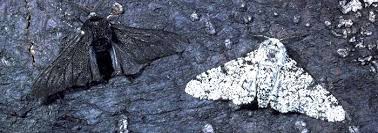


The variety of organisms that inhabit the Earth
biodiversity
mutation
evolution
natural selection
Darwin observed that this type of tortoise ate plants closer to the ground.


Anything that has mass and takes up space
Matter
Mass
Volume
Density
Weight
Matter
Mass
Volume
Density
When something takes up space, it has
Matter
Mass
Volume
Density
Matter exists as:
solid
liquid
gas
vacuum
All matter is made up of _________________which have specific chemical and physical properties
elements
molecules
cells
rocks
The smallest unit of matter that has all of the chemical properties of an element
atom
molecule
mass
volume
A group of 2 or more atoms joined together by chemical bonds.
atom
molecule
mass
volume
Things are made of (a) (or other types of atom groups).
When a thing gets hotter, its molecules _____________________________________.
are moving faster
are moving slower
have more kinetic energy
have less kinetic energy
Atoms are the smallest units of matter and include:
cells
protons (+ charge)
neutrons (no charge)
electrons (- charge)
The freezing point of water is:
0° Celsius
100° Celsius
37° Celsius
212° Celsius
32° Celsius
The boiling point of water is:
0° Celsius
100° Celsius
37° Celsius
212° Celsius
32° Celsius
Body temperature is:
0° Celsius
100° Celsius
37° Celsius
212° Celsius
32° Celsius
Temperature is ___________________________________.
a measure of the average kinetic energy of the molecules of a thing.
a measure of the average weight of the molecules of a thing.
a measure of the volume of the molecules of a thing.
a measure of the density of the molecules of a thing.
When a thing gets colder, its molecules _____________________________________.
are moving faster
are moving slower
have more kinetic energy
have less kinetic energy
Kinetic means
movement
weight
how much space an object takes up
to stay the same

When two things are in contact, their molecules collide, and kinetic energy transfers from the ________________________________________________________.
faster-moving molecules to the slower-moving molecules
slower-moving molecules to the faster-moving molecules
Energy can be created or destroyed.
True
False
As energy transfers, it ______________________________________________________________.
increases in one part of the system as it decreases in another part of the system
stays the same
increases in both parts of the system
decreases in both parts of the system
The molecules of a system will transfer energy until the system reaches a stable state known as ____________________, in which all of the molecules are moving at about the same speed.
equilibrium
equality
kinetic
static
Heat (thermal energy) always transfers from __________________________.
hot to cold
cold to hot
left to right
right to left
There is a limit to how cold something can be. Scientists call this temperature __________________________.
absolute zero
freezing
0º C
arctic
________________ are useful because they make it easier to compare two sets of data.
Averages
Temperatures
Totals
Sums
Total kinetic energy is the same as
thermal energy
temperature
average kinetic energy
Average kinetic energy is the same as
total kinetic energy
temperature
thermal energy
To calculate the total kinetic energy, you:
add the numbers to get the total
add the numbers to get the total, count the number of numbers, and divide by the number of numbers
To calculate the average kinetic energy, you:
add the numbers to get the total
add the numbers to get the total, count the number of numbers, and divide by the number of numbers

What is the thermal energy (total kinetic energy) of this sample?
12
3
10
9

What is the temperature (average kinetic energy) of this sample?
12
4
10
8
Colder things can have more total kinetic energy (thermal energy) than warmer things if they are made up of _____________molecules.
bigger
smaller
more
less
For things at the same temperature, the thing with more molecules has more __________________________ than the thing with fewer molecules.
total kinetic energy (thermal energy)
average kinetic energy (temperature)
At equilibrium, the average kinetic energy (temperature) of the molecules in the system is the total kinetic energy (thermal energy) _______________________________ the number of molecules in the system.
evenly divided by
multiplied by
added to
subtracted from
When a thing gains or loses energy, the energy gained or lost is divided among _________________ the molecules of the thing.
all
some of
The greater the __________________________________________ something has, the more energy it has to transfer to other parts of a system.
total kinetic energy (thermal energy)
average kinetic energy (temperature)
The total energy of a system ______________ change.
doesn’t
can
Earth's outer layer is called the _______________.
crust
mantle
outer core
inner core
Earth is covered with ______________________.
hard, solid rock that is underneath the soil, vegetation, and water
some rock, some water
The crust is broken up into pieces called
tectonic plates
continental sections
boundaries
faults
Geologists look for _____________ in landforms and in geologic events in order to better understand
Earth.
patterns
random events
The plates of Earth’s outer layer
________________.
remain in a fixed position
move
One of the very large sections of hard, solid rock that make up Earth’s outer layer
(a)

The Mesosaurus fossils are found in hard, solid rock on
two different plates of Earth’s surface:
South American Plate
African Plate
Pacific Plate
Eurasian Plate
The place where two plates meet
(a)

This picture shows two plates ____________.
Converging
Diverging
Transforming

This picture shows two plates ____________.
Converging
Diverging
Transforming

This picture shows two plates ____________.
Converging
Diverging
Transforming

A diagram that shows what the inside of something looks like
Cross Section
Landform
Diorama
CER model
Something we observe to be similar over and over again
Pattern
Layer
Model
Landform
A sudden shaking of Earth’s surface
Earthquake
Tsunami
Hurricane
Drought
Which is true?
Plates move, which can cause earthquakes.
Earthquakes cause the plates to move.

Which picture shows what the cross section of Earth looks like between South America and Africa?


Rocks can be:
hard solids
soft solids
gas
water
Earth's mantle is _________________.
soft, solid rock
hard, solid rock
gas
water
Earth’s plates __________ on top of a soft, solid layer of rock called the mantle.
move
float
spin
do not move
Scientists use _______________________ to gather evidence about plate boundaries on the ocean floor.
a range of techniques and tools
one technique
one tool
no techniques and tools
A (a) may represent some parts of a system accurately and other parts less accurately.
At _______________________, one plate sinks into the mantle.
convergent plate boundaries
divergent plate boundaries
At ________________________, mantle material fills the gap between the plates.
convergent plate boundaries
divergent plate boundaries
At _________________________, rock rises from the mantle and hardens, adding new solid rock to the edges of both plates.
convergent plate boundaries
divergent plate boundaries
At ___________________________, one plate moves underneath the other plate and sinks into the mantle.
convergent plate boundaries
divergent plate boundaries
___________________ of evidence can be used to draw a conclusion or to make a convincing argument.
Multiple pieces
One piece
Scientists _______________ data in order to come to conclusions.
analyze
guess about
ignore

Multiple pieces of evidence suggest that the plate boundary between the South American Plate and African Plate
is _________________.
divergent
convergent
Plates move away from each other at:
convergent boundaries
divergent boundaries
Plates move toward each other at:
convergent boundaries
divergent boundaries
Mantle material is added to the edges of both plates at:
convergent boundaries
divergent boundaries
One plate sinks into the mantle and is destroyed at:
convergent boundaries
divergent boundaries
Mid-ocean ridges and volcanoes are commonly found at:
convergent plate boundaries
divergent plate boundaries
Trenches and volcanoes are commonly found at:
convergent plate boundaries
divergent plate boundaries
Earthquakes occur at:
convergent plate boundaries
divergent plate boundaries
There is volcanic activity at:
convergent plate boundaries
divergent plate boundaries
The South American and African Plates __________________________________________ formed
between them and an ocean basin formed and spread.
moved apart as a divergent boundary
moved closer as a convergent boundary
moved past each other as a transform boundary
Earth’s plates travel at a rate (a) to be experienced by humans.
It takes ________________ for Earth’s plates to
travel great distances.
a long time
a few years
hundreds of years
thousands of years
The Mesosaurus fossils moved apart ______________ over _______________________ of years.
gradually; tens of millions
gradually; hundreds
gradually; thousands
quickly; a very small number
quickly; tens of millions

Which rock layer is the oldest?
Layer J
Layer Z
Layer D
Layer F

Which fossil is the youngest?
Ammonite
Trilobite
Crinoid
Fern

The ____________________ and the ______________ that appeared on them tell us that they may have once been connected.
shapes of the continents
landforms
animals
buildings

The edges of the continents ____________________.
match like puzzle pieces
are all the same
are not evidence of plate motion
are evidence that the continents used to all fit together and formed a supercontinent

Similar _________________________________ are found on different continents which suggests that they were all once connected
fossils
rocks
mountain ranges
people
buildings

Dr. James and her team of geologists have been studying GPS data that shows that two plates moved apart. Which diagram shows what happened between the two plates as they moved away from each other?
Diagram A: A new plate from underneath filled in the gap that was created by the plates moving apart.
Diagram B: Sand and dirt filled in the gap that was created by the plates moving apart.
Diagram C: Ocean water filled in the gap that was created by the plates moving apart.
Diagram D: Soft, solid rock from underneath the plates rose and hardened, adding solid rock to the edges of both plates.

Fossil remains of Glossopteris (an extinct plant) have been discovered in Antarctica and Australia. The Glossopteris seed is known to be large and bulky and therefore could not have drifted or flown across the oceans to separate continents. However, now there are oceans between the Glossopteris fossils. What could explain how these fossils got so far apart?
Antarctica and Australia are parts of different plates. The plates slowly moved far apart as soft, solid rock from underneath got added to the edges of the plates over millions of years.
Antarctica and Australia are parts of different plates. The plates floated away from each other across the ocean.
Antarctica and Australia are parts of different plates. The plates slowly moved apart as new plates from underneath got added between them over millions of years.
Antarctica and Australia are parts of different plates. The plates were sometimes pushed far apart by earthquakes, and soft, solid rock from underneath got added to the edges of the plates.

Scientists often study cross sections to better understand what the inside of something looks like. If we took a cross section of a potted plant by cutting it vertically, what would the cross section look like?
A
B
C
D

Dr. Morris and her team have been using GPS to track two plates that are moving toward each other. Which diagram shows what is happening at the place where the plates are moving toward each other?
Diagram A: Two plates are hitting each other, and the plates are breaking into pieces, creating sand.
Diagram B: Two plates are pushing against each other, causing the edges to bend upward.
Diagram C: One plate is going underneath the other plate and sinking into the soft rock below.
Diagram D: One plate is going underneath the other plate and sinking into the ocean below.
Earthquakes make plates move apart.
True
False
Earthquakes and volcanoes are often found:
at plate boundaries around the world
At some plate boundaries
In the middle of plates
In the inner core

Patterns on this map tell us that . . .
volcanic activity and earthquakes can cause damage to buildings and hurt people.
volcanic activity and earthquakes happened in similar areas.
volcanic activity and earthquakes happened in random locations all over the map.
volcanic activity and earthquakes happened in the following order: volcanic activity, earthquake, volcanic activity, earthquake, and so on.

In the past, Africa used to be farther away from Europe than it is now (shown above). What could explain why Africa is closer to Europe now than it was before?
Africa and Europe are parts of different plates. The plates floated toward each other across the ocean.
Africa and Europe are parts of different plates. The plates were sometimes pushed toward each other by earthquakes, and one plate went under the other plate into soft, solid rock.
Africa and Europe are parts of different plates. The plates slowly moved toward each other over millions of years. When the plates hit each other, they broke into smaller pieces.
Africa and Europe are parts of different plates. The plates slowly moved toward each other as one plate went under the other plate into soft, solid rock over millions of years.
Which statement best describes what Earth’s outer layer is like underneath the surface in the image?
Underneath both the soil and the ocean, Earth’s outer layer is made of sand and water.
Underneath both the soil and the ocean, Earth’s outer layer is made of hard, solid rock.
Underneath the soil, the outer layer is made of hard, solid rock. Underneath the ocean, Earth's outer layer is made of sand.
Underneath the soil, Earth’s outer layer is made of water.

Who is the person credited with developing the theory of continental drift?
Energy that moves from one object or substance to another, because of temperature differences
Kinetic Energy
Potential Energy
Heat
Thermal Energy
Energy that is generated by a source and measured by heat
Kinetic Energy
Potential Energy
Heat
Thermal Energy
Energy transmitted in waves or a stream of particles
Conduction
Convection
Radiation
Potential Energy
Heat transfers when objects are not touching during _____________.
Conduction
Convection
Radiation
Potential Energy
Heat transfer through direct contact
Conduction
Convection
Radiation
Potential Energy
The movement of heat or electricity through matter
Conduction
Convection
Radiation
Potential Energy
Heat always moves from ____________________________.
Hot to Cold
Cold to Hot
It moves randomly.
It doesn't move.
Which of the following are good conductors?
Metals
The human body
Wood
Wool
Air
Which of the following are good insulators?
Metals
The human body
Wood
Wool
Air
The transfer of thermal energy through a gas or a liquid
Conduction
Convection
Radiation
Potential Energy
The thermal energy transfer that happens when there are differences in density in a substance.
Conduction
Convection
Radiation
Potential Energy
Hot gas/liquid is ________________________.
dense
not dense
Cold gas/liquid is _________________.
dense
not dense
Hot gas/liquid ________________________.
rises
sinks
Cold gas/liquid ________________________.
rises
sinks

Feeling the heat from a hot poker in a fireplace is
Conduction
Convection
Radiation
Potential Energy
Macaroni rising and falling in a pot of boiling water is
Conduction
Convection
Radiation
Potential Energy
Laying out in the sun at a beach is
Conduction
Convection
Radiation
Potential Energy
Candice dropped a water balloon off a balcony. The water balloon fell toward her friend Jonathan, who was standing below the balcony. The gravitational potential energy stored between the water balloon and the Earth _______________ as the balloon fell toward Jonathan
increased
decreased
stayed the same
can not be determined
Monica's backpack, holding all of her school books, was on the floor of a library. She carefully lifted her heavy backpack onto the edge of a table. Then, she slid her backpack to the middle of the table so it would not fall to the floor.
When was the least gravitational potential energy stored between the backpack and Earth? Assume that the backpack's mass did not change.
When the backpack was on the floor
When the backpack was on the edge of the table
When the backpack was sitting in the middle of the table
Can not be determined
A squirrel was sitting on a short tree stump and cleaning its paws. The squirrel got scared when some people walked by, so it ran down the stump. After reaching the ground, the squirrel scurried across a flat field toward a tall oak tree. The squirrel then ran up to the highest branch in the oak tree and rested there. When was the most gravitational potential energy stored between the squirrel and Earth? Assume that the squirrel's mass did not change.
When the squirrel was sitting on the short tree stump
When the squirrel got scared and ran down the stump
When the squirrel ran across the flat field
When the squirrel rested on the highest branch of the oak tree

A roller coaster train slowly moved away from its station
and over the top of a tall hill.
As the train began to rush down the hill, the riders felt like
they were rising out of their seats! The train sped up until
the track flattened out at the bottom of the hill.
At the bottom, the riders felt like they were being pushed
down into their seats.
Consider the following claim:
As the train rushed down the hill, gravitational potential energy was converted into kinetic energy.
Which piece of evidence best supports the claim?
The people in the train felt like they were being pushed down at the bottom of the hill.
The train kept moving when it reached the flat part of the track.
The speed of the train increased as the height of the train decreased.
Can not be determined.

At an amusement park, a group of riders boarded a roller
coaster train and sat down.
Once everyone was safely in their seats, the ride operator
flipped a switch, and electricity flowed to a motor below the track. The motor pulled the train forward and out of the
station. Which of the following is better evidence that the train's kinetic energy changed?
Electricity started flowing to the motor when the ride operator flipped the switch.The train was stopped, and then it began to move forward and away from the station.
The train was stopped, and then it began to move forward and away from the station.
Ellen was training for a bike race. One afternoon, she
grabbed her helmet and took her bike out to the street. She got on the bike and started to pedal, pushing hard to start
moving forward.
When Ellen started riding, ______________was converted into __________________ .
chemical potential energy...kinetic energy
kinetic energy... chemical potential energy
Which of the following statements about energy transformations are true? Select all that apply.
Chemical potential energy in muscle cells can be converted into kinetic energy.
An energy transformation involves two or more types of energy.
In all energy transformations, kinetic energy changes.
Energy can be destroyed after many transformations.

