
 Worksheets
Matter and its Interactions Unit Tests Review
Total questions: 105
Worksheet time: 2hrs 54mins
All matter is made of what
energy
atoms
electrons
compounds
The positive particles of an atom are
electrons
positrons
neutrons
protons
The central region of an atom where its neutrons and protons are is its
nucleus
electron cloud
core
center
An atom with atomic number 6 would have how many protons
6
12
3
cannot be determined
Particles in an atom that are neutral and have no charge are
negatrons
electrons
neutrons
protons
What is the atomic number for an element with 3 protons?
2
1
3
6
A particle that moves around the nucleus is a(n)...
Proton
Neutron
Electron
Quark
In the modern periodic table, elements are arranged by:
atomic mass
atomic number
valence electrons
number of isotopes
If an atom has 10 protons, 10 neutrons, and 10 electrons, what is the mass of the atom?
10
20
30
What subatomic particle(s) would be found orbiting the nucleus?
Neutrons only
Electrons only
Protons and Neutrons
Protons and Electrons
True/False: Compounds are made of two or more different elements.
True
False
Electrons are___________
Extremely small even in comparison to protons.
part of the nuclues.
Super Positive, like cheerleaders!
very large
Anything that has mass and takes up space is called
heterogeneous
homogeneous
matter
density
An atoms overall charge is
positive
depends on its mood
neutral
negative
H2SO4
A physical change...
changes the physical properties of an object, but does not create a new substance.
creates a new substance and cannot be undone.
A chemical change
changes the physical properties of an object, but does not create a new substance.
creates a new substance and cannot be undone.

Is this an example of a physical or chemical change?
physical
chemical

Is this an example of a physical or chemical change?
physical
chemical

Is this an example of a physical or chemical change?
physical
chemical

Is this an example of a physical or chemical change?
physical
chemical

Is this an example of a physical or chemical change?
physical
chemical

Is this an example of a physical or chemical change?
physical
chemical

Is this an example of a physical or chemical change?
physical
chemical

Is this an example of a physical or chemical change?
physical
chemical

Is this an example of a physical or chemical change?
physical
chemical

Is this an example of a physical or chemical change?
physical
chemical

Is this an example of a physical or chemical change?
physical
chemical

Is this an example of a physical or chemical change?
physical
chemical
A student mixes yellow powder with water. Which observation would prove a CHEMICAL change occurred?
The powder DISSOLVED in the water
The water turned the COLOR yellow
The bag's TEMPERATURE changed
The STATE OF MATTER changed
Which of the following options provides evidence of a CHEMICAL change?
Wood is burned releasing ash and smoke
Rocks separate when soil is sifted
Water turns to ice when you put it in the freezer
Salt dissolves in water
Which of the following examples provides evidence of a PHYSICAL change?
Wood is burned and releases ash and smoke
Iron rusts over time
When mixed, baking soda and vinegar form gas bubbles
A piece of paper changes shape when you rip it up

A white tablet is dropped into water. The water becomes cloudy and bubbles are produced. What type of change has occurred?
Physical change
Chemical change
No change
Which observations prove a chemical change has occurred?
Dissolving and expected color change
Mixing and dissolving
State of matter change and boiling water bubbles
Unexpected color change and temperature change
When mixing milk and vinegar, a white, chunky, solid substance is formed. What has occurred?
Physical change: state of matter
Chemical change: production of a solid
Physical change: freezing
Chemical change: rust
Physical properties....
change the matter when studied
can be observed and measured without changing the matter being studied
include the ability to burn and rust
are useless unless studied in a lab
______________________ can only be recognized when substances react or do not react chemically with one another.
Physical properties
Chemical properties
Flammable properties
Colorful properties
Flammability means the ability to _______ and is a _________ property.
melt; chemical
rust; physical
change; physical
burn; chemical
All of the following are examples of physical properties EXCEPT
Density
Heat conductivity
pH (acidic or basic)
Boiling point
Choose the one that is a chemical property
Magnetism
Size
Color
Reactivity with water
What is the outcome of observing a chemical property?
Nothing
A new substance is formed with different properties
NaCl
A rise in thermal conductivity
Melting point is...
The temperature at which a solid can change to a liquid
The temperature at which a solid can change to a gas
The temperature at which a gas can change to a liquid
The temperature at which a liquid can change to a solid
The boiling point is ...
The temperature at which a liquid changes to a gas
The temperature at which a solid changes to a gas
The temperature at which a gas changes to a solid
The temperature at which a liquid changes to a solid
What word describes the relationship between the mass of a material and its volume?
Volume
Weight
Height
Density
Substances that do NOT conduct heat and electricity well are called ______________.
Metals
Silver
Conductors
Insulators
You are given the following information: mass = 48 g; volume = 24 cm3. What is the density of this substance?
2 g/cm3
72 g/cm3
.5 g/cm3
1,152 g/cm3
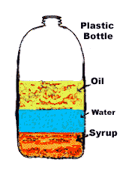
In an endothermic reaction, heat is ...
taken in
given out
Which of these processes is always exothermic?
evaporation
burning
insulation
melting
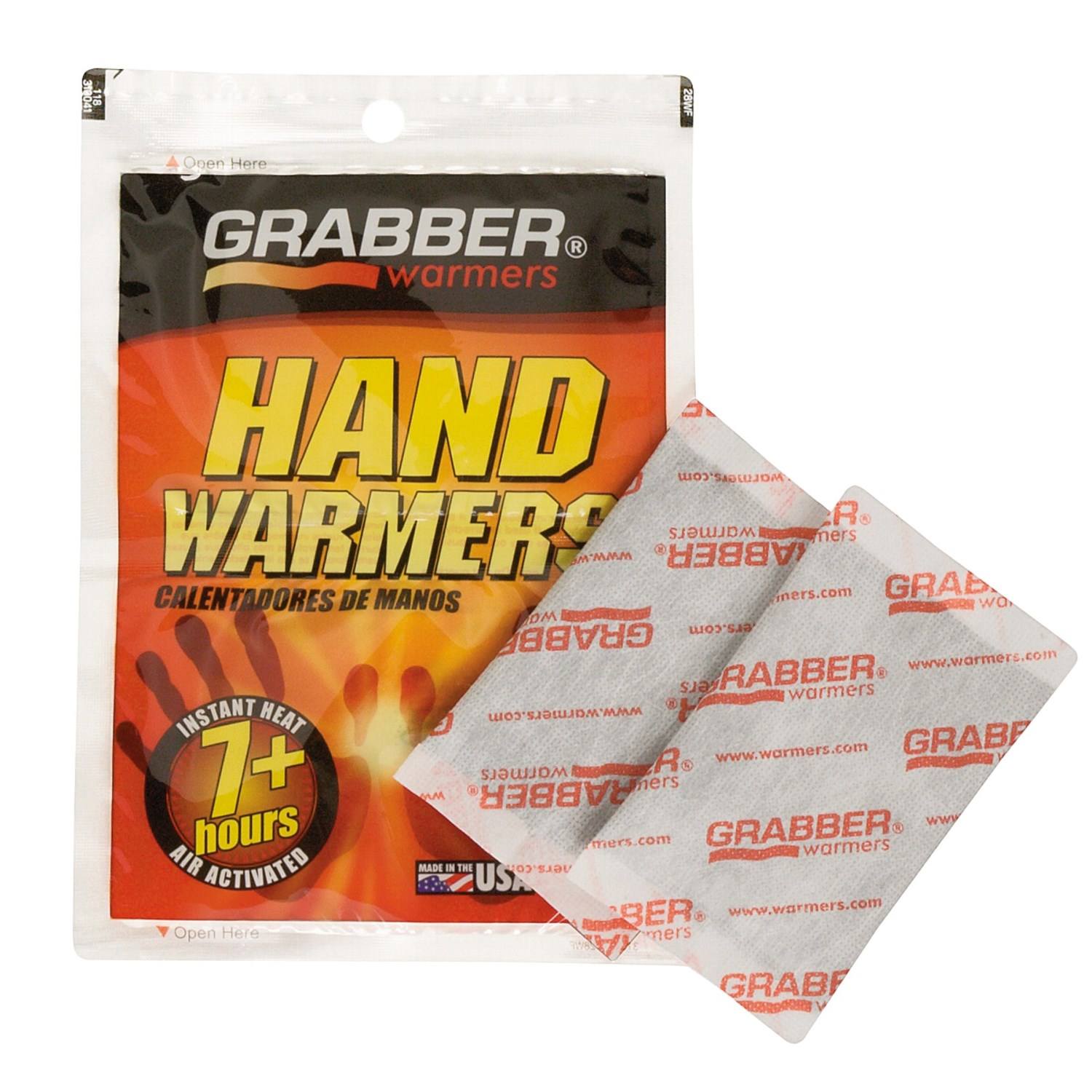
What type of reaction occurs in a hand warmer?
exothermic
endothermic
5. When ammonium chloride dissolves in water the temperature falls. The type of energy change is described as?
A. exothermic
B. activated
C. decomposition
D. endothermic
O2(g) + 2 H2 (g) → 2 H2O (g) + Energy
endothermic
exothermic
6 CO2+ 6 H2O + Energy → C6H12O6 + 6 O2
endothermic reaction
exothermic reaction
This is when heat is absorbed, it is an
Exothermic reaction
endothermic reaction
both
none
When heat is released it is an
exothermic reaction
endothermic reaction
both
none

A melting ice cube is an example of
exothermic
endothermic
none
both

How does heat energy from the Sun reach Earth?
radiation
solar wind
conduction
convection
Sarah is stirring her hot chocolate with a metal spoon, and she notices that the spoon is getting hot. This is most likely caused by which type of heat?
conduction
convection
radiation
insulation
Molecules in cold things move more _________
than in hot things.
quickly
slowly
speedy
Rapidly

Which direction will the heat flow while this person holds a hot cup of tea?
from the cup to her hand
from her hand to the cup
no heat is transferred
Heat does not move
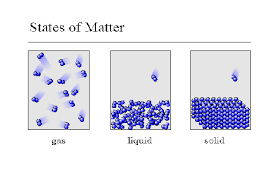
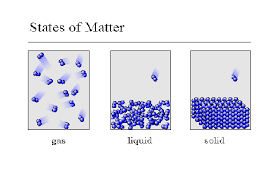

Freezing
Solid to gas
Liquid to solid
Gas to solid

Boiling
liquid to gas
gas to solid
gas to liquid
Solid to Gas
Deposition
Sublimation
Evaporation
What is condensation?
gas to solid
gas to liquid
liquid to solid
The slower the particles in a substance move,
the colder it is.
the warmer it is.
the more energy it has.

Definite shape and definite volume
Solid
Liquid
Gas

Has a definite volume but not a definite shape
Solid
Liquid
Gas
Liquid to Gas
Condensation
Evaporation
Sublimation

The state of matter that has no definite size or shape is
Solid
Liquid
Gas

The law of conservation of mass says substances can neither be _______ nor ___________.
Built; torn down
Blended together; separated
Created; destroyed
Condensed; extracted

