
 Worksheets
FITT 04: Lesson 1 to 4
Total questions: 70
Worksheet time: 1hrs 10mins
It is an outdoor-recreational activity that aims to reach the peak of a forest mountain.
(a)
It is an outdoor activities that involves walking in natural surroundings, often on mountainous or other scenic terrain.
(a)
It is a long and difficult walk generally over mountains, hills, or forests.
(a)
The act of staying and sleeping for one or more days and nights in the outside field, usually in a tent.
(a)
A team sports in which players find their way to different checkpoints throughout the rough country with the help of a map and a compass.
(a)
A pile of rock or wood used to mark a given path.
(a)
A climb using one's hands and feet only, without artificial helps.
(a)
Disassembling tents, cleaning campsite, and getting ready to leave camp.
(a)
It is an easily accessible bottle of water or snacks for refreshment along the trail.
(a)
It is a rock, string, foliage, branch, or hack sign on tree trunks that mark the designated route.
(a)
Take 5 minutes rest.
(a)
Emergency Camp
(a)
What are the four climb ethics?
(a)
What is the ideal weight of your backpack for mountaineering?
(a)
A fun or recreational and experiential climb.
(a)
A climb which has a high level of difficulty and need more preparation and other consideration.
(a)
A climb for developing skills of climb members.
(a)
An organized climb which can include tree planting activity.
(a)
An expedition climb that needs more planning and preparation.
(a)
A tour-aid type of climbing.
(a)
True or False. Is it easier to split large numbers of climbers into small groups in some climbing operation considering the size of the group and with LNT in mind?
(a)
How many people should be in a small group of climbers?
(a)
When you split a large number of climbers, what are the three small groups that should be created?
(a)
A hiking group is composed of?
(a)
According to the International Whistle Code, three blasts mean (a) .
According to the International Whistle Code, two blasts mean (a) .
According to the International Whistle Code, one blast means (a) .
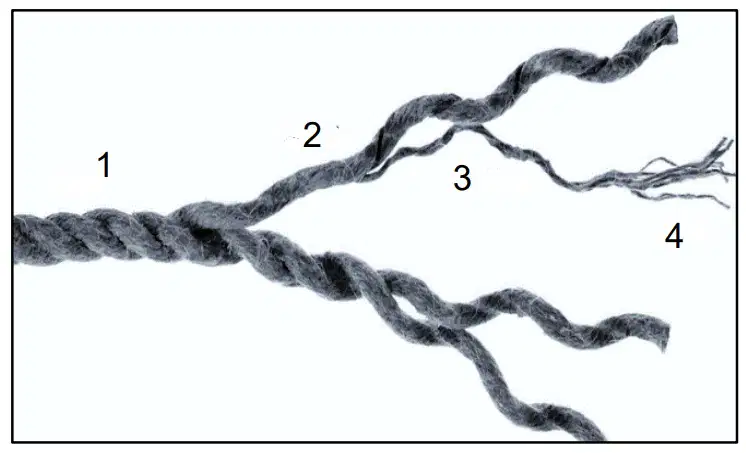
What is no. 1?
Rope
Strand
Yarn
Fibre/Fiber
What is no. 2?
Rope
Strand
Yarn
Fibre/Fiber
What is no. 3?
Rope
Strand
Yarn
Fibre/Fiber
What is no. 4?
Rope
Strand
Yarn
Fibre/Fiber

What is no. 1?
Loop
Working End
Elbow
Standing Part
Bight
What is no. 2?
Loop
Working End
Elbow
Standing Part
Bight
What is no. 3?
Loop
Working End
Elbow
Standing Part
Bight
What is no. 4?
Loop
Working End
Elbow
Standing Part
Bight
What is no. 5?
Loop
Working End
Elbow
Standing Part
Bight
It is a basic and essential life skill.
(a)
This knot is used as a safety knot with the purpose of securing loose ends.
(a)
This knot is used to stop the end of the rope from moving through a device such as a rappel rack.
(a)
This is an anchor knot that creates a single loop that will not slip. It can be attached to elements of a rescue system with carabiners.
(a)
This anchor knot provides more load-bearing surface area due to its two-loop configuration. When you need to tie around a tight object like a carabiner, this knot is slightly more efficient.
(a)
This knot may be used as a static anchor knot.
(a)
This is a bridle knot that provides a midline attachment point. This knot is designed to take a three-dimensional pull.
(a)
This knot is used to join two ropes of equal diameter together for load bearing applications.
(a)
This knot is used in binding two ropes, with the same diameter, together.
(a)
This knot is an adjustable anchor hitch often tied around anchor points, horizontally or vertically.
(a)
This knot, also called the lark’s head, is used to attach a rope to an object.
(a)
This knot, also called the lark’s head, is used to attach a rope to an object.
(a)
It provides privacy and protection from the rain, wind, sun, cold, and insects.
(a)
What are the different types of tent?
(a)
It is a sheet waterproof fabric that have been stitched together.
(a)
It is a flat graphic representation of Earth's surface as seen from above.
(a)
Give five types of map.
(a)
A part of map that tells what the map is.
(a)
A part of map that shows how to read the distance on the map.
(a)
A part of map that shows direction.
(a)
A part of map that shows the lists of symbols and its meaning.
(a)
What are the four cardinal points in a map direction?
(a)
It is the direction of the Earth’s North Pole which is 90 degrees north.
(a)
It is the direction of the Earth’s magnetic pole.
(a)
It is the direction of the vertical grid line called eastings.
(a)
True or False. All three North do not point at the same direction.
(a)
It is a navigation and orientation instrument that shows direction relative to geographic directions.
(a)
GPS stand for?
(a)
A type of compass commonly used in navigation for mountaineering.
(a)
It is a method of synchronizing the lines & direction of a map and the compass to have a defined direction to navigate.
(a)
In chronological order, what are the building fire procedures?
(a)
It is the principle for mountaineering.
(a)
Visitors or mountain climbers often leave an impact to their camping sites. Among the following, pick the three created impacts of the visitors.
vandalism
forest fires
signs
trampled vegetation
pile of rocks
Visitors or mountain climbers often leave an impact to their camping sites. Among the following, pick the three created impacts of the visitors.
markings on the path
contaminated water sources
trail sign
name carved on the trees and caves
trails

