
 Worksheets
ANATOMY & PHYSIOLOGY LAB SEMIFINALS
Total questions: 100
Worksheet time: 3hrs 20mins

optic nerve
A
B
C
D
sclera
A
B
C
D
ciliary body
E
F
G
H
retina
E
F
G
H

myopic eye
A
B
C
D
E
concave lens to correct nearsighted eye
A
B
C
D
E
hyperopic eye
A
B
C
D
E
convex lens to fix farsighted eyes
A
B
C
D
E

malleus
A
B
C
D
E
incus
A
B
C
D
E
semicircular canal
A
B
C
D
E
internal auditory canal
A
B
C
D
E
vestibular branch of vestibulocochlear nerve
A
B
C
D
E
cochlear branch of vestibulocochlear nerve
F
G
H
I
J
cochlear branch of vestibulocochlear nerve
F
G
H
I
J
cochlea
F
G
H
I
J
auditory tube
F
G
H
I
J
round window
F
G
H
I
J
round window
F
G
H
I
J
stapes in the oval window
F
G
H
I
J
tympanic membrane
K
G
H
I
J

vallate papilla
A
B
C
D
fungiform papilla
A
B
C
D
filiform papilla
A
B
C
D
foliate papilla
A
B
C
D

olfactory bulb
A
B
C
D
E
cribiform plate
A
B
C
D
E
olfactory gland
A
B
C
D
E
basal cell
A
B
C
D
E
olfactory receptor cell
A
B
C
D
E
olfactory epithelium
K
G
H
I
J
supporting cell
K
G
H
I
J
dendrite
K
G
H
I
J
olfactory cilia
K
G
H
I
J
odorant molecule
K
G
H
I
J

taste pore
A
B
C
D
microvilli hairs/gustatory hairs
A
B
C
D
gustatory receptor cells
A
B
C
D
basal cell
A
B
C
D
first-order taste neuron
E
F
G
H
connective tissue
E
F
G
H
supporting cell
E
F
G
H
stratified squamous epithelium
E
F
G
H
aud-
to hear
audition
auditorium
audit
somatic sensations; receptors all throughout the body
touch
special senses
general senses
chemoreceptors
involves the organization, interpretation and conscious experience of sensations
tactile
free nerve endings
perception
sensation
grouped in localized/specific areas; have specialized receptors
special senses
perception
thermoreceptors
general senses
occurs when sensory receptors detect stimuli
glandular secretion
sensory adaptation
satisfaction
sensation
location of pain receptors
originating from the heart
deep tissue and most of visceral organs
signals stem from the brain
middle ear
pain felt at different site from the injured body part
slow pain
distal pain
pain receptors
referred pain
senses odor
Thermoreceptors
Nose
Olfactory receptors
Limbic system
clears mucus from the middle ear into the nasopharynx
Labyrinth
Cochlea
Eustachian tube
Pinna
Which is not a primary taste sensation?
Salty
Savory
Sickening
Sweet
A chemical must dissolved in this in order to be tasted
Saliva
Bleach
Water
Glycogen
sensitive part of the receptor cells for taste
Cell membrane
Microvilli
Vesicles
Endorphins
transmits sound vibration from incus- "taps" oval window to the inner ear
sound waves
hair cells
stapes
cochlea
responsible for the eye drainage; lubricates, moistures and cleans eye surface
lacrimal apparatus
levator of the upper lid
orbicularis oculi
conjunctiva
2 chambers in vestibule
cornea and sclera
lacrimal gland and lacrimal duct
saccule and utricle
pinna and cochlea
area of ear that amplifies sound
middle ear
inner ear
outer ear
pharynx
area of ear that detects sound and balance
pharynx
outer ear
middle ear
inner ear
area of ear that funnels sound waves
outer ear
inner ear
middle ear
semicircular canals

The ? is what gland
pineal gland
eye gland
lacrimal gland
thymus gland


What is this?
Ear Drum
Ear Canal
Pinna
Cochlea
Hearing Nerve
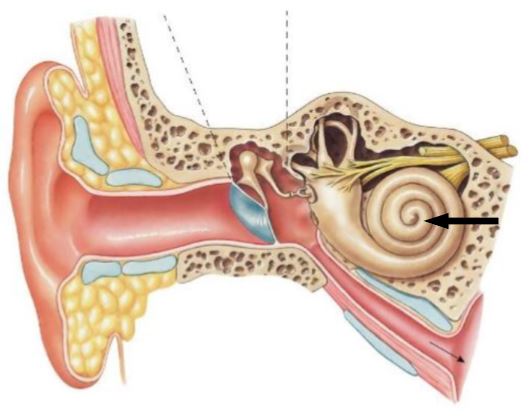
What is this?
Pinna
Hearing Nerve
Cochlea
Ear Drum
Anvil

What is this?
Anvil
Hammer
Stirrup
Cochlea
Ear drum

What part is #9?
Semicircular Canals
Eustachian Tube
Cochlea
Oval Window
What is this?
Ear Drum
Ear Canal
Pinna
Cochlea
Hearing Nerve

What is this?
Cochlea
Pinna
Auditory Nerve
Stirrup
Ear drum

The two types of cells that respond to light in the retina
Cornea and lens
Cone and cupcakes
Rods and cones
Rods and nerve

Outmost layer of the eye
Sclera
Lens
Retina
Pupil

A small home through which light passes
Pupil
Cornea
Lens
Retina


The part of the brain labelled Z controls the center which serves all of the following except
Cardiac inhibition.
Visual interpretation center.
Respiratory center.
Vaso contraction center.
made up of the brain and the spinal cord.
(a)
made up of the cranial nerves, the spinal nerves, and the Autonomic Nervous System
(a)
Forebrain also called as
(a)
Midbrain also called as
(a)
Hindbrain also called as
(a)
Divisions of Brain: composed of nerve cell bodies
(a)
Divisions of Brain: composed of myelinated nerve fibers
(a)
Divisions of Brain: composed of myelinated nerve fibers
(a)
mass of nerve cells in any part of the brain and spinal cord
(a)
mass of nerve cells outside of the brain and the spinal cord
(a)
_____________ is the only way through which the rest of our body is connected to our brain
Heart
Lungs
Liver
Spinal Cord
____________ are sending and receiving messages from the brain to an organ via spinal cord
Nerves
Lungs
Spinal Cord
Skin
___________________ are messages or signals that travel to and from the brain
Axon
Neurons
Nerve cells
Nerve Impulse
What is the name of the neuron which sense an object ?
Motor Impulse
Axon
Nerve impulse
Sensory Neurons
________________ is a nerve which passes the message from the brain to an organ ?
Sensory neurons
Axon
Motor Neurons
Dendrites
__________________ is a group of cells work together to acieve a specific function ?
Axon
Tissues
Nerves
Brain
Which system controls the entire working of a body ?
Respiratory system
Nervous system
Muscular system
Digestive system
Type of tissue formed by Nerve cell
Nervous tissue
Motor tissue
Plant tissues
Sensory tissue

