wayground logo

Free Printable Worksheets

Font size

S
M
L
XL
Worksheets

5th AdVENTURE STEM CAASPP Part 1

Total questions: 100

Worksheet time: 2hrs 40mins

Name
Class
Date
1.
What does the digestive system do?
a)
Breaks down and handles food 
b)
Pumps blood throughout the body
c)
Helps you breathe
d)
Helps your arms and legs move
2.
This tube is made of smooth muscle and carries food from your mouth to your stomach
a)
trachea
b)
intestine
c)
esophagus
d)
urethra
3.
The two major organs of the respiratory system where the gas exchange takes place are called
a)
stomachs
b)
diaphragms
c)
lungs
d)
tracheas
4.
Where does digestion start?
a)
mouth
b)
esophagus
c)
stomach
d)
intestines
5.
When you breathe in air, you bring oxygen into your lungs and blow out:
a)
carbon dioxide
b)
carbon monoxide
c)
oxygen
d)
hydrogen
6.
Where is urine PRODUCED?
a)
intestines
b)
kidneys
c)
bladder
d)
blood
7.
Each bone has a particular job. What is the job of the skull?
a)
pumps blood to the brain
b)
protects the brain
c)
helps the body to make decisions
d)
tells the brain what to do
8.
The three major types of muscles in the body are:
a)
Smooth muscle, sports muscles, and skeletal muscles
b)
Smooth muscle, cardiac muscle, and skeletal muscle 
c)
Smooth muscle, running muscle, and face muscles
d)
Smooth muscle, flexible muscle, and strength muscle
9.
Urine is STORED in this organ.
a)
bladder
b)
kidneys
c)
peeing bag
d)
intestines
10.
This system controls everything you do:
a)
nervous system
b)
olfactory system
c)
respiratory system
d)
circulatory system
11.
What is the correct order from simplest to most complex:
a)
organ, tissue, cell, organ system, organism
b)
cell, tissue, organ, organ system, organism
c)
organ system, organism, cell, organ, tissue
d)
tissue, organ, organism, cell, organ system
12.
While looking at cells under a microscope, how would you recognize a plant cell?
a)
It is green
b)
It has a cell wall, chloroplasts and a large vacuole
c)
It does not have a cell wall
d)
It has small vacuoles
13.
How do animals help some plants reproduce?
a)
By moving the seeds from one place to another
b)
By providing shelters
c)
By providing carbon dioxide
d)
By living in the canopy
14.
Which of the following organisms are producers?
a)
Mushrooms and worms
b)
Rabbits and hawks
c)
Lions and tigers
d)
Dandelions and grasses
15.
What is the waste product of photosynthesis?
a)
carbon dioxide
b)
hydrogen
c)
oxygen
d)
soil
16.
Which of the following organisms are decomposers?
a)
Mushrooms and worms
b)
Rabbits and hawks
c)
Lions and tigers
d)
Dandelions and grasses
17.
When air pressure is high:
a)
you can expect clouds and rain
b)
you can expect cold temperatures
c)
you can expect sunny, clear days
d)
you can expect tornadoes
18.
To predict the weather, you do NOT need to know which of the following:
a)
front speed and direction
b)
the distance of a front to where you are
c)
the current weather conditions
d)
the current phase of the moon 
19.
Where in the diagram would the air pressure be the greatest?
a)
at the beach 
b)
on top of the mountain
c)
at the bottom of the clouds
d)
above the earth's atmosphere
20.
Which of these is a conclusion rather than an observation?
a)
This bear lives in a cold climate. 
b)
This bear has big teeth.
c)
This bear has black claw
d)
This bear has small ears and eyes. 
21.
In which layer of the atmosphere does weather occur?
a)
thermosphere
b)
mesosphere
c)
stratosphere
d)
troposphere
22.
Water turns to water vapor by a process called
a)
condensation
b)
precipitation
c)
evaporation
d)
boiling
23.
The water cycle is powered by
a)
precipitation
b)
the movement of water
c)
the Sun
d)
rivers and streams
24.
Which of these units would be best to use to measure the amount of water in a test tube?
a)
meters
b)
milliliters
c)
kilograms
d)
seconds
25.
Which of these revolves around a planet? 
a)
an asteroid
b)
a star
c)
a comet
d)
a moon
26.
Gravity is responsible for the
a)
orbits of the planets around the Sun.
b)
rotation of a planet on its axis.
c)
tilt of Earth’s axis. 
d)
phases of the Moon. 
27.
Why are most fossils found in sedimentary rocks? 
a)
Sedimentary rocks are not very old. 
b)
Organisms live only in areas with sedimentary rock
c)
Organisms can be preserved in sedimentary rock. 
d)
Sedimentary rocks are found only at the surface.
28.
If you needed to separate iron filings from sand, what would you use?
a)
a magnet
b)
a hot plate
c)
small tweezers
d)
a funnel
29.
Which tools would be needed to measure the size and the mass of a block of wood?
a)
A watch with a second hand and a ruler
b)
A graduated cylinder and a thermometer 
c)
A ruler and a balance
d)
A thermometer and a meter stick 
30.
This measures how much space matter takes up.
a)
volume
b)
density
c)
mass
d)
temperature
31.
Matter is anything that
a)
Can be seen with microscopes
b)
is solid
c)
has mass and takes up space
d)
takes up space only
32.
Dissolving sugar in water to make lemonade is a
a)
physical change
b)
chemical change
33.
Which of the following are magnetic poles?
a)
north and south
b)
east and west
c)
red and blue
d)
north and east
34.
Which of the following is not a magnetic material?
a)
iron
b)
cobalt
c)
aluminum
d)
nickel
35.
What do two poles of the same type do when they are brought close together?
a)
they repel
b)
they attract
36.
Which pair of elements is more likely to share properties?
a)
Carbon and Silicon
b)
Hydrogen and Helium
c)
Carbon and Nitrogen
d)
Sodium and Aluminum
37.
According to the Moh's Scale, what is the hardness of Topaz
a)
6
b)
7
c)
8
d)
9
38.
A student is testing an unknown mineral for hardness. The unknown mineral is tested against fluorite, but neither mineral scratches the other. Which of the following conclusions can the student accurately make?
a)
The unknown mineral and apatite will not scratch each other.
b)
The unknown mineral and calcite will not scratch each other.
c)
The unknown mineral will scratch apatite.
d)
The unknown mineral will scratch calcite.
39.
According to the Moh's Scale, which of the following can be scratched by a fingernail
a)
gypsum
b)
calcite
c)
quartz
d)
diamond
40.
Which of the following represents a chemical reaction?
a)
a sugar cube dissolving in water
b)
cutting grass
c)
ice cubes forming in a freezer
d)
cooking an egg
41.
What do water, aluminum, redwood trees and yourself all have in common?
a)
They are all made of atoms 
b)
They are all made of cells
c)
They are all living creatures
d)
They are all pure elements
42.
How do plants most commonly break large rocks into smaller pieces?
a)
Plant leaves insulate surrounding rocks from extreme temperatures. 
b)
Plant roots grow into cracks in rocks.
c)
Seeds from plants fall onto rocks and release acidic compounds. 
d)
Stems of plants surround and squeeze rocks. 
43.
The freezing and thawing action of water affects a rock by
a)
transforming the rock into igneous rock. 
b)
chemically changing the rock. 
c)
gradually breaking down the rock into smaller pieces. 
d)
leaving behind sedimentary particles from evaporated solutions.
44.
Salt concentration, water temperature, plankton, and the whale shark might all be used in a description of an ocean 
a)
climate
b)
food web
c)
ecosystem
d)
population
45.
Which of the following animals might compete with the coyote in this food chain? 
a)
owl
b)
deer
c)
rabbit
d)
woodpecker
46.
Where is most of the earth's water located?
a)
glaciers
b)
oceans
c)
lakes
d)
rivers
47.
What element is needed to rust your bike and for breaking down food molecules in a cell?
a)
carbon dioxide
b)
oxygen
c)
salt
d)
nitrogen
48.
Electricity can produce
a)
heat
b)
motion
c)
sound
d)
all answers are correct
49.
Which of the following is NOT an example of a chemical change?
a)
rusting
b)
evaporation
c)
burning wood
d)
digestion
50.
Matter usually changes state because of a change in
a)
temperature
b)
mass
c)
density
d)
color
51.
This state of matter has a definite volume and takes the shape of the container it is in. It's 
a)
solid
b)
liquid
c)
gas
52.
This element is found in all living things. It is ...
a)
oxygen
b)
nitrogen
c)
carbon
d)
magnesium
53.
Which gas is forming in the test tube shown in the picture?
a)
carbon dioxide
b)
hydrogen
c)
oxygen
d)
nitrogen
54.
In looking at the attached image, at which location is the magnetic field the strongest?
a)
1
b)
2
c)
3
d)
4
55.
The diagram shows an electrical circuit. This circuit is a series circuit because
a)
the same current flows through all light bulbs
b)
it has three lightbulbs and a switch
c)
the current is divided into the three bulbs
d)
the lights will glow dimly
56.
Which of the following converts electrical energy into motion?
a)
light switch
b)
electric stove
c)
light bulb
d)
electric fan
57.
A sudden change in wind direction, air temperature, and cloud cover most likely signals a change in —
a)
climate
b)
seasons
c)
landforms
d)
weather
58.
Which process must occur for clouds to form? 
a)
erosion
b)
condensation
c)
conduction
d)
precipitation
59.
Some beetles break down the remains of dead animals.  Some mushrooms break down the remains of dead trees.  How do these actions most benefit plants?
a)
by returning nutrients to the soil
b)
by making space for new animals
c)
by releasing oxygen into the air
d)
by decreasing the population of herbivores
60.
Plants use sunlight and take in carbon dioxide from the air and water from the environment to make food. In this process, they release oxygen back into the environment. How is this important to the survival of other living things? 
a)
plants use this oxygen to make water
b)
people need this oxygen to make electricity
c)
animals use oxygen for food
d)
living things need oxygen for respiration
61.
Water evaporating from the surface of a lake moves from the...
a)
Atmosphere to the geosphere 
b)
Geosphere to the hydrosphere 
c)
Hydrosphere to the atmosphere 
d)
Atmosphere to the hydrosphere 
62.
The rock, dust, soil, and minerals of the Earth's solid crust and outer mantle make up the ____
a)
Biosphere
b)
Geosphere
c)
Cryosphere
d)
Atmosphere
63.

Which example best describes how human activity can directly impact the biosphere?

a)

Poor farming practices can degrade the soil and cause erosion.

b)

Dumping waste from a factory into a river can pollute the water supply.

c)

Construction activities can release harmful dust and chemicals into the air.

d)

Removing too many fish from the ocean can cause a fish species to go extinct.
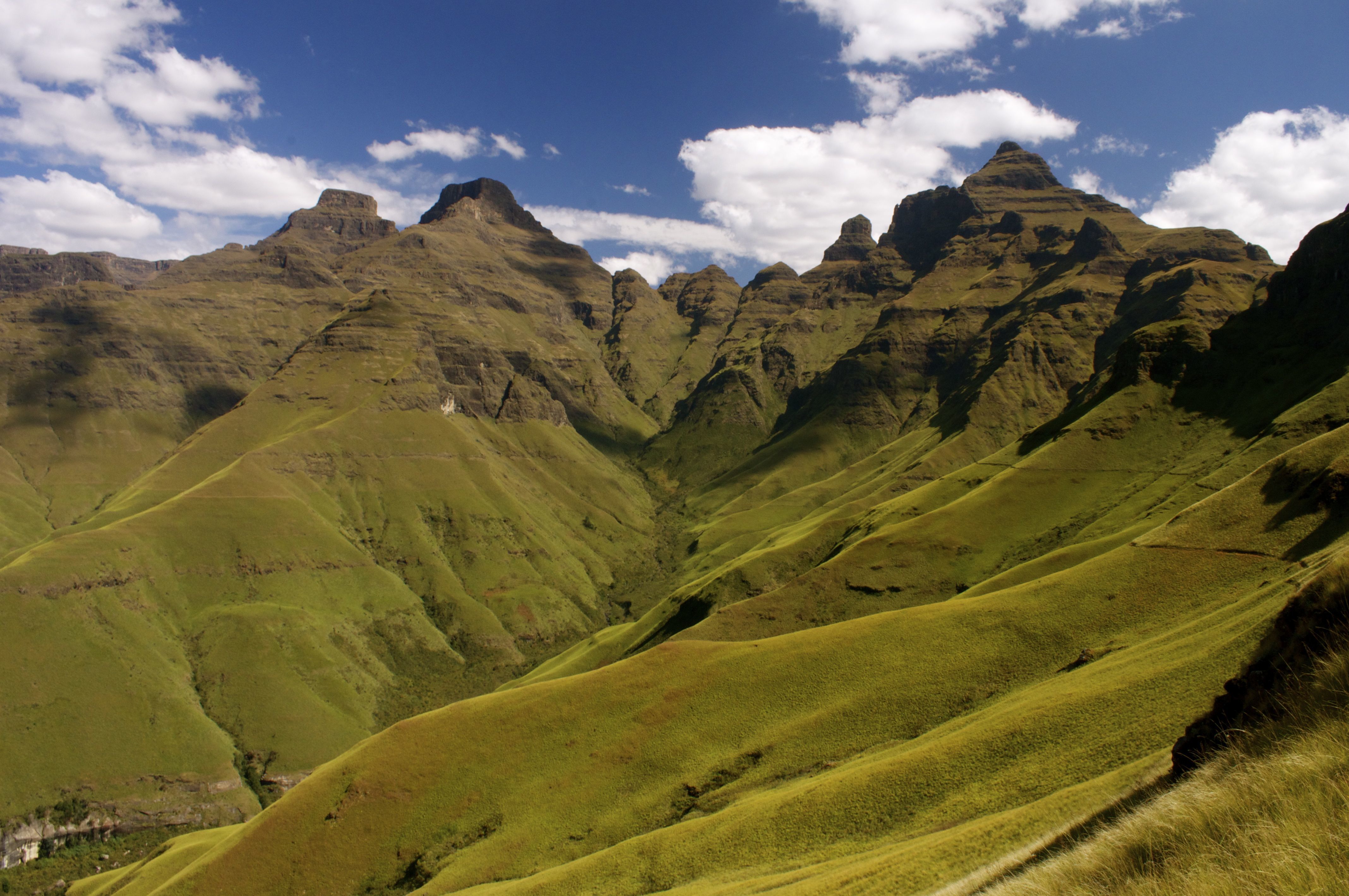
64.
This sphere includes the continents, the ocean floor, all the rocks on the surface, and all of the sand in the deserts. 
a)
Hydrosphere 
b)
Biosphere 
c)
Atmosphere 
d)
Geosphere 
65.
Composed of all the water on or near the earth
a)
Hydrosphere 
b)
Biosphere 
c)
Atmosphere 
d)
Geosphere 
66.
This sphere is composed of all the living things 
a)
Hydrosphere 
b)
Biosphere 
c)
Atmosphere 
d)
Geosphere 
67.
Body of air surrounding our planet. 
a)
Hydrosphere 
b)
Biosphere 
c)
Atmosphere 
d)
Geosphere 
68.
When dead plants decompose and nitrogen is returned to the soil, the interaction is between which two spheres? 
a)
The biosphere and atmosphere 
b)
The atmosphere and geosphere 
c)
The geosphere and atmosphere 
d)
The biosphere and geosphere 
69.
When living things breathe, they interact with which of Earth's spheres? 
a)
Geosphere 
b)
Hydrosphere 
c)
Atmosphere 
d)
Biosphere 
70.
Bio = 
a)
Earth
b)
Sphere
c)
Life
d)
Water
71.
Hydro = 
a)
Earth
b)
Sphere
c)
Life
d)
Water
72.
Geo = 
a)
Earth
b)
Sphere
c)
Life
d)
Water
73.
When carbon dioxide dissolves from the air into the ocean- the interaction is between...
a)
The atmosphere and geosphere 
b)
The atmosphere and hydrosphere 
c)
The atmosphere and biosphere 
d)
The atmosphere and atmosphere 
74.
When a plants takes carbon dioxide from the air which two spheres are interacting? 
a)
Biosphere and atmosphere 
b)
Geosphere and atmosphere 
c)
Hydrosphere and atmosphere 
d)
Atmosphere and atmosphere 
75.

Atmo=

a)

Water

b)

Earth

c)

Life

d)

Gases

76.

Cryo=

a)

Gases

b)

Water

c)

Frost/Frozen

d)

Earth

77.

Heavy cloud cover impacted the temperature of the land by making it cooler. What 2 spheres are interacting during this event?

a)

Atmosphere and Hydrosphere

b)

Hydrosphere and Cryosphere

c)

Atmosphere and Geosphere

d)

Geosphere and Hydrosphere

78.

Shifting winds causes major rain storms which floods rivers, lakes and streams. Which 2 spheres are interacting in this event?

a)

hydrosphere and atmosphere

b)

hydrosphere and biosphere

c)

biosphere and atmosphere

d)

geosphere and hydrosphere

79.

Coral reefs protect the coastline by absorbing the energy from the pounding waves. What 2 spheres are interacting in this event?

a)

biosphere and hydrosphere

b)

hydrosphere and geosphere

c)

geosphere and biosphere

d)

geosphere and atmosphere

80.
This sphere includes the continents, the ocean floor, all the rocks on the surface, and all of the sand in the deserts. 
a)
Hydrosphere 
b)
Biosphere 
c)
Atmosphere 
d)
Geosphere 
81.
Composed of all the water on or near the earth
a)
Hydrosphere 
b)
Biosphere 
c)
Atmosphere 
d)
Geosphere 
82.
What might happen if the earth didn't have an atmosphere? 
a)
Everything would go flying off into space 
b)
The seasons would be longer 
c)
The earth's rotation would stop 
d)
We wouldn't be able to breathe 
83.
When carbon dioxide dissolves from the air into the ocean- the interaction is between...
a)
The atmosphere and geosphere 
b)
The atmosphere and hydrosphere 
c)
The atmosphere and biosphere 
d)
The atmosphere and atmosphere 
84.
When a plants takes carbon dioxide from the air which two spheres are interacting? 
a)
Biosphere and atmosphere 
b)
Geosphere and atmosphere 
c)
Hydrosphere and atmosphere 
d)
Atmosphere and atmosphere 
85.
When volcanoes erupt, dust and ash particles spread through much of the air blocking the sun.  Which two spheres are interacting? 
a)
Hydrosphere and atmosphere 
b)
Geosphere and atmosphere 
c)
Biosphere and atmosphere 
d)
Atmosphere and atmosphere 
86.
When volcanoes erupt, dust and ash particles spread through much of the air blocking the sun.  Which two spheres are interacting? 
a)
Hydrosphere and atmosphere 
b)
Geosphere and atmosphere 
c)
Biosphere and atmosphere 
d)
Atmosphere and atmosphere 
87.
Energy from the sun is stored by plants. When animals eat the plants, they acquire the energy originally captured by the plants. Between which two spheres is the above interaction? 
a)
Hydrosphere and biosphere 
b)
Atmosphere and biosphere 
c)
Biosphere and biosphere 
d)
Geosphere and biosphere 
88.
When plants draw nutrients from the soil, the interaction is between which two spheres? 
a)
The atmosphere and the geosphere 
b)
The geosphere and the hydrosphere 
c)
The hydrosphere and atmosphere 
d)
The biosphere and the geosphere 
89.

The prefix "bio" comes from a Greek word that means what?

a)

Life

b)

Water

c)

Earth

d)

Ground

90.
A thunderstorm is a connection between:
a)
Biosphere-Atmosphere
b)
Atmosphere-Hydrosphere
c)
Hydrosphere-Geosphere
d)
Hydrosphere-Biosphere
91.
This picture best describes which connection?
a)
Atmosphere-Biosphere
b)
Hydrosphere-Atmosphere
c)
Hydrosphere-Geosphere
d)
Geosphere-Biosphere
92.
This coral reef is an example of something in the:
a)
Atmosphere
b)
Biosphere
c)
Hydrosphere
d)
Geosphere
93.
This picture shows
a)
Atmosphere
b)
Biosphere
c)
Hydrosphere
d)
Geosphere
94.
The Four Spheres of Earth
a)
are all connected
b)
have nothing to do with one another
c)
exist on Venus and Mars
d)
don't affect human life
95.
This volcano is an example of something you would find in the:
a)
Atmosphere
b)
Biosphere
c)
Hydrosphere
d)
Geosphere
96.
Animals, forests, grasslands, and trees all belong to which sphere?
a)
Atmosphere
b)
Biosphere
c)
Lithosphere
d)
Hydrosphere
97.
Oceans, rain, and glaciers belong to this sphere.
a)
Atmosphere
b)
Biosphere 
c)
Lithosphere
d)
Hydrosphere
98.
Wind is part of what sphere of Earth?
a)
Windosphere
b)
Atmosphere
c)
Hydrosphere
d)
Airosphere
99.
The most abundant gas in the atmosphere is ___________ (78%) followed by ___________ (21%). 
a)
oxygen/nitrogen
b)
nitrogen/oxygen
c)
carbon dioxide/oxygen
d)
nitrogen/carbon dioxide
100.
What are the 4 main spheres?
a)
biosphere, atmosphere, hemisphere, hydrosphere
b)
biosphere, atmosphere, hydrosphere, geosphere