wayground logo

Free Printable Worksheets

Font size

S
M
L
XL
Worksheets

EOC REVIEW ALL

Total questions: 112

Worksheet time: 2hrs 29mins

Name
Class
Date
1.
Which of the following is a step in the naturalization process?
a)
applying for a driver's license
b)
getting a job
c)
registering to vote
d)
taking a citizenship test
2.
In which of the following scenarios may a person gain U.S. citizenship by naturalization?
a)
a person is born in an American territory
b)
a person is born on a U.S. military base overseas
c)
a person with no U.S. ties immigrates to the United States
d)
two non-U.S. citizens have a child on American soil
3.
To become a citizen of the United States, an immigrant must have been a lawful, permanent resident for at least ________ years.
a)
1
b)
3
c)
7
d)
5
4.
Duties of citizens are ___________ but responsibilities are ____________.
a)
important/unimportant
b)
optional/required
c)
for males/for females
d)
required/optional
5.
Which practice is part of the obligation of a U.S. citizen to help defend the nation? 
a)
A. Serve on a jury
b)
B. Register for selective service
c)
C. Vote in all elections
d)
D. Keep informed about national issues 
6.
Who of the following is a U.S. Citizen?
a)
Mike was born in Canada and has been working in the U.S. the past 3 years
b)
Cecilia is seventeen and is going to high school in Los Angeles
c)
Josh was born in Spain to two U. S. citizens
d)
Julie moved to the United States when she was three years old. She moved back to Mexico when she was 12.
7.

Locke argued that we had 3 main natural rights. What are they? (Select 3)

a)

Life

b)

Liberty

c)

Pursuit of Happiness

d)

Property

8.

Which American Founding Father did John Locke influence the most?

a)

Ben Franklin

b)

George Washington

c)

John Adams

d)

Thomas Jefferson

9.

The idea that people are NOT subject to cruel and unusual punishment comes from the?

a)

English Bill of Rights

b)

Magna Carta

c)

Mayflower Compact

10.

This document, signed in 1620, was the first of colonial self government.

a)

English Bill of Rights

b)

Magna Carta

c)

Mayflower Compact

11.

This document, signed in 1215, was the first to establish limited government.

a)

Petition of Rights

b)

Magna Carta

c)

Declaration of Independence

12.

The idea that citizens are the source of government power is called.

a)

Authority

b)

leadership

c)

consent of the governed

13.

This is a type of government led by a small group of people?

a)

oligarchy

b)

anarchy

c)

democracy

14.
Which event(s) led to the Revolutionary War?
a)
Stamp Act
b)
Boston Massacre
c)
Sugar Act
d)
All of the answers
15.
Which items were taxed in the Stamp Act?
a)
Marriage
b)
Newspapers
c)
Stamps
d)
All of the answers
16.
Why were the British taxing everything?
a)
They were in debt and needed to make money
b)
they wanted to make everyone mad
c)
they didn't want anyone else trading
17.

"Whenever the govt becomes destructive, it is the right of the ppl to abolish it". What was the purpose of this quote?

a)

means the British govt should destroy all rebellions

b)

British govt ruled with authority over the colonies

c)

meant the colonists had the right to break away from Great Britain

d)

meant the colonists should continue to work w/the British govt

18.

Which quote from Declaration of Independence reflects the colonial complaint about no taxation w/o representation?

a)

"For cutting off our trade with all parts of the world"

b)

"for imposing taxes on us without our consent"

c)

"for depriving us of trial by jury"

d)

"for quartering large bodies of armed troops among us"

19.

"We hold these truths to be self evident that all men are created equal & they are endowed by the creator w/certain unalienable rights that among these are life, liberty and the pursuit of happiness". How does this explain the idea of "natural rights"?

a)

natural rights are rights that every person are entitled to

b)

natural rights are those rights that can be taken away by a govt

c)

natural rights are any rights that are protected by law

d)

natural rights are rights that people have gained for themselves

20.
Which form of government has one ruler with unlimited power? 
a)
socialism 
b)
oligarchy 
c)
democracy 
d)
autocracy 
21.
Which system of government will you find shared power between state and central government? 
a)
democracy 
b)
monarchy 
c)
federal
d)
unitary 
22.
The leader pictured here comes from which type of government? 
a)
oligarchy 
b)
democracy 
c)
theocracy 
d)
monarchy 
23.
Where is power centered in a unitary system? 
a)
central government
b)
military 
c)
state government 
d)
dictator 
24.
What system of government was in place after the United States Constitution? 
a)
confederal 
b)
federal 
c)
oligarchy 
d)
parliamentary 
25.
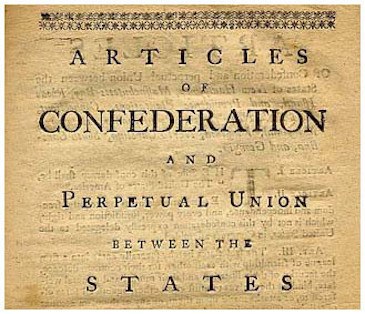
In the United States which type of government was in place under the Articles of Confederation? 
a)
federal 
b)
direct democracy 
c)
republic 
d)
confederal 
26.
Under the Articles of Confederation, the government consisted of _______________ branch of government.
a)
3
b)
2
c)
1
d)
4
27.
Under the Articles of Confederation Congress could only pass a law if ____________ out 13 states agreed. 
a)
13
b)
8
c)
9
d)
10
28.
One weakness of the Articles of the Confederation was ____________. 
a)
The ability of Congress to tax.
b)
The inability of Congress to tax.
c)
The ability of Congress to declare war.
d)
The ability of Congress to create courts.
29.
In order to change (amend) the Articles of Confederation,  __________ out of 13 states had to agree. 
a)
9
b)
10
c)
13
d)
15
30.
Under the Articles of Confederation, America used a national currency (money)
a)
True
b)
False
31.
Under the Articles of Confederation, Congress could regulate trade between the states.
a)
true
b)
false
32.

The Federalist and Anti-Federalists groups are known as _______________.

a)

Governing Groups.

b)

Political Parties.

c)

Militia's.

d)

Delegates.

33.

Federalists believed that the Articles of Confederation were a ________ and set up a ________ National Government.

a)

Success, Strong.

b)

Success, Weak.

c)

Failure, Weak.

d)

Failure, Strong.

34.

The ___________ are for the ratification (approval) of the U.S Constitution.

a)

Federalists

b)

Anti-Federalists

c)

Whiggs

d)

Representatives

35.

The ___________ are NOT for the ratification (approval) of the U.S Constitution.

a)

Anti-Federalists.

b)

Federalists.

c)

Whiggs.

d)

Supreme Court Justices.

36.

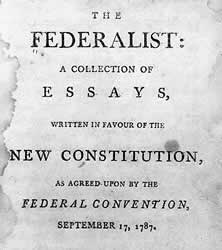
The "Federalist Papers" were written to:

a)

Explain and convince the people into supporting the new U.S Constitution.

b)

spark a new revolution among the American people against their government.

c)

oppose a strong centralized government.

d)

create a new monarchy.

37.

Anti-Federalists were in favor of:

a)

States Rights and the protection of individual rights.

b)

A strong Central Government.

c)

A Monarchy (King & Queen) to rule over the country.

d)

a powerful National Government

38.
What amendment give the people freedom from unwarranted searches and seizures?
a)
8th Amendment
b)
10th Amendment
c)
3rd Amendment
d)
4th Amendment
39.
What amendment gives people the right to NOT quarter soldiers in their homes?
a)
4th Amendment
b)
3rd Amendment
c)
6th Amendment
d)
8th Amendment
40.
What amendment gives people the right to a speedy trial and to a lawyer?
a)
4th Amendment
b)
5th Amendment
c)
6th Amendment
d)
7th Amendment
41.
What amendment has the right to bear arms?
a)
2nd Amendment
b)
3rd Amendment
c)
4th Amendment
d)
5th Amendment
42.
What amendment provides people with the right to No excessive bail and No cruel or Unusual Punishment?
a)
7th Amendment
b)
8th Amendment
c)
9th Amendment
d)
10th Amendment
43.
The first ten Amendments are called the
a)
Constitution Day
b)
Senators 
c)
Bill of Rights
44.
Which Branch makes the Laws?
a)
Legislative
b)
Judicial
c)
Executive
d)
Federal
45.
Which branch enforces the laws?
a)
Legislative
b)
Executive
c)
Federal
d)
Judicial
46.
What are the 2 parts of our Congress?
a)
Federal and State
b)
House of Rep and Senate
c)
Senate and Federal
d)
House of Rep and State
47.
How many Senators are there?
a)
6
b)
50
c)
9
d)
100
48.
How are members of the U.S. House of Rep. and U.S. Senate elected?
a)
Voters in their state
b)
Voters in Mexico
c)
Voters in Canada
d)
Voters on the moon
49.
How many Justices are there?
a)
5
b)
50
c)
9
d)
100
50.
What are the 3 branches of government? 
a)
Judicial, Federal, Legislative
b)
Judicial, State, Executive
c)
Legislative, Judicial, Executive
d)
Judicial, Local, Executive
51.

When the Civil War was over, the United states ratified the 15th amendment which promised that a person's right to vote could not _____

a)

be denied based on whether you were male or female

b)

be denied based on race, color or previous condition as a slave

c)

be denied even if a person was not a citizen

52.

After the 15th Amendment was passed giving freed slaves the right to vote, some states used certain laws to try to prevent them from voting. These were called "Jim Crow" laws. One was a __________ (which is money a voter must pay to be able to vote)

a)

crime tax

b)

slave tax

c)

poll tax

53.

The _______ amendment to the Constitution gave women the right to vote in the year 1920

a)

1st

b)

14th

c)

19th

54.

Suffrage is a fancy word meaning _____

a)

the right to vote

b)

the process to amend the Constitution

c)

suffering

55.

The 19th amendment went through several votes in the House and Senate but was finally _____________ (legally approved) in the year 1920

a)

platform

b)

suffrage

c)

ratified

56.

What does Article I (1) establish?

a)

Legislative Branch

b)

Judicial Branch

c)

Executive Branch

d)

Supremacy of the Constitution

57.

What does Article II (2) establish?

a)

Legislative Branch

b)

Judicial Branch

c)

Executive Branch

d)

Supremacy of the Constitution

58.

What does Article III (3) establish?

a)

Legislative Branch

b)

Judicial Branch

c)

Executive Branch

d)

Supremacy of the Constitution

59.

What does Article IV (4) establish?

a)

The Constitution is Supreme

b)

How to amend the Constitution

c)

How to ratify the Constitution

d)

Relationships between the states

60.
What does Article V (5) establish?
a)
The Constitution is Supreme
b)
How to amend the Constitution
c)
How to ratify the Constitution
d)
Relationships between the states
61.
What does Article VI (6) establish?
a)
The Constitution is Supreme
b)
How to amend the Constitution
c)
How to ratify the Constitution
d)
Relationships between the states
62.
What does Article VII (7) establish?
a)
The Constitution is Supreme
b)
How to amend the Constitution
c)
How to ratify the Constitution
d)
Relationships between the states
63.
Which branch of government existed when the Articles of Confederation was created?
a)
Legislative (congress)
b)
Judicial (Supreme court)
c)
Executive (President)
d)
Legislative, Executive, and Judicial
64.
Under the Articles of Confederation, which government had the MOST power?
a)
Legislative branch
b)
the president
c)
the state governments
d)
national government
65.
Which of the following is an example of a weakness in the Articles of Confederation?
a)
Congress couldn't collect taxes
b)
Weak national government
c)
Provided no common currency/money for all 13 states
d)
All of the  above
66.
The Articles of Confederation created a ________ national government.
a)
weak
b)
strong
c)
both strong and weak
d)
neither  strong nor  weak
67.
What is the name of the first written plan of government for the newly independent U.S.A.?
a)
Constitution
b)
Treaty of Paris
c)
Declaration of Independence
d)
Articles of Confederation
68.
Because of the Articles  of  Confederarion the government could NOT regulate(control) ______ among the states.
a)
food quality
b)
laws
c)
travel
d)
commerce (trade)
69.

The Constitution is a Bill of Rights because it guarantees citizens a role in government.

a)
b)
70.

The United States is too large to have a central government. People won’t know their leaders and will lose control over the government.

a)
b)
71.

The Constitution already contains a few rights, so we may as well add a whole Bill of Rights.

a)
b)
72.
What check does the U.S. Senate have on the president?
a)
     overriding vetoes
b)
     appointing judges
c)
   declaring laws unconstitutional
d)
   refusing to confirm appointments
73.
Which principle does the U.S. Supreme Court apply when it declares an act of Congress unconstitutional?
a)
a.  separation of powers
b)
a.  checks and balances
c)
a.  advice and consent
d)
a.  executive privilege
74.
Which part of the U.S. Constitution outlines legislative power?
a)
First Amendment
b)
Bill of Rights
c)
Preamble
d)
Article I
75.
Which part of the U.S. Constitution outlines Judicial  power?
a)
Article I
b)
Article II
c)
Article III
d)
Article IV
76.
Which part of the U.S. Constitution outlines Executive  power?
a)
Article I
b)
Article II
c)
Article III
d)
Article IV
77.
Which branch of Government has the power to enforce laws?
a)
Legislative
b)
Executive
c)
Judicial
d)
Federal
78.

What does Article I (1) establish?

a)

Legislative Branch

b)

Judicial Branch

c)

Executive Branch

d)

Supremacy of the Constitution

79.

What does Article IV (4) establish?

a)

The Constitution is Supreme

b)

How to amend the Constitution

c)

How to ratify the Constitution

d)

Relationships between the states

80.
What does Article V (5) establish?
a)
The Constitution is Supreme
b)
How to amend the Constitution
c)
How to ratify the Constitution
d)
Relationships between the states
81.
What does Article VI (6) establish?
a)
The Constitution is Supreme
b)
How to amend the Constitution
c)
How to ratify the Constitution
d)
Relationships between the states
82.
What does Article VII (7) establish?
a)
The Constitution is Supreme
b)
How to amend the Constitution
c)
How to ratify the Constitution
d)
Relationships between the states
83.
Which of the following rights and freedoms is specifically guaranteed by the first 1st amendment?
a)
Right to an education
b)
Freedom of press
c)
Right to bear arms
d)
Right to privacy 
84.
The Fifth Amendment states that a person cannot be
a)
tried for the same crime twice.
b)
forced to give evidence against himself or herself.
c)
deprived of life, liberty, and property without due process of law.
d)
all of the above
85.
According to the Fourth Amendment, the police can search and seize a person's property only if
a)
the neighbors sign a petition.
b)
the chief of police gives permission.
c)
a judge issues a warrant.
d)
the have a written note from your mother. 
86.
Which of these is not allowed, according to the Eighth Amendment?
a)
reasonable bail
b)
reasonable fines
c)
jail terms
d)
cruel punishments
87.
Why was the Ninth Amendment added to the Constitution?
a)
because the framers worried they might have forgotten an important right
b)
because the framers wanted to make clear that basic rights were guaranteed even if they were not stated specifically
c)
because the Bill of Rights had to have ten parts
d)
because the English Bill of Rights listed nine rights
88.
The Tenth Amendment states that
a)
most powers belong to the national government.
b)
powers not given to the national government or prohibited from the states belong to the states or the people.
c)
the people are the source of all government powers.
d)
the states are the most important part of our government system.
89.

Martin was born in San Diego, California. He joined the Navy and was sent to Italy. He married Bianca, an American attending college in Italy. Martin and Bianca had a daughter. When Martin left the Navy, he and his family returned to California.


What happened to Martin's daughter?

a)

She was sent back to Italy.

b)

She was granted resident alien status because she had not yet been naturalized.

c)

She was allowed to enter the country because her parents were citizens, even though she was not.

d)

She was allowed to enter the country because she was a citizen.

90.

Phillip always dreamed of being the president of the United States. Then one day in Civics class, he learned that the Constitution makes that impossible. Why can Phillip never be the President?

a)

He moved to this country when he was two years old.

b)

His mother did not pass the Naturalization test.

c)

His parents are not citizens.

d)

His father is Mexican.

91.

Which naturalization requirement is missing?


  1. Be at least 18 years old
  2. Be a legal permanent resident for at least 5 years
  3. Speak English
  4. Pass Exam & Interview
  5. Take Oath of Allegiance
a)

Sign up for the Selective Service

b)

Register to Vote

c)

Be of Good Moral Character

d)

Be able to read and write

92.

There are three paths to citizenship in the United States. What are they?

a)

Law of Blood, Law of Soil, and Selective Service

b)

Law of Mud, Law of Genetics, and Selective Service

c)

Law of Blood, Law of Land, Naturalization

d)

Law of Blood, Law of Soil, and Naturalization

93.

Which of the following is not an obligation of citizenship?

a)

Paying Taxes

b)

Jury Duty

c)

Voting

d)

Defending the Nation (Selective Service)

94.
Who of the following is a U.S. Citizen?
a)
Mike was born in Canada and has been working in the U.S. the past 3 years
b)
Cecilia is seventeen and is going to high school in Los Angeles
c)
Josh was born in Spain to two U. S. citizens
d)
Julie moved to the United States when she was three years old. She moved back to Mexico when she was 12.
95.

Which document limited the Power of the King of England?

a)

The Mayflower Compact

b)

The Magna Carta

c)

The Declaration of Independence

d)

The Article of Confederation

96.
Which documents influenced the colonists' views of government?
a)
 Common Sense, Articles of Confederation, Declaration of the Rights of Man
b)
Virginia Declaration of Rights, Common Sense, Bill of Rights
c)
Magna Carta, Mayflower Compact, Common Sense
d)
Magna Carta, Iroquois Constitution, Common Sense
97.

The Mayflower Compact was written to establish ___________ for the Plymouth Colony?

a)

Self-government

b)

Indepenence

c)

Freedom

d)

Monarchy

98.
___________________ was a pamphlet published in 1776 by Thomas Paine that persuaded many American colonists to support independence.
a)
Poor Richard's Almanac
b)
Common Sense
c)
The Federalist Papers
d)
Pennsylvania Gazette
99.

Select two documents that would limit the power of the king:

a)

Magna Carta

b)

Common Sense

c)

Declaration of Independence

d)

English Bill of Rights

e)

Cato's Letters

100.

The idea that citizens should create and run their own government is also known as

a)

Monarchy

b)

Self Government

c)

Communism

d)

Anarchy

101.
What are the three rights that Thomas Jefferson says all men are born with?
a)
Life, liberty, pursuit of happiness
b)
peace, love, harmony
c)
life, love, freedom of religion
d)
voting, taxes, and having a job
102.
What is another word for grievances?
a)
happiness
b)
complaints
c)
abolish
d)
inalienable
103.
Who was directly addressed in the Declaration of Independence?
a)
King George III
b)
George Washington
c)
King Phillip of France
d)
no one
104.
According to the declaration, what does a country have the right to do if a government is not protecting the people's rights?
a)
alter it
b)
abolish it
c)
do nothing
d)
both alter or abolish
105.
What is the purpose of a government?
a)
To make laws
b)
To protect the rights of the people
c)
To impose taxes
d)
To write long documents
106.
What did the final part of the declaration include?
a)
A formal declaration
b)
reasons for wanting to be independent and free
c)
complaints to the King
d)
list of things the King ignored
107.

What is "an economic system in which the government owns the primary means of production?"

a)

communism

b)

socialism

c)

monarchy

d)

autocracy

108.

Which term means "a system of government in which the people elect representatives to make policies and laws for them?"

a)

direct democracy

b)

monarchy

c)

oligarchy

d)

representative democracy

109.

Which term means "a form of an autocracy where a military leader becomes the leader of a country often through violent means?"

a)

dictatorship

b)

representative democracy

c)

anarchy

d)

socialism

110.

Which term means "a form of government in which a single ruling party owns and controls all production and distribution of goods, and in which no private ownership is allowed?"

a)

autocracy

b)

oligarchy

c)

democracy

d)

communism

111.

Which term means "a form of government in which a small group has total control and power?"

a)

oligarchy

b)

democracy

c)

republic

d)

autocracy

112.

Which term means "a form of government in which the power to govern lies directly in the hands of the people rather than through elected representatives?"

a)

absolute monarchy

b)

federal

c)

direct democracy

d)

republic