
 Worksheets
Cells
Total questions: 35
Worksheet time: 19mins
who observed cork under the microscope?
Anthony Lockwood
Robert hooke
Albert anisate
Purimantar Singh
Which of the following contains DNA
Nucleus
Ribosomes
Mitochondria
Plastids
jelly-like fluid that fills up the space in the cell
All of the above
Cytoplasm
Chloroplast
Vacuole
These organelles makes proteins?
Nucleus
Lysosomes
Cell wall
Ribosomes
Ribosomes are attached to.......
SER
Nucleus
RER
Plastids
Which of the following is a Eukaryotic cell?
Streptococcus
Cynobactria
Protozoa
Fungus
What part of the cell is responsible for breaking down and digesting things?
Ribosomes
Lysosomes
Golgi apparatus
Cell membrane
What part of the cell serves as the intracellular highway?
All of the above
Cytoplasam
Golgi apparatus
Endoplasmic Reticulum
Which of the following is found in plant cells, but not animal cells?
cell wall
Cytoplasm
Cell membrane
nucleus
What part of the cell serves to process, package and export proteins?
Endoplasmic reticulum
Golgi apparatus
Cytoplasm
None of the above
Cell organelles are located within the ____ of the cell.
nuclear membrane
cell membrane
nucleus
cytoplasm
Located within the nucleus, it is responsible for producing ribosomes:
lysosomes
nucleolus
centrosome
ribosomes
The _____ controls what enters and leaves the cell.
cell membrane
nuclear membrane
cell wall
cell organelles
This organelle is responsible for destroying worn-out cell parts:
brain
stomach
lysosomes
nucleus
The endoplasmic reticulum functions to:
destroy old cell parts
package proteins
transport materials
make ribosomes
Which of the following scientists contributed to the cell theory?
Robert Hooke, Charles Darwin, Anton von Leuwenhoek
Matthais Schleiden, Theodor Schwann, Rudolf Virchow
George Clooney, Matthais Schleiden, Charlie Sheen
Rudolf Virchow, Albert Einstein, Anton van Leuwenhoek
Which of the following statements is NOT part of the cell theory?
Cells are the basic unit of structure and function in all living things.
All living things are composed of cells.
Only animal cells are composed of cells.
All living things are composed of cells.

The invention of the microscope made it possible for people to discover and learn about
eyes
hair
skin
cells
The basic unit of life is called a (n)
cell
atom
matter
all of the above
When observing cells, which of the following optical tools is most appropriate?
test tube
car
microscope
telescope
Why are microscopes important when studying most cells?
all cells ar large
all cells are small
all cells are dead
some cells are small
An Amoeba is a unicellular, animal-like protist that lives in ponds and streams. According to cell theory, where did this cell come from?
another pre-existing amoeba cell.
the nonliving environment.
energy from sun that allowed the protist to reproduce.
a multicellular organism.
All cells come from___________ cells.
all of the above
dead cells
pin size
pre-existing
Rocks are not living because
they don't break down
they are not made of cells
they never move
they aren't needed for humans

Which of the following scientists was the first to observe bacteria under a microscope?
Anton van Leuwenhoek
Matthais Schleiden
Theodor Schwann
Robert Hooke
what is a cell classified as?
a unit based on only plants and animals that are living
a basic unit of structure and function of all living organisms
In order to sustain life, all cells must...
digest nutrients and water
excrete waste and fluids
must be able to maintain a homeostasis environment (aka cellular respiration and regulation)
Which of the following is NOT one of the basic points of Cell Theory?
All living things are made of cells.
All cells must come from pre-existing cells.
The cell is the smallest living thing that can perform all the functions of life.
Cells are too small to see without a microscope.
A normal human cell contains how many chromosomes?
23
24
46
100
It is true, not all cells have a true nucleus, but all cells must have some sort of
DNA
osomosis
difussion
Nuclear membrane
True or False: During Mitosis the nucleus divides in two
True
False
True or False: Cells Require oxygen to survive?
True
False
Has membrane bound organelles
Prokaryote
Eukaryote
Both
Where is the DNA found in a prokaryotic cell?
mitochondria
in nucleus
floating around in the cytoplasm
ribosomes
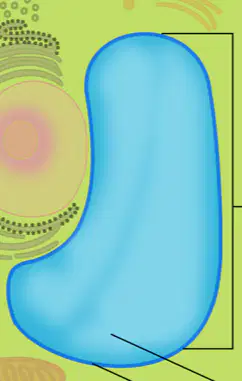
I store water in both plant and animal cells. What am I?
vacuole
cell wall
plastids
cell membrane

