
 Worksheets
Genetics - Punnett Squares
Total questions: 36
Worksheet time: 2hrs 48mins
Which of the following allele pairs is heterozygous?
RR
ss
Which of the following allele pairs is homozygous?
Ee
BB
Tt
Which of the following allele pairs is homozygous recessive?
RR
Rr
rr

Look at the punnett square shown. What allele pair would replace the "?"
WW
Ww
ww

Look at the punnett square shown. What is the probability that the offspring will show the dominant trait?
100%
75%
50%
25%
0%

Look at the punnett square. What is the probability of the offspring showing the recessive trait?
100%
75%
50%
25%
0%

Look at the punnett square. What is the probability that the offspring's alleles will be homozygous dominant?
100%
75%
50%
25%
0%

Look at the punnett square. What is the probability that the offspring would have homozygous alleles for the trait?
100%
75%
50%
25%
0%

Webbed fingers (F) are dominant over nonwebbed fingers (f). If parent A (Ff) and parent B (Ff) have children, which of the following are true? Select all that apply
Phenotypes: 75% chance of having webbed fingers and 25% chance of not.
Phenotypes: 100% chance of having webbed fingers and 0% chance of not.
Phenotypes: 25% chance of having webbed fingers and 75% chance of not
Genotypes: FF 25%, Ff 50%, ff 25%
Genotypes: FF 75%, Ff 50%, ff 25%
The genotype for a yellow plant is...

Brown eyes (B) tend to be dominant whereas blue eyes (b) tend to be recessive. Parents with heterozygous genes want to know: what is the likelihood of them having a child with blue eyes?
0%
25%
75%
100%
Two heterozygous (Tt) tall pea plants are crossed. Tall (T) is dominant. Short (t) is recessive. Which is the likelihood of each phenotype?
50% tall and 50% short
75% tall and 25% short
100% short

Which of the following would complete this Punnett Square?
aa
AA
Aa

Brown eyes are dominant (B) to blue (b). If Parent A (bb) and Parent B (Bb) have a child, what is the likelihood that the child will have brown eyes?
25%
50%
75%
100%

Select TWO answers. Which are the missing parts?
BB
bb
Bb

Which of the following must be the father's genotype?
RR
Rr
rr

If the father is homozygous recessive for dimples, what must the mother be for this Punnett Square?
Dd (Heterozygous)
DD (Homozygous Dominant)
dd (Homozygous Recessive)
Different versions of a trait (tall or short, white or purple) are called
alleles
traits
versions
genes
Which of the following shows a dominant trait?
aa
Bb
cc
dd
The only way for a recessive trait to appear is for an organism to have
two dominant alleles
two recessive alleles
one dominant allele and one recessive allele
Which of the following is/are considered to be purebreds? Select all that apply.
AA
bb
Dd
ee
Which of the following is considered to be Heterozygous?
AA
aa
Aa
In pea plants, purple is dominant to white. If a plant has a genotype of Pp, what is its phenotype?
purple
white
purple and white

Which of the following is the correct definition for a genotype?
The physical expression of a gene. (Characteristics)
A strand of DNA made up of multiple mutations.
The expression of one of your parents traits.
The set of genes in our DNA which is responsible for a particular trait.
Which of the following is the correct definition for a phenotype?
The physical expression of a gene. (Characteristics)
A strand of DNA made up of multiple mutations.
The expression of one of your parents traits.
The set of genes in our DNA which is responsible for a particular trait.


Who wins the bet?




The karyotype diagram below represents a human male. Chromosomal analysis of this karyotype reveals the abnormality in this karyotype is:
a missing X chromosome
a missing Y chromosome
an extra 21 chromosome
missing chromosome #9

What is the biological gender of this individual?
Male
Female
Cannot be determined
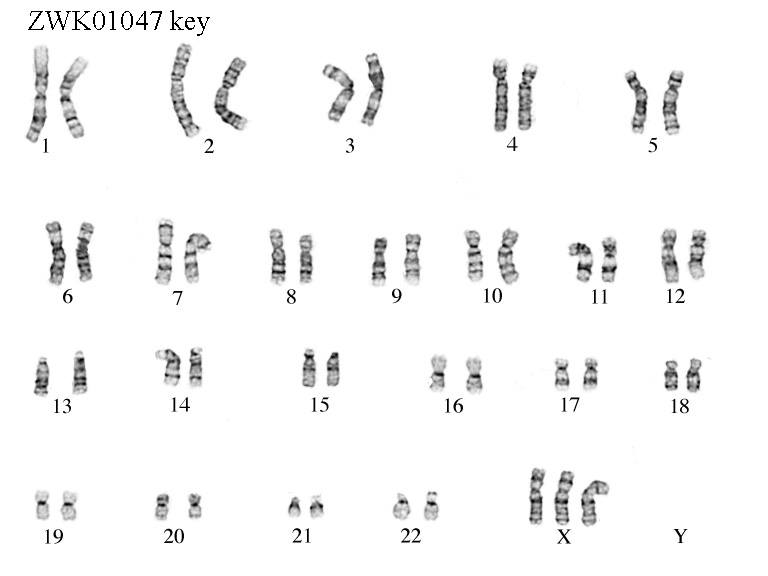
Based on the karyotype, can you guess the name of this genetic disorder?
Curvy 3
Jacob's syndrome
Triple X
Superwoman syndrome
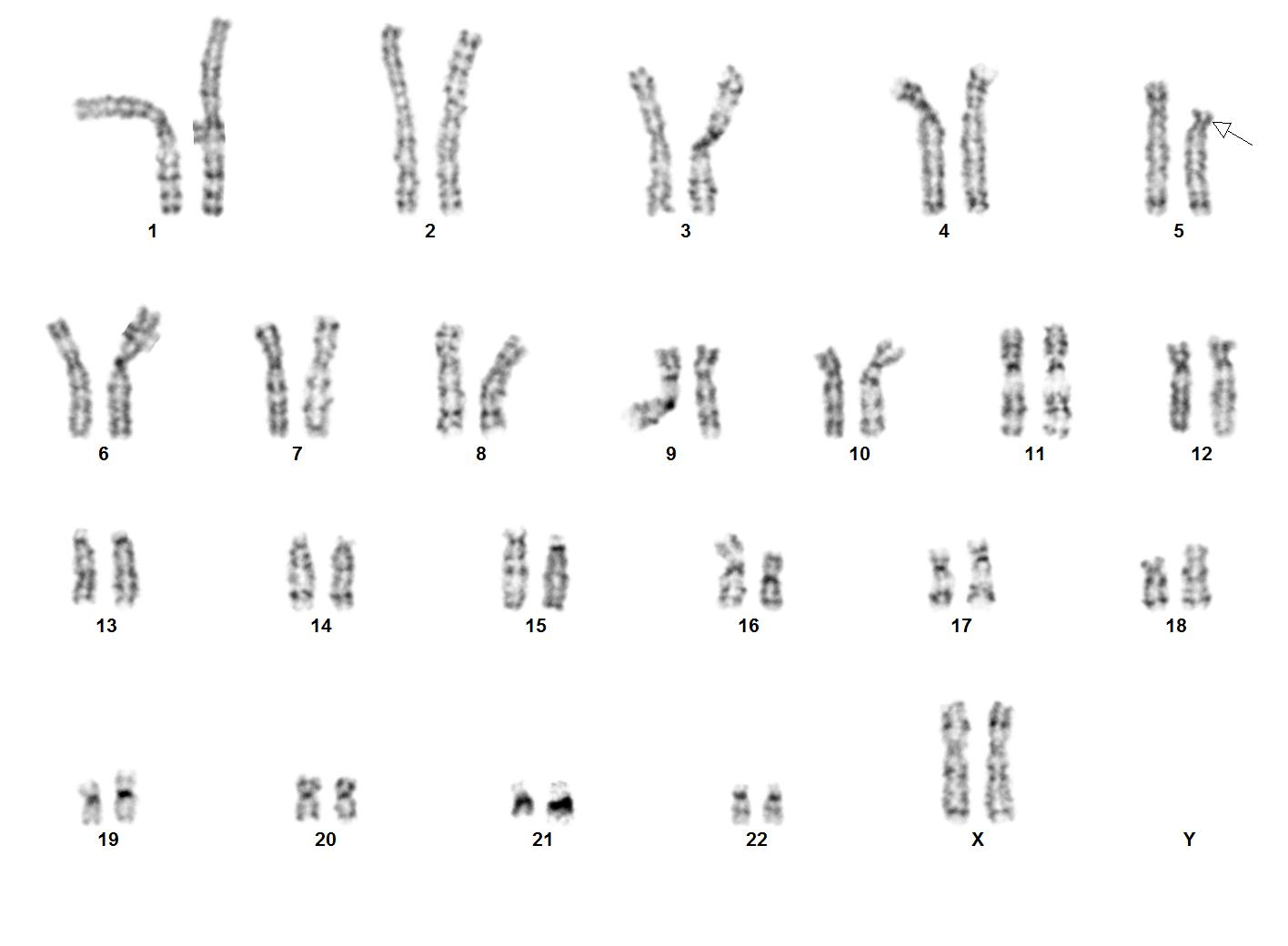
This disorder is called "Cry of the cat", can you find the chromosomal mutation?
There are too many chromosomes
They are missing the Y chromosome
Chromosome 1 is bent
Chromosome 5 is too short (missing a piece)

