wayground logo

Free Printable Worksheets

Font size

S
M
L
XL
Worksheets

Vocabulary Review - CS

Total questions: 111

Worksheet time: 2hrs 34mins

Name
Class
Date
1.

Match the following

a)
1.

proton

b)
2.

electron

c)
3.

neutron

2.

Identifies the number of protons in an atoms nucleus.

a)

Electron Cloud

b)

Atomic Theory

c)

Atomic Number

d)

Mass Number

3.

Each chemical element is made up of only one kind of

a)

atom

b)

molecule

c)

electron

d)

neutron

4.

Chemists use letters of the alphabet as _____ for the elements.

a)

symbols

b)

codes

c)

atomic numbers

d)

atomic masses

5.

A _____ is a particle with no charge.

a)

proton

b)

neutron

c)

electron

d)

quark

6.

What is the CHEMICAL SYMBOL in this element tile?

a)

10

b)

Ne

c)

Neon

d)

20.18

7.

What is the atomic number of this element?

a)

8

b)

16

c)

O

d)

oxygen

8.

How many neutrons does this element have?

a)

27

b)

13

c)

14

d)

40

9.

What is the atomic mass of this element?

a)

16

b)

8

c)

24

d)

18

10.

How many electrons does this element have?

a)

27

b)

13

c)

14

d)

40

11.

All matter is made of _________.

a)
energy 
b)
atoms 
c)
electrons 
d)
compounds 
12.

The amount of matter/atoms in an object is...

a)

volume

b)

mass

c)

density

d)

weight

13.

Which (3) of these are subatomic particles that form an atom? (choose 3)

a)

Protons

b)

Klingons

c)

Electrons

d)

Microns

e)

Neutrons

14.

A proton has a ___________ charge.

a)

positive

b)

negative

c)

neutral

d)

massive.

15.

An electron has a _________ charge

a)

positive

b)

neutral

c)

negative

d)

massive

16.
The particles with no charge in an atom are the _______.
a)
electrons
b)
neutrons
c)
protons
d)
protons and neutrons
17.
What does the nucleus of an atom contain?
a)
Electrons and neutrons
b)
Protons and neutrons
c)
Neutrinos and positrons
d)
DNA and RN
18.

__________ are negatively charged particles that are in the orbitals around the nucleus.

a)

protons

b)

nucleus

c)

neutrons

d)

electrons

19.

An element is identified by

a)

its number of protons

b)

the atomic mass

c)

the type of charge

d)

its number of isotopes

20.

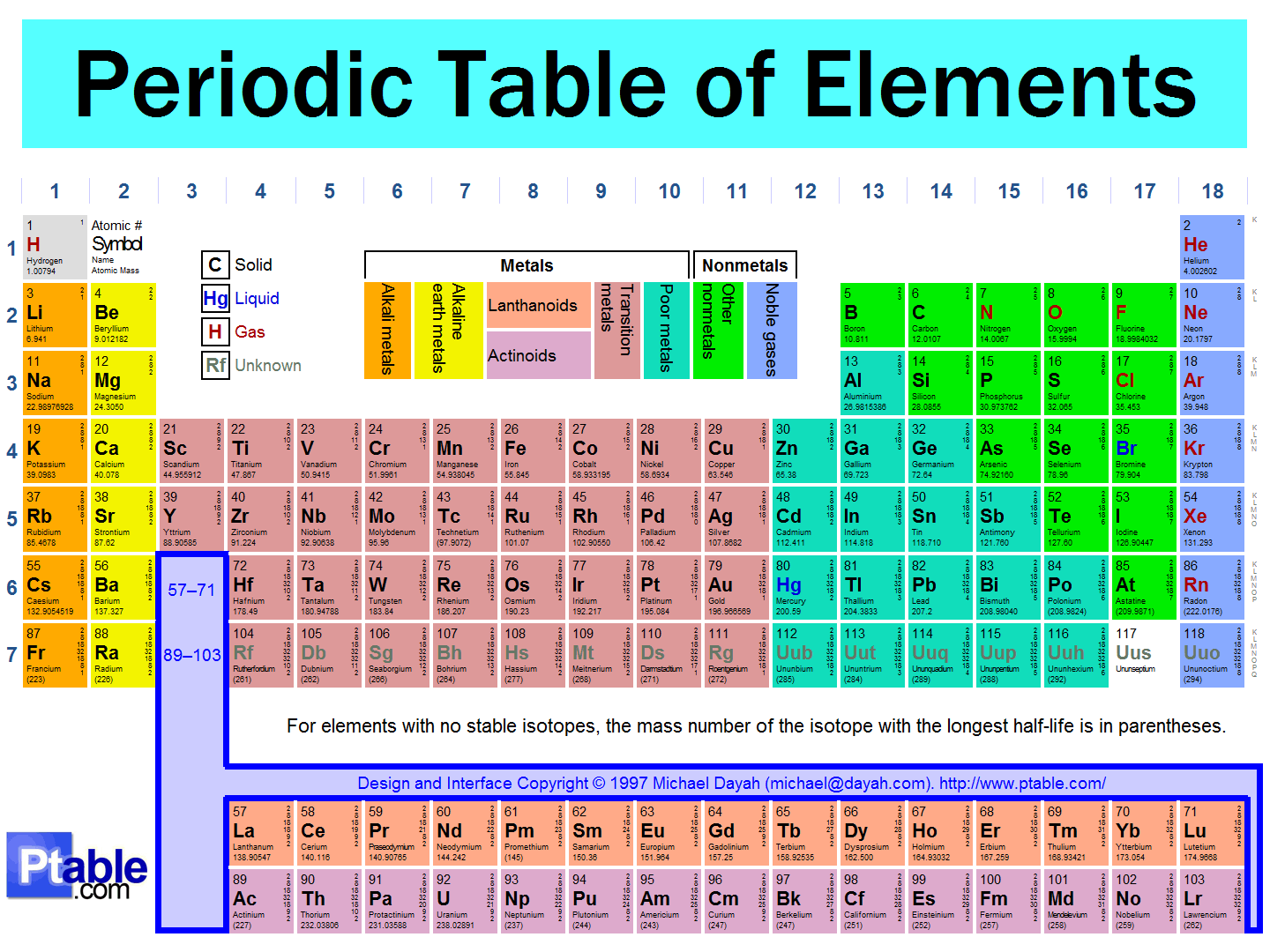
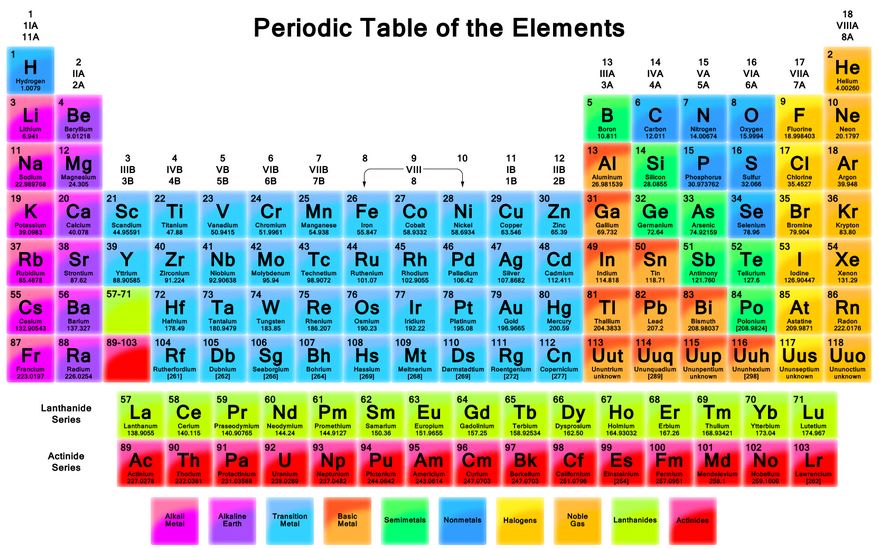
What is this table

a)

Elemental Table of Periods

b)

Atomic Table of Atoms

c)

Periodic Table of Elements

21.

What is the Periodic Table?

a)

A chart that shows all the elements scientists have discovered/created.

b)

A chart that lists all the molecules that exist in the universe.

c)

A chart that tells who discovered each element.

d)

A chart that lists all the molecules found in nature.

22.

The number of protons in an atom is called the .....

a)

Mass

b)

Atomic Number

c)

Nucleus

d)

Orbital

23.

What is the name of this element?

a)

11

b)

Na

c)

Sodium

d)

20.98977

24.

What is the symbol for this element?

a)

Kr

b)

kr

c)

KR

d)

All of them are right.

25.

How many protons does Potassium (K) have?

a)

19

b)

39

c)

20

d)

58

26.

What are atoms?

a)

Atoms are invisible

b)

The tiny building blocks from which everything is made of.

c)

The tiny building blocks that little kids play with

d)

Things we talk about in science

27.

What type of atoms are living things mostly made of?

a)

Carbon, soda, and oxygen

b)

Carbon, hydrogen, and oxygen

c)

Caffeine, hydrogen, and oxygen

d)

Water

28.

How many elements are there?

a)

50

b)

100

c)

Over 100

d)

A billion

29.

What are the bits inside atoms called?

a)

Atomic matter

b)

Molecules

c)

Subatomic particles

d)

Smaller atoms

30.

The 3 subatomic particles inside an atom are called...

a)

Protons, neutrons, and elections

b)

Protests, neutrons, and electrons

c)

Protons, neutral, and electrons

d)

Protons, neutrons, and electrons

31.

The smallest piece of an element:

a)

quark

b)

electron

c)

shell

d)

atom

32.

What is the study of matter?

a)

Chemistry

b)

Biology

c)

Earth Science

d)

Physics

33.

The vertical (up and down) columns in the Periodic Table are called

a)

groups

b)

towers

c)

periods

d)

atomic numbers

34.
In the modern periodic table elements are arranged by:
a)
atomic mass
b)
atomic number
c)
valence electrons
d)
number of isotopes
35.

Periods on the periodic table are:

a)

Horizontal

b)

Vertical

36.

Groups on the periodic table are:

a)

Horizontal

b)

Vertical

37.

The symbol of which of these elements is a single letter ?

a)

Sulphur

b)

Bromine

c)

Calcium

38.

The symbol of which of these elements is a single letter ?

a)

Mercury

b)

Gold

c)

Oxygen

39.

The symbol of which of these elements is NOT a single letter ?

a)

Phosphorous

b)

Sulfur

c)

Silver

40.

The name of FeCl₂ is

a)

iron chloride

b)

iron (II) chloride

c)

iron (I) chloride

d)

iron dichloride

41.

LiBr is called

a)

lithium bromine

b)

lithium (I) bromine

c)

lithium bromide

d)

lithuim (I) bromide

42.

Name the ionic compound SnSe2

a)

Tin diselenide

b)

Tin (IV) Selenide

c)

Tin selenide

d)

Tin (II) triselenide

43.

Which of these combinations is an ionic compound made of?

a)

Metal and Metal

b)

Nonmetal and Nonmetal

c)

Metal and Nonmetal

d)

Cation and Cation

44.

Which of the following combinations would need roman numerals in the name?

a)

potassium + fluorine

b)

beryllium + oxygen

c)

boron + iodine

d)

gold + oxygen

45.

H20 - name?

a)

hydrooxic acid

b)

hydrogen oxygen

c)

water

d)

dihydrogen monoxide

46.

HCl- name?

a)

hydrogen chloride

b)

chlorine hydrogen

c)

hydrogen chlorine

d)

hydrogen chlorate

47.
phosphorus trichloride
a)
KCl3
b)
PCl3
c)
K3Cl
d)
P3Cl
48.
silicon dioxide
a)
SO2
b)
NaO2
c)
SiO2
d)
SiO
49.
diphosphorus pentoxide
a)
P2O5
b)
PO5
c)
P5O2
d)
P2O6
50.
SiCl4
a)
silicon tetrachloride
b)
silicon quadchloride
c)
monosilicon tetrachloride
d)
silicon chloride
51.
The name of P₄S₁₀ is
a)
phosphorous sulfide
b)
phosphorus sulfide
c)
tetraphosphorus decasulfide
d)
phosphorus (X) sulfide
52.
The name of SO₃ compound is
a)
sulfate
b)
sulfur oxide
c)
sulfur trioxide
d)
monosulfur trioxide
53.
What is the correct formula for the compound, lithium oxide?
a)
LiO
b)
Li2O
c)
LiO2
d)
Li2O2
54.
What is the formula for manganese(III) oxide?
a)
MgO
b)
Mg2O3
c)
MnO
d)
Mn2O3
55.
The chemical formula of Iron (III)bromide is
a)
FeBr
b)
Fe(III)Br
c)
FeBr₃
d)
Fe₂Br₃
56.
How do the following two elements bond together?
Cr3+  O2-         
a)
CrO
b)
Cr3O2
c)
Cr2O3
d)
CrO3
57.
How do the following two elements bond together?
K1+  S2- 
a)
KS
b)
K8S
c)
K6S3
d)
K2S
58.

Identify the type of chemical reaction

a)

Synthesis

b)

Decomposition

c)

Single replacement

d)

Double replacement

e)

Combustion

59.

Identify the type of chemical reaction

a)

Synthesis

b)

Decomposition

c)

Single replacement

d)

Double replacement

e)

Combustion

60.

Identify the type of chemical reaction

a)

Synthesis

b)

Decomposition

c)

Single replacement

d)

Double replacement

e)

Combustion

61.

Identify the type of chemical reaction

a)

Synthesis

b)

Decomposition

c)

Single replacement

d)

Double replacement

e)

Combustion

62.

Identify the type of chemical reaction

a)

Synthesis

b)

Decomposition

c)

Single replacement

d)

Double replacement

e)

Combustion

63.
This pictures simulates what type of reaction?
a)
Synthesis
b)
Decomposition
c)
Single Replacement
d)
Double Replacement
64.

Pb(NO3)2 --> PbO + NO2 + O2

a)

Synthesis

b)

Decomposition

c)

Single replacement

d)

Combustion

e)

Double replacement

65.

Cu + 2Ag(NO3) → 2Ag + Cu(NO3)

a)

Synthesis Reaction

b)

Decomposition Reaction

c)

Single Replacement Reaction

d)

Double Replacement Reaction

66.

P4 + 3 O2 ----> 2 P2O3

a)

Synthesis

b)

Decomposition

c)

Single replacement

d)

Double replacement

e)

Combustion

67.
Always starts with a Hydrocarbon that reacts with oxygen and produces carbon dioxide and water. 
a)
Decomposition
b)
Synthesis
c)
Combustion
d)
Single Replacement
68.
Which of these is a property of metals?
a)
It's malleable
b)
It can't conduct electricity
c)
They are used in food
d)
It's very brittle
69.
Where are the non-metallic elements found in the periodic table?
a)
In the middle
b)
In the top rows
c)
On the left-hand side
d)
On the right-hand side
70.
I have an object that is dull, brittle, and an insulator, what is it?
a)
metalloid
b)
non-metal
c)
metal
d)
matter
71.
If you have a material that can conduct electricity well it is probably a...
a)
Metalloid
b)
Matter
c)
Non-metal
d)
Metal
72.
What physical properties are used to classify elements as metals, non-metals, or metalloids?
a)
Color, smell, physical state
b)
Reactivity, streak, hardness
c)
Ability to burn, mass, density
d)
Luster, conductivity, malleability
73.
Which of the following would help a student classify an unknown element as a metal, metalloid, or non-metal?
a)
Measure its conductivity
b)
Determine its density
c)
Find its melting point
d)
Observe its color
74.
Non-metals are good conductors of heat and electricity. 
a)
TRUE
b)
FALSE
75.
Metals are ductile, meaning they can be drawn into wire
a)
True
b)
False
c)
Never
76.
Unlike non-metals, most metals tend to —
a)
conduct electricity and heat well.
b)
be gases at room temperature.
c)
break easily when hammered.
d)
have less luster and shine.
77.
Luster is ___________
a)
A.  the way light is reflected off a surface.
b)
A.  how well a piece of matter conducts electricity. 
c)
A.  the capability of being drawn out into thin wires or threads.
d)
A.  the capability of being hammered out thin.
78.
What kind of bond forms when atoms share electrons?
a)
Chemical bond
b)
Ionic bond
c)
Covalent bond
d)
Electron bond
79.
Al+3  combines with (PO4)-3 to make the following compound
a)
Ai(PO4)
b)
Al(PO4)
c)
Al(PO4)3
d)
Ai(SO)7⊕⌋
80.
Why do atoms create chemical bonds when they come into contact with each other?
a)
Because atoms like high levels of energy.
b)
Because elements are afraid to be alone.
c)
Because atoms are much more stable with 8 valence electrons. (octet rule)
d)
Because atoms are much more stable with 8 valence electrons. (valence rule)
81.
What kind of chemical bond forms between a metal and a nonmetal?
a)
Covalent bond
b)
Ionic bond
c)
Can be either covalent or ionic
d)
Hydrogen bond
82.
What kind of bond forms between two nonmetals?
a)
Covalent bond
b)
Ionic bond
c)
Can be either covalent or ionic
d)
Hydrogen bond
83.
What is the name for an ion with a positive charge?
a)
Anion
b)
Cation
c)
Dogion
d)
Ion
84.
What is the name for an ion with a negative charge?
a)
Anion
b)
Cation
c)
Dogion
d)
Ion
85.
What kind of bond forms when one kind of atom gives electrons to another kind of atom?
a)
Chemical bon
b)
Ionic bond
c)
Covalent bond
d)
Electron bond
86.
What kind of bond forms when atoms share electrons?
a)
Chemical bond
b)
Ionic bond
c)
Covalent bond
d)
Electron bond
87.
Elements on the LEFT side of the periodic table will most likely form:
a)
Positive ions
b)
Negative ions
c)
Neutral Ions
d)
None of these
88.

Predict the type of bond that will form between Be and F.

a)

Ionic

b)

Covalent

89.
Which Compound would be classified as a covalent bond
a)
CaCl2
b)
P2O5
c)
KI
d)
MgO
90.
Where are the nonmetals located on the periodic table? 
a)
Blue
b)
Red
c)
Green
91.
Where are metals located on the periodic table?
a)
Blue
b)
Green
c)
Red
92.
MgBr2
a)
Ionic Bond
b)
Covalent Bond
c)
Both bonds
d)
Neither bond
93.

The chemical bond between a non-metal and another non-metal will be a ________ bond.

a)

metal

b)

ionic

c)

covalent

d)

polar

94.

The chemical bond between a metal and a non-metal will be a _____ bond.

a)

metal

b)

ionic

c)

covalent

d)

polar

95.

Beryllium and sulfur will form a ______ bond

a)

ionic

b)

covalent

c)

metalloid

96.
What is the formula for magnesium phosphide?
a)
Mg3P2
b)
Mg2P3
c)
Mg2PO3
d)
Mg3(PO3)2
97.
The chemical formula for an ionic compound of potassium and oxygen is
a)
KO.
b)
K2O.
c)
K2O2.
d)
KO2.
98.
Which is most likely to form a negative ion?
a)
an element from group 17
b)
a metal
c)
an element from group 1
d)
an element with atoms that have eight valence electrons
99.
Name this compound: 
NaBr
a)
Bromide sodide
b)
Sodium bromide
c)
Sodium bromate
d)
Sodium bromite
100.

What is the chemical formula for a compound between sodium and sulfur?

a)

SoS2

b)

Na2S

c)

So2S

d)

NaS

101.
What formula results when Ca+2  and  Br- ions bond?
a)
Ca2Br2
b)
CaBr
c)
Ca(br)2
d)
CaBr2
102.
What would be the proper chemical formula for combining Al3+ and l- :
a)
Al l3
b)
Al3l
c)
Al l
d)
All3
103.
How do the following two elements bond together?
Cr3+  O2-         
a)
CrO
b)
Cr3O2
c)
Cr2O3
d)
CrO3
104.
How do the following two elements bond together?
K1+  S2- 
a)
KS
b)
K8S
c)
K6S3
d)
K2S
105.
Na +  and  S -2
a)
Na2S
b)
NaS2
c)
Na2S2
d)
NaS
106.
What is the charge of an atom that has lost one electron?
a)
-1
b)
-2
c)
+1
d)
+2
107.
If an element has 3 valence electrons, what charge will likely form on its ion ?
a)
+3
b)
+5
c)
-3
d)
-5
108.
What is the name of N2O3
a)
Nitrogen trioxide
b)
Dinitrogen oxide
c)
Dinitrogen trioxide
d)
Nitrogen oxide
109.
What is the chemical formula for Tetrasulfur pentoxide?
a)
SO
b)
S4O
c)
S4O5
d)
S5O4
110.
What is the name of CO
a)
Carbon oxide
b)
Carbon dioxide
c)
Carbon monoxide
d)
Carbon II oxide
111.
diphosphorus pentoxide
a)
P2O5
b)
PO5
c)
P5O2
d)
P2O6