Wayground logo

Free Printable Worksheets

Font size

S
M
L
XL
Worksheets

Energy Diagrams/Endo v Exo

Total questions: 44

Worksheet time: 35mins

Name
Class
Date
1.
ΔH value in an endothermic reaction is a positive number.
a)
True
b)
False
2.
A catalyst works by
a)
changing the order of the reaction
b)
increasing the temperature
c)
lowering the activation energy
d)
making the activated complex
3.
Define 'Enthalpy'
a)
a) Energy stored in the movement of molecules in a substance
b)
b) The opposite of temperature
c)
c) The temperature of a molecule
d)
d) Energy stored in the chemical bonds in a substance
4.
Which statement is true regarding endothermic reactions?
a)
a) Temperature change is positive and enthalpy change is positive
b)
b) Temperature change is positive and enthalpy change is negative
c)
c) Temperature change is negative and enthalpy change is positive
d)
d) Temperature change is negative and enthalpy change is negative
5.

What is the Heat of Reaction ΔH\Delta H  for this reaction?

a)

-200 KJ

b)

200 KJ

c)

400 KJ

d)

-300 KJ

6.

How much activation energy is needed for this reaction?

a)

300 KJ

b)

500 KJ

c)

400 KJ

d)

100 KJ

7.

Are the products or reactants of this reaction storing more energy in their chemical bonds?

a)

Both storing the same

b)

No way to tell

c)

Products

d)

Reactants

8.

What type of reaction is this?

a)

Exothermic

b)

Endothermic

c)

Energy Producing

d)

No way to tell

9.

What kind of equation is this: 2KI + MgCl2 + 200KJ ----> 2KCl + MgI2

a)

Endothermic

b)

Exothermic

10.

In this equation, is more energy stored in the bonds of the reactants or products: NaCl + AgF +100KJ -----> NaF + AgCl

a)

Products

b)

Reactants

11.

How can you tell this reaction is exothermic: MgO + CaS ----> CaO + MgS + 200 KJ

a)

Energy is written on the products side

b)

Energy is being released

c)

Less energy is stored on product side

d)

All of these tell me

12.
Which of these conditions is always true for an exothermic process?
a)
They leave the surroundings feeling cold
b)
They release energy into the surroundings.
c)
They absorb energy from the surroundings
d)
The reactants gain energy as they form the products
13.
In an endothermic reaction the system is releasing energy.
a)
True
b)
False
14.
A reaction is performed in a beaker with a temperature probe recording the temperature changes of the reaction.  If the temperature began at 15.0 degrees Celsius and ended at 27.5 degrees Celsius.  If the reaction is our system, is the system endothermic or exothermic?
a)
Exothermic
b)
Endothermic
15.
Do reactants in an endothermic reaction have a higher or lower energy than the products? 
a)
Higher
b)
Lower
16.

When you freeze water, it turns to ice. What kind of change is this?

a)

endothermic

b)

exothermic

17.
What kind of reaction has a negative heat of reaction (ΔHr)?
a)
endothermic
b)
exothermic
18.

When heat is transferred, which way does it travel?

a)

from colder temperature to warmer temperature

b)

from warmer temperature to cooler temperature

c)

first class

d)

coach

19.
What happens to the energy of particles in a substance as it changes from gas, to liquid, to solid?
a)
KE decreases
b)
KE increases
c)
KE stays the same
d)
KE goes up and then goes down
20.
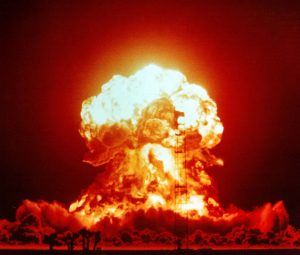
What type of reaction is shown in the photo?
a)
Exothermic
b)
Isothermic
c)
Endothermic
d)
None of the  above
21.

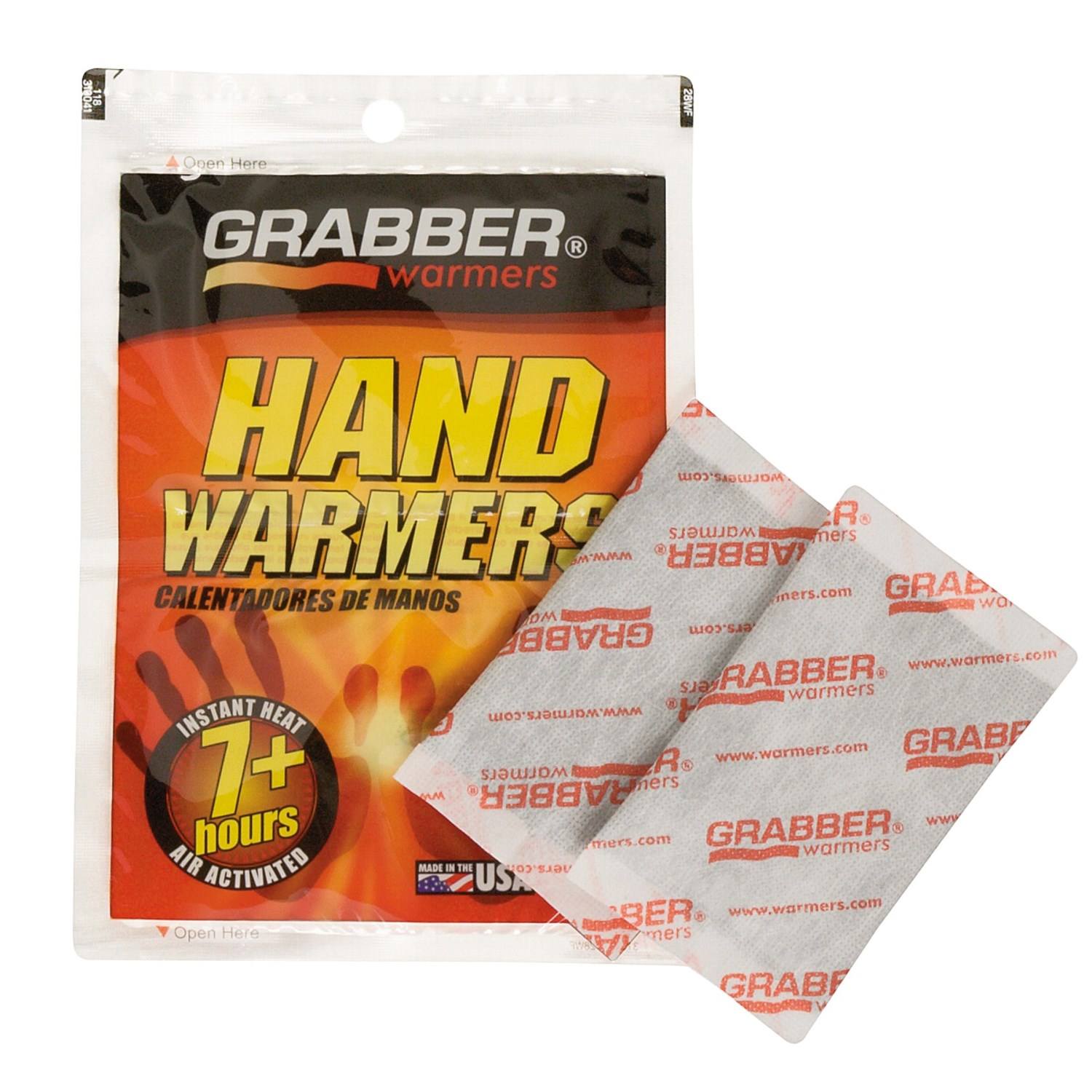
What type of reaction occurs in a hand warmer?

a)

exothermic

b)

endothermic

22.

What do you call the energy that is required to start a reaction?

a)

Alternative energy

b)

Activation energy

c)

Atmospheric energy

23.

A + Heat -------> C + D

a)

Endothermic

b)

Exothermic

24.

A + B-------> C + Heat

a)

Endothermic

b)

Exothermic

25.

Absorbs energy

a)

Endothermic

b)

Exothermic

26.

Burning and combustion

a)

Endothermic

b)

Exothermic

27.

Energy or heat is a product

a)

Endothermic

b)

Exothermic

28.

Cold Pack

a)

Endothermic

b)

Exothermic

29.

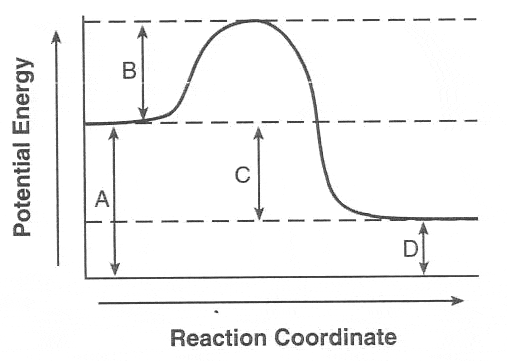
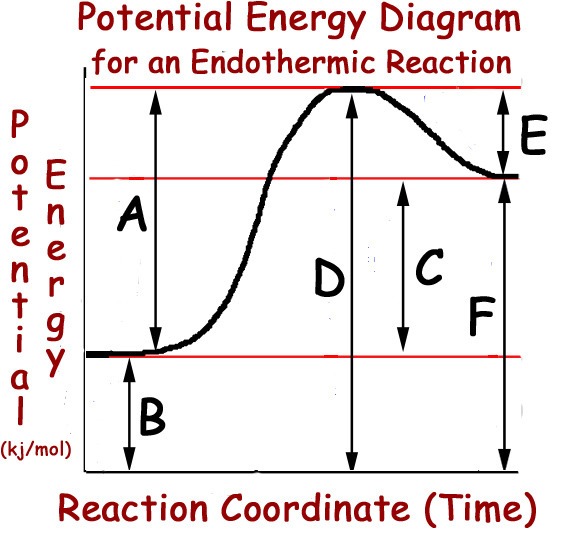
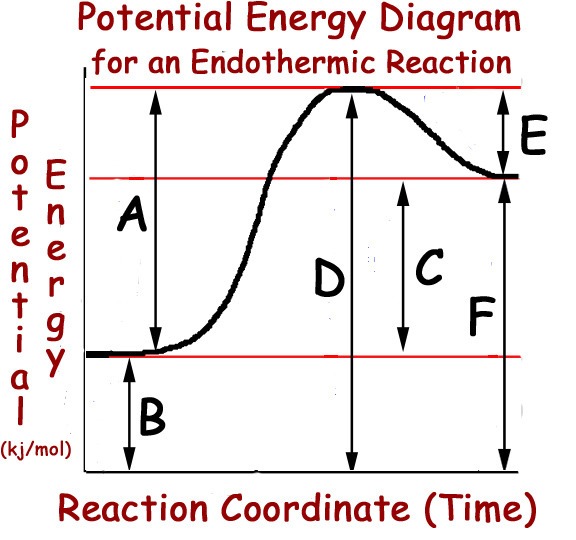
Which letter shows the activation energy

a)

A

b)

B

c)

C

30.

Is this showing an endothermic or an exothermic reaction?

a)

Endothermic

b)

Exothermic

31.

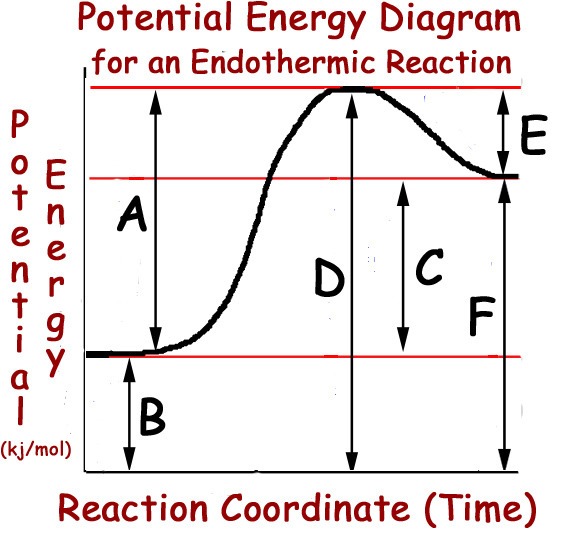
Which letter shows the heat change?

a)

A

b)

B

c)

C

d)

D

e)

E

32.

Which letter represents the reactants?

a)

A

b)

B

c)

C

d)

D

e)

E

33.

Which letter represents the products?

a)

A

b)

B

c)

C

d)

D

e)

E

34.

Which letter represents the transition state?

a)

A

b)

B

c)

C

d)

D

e)

E

35.
What letter represents the energy of the products?
a)
A
b)
B
c)
C
d)
D
36.
What letter represents the activation energy?
a)
A
b)
B
c)
C
d)
D
37.
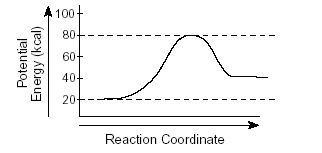
Is this reaction endothermic or exothermic?
a)
endothermic 
b)
exothermic
38.

What is the ΔH of this reaction?

a)

40 kJ

b)

20 kJ

c)

80 kJ

d)

-60 kJ

39.
What letter represents ΔH?
a)
A
b)
B
c)
C
d)
D
40.

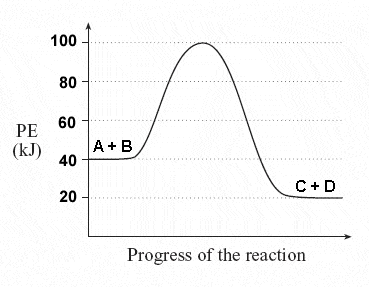
What is the change of the heat of the reaction (ΔH)?

a)

-40 kJ

b)

-20 kJ

c)

100 kJ

d)

60 kJ

41.
What is the PE of the reactants?
a)
100 kJ
b)
175 kJ
c)
50 kJ
d)
75 kJ
42.
What is the PE of the products?
a)
100 kJ
b)
175 kJ
c)
50 kJ
d)
75 kJ
43.
What is the activation energy?
a)
100 kJ
b)
175 kJ
c)
50 kJ
d)
75 kJ
44.

What is the change of the heat of the reaction (ΔH)?

a)

100 kJ

b)

-175 kJ

c)

-50 kJ

d)

75 kJ