
 Worksheets
Pretest: Physical Chemistry
Total questions: 40
Worksheet time: 3hrs 20mins
The positive particles of an atom are
electrons
positrons
neutrons
protons
The central region of an atom where its neutrons and protons are is its
nucleus
electron cloud
core
center
An atom with atomic number 6 would have how many protons
6
12
3
cannot be determined
If an atom has 10 protons, 10 neutrons, and 10 electrons, what is the mass of the atom?
10
20
30
What subatomic particle(s) would be found orbiting the nucleus?
Neutrons only
Electrons only
Protons and Neutrons
Protons and Electrons
What particle uniquely identifies an element?
Number of Valence Electrons
Number of Protons
Number of Electrons
Atomic Mass
Stars are 96% - 99% ____ and ___.
gas, dust
elements, compounds
hydrogen, helium
hydrogen, carbon
The giant molecular clouds that form new stars are also called ___.
pulsars
white holes
nebulae
protostars
Elements past iron on the periodic table form in what happens to very massive stars when they "die" in an event called a ___.
nova
supernova
pulsar
When the sun becomes a ____ it will start fusing helium into carbon.
white dwarf
red dwarf
supergiant
red giant
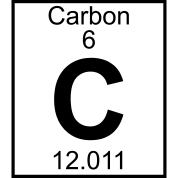
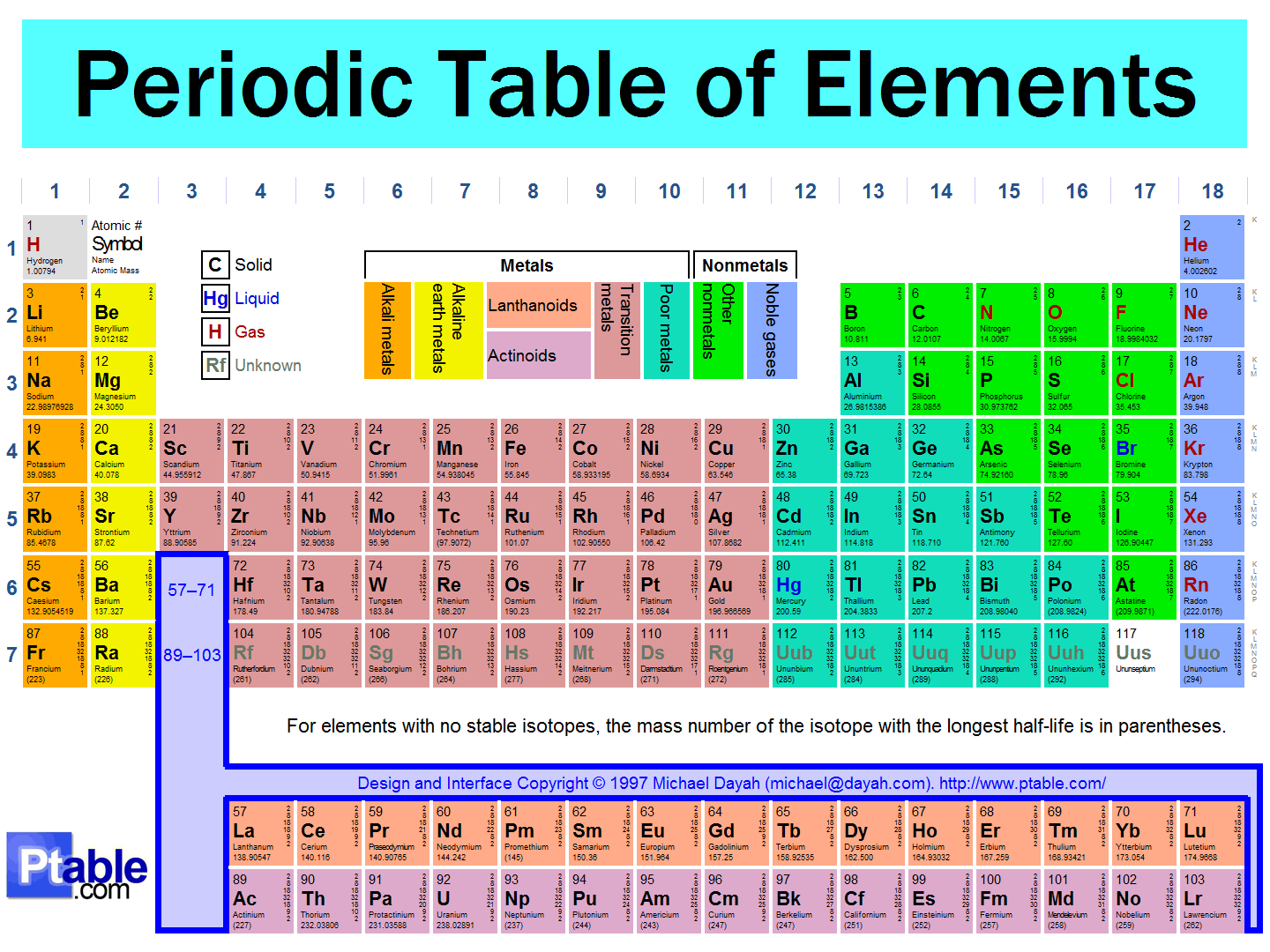
The horizontal (side to side) rows in the Periodic Table are called
groups
families
periods
atomic numbers
The skeletal formula for CH3CH2CH2CH3 is ….


The different formula for organic compounds are shown below. Which among the following is a structural formula of an organic compound?


The name for this compound is ....
2-ethylpropane
1,1-dimethylpropane
2-methylbutane
3-methylbutane
The molecular formula below which shown the alkanes compound is ….
C2H4
C3H7
C4H10
C5H8

Which of these structures represent
4-ethyl-2,3-dimethyl-2-heptene?


Which of the following has the lowest boiling point?
C5H12
(CH3)2CHC2H5
(CH3)4C
Cyclopentane

Which hydrocarbon subtituent/s is found on the following molecule?
ethyl
pentyl
methyl
ethyl and pentyl
methyl and pentyl

What is the correct name for the following compound?
3,4-dimethylheptane
4-methyl-5-ethylhexane
3-methyl-4-propylpentane
4,5-dimethylheptane
How many moles of oxygen are produced when 6.7 moles of KClO3 decompose completely?
How many moles of water can be produced if 8 moles H2 are used?
In a chemical reaction, the mass of reactants ___.
is less than the mass of products
is greater than the mass of products
has no relationship to the mass of products
is equal to the mass of products
What coefficients are needed to balance the reaction?
WO3 + H2 --> W + H2O
In balancing the above equation, what coefficient goes in front of H2?
1
2
3
4
What reaction has the following general formula:
AB --> A + B
Combination
Decomposition
Single Replacement
Double Replacement
Combustion
What reaction has the following general formula:
A + CD --> C + AD
Combination
Decomposition
Single Replacement
Double Replacement
Combustion
What is the general reaction scheme for a single replacement reaction?
A + B --> AB
AB --> A + B
A + CD --> C + AD
AB + CD --> CB + AD
CxHy+O2 −> CO2+H2O
What type of reaction is the following:
BaCl2+2KI −> 2KCl + BaI2
Combination
Decomposition
Single Replacement
Double Replacement
Combustion
What type of reaction is the following:
3CuS +2Al −> Al2S3+3Cu
Combination
Decomposition
Single Replacement
Double Replacement
Combustion
An atom of carbon has 6 protons and 7 neutrons in its nucleus. If the atom is neutral, how many electrons does it have?
0
7
6
13
An atom of iodine has 7 valence electrons. What will an atom of iodine MOST likely do to be stable?
Lose 1 electron
Lost 7 electrons
Gain 1 electron
Neither gain nor lose any valence electrons

