wayground logo

Free Printable Worksheets

Font size

S
M
L
XL
Worksheets

Science Review

Total questions: 79

Worksheet time: 1hrs 6mins

Name
Class
Date
1.
Matter is...
a)
a substance made up of only one kind of element
b)
anything that has mass and takes up space
2.
A molecule is...
a)
two or more atoms linked together
b)
anything that has mass and takes up space
3.
The more mass an object has, the more gravity it has.
a)
True
b)
False
4.
Which of the following determines if an object sinks or floats?
a)
density
b)
mass
c)
weight
d)
volume
5.
Which tool can be used to measure the mass of an object?
a)
balance
b)
ruler
c)
graduated volume
d)
themometer
6.
Type of matter made of two or more elements...
a)
element
b)
mixture
c)
compound
7.
Amount of matter in a solid, liquid, or gas...
a)
mass
b)
volume
8.
Measured with a balance...
a)
Mass
b)
Volume
9.
Solid have a certain shape and a volume of their own. Solid are something you can touch.
a)
True
b)
False
10.
Gasses do not have a shape or volume of their own. You cannot see most gasess.
a)
True
b)
False
11.
All living and non living things that interact in an area. 
a)
School
b)
Home
c)
Ecosystem
d)
environment 
12.
This part of the plant captures energy from the Sun.
a)
Stem
b)
Carbon Dioxide
c)
Chlorophyll
d)
Roots
13.
How do plants get energy? 
a)
Photosynthesis 
b)
Eating other plants
c)
Respiration
d)
hydroponics 
14.
Who makes their own food?
a)
Producer
b)
Consumer
c)
herbivore
d)
animal
15.

A shark eats a little Miguel.The shark is a what?

a)

producer

b)

consumer

c)

mean

d)

herbivore

16.

What breaks down dead organisms and their waste?

a)

Decomposers

b)

dirt

c)

wind

d)

Miguel

17.
Sunlight -> Red coco plant -> Spider Monkey -> What comes next in this food chain?
a)
fungi
b)
Jaguar
c)
Shark
d)
Spider
18.
A shooting star  is actually a:
a)
a star
b)
a meteor
c)
and asteroid
19.
Fill in the blanks.In a 24 hour period, the earth completes one ________ on its ________
a)
rotation, orbit
b)
revolution, axis
c)
rotation, axis
d)
revolution, orbit
20.
What causes the temperatures at the north and south pole to remain cold throughout the year?
a)
The speed at which the Earth moves around the sun
b)
The tilt of the Earth on its axis
21.
The orbit of the Earth around the sun is:
a)

circular

b)
elliptical
c)
irregular
22.
Sometimes people see figures such as animals in the arrangement of the stars, these figures are called:
a)
Supernova
b)
Constellations
c)
Supergiants
23.
Which moon phase comes after waxing crescent?
a)
First Quarter
b)
Waning Crescent
c)
Full moon
d)
Waxing Gibbous
24.
What revolves around a planet?
a)
star
b)
moon
c)
comet
25.
Which of the following best describes the size of the sun in relation to other stars?
a)
The sun is a dwarf star
b)
the sun is an averaged size star.
c)
The sun is a giant star
26.
Which planet is located between mars and Saturn?
a)
Mercury
b)
Earth
c)
Jupiter
d)
Uranus
27.
Which order is correct?
a)
Jupiter, Mercury, Saturn, Neptune
b)
Mercury, Earth, Mars, Jupiter
c)
Earth, Mars, Venus, Jupiter
d)
Uranus, Jupiter, Neptune, Saturn
28.
What season is the Southern hemisphere in when the North Pole is leaning into the Sun?
a)
Summer
b)
Fall
c)
Winter
d)
Spring
29.
Which planet is the largest?
a)
Jupiter
b)
Saturn
c)
Uranus
d)
Neptune
30.
Which Planet comes after Earth in the solar system?
a)
Mercury
b)
Mars 
c)
Venus 
d)
Eros
31.
The order of the planets is:
a)
Mars,Venus,Earth,
Mercury,Saturn
Jupiter, Uranus, Neptune
b)
Earth,Venus,Mars
Jupiter, Neptune,
Mercury,Saturn,
Uranus
c)
Mercury,Venus,Earth
Mars,Jupiter,
Saturn,Uranus
Neptune
32.
When the Northern Hemisphere of Earth is Leaning away from the Sun, What season is the Southern Hemisphere experiencing?
a)
Summer
b)
Winter
c)
Spring
d)
Fall
33.

What are plants and animals made of?

a)

Stuff

b)

Cells

c)

Water

d)

Mitochondria

34.

What is a cell?

a)

The biggest unit of living things

b)

An organ

c)

The smallest unit of living things

d)

An small thing

35.

Do you see the United States here on the Earth? Which season does this picture show?

a)

Winter

b)

Spring

c)

Summer

d)

Fall

36.

Biology is the study of what?

a)

Life

b)

Sandwich

c)

The human brain

d)

Weather

37.

How long does it take for light to get from the Sun to the Earth?

a)

150 million years

b)

10 seconds

c)

8 minutes

d)

Sandwich

38.

What is an Herbivore?

a)

Meat eater

b)

Sandwich

c)

Plant & Meat eater

d)

Plant eater

39.

An elephant is a

a)

mammal

b)

amphibian

c)

reptile

d)

protozoa

40.

Which organism is a decomposer?

a)

frog

b)

worm

c)

oak tree

d)

grasshopper

41.
What tool would you use to check the temperature of the water?
a)
ruler
b)
microscope
c)
thermometer
d)
ruler
42.
When might you use a meter stick?
a)
to measure a caterpillar
b)
to find how much a gummy bear weighs
c)
to find the length of a wall
d)
to closely examine a butterfly wing
43.
What tool is used to measure the volume of a liquid?
a)
thermometer
b)
hand lens
c)
graduated cylinder
d)
ruler
44.
Name the tool.
a)
spring scale
b)
hand lens
c)
graduated cylinder
d)
ruler
45.
Name the tool.
a)
hand lens
b)
graduated cylinder
c)
meter stick
d)
balance
46.
A Microscope is a 
a)
tool to help you see objects that are far away
b)
tool to make objects appear much larger
c)
tool to help you weigh an object
d)
tool to protect your eyes
47.
A magnet will pick up
a)
a penny
b)
a rubber band
c)
a paper clip
d)
a pizza
48.
Measures length and distance
a)
Computer
b)
Balance
c)
Thermometer
d)
Metric Ruler
49.
Measures Mass
a)
Thermometer
b)
Balance
c)
Telescope
d)
Hand Lens
50.

What is this tool used for?

a)

looking at objects in space

b)

viewing germs and bacteria

c)

views bugs and other small objects

51.
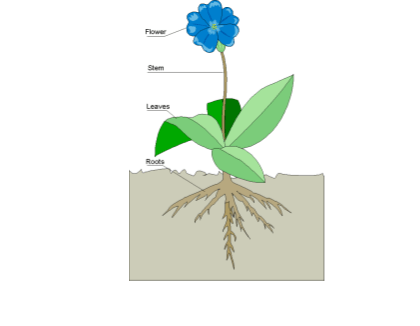
Which plant part absorbs water and nutrients?
a)
Leaf
b)
Stem
c)
Roots
d)
Flower
52.
Which plant part collects the sun's energy and makes food?
a)
Leaf
b)
Stem
c)
Roots
d)
Flower
53.
What is the name of the green pigment inside plants?
a)
Monophyll
b)
Chlorophyll
c)
Epiphyll
d)
Glorophyll
54.
What gas is released by plants from the process of photosynthesis?
a)
air
b)
carbon dioxide
c)
oxygen
d)
hydrogen
55.
Why are coal, oil, and natural gas considered nonrenewable resources?
a)
There is a limited supply, and they can be replaced in a short period of time.
b)
There is not a limited supply, and they cannot be replenished in a short period of time.
c)
There is a limited supply, and they cannot be replenished in a short period of time.
d)
There is not a limited supply, and they can be replaced in a short period of time.
56.
The beads on this glass are caused by - 
a)
evaporation
b)
condensation
c)
precipitation
d)
sweaty hands
57.
what do you call molten rock before it has erupted?
a)
magma
b)
lava
c)
rock
d)
fire
58.
Which is a example of an abiotic factor?
a)
panda
b)
turtle
c)
butterfly
d)
weather
59.
A _____________________ is something that scientists use to represent an object or process
a)
mass
b)
matter
c)
model
d)
weight
60.
Sal is studying the solar system. He makes a physical model using different-sized foam balls to represent the planets. Which best describes why a physical model is a useful tool for studying the solar system?
a)
Solar system models can be used to study a system that is too big to study directly.
b)
A model of the solar system eliminates the need for scientists to study the solar system directly.
c)
A model of the solar system provides an exact replica of the actual solar system, so scientists can experience what each planet is like.
d)
A model of the solar system can provide more data about the solar system than direct observations.
61.

How many legs does a spider have?

a)

6

b)

8

c)

10

d)

12

62.

What system of the body is made of the brain, spinal cord, and nerves?

a)

digestive

b)

circulatory

c)

skeletal

d)

nervous

63.

What do we call the energy of motion?

a)

potential

b)

kinetic

c)

chemical

d)

nuclear

64.

What type of animal eats only meat?

a)

carnivore

b)

herbivore

c)

omnivore

d)

frugivore

65.

What system of the human body is made up of blood, blood vessels, and the heart?

a)

nervous

b)

digestive

c)

skeletal

d)

circulatory

66.

What tube connects the mouth and the stomach?

a)

trachea

b)

throat

c)

esophagus

d)

diaphragm

67.

If a temperature is 32 degrees Farenheit, what is the Celsius temperature?

a)

0

b)

32

c)

64

d)

100

68.

What are animals without backbones called?

a)

vertebrates

b)

invertebrates

c)

reptiles

d)

mammals

69.

The difference in gravitational force is called _________.

a)

Tidal Force

b)

Fun Tides

c)

Tidal waters

d)

Ocean Force

70.

The tidal force exerted by the ______ is stronger that the tidal force exerted by the _______.

a)

earth, ocean

b)

sun, moon

c)

moon, stars

d)

moon, sun

71.

The moon is mainly responsible for the tides on Earth because it is _________ _________.

a)

much closer

b)

far away

c)

behind the sun

72.

The bulges that occur in the Earth's oceans are called ______ _______.

a)

low waters

b)

low tides

c)

high tides

d)

big dips

73.

____ ____ occur in the spaces between the high tides.

a)

High tides

b)

Medium tides

c)

Low tides

d)

Super tides

74.

Low tides is simply a term given to water that is lower than ___ _____.

a)

high tide

b)

sea level

c)

low tide

d)

the ocean

75.

The tidal bulge follows the movement of the _____.

a)

moon

b)

sun

c)

Earth

d)

ocean

76.

Because the tidal bulge follows the moon;s revolution-Many places on Earth experience ___ high tides and ___ low tides each day.

a)

4 and 4

b)

1 and 1

c)

2 and 2

d)

3 and 3

77.

Because the moon is so much closer than the sun, the moon's gravitational force is much stronger than that of the ___.

a)

sun

b)

earth

c)

moon

d)

sea

78.

The _____ _____ is the difference between the levels of ocean water at high tides and low tides. That range depends on the sun-Earth-moon;s position.

a)

ocean waves

b)

mountain level

c)

sea level

d)

tidal range

79.

_____ ______ occur when the Sun, the Earth, and the Moon are in a ______ degree angle.

a)

Spring tides. 90°

b)

Neap tides, 90°

c)

High tides, 90°

d)

Low tides, 90°