
 Worksheets
SSA 5th grade review
Total questions: 77
Worksheet time: 39mins
What should her next step be?
Which would be the best way for him to perform his experiment?
Which one of the questions below is a Testable Question?
What is gravity?
How many stars are in the sky?
Why does the Earth orbit the Sun?
What color candle burns the fastest?
What should they do to check their results?
Does warm salt water or cold salt water dissolve salt faster? What would be the variable in this experiment?
Water
temperature of water
type of salt
speed of stirring

This map was made on Tuesday.
What are meteorologists doing when they create storm tracks such as this one?
Predicting
Testing their ideas
Explaining how a hurricane develops
Gathering information to determine the strength of a hurricane
Which statement is necessary in order for a scientific investigation to be valid?
The investigation must be able to be repeated by others.
The investigation must produce data that can be graphed.
The investigation must follow all the steps of the scientific method.
The investigation must have a conclusion that matches the prediction.
Ms. Hayward conducts a study to see which period students are most late to. She does this for five days. This is an example of...
repetition
replication
torturing students
Which of the following is true of the sun?
The sun is the closest star to Earth.
The sun is the largest star in the Milky Way.
The sun is the largest planet in our Solar System.
The sun is an example of a galaxy that gives off light energy
Peter has learned that many stars are actually larger than the sun. If this is true, why do these stars appear like points of light in the sky?
These stars are hotter than the sun.
These stars have less mass than the sun.
These stars are farther away from Earth than the sun is.
These stars are made of different chemicals than the sun.
Which of the following best describes what makes up a galaxy?
gas, dust, and many stars
a star and planets orbiting the star
one planet and a moon orbiting the planet
a group of several stars that make a shape in the sky
Which answer describes how the inner planets are similar to each other?
They are all the same size.
They all have solid surfaces.
They all have at least one moon.
They all have a thick atmosphere.
The sun APPEARS to move across the sky, during the day. Which of the following causes shadows to change length throughout the day?
earth's rotation
earth's revolution
sun's revolution
earth's orbit
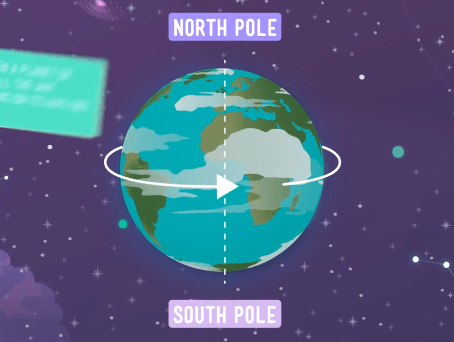
Earth revolves around the sun, but it also makes one complete rotation. How long does it take Earth to make one complete rotation on its axis?
365 days
1 month
1 day
1 week


Which physical property of minerals requires no tools or other equipment to determine?
Hardness.
Fracture.
Color.
Cleavage.

Compacted layers of rocks are called...
igneous.
sedimentary.
metamorphic.

Which type of rock is formed when rocks are melted deep in the Earth and cool to form new rocks?
Igneous
Metamorphic
Sedimentary
Sandstone

What condition is required for piles of sediment to become a sedimentary rock?
High pressure/compaction
Low temperature
Cool Air

What rock is made out of the process shown in the picture?
Metamorphic Rock
Igneous Rock
Sedimentary Rock
Minerals
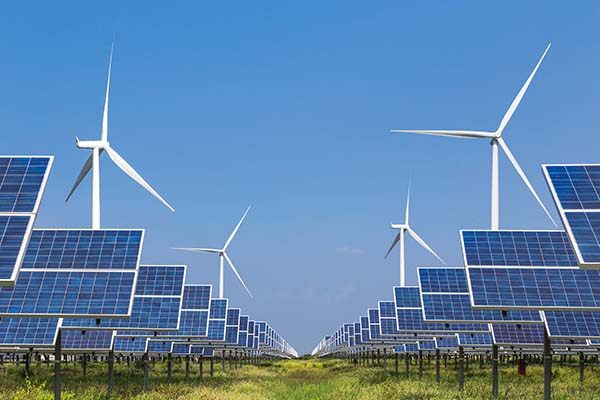
What are renewable resources?
A limited amount and cannot be replaced in a human life time.
Plastic bags
Coal, oil, and natural gas
Can be replaced in our lifetime through natural processes
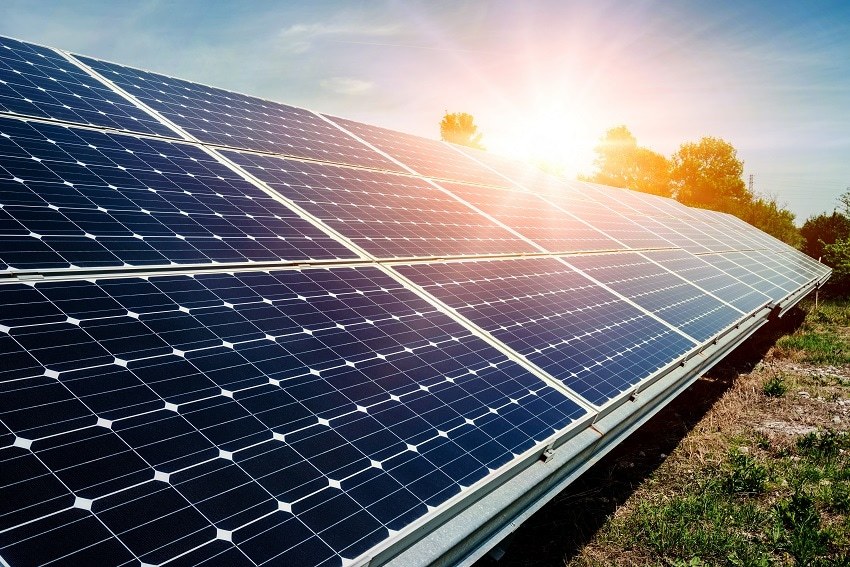
Sunlight is...
Very bright
Will eventually run out soon
A renewable resource
A nonrenewable resource
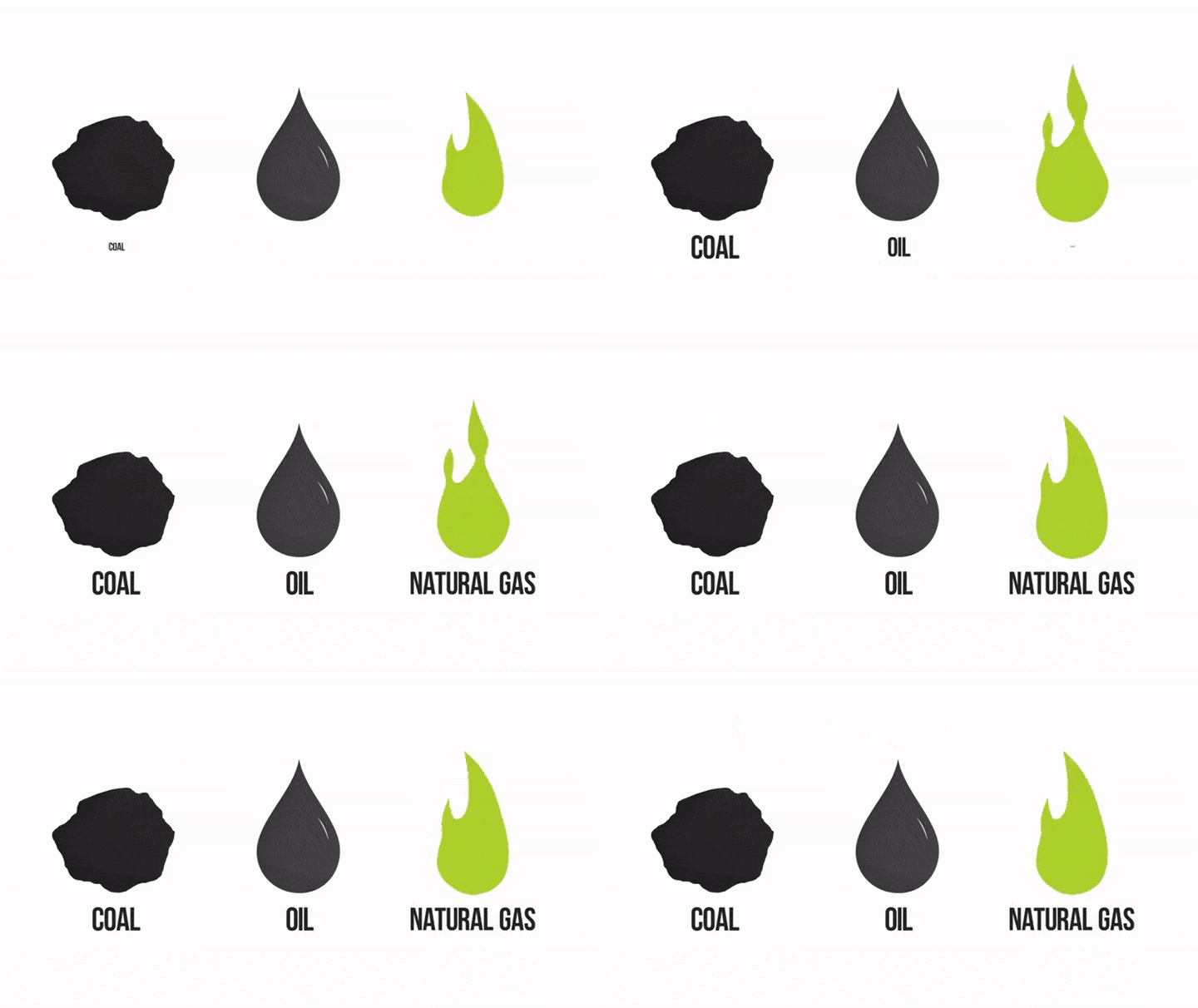
A group of non-renewable resources, called ______________, include coal, oil, and natural gas.
Fossils
Energy
Resources
Fossil fuels
Samantha put some ice in a cup and poured some cold tea over the ice. She set the filled cup on the kitchen table. In a few minutes, she noticed that there were drop of water all over the outside of the cup. Where did the drops of water most likely come from?
They evaporated out of the air above the cold liquid.
They condensed out of the air surrounding the cold cup.
They dripped off the ice cubes as he put them into the cup.
They came off his hands after holding the melting ice cubes.
Why are oceans such an important part of the water cycle?
Oceans contain most of the water on Earth.
Oceans help to replenish the water in rivers and streams via evaporation and precipitation.
The water from oceans evaporates back into the air.
All of the above.
Water runs down creeks and rivers until it flows into the ocean. At what stage in the water cycle does the water return to creeks and rivers?
Condensation
Evaporation
Precipitation
Vapor formation
One morning, Ryan noticed there were tiny drops of water on the grass as he walked to school. That afternoon, he did not see any drops of water on the grass when he returned home. Which of the following best explains what happened to the drops of water?
The heat from the air caused the water drops to boil.
The air cooled the water and caused the drops to freeze.
The Sun heated the water and caused the drops to evaporate.
The energy from the Sun caused the water drops to condense.
Which sequence below shows how water leaves the ocean and returns to land as it moves through the water cycle?
condensation, precipitation, evaporation
evaporation, condensation, precipitation
evaporation, precipitation, condensation
precipitation, condensation, and precipitation
Where is most of Earth's water found?
underground
in Earth's oceans
in rivers and lakes
in polar ice caps
The amount of precipitation over a period of time is measured with what instrument?


A weather map is provided.
The variation in yearly temperature averages is the result of difference in which of the following? (In other words, what is the main reason for a difference in temperature?)
Latitude
Elevation
Precipitation
Wind Speed

A map is provided.
The variation in yearly rainfall averages is the result of differences in which of the following? (In other words, what is the main reason for a difference in the amount of rainfall?)
Latitude
Amount of vegetation
Elevation
Proximity to water

William lives in southern Florida. He often visits his grandmother's home in the Colorado Rocky Mountains. William notices that the weather is usually very different where his grandmother lives compared to the weather where he lives. Which of the following best explains why the weather is different?
William’s grandmother lives farther to the north and at a higher elevation.
William always visits his grandmother at the same time every year.
When William visits his grandmother, he spends more time outside.
William’s grandmother is much older and has lived in several different locations.
Hot and wet all year. Located near the Equator.
polar
temperate
tropical
Milk takes the shape of its container because it is a:
Solid
Liquid
Gas
Which state of matter has tightly packed molecules?
Solid
Liquid
Gas
Which state of matter can spread out and fill in any container its in?
Solid
Liquid
Gas

Which of the following describes an example of a material undergoing a chemical change to become another material with different characteristics?
Iron turns to rust when it is exposed to oxygen.
When water boils, it turns into vapor, which is a gas.
Oxygen can become liquid at a very low temperature.
Gold can be spread out very thin to cover a large area.
Which of the following best explains what will happen if you fill a container to the top with liquid and then tightly secure the lid and place it in a freezer?
As it freezes, the liquid will maintain its shape and volume as it slowly turns into a solid.
As it freezes, the liquid will take up more space and push out on the container until it bursts.
As it freezes, part of the liquid will become gas, which will push out on the container until it bursts.
As it freezes, the liquid will take up less space because it will be a mixture of solid, liquid, and gas.
What other form of energy does the burning match give off?
What form of energy causes the noodles to cook on the range?
What form of energy must solar energy be changed into in order to run household appliances?
Which of the following is the best explanation for why this happens?
Shari is using two toy cars to experiment with force and motion. The cars have different masses. Car A has a mass of 100 grams. Car B has a mass of 300 grams. Shari pushes each car forward using the same amount of force. Which car will travel farther?
Car A will travel farther.
Car B will travel farther.
The cars will travel at the same distance.
It is not possible to predict which car will travel farther.
As part of a science project, Samuel slides several different objects down a ramp. The objects Samuel uses are a magnet, a marble, a wooden block, and a metal car. Which two forces are acting on all the objects as they slide down the ramp?
Gravity moves the objects, and friction slows them down.
Friction moves the objects, and gravity slows them down.
Magnetism moves the objects, and gravity slows them down.
Gravity moves the objects, and a pulling force slows them down.

Stephanie started pushing a bookcase across the room, as shown in picture 1. Then, she removed the books and continues pushing with the same force and direction in picture 2. How does removing the books affect the motion of the bookcase?
The mass is decreased, making the bookcase move faster.
The gravity is increased, making the bookcase move slower.
The friction is increased, making the bookcase move slower.
The mechanical energy is decreased, making the bookcase move faster.

When Camari placed next year’s plants in the school garden she didn’t notice that she accidentally knocked the Jasmine plant over. What should she expect when she returns from summer vacation?
The plant was dead because it was knocked over and it couldn’t receive carbon dioxide.
The stem began to grow up away from the ground and the roots grew down towards the ground.
The stem grew down towards the ground and the roots grew away from the ground.
The flowers grew towards the pot and the leaves grew away from the pot.

Michael planted two trees on Earth day, tree A and tree B, as shown below. If Michael only watered tree A, what could be said about tree B?
The leaves of tree B grew bigger because it was in the shadow of tree A.
The stem of tree B grew longer because it was watered more.
The flowers on tree B could not attract pollinators because it was over-watered.
The roots of tree B grew towards tree A to absorb some of the water tree A was receiving.
Plants have many organs. The leaf is a very important organ of the plant because it
a) makes the food for the plant.
b) soaks up the water from the ground.
c) delivers water to the other parts of the plants
d) makes seeds
Where does the plant get the energy to make its own food through a process called photosynthesis?
a) the sun
b) insects
c) seeds
d) the flower
What is the function of the heart?
to grind up food for the body
to pump blood throughout the body
to control blood sugar through the release of chemicals
to control muscle groups through the release of chemicals
Which organ filters the blood in the body?
heart
liver
skin
stomach
Which of these is NOT a function of the skin?
to protect the body against outside invaders
to keep the body at a constant temperature
to release chemicals that control blood sugar
to allow the body to feel when something is touching it
The small intestine is located under the stomach and is where the human body digests most substances. Which human organ provides digestive enzymes to the small intestine?
bladder
kidneys
liver
pancreas
Jenny plays on a soccer team. She uses the muscles in her legs to kick the soccer ball into the goal. What job do her muscles do?
Her muscles make energy for her legs.
Her muscles carry blood to her legs.
Her muscles move the bones in her legs.
Her muscles store minerals in her legs.

Several organs in the human body are labeled in the model. Which organ is labeled 7?
heart
liver
lung
stomach
Many kinds of animals live in the Everglades, including alligators, Florida panthers, and manatees. What characteristic do all three of these animals of the Everglades share?
They all eat only fish.
They all have a backbone
They all give birth to live young
They all make their homes in the water
The scales of fish and the feathers of birds are both made from the same protein, called keratin. What is another characteristic birds and most fish share?
Both are animals that lay eggs.
Both are animals that have teeth.
Both are animals that have cold blood
Both are animals that care for their young

Moths and Praying Mantises both go through stages of metamorphosis. Which stage are both the moth and mantis able to reproduce?
egg
larva
nymph
adult

Frogs go through a form of metamorphosis similar to butterflies. What stage do frogs and butterflies both start their life cycles?
egg
larva
tadpole
adult

The life cycle of a dragonfly is shown. Which stage is missing from the picture?
egg
larva
nymph
adult
Complete and incomplete metamorphosis both have benefits and risks. Which type of metamorphosis has an advantage when it comes to food sources? Why?
Incomplete metamorphosis because the nymphs and adults eat the same food.
Incomplete metamorphosis because the adults will share their food with the nymphs.
Complete metamorphosis because the adults will go out and find food if the larva can't find any.
Complete metamorphosis because the larva eats different food than the adults.

How is complete metamorphosis different from incomplete metamorphosis?
Only complete metamorphosis has an egg stage.
Complete metamorphosis has a larva and pupa stage, incomplete metamorphosis does not.
Only incomplete metamorphosis has an adult stage.
Complete metamorphosis requires the insect to molt.
How can you tell if a tree is in its mature stage?
It will be tall
It will have fruit
It will have many leaves
It will have deep roots

