
 Worksheets
World History 1 - 2012 Released Test
Total questions: 100
Worksheet time: 50mins
Name
Class
Date
1.
Which explains the significance of Caltalhoyuk?
a)
A Paleolithic site where cave art was present
b)
A prehistoric monument located in England
c)
A Neolithic settlement that existed in Anatolia
d)
A site where Europe separates from Asia
2.

Which Roman wrote the epic poem called Aeneid?
a)
Virgil
b)
Constantine
c)
Cicero
d)
Ptolemy
3.
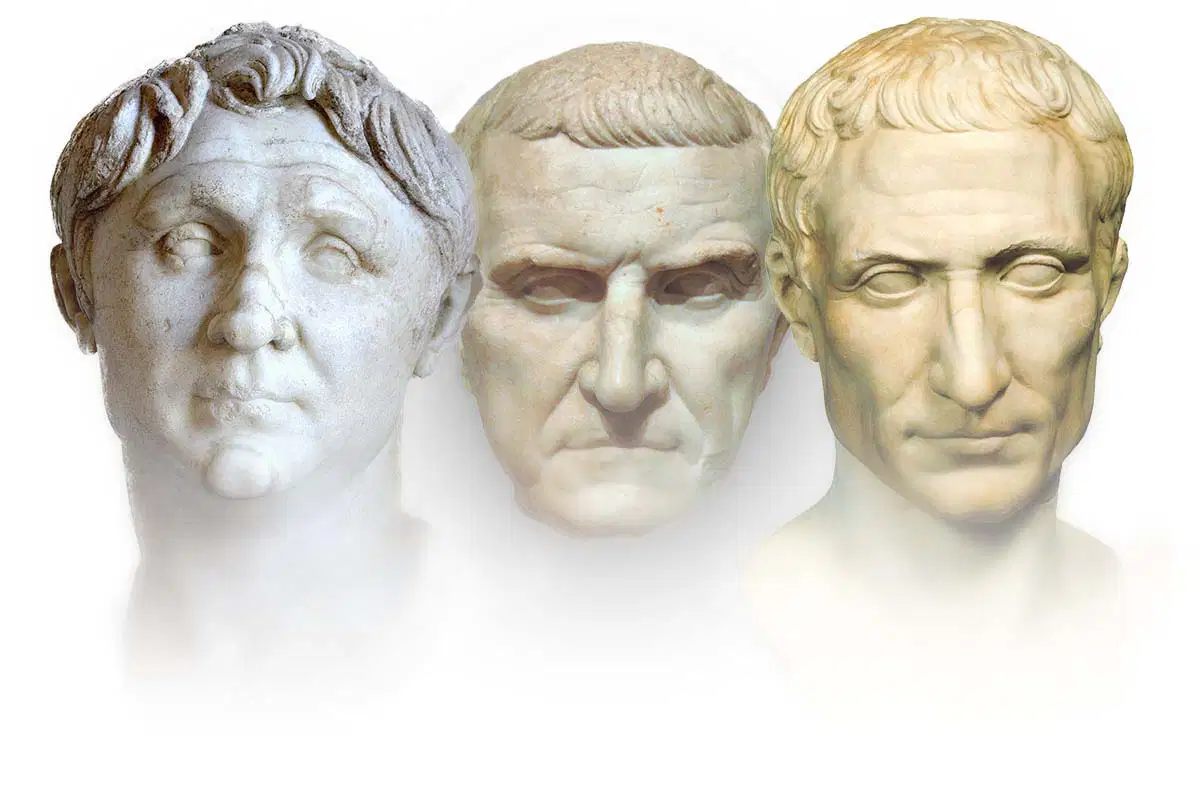
In 61 B.C., the arrangement of Caesar, Pompey, and
Crassus to govern Rome was called –
a)
First Triumvirate
b)
Representative democracy
c)
Council of Rome
d)
Pax Romana
4.
During the Middle Ages, the Pope crowned the emperors
and –
a)
supported rebellious nobles from Rome.
b)
ended all Church authority.
c)
spread Christianity and Latin to Germanic tribes.
d)
encouraged Muslims to advance into the region.
5.
All are true regarding how geography impacted the development
of ancient Greece except –
a)
They created independent, small city-states that were cut off from one another by mountains or water
b)
They built vast empires due to the large and flat land spaces
c)
Some cities became important trading centers while others were isolated
d)
The location of the seas created skilled sailors and provided harbors for ships
6.
Which became an important new economic institution introduced during the Crusades?
a)
Methods for accounting and bookkeeping emerged
b)
The use of credit was not allowed with merchants
c)
The Church ruled that usury was allowed
d)
Merchants used only coins to make purchases
7.
Hindu belief of rebirth based upon Karma is known
as-
a)
Vedas
b)
Upanishads
c)
monotheism
d)
reincarnation
8.
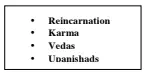
Which religion is best described by the list?
a)
Buddhism
b)
Judaism
c)
Hinduism
d)
Zoroastrianism
9.
The Hindu belief that all thoughts and actions
result in future consequences is known as-
a)
caste system
b)
karma
c)
monotheism
d)
noble truths
10.
Four Noble Truths and the Eightfold Path to
Enlightenment are the teachings of what religion?
a)
Buddhism
b)
Judaism
c)
Hinduism
d)
Zoroastrianism
11.
The religious founder of Buddhism is also known
as-
a)
Asoka
b)
Confucius
c)
Siddhartha Gautama
d)
Qin Shi Huangdi
12.
The First Crusade ended with Jerusalem –
a)
captured by the Christians.
b)
coming under Muslim control under Saladin’s leadership.
c)
becoming ruled by those of Jewish faith.
d)
remaining neutral to all religions in the region.
13.
During the Fourth Crusade, western Crusaders sacked which Byzantine capital?
a)
Moscow
b)
Jerusalem
c)
Constantinople
d)
Madrid
14.
Ivan the Great is most known for which of the
following?
a)
Defeating the Mongols
b)
Creating a written law code for Russia
c)
His democratic rule
d)
Acceptance of the Mongols in Russia
15.
Which group conquered the Byzantine Empire
in 1453?
a)
Christian Crusaders
b)
Ottoman Turks
c)
French conquerors
d)
Russian Nomads
16.
All are true of the Persian Wars except –
a)
Athenians and Spartans put aside their differences to fight Persia
b)
After Athenian victories, the Greeks controlled the Aegean Sea
c)
Sparta merged with Athens to create one large city-state
d)
Athens preserved its independence and continued making innovations
17.
Which demonstrates a main cause of the Peloponnesian War?
a)
Persia attacked the Greek mainland
b)
Spartans attacked Marathon and Salamis
c)
Competiton for control of the Greek world
d)
Aggressive taxes forced citizens to revolt
18.
Who launched Greek literature by writing The Iliad and The Odyssey, epic poems about the Trojan War?
a)
Socrates
b)
Aeschylus
c)
Homer
d)
Herodotus
19.
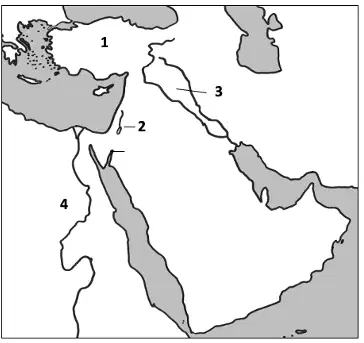
Which number is where Mesopotamia was located?
a)
1
b)
2
c)
3
d)
4
20.

Which ancient Greek city-state is being described?
a)
Troy
b)
Sparta
c)
Athens
d)
Persepolis
21.
Which best describes the legacy of Pericles?
a)
Athens was rebuilt and became more democratic
b)
He led a small force of soldiers at a mountain pass for three days
c)
Athens created a harsh code of laws
d)
Debt slavery was outlawed in the city
22.

When studying prehistoric people, cave drawings like this one allow archaeologists to —
a)
understand spoken languages
b)
speculate about daily lives
c)
interpret written records
d)
study farming techniques
23.
The ancient Hebrews were among the first to develop a religious tradition that included —
a)
sacrifices
b)
ancestor worship
c)
holy pilgrimages
d)
monotheism
24.
What was the major change caused by the agricultural revolution?
a)
Increase of spoken languages
b)
End of hunting
c)
Development of permanent settlements
d)
Elimination of trade
25.
Which type of government was used in the Persian Empire?
a)
Religious oligarchy
b)
Republic
c)
Imperial bureaucracy
d)
Democracy
26.
Which text is a central document of Judaism?
a)
Analects
b)
Koran (Qur’an)
c)
Torah
d)
Upanishads
27.
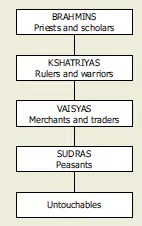
What does this diagram represent?
a)
Class system of China
b)
Political system of Greece
c)
Feudal system of Japan
d)
Caste system of India
28.

Which ancient writing system is illustrated in this picture?
a)
Chinese characters
b)
Phoenician alphabet
c)
Egyptian hieroglyphics
d)
Sumerian cuneiform
29.
Buddhists achieve enlightenment by following the —
a)
laws of the Old Testament
b)
decrees of the Upanishads
c)
Five Pillars
d)
Eightfold Path
30.
The Gupta Empire made a major contribution to world civilizations by developing
a)
the concept of zero
b)
long-lasting roads
c)
the production of porcelain
d)
wind-powered boats
31.
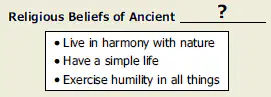
Which region best replaces the question mark?
a)
China
b)
Greece
c)
Egypt
d)
Mesopotamia
32.
The ruling authority of China’s ancient dynasties was based on the —
a)
Code of Hammurabi
b)
Mandate of Heaven
c)
Twelve Tables
d)
Ten Commandments
33.
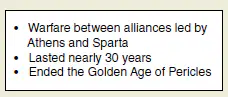
Which event is described in this list?
a)
The Gallic Wars
b)
The Peloponnesian War
c)
The Trojan War
d)
The Punic Wars
34.

In this quotation, Pericles describes Athenian society as valuing —
a)
military discipline
b)
civic responsibility
c)
religious freedom
d)
economic opportunity
35.
Hippocrates made important contributions in the area of —
a)
poetry
b)
sculpture
c)
philosophy
d)
medicine
36.
Which characteristic is associated with both the Roman and the Greek cultures?
a)
The rule of emperors
b)
An army of legionnaires
c)
Polytheistic religion
d)
Bicameral legislature
37.
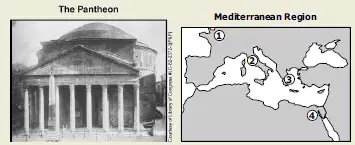
Which number on the map marks the location of this building?
a)
1
b)
2
c)
3
d)
4
38.
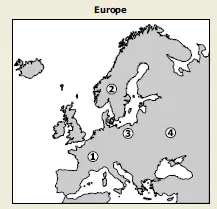
Which number marks a province of the Roman Empire?
a)
1
b)
2
c)
3
d)
4
39.
Constantine brought a significant change to the Roman Empire by —
a)
banning monotheism
b)
writing a constitution
c)
moving the capital
d)
abolishing slavery
40.
Which accomplishment is associated with Alexander the Great?
a)
The spread of Greek culture throughout the empire
b)
The introduction of Christianity to the Near East
c)
The defeat of the Chinese army in Asia
d)
The destruction of the Athenian navy in battle
41.
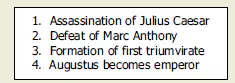
Which list places these events in the correct chronological order?
a)
1, 2, 4, 3
b)
2, 4, 3, 1
c)
3, 1, 2, 4
d)
4, 3, 1, 2
42.
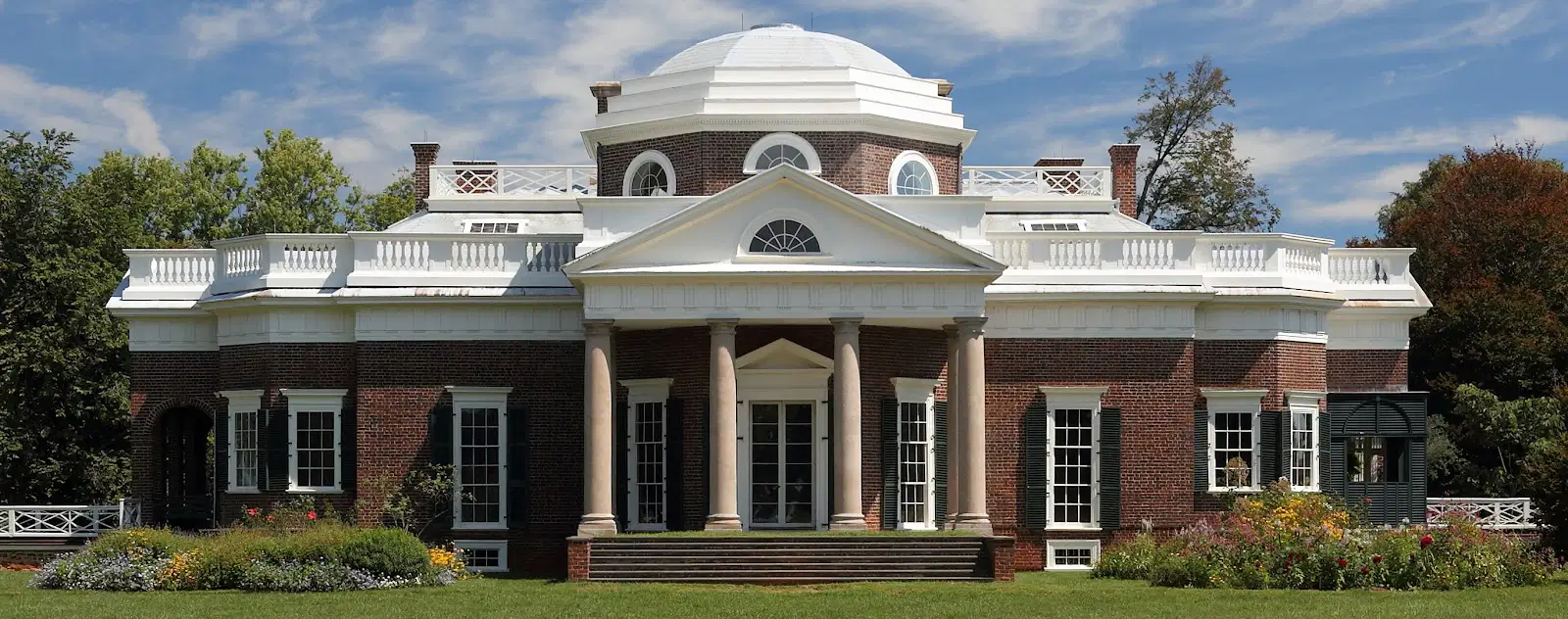
Which civilization influenced the architecture in this picture?
a)
Greek
b)
Russian
c)
Byzantine
d)
Islamic
43.
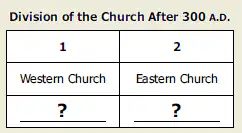
Which information correctly completes this table?
a)
Column 1—Centered in Constantinople
b)
Column 2—Centered in Rome
c)
Column 1—Accepted the authority of the Patriarch
d)
Column 2—Used Greek language in liturgy
44.
Which empire was best known for libraries that preserved ancient Greek and Roman knowledge?
a)
Mongol
b)
Gupta
c)
Chinese
d)
Byzantine
45.
The Battle of Tours was significant because it marked the —
a)
end of Muslim expansion into Western Europe
b)
end of the Crusades in the Middle East
c)
beginning of British dominance in Northern Europe
d)
beginning of Turkish rule in the Balkans
46.
The Dome of the Rock is an example of which civilization’s achievements in art and architecture?
a)
Chinese
b)
Greek
c)
Islamic
d)
Roman
47.
The practice of Orthodox Christianity in Russia was primarily the result of contact with the —
a)
Islamic Empire
b)
Persian Empire
c)
Mongol Empire
d)
Byzantine Empire
48.

Which religion encourages its followers to make a pilgrimage to this site?
a)
Islam
b)
Hinduism
c)
Buddhism
d)
Christianity
49.
Which factor strengthened both the Byzantine Empire and the empire of Charlemagne?
a)
Unity between politics and religion
b)
Respect for elders and ancestors
c)
Studies of geography and medicine
d)
Patrons of painters and sculptors
50.

What was one impact of this event?
a)
Muslim pilgrims no longer traveled to Medina.
b)
A permanent split occurred within the religion.
c)
Muslim teachers no longer made the Hajj.
d)
The desert tribes declared a lasting truce.
51.

One of the main accomplishments of Justinian was —
a)
making Christianity the official religion of the Roman Empire
b)
stopping the Islamic conquest of Western European territories
c)
reconquering territory that had once belonged to the Roman Empire
d)
defeating an invading army of Ottoman Turks
52.
The Limpopo and Zambezi Rivers were boundaries for the empire of —
a)
Kush
b)
Nubia
c)
Ghana
d)
Zimbabwe
53.
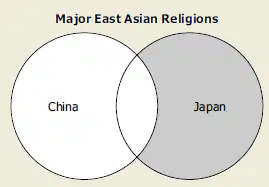
Which religion belongs in the shaded part of this diagram?
a)
Buddhism
b)
Hinduism
c)
Confucianism
d)
Shintoism
54.
Which map shows the Japanese archipelago?
a)
1
b)
2
c)
3
d)
4
55.
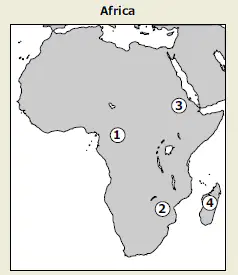
Which number marks the location of an African kingdom that adopted Christianity?
a)
1
b)
2
c)
3
d)
4
56.

Which characteristic was shared by the Aztec and Mayan civilizations?
a)
1
b)
2
c)
3
d)
4
57.

These events occurred in the nation-state of —
a)
France
b)
Russia
c)
England
d)
Spain
58.

This speech helped to start the —
a)
Hundred Years’ War
b)
First Crusade
c)
Norman Conquest
d)
Holy Roman Empire
59.
The first European universities were based on the scholarly contributions of
a)
courts
b)
guilds
c)
manors
d)
monasteries
60.
The Magna Carta was important because it —
a)
established the right of assembly
b)
limited the power of the king
c)
ended the system of feudalism
d)
increased the influence of the church
61.
Which diagram indicates the spread of the Black Death?
a)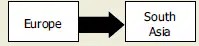
1
b)
2
c)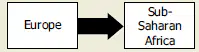
3
d)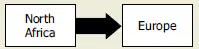
4
62.
Which movement had the greatest influence on the Renaissance?
a)
Utopianism
b)
Feudalism
c)
Humanism
d)
Romanticism
63.

Which empire is described by these characteristics?
a)
Persian Empire
b)
Ottoman Empire
c)
Byzantine Empire
d)
Mongol Empire
64.
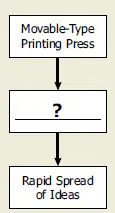
Which phrase completes this diagram?
a)
Construction of Monasteries
b)
Development of Guilds
c)
Growth of Universities
d)
Production of Books
65.
During the Paleolithic Era, how did most early humans acquire food?
a)
By planting crops
b)
From domesticated animals
c)
By following animal migrations
d)
From nearby settlements
66.
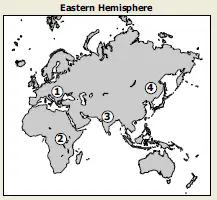
Which number on this map represents the region where archaeologists believe the first humans appeared?
a)
1
b)
2
c)
3
d)
4
67.
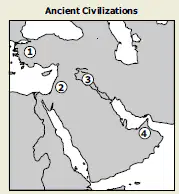
The ancient Hebrews established a civilization near which location?
a)
1
b)
2
c)
3
d)
4
68.
Early Hellenic culture spread from Greece to Asia Minor as a result of —
a)
dynastic decline
b)
climate changes
c)
sea trade
d)
democratic elections
69.
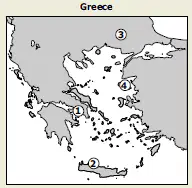
Which number represents the location of ancient Athens?
a)
1
b)
2
c)
3
d)
4
70.
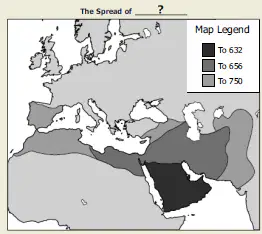
What best completes the title of this map?
a)
the Plague
b)
Islam
c)
Judaism
d)
the Crusades
71.
The Vikings who invaded Europe in the Middle Ages were from —
a)
Poland
b)
Russia
c)
Turkey
d)
Scandinavia
72.
Which factor was most important about the site of Constantinople?
a)
Mountains for stone building materials
b)
Peninsula for easily constructed defenses
c)
River valley to provide rich farmland
d)
Desert oasis to supply fresh water
73.
In the 14th and 15th centuries, most goods arrived in northern Europe from Constantinople after crossing the —
a)
Black Sea
b)
Indian Ocean
c)
Red Sea
d)
Pacific Ocean
74.
Machu Picchu is located in which type of geographic region?
a)
Arid valley
b)
Rain forest
c)
Mountains
d)
Plains
75.
Which characteristic was most common in ancient river valley civilizations?
a)
Hereditary rule
b)
Limited population growth
c)
Social equality
d)
Limited economic growth
76.

This sequence describes the development of government in ancient —
a)
Byzantium
b)
Sparta
c)
Rome
d)
Athens
77.
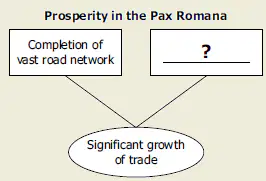
Which action best completes this diagram?
a)
Control of price levels
b)
Adoption of uniform currency
c)
Prohibition of money lending
d)
Limitation of economic regulations
78.
Which change was a result of the rise of the feudal system?
a)
Major cities were established.
b)
Local lords had the most political power.
c)
Artistic achievements became socially important.
d)
Long-distance trade routes were developed.
79.
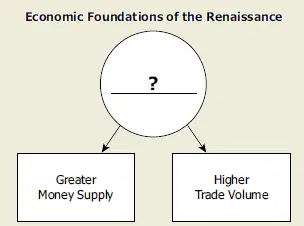
Which phrase best completes this diagram?
a)
Closure of Banks
b)
Use of Arabic Numbers
c)
Letters of Credit
d)
Church Rules on Usury
80.
In The Prince, Niccolò Machiavelli explained why it is necessary for leaders to have —
a)
absolute power
b)
constitutional government
c)
democratic participation
d)
political equality
81.
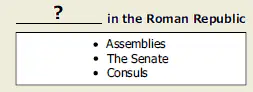
What best replaces the question mark?
a)
Representative Government
b)
Citizenship Rights
c)
Social Structure
d)
Trade Policies
82.
The defining characteristic of polytheistic religions is the idea that-
a)
there is an eternal struggle between good and evil
b)
beings undergo many cycles of rebirth
c)
past actions control the destiny of each person
d)
there are many gods and goddesses in existence
83.
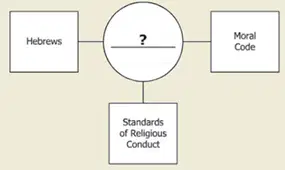
4.pngWhich of these best completes this diagram?
a)
Vedas
b)
Upanishads
c)
Twelve Tablets
d)
Ten Commandments
84.
The Vedas and the Upanishads are sacred writings of-
a)
Hinduism
b)
Judaism
c)
Zoroastrianism
d)
Buddhism
85.
Emperor Constantine influenced the traditions of Western civilization by -
a)
sending Roman soldiers to the Middle East
b)
legalizing Christianity within the Roman Empire
c)
codifying Roman law in the Middle East
d)
unifying Europe by founding the Holy Roman Empire
86.
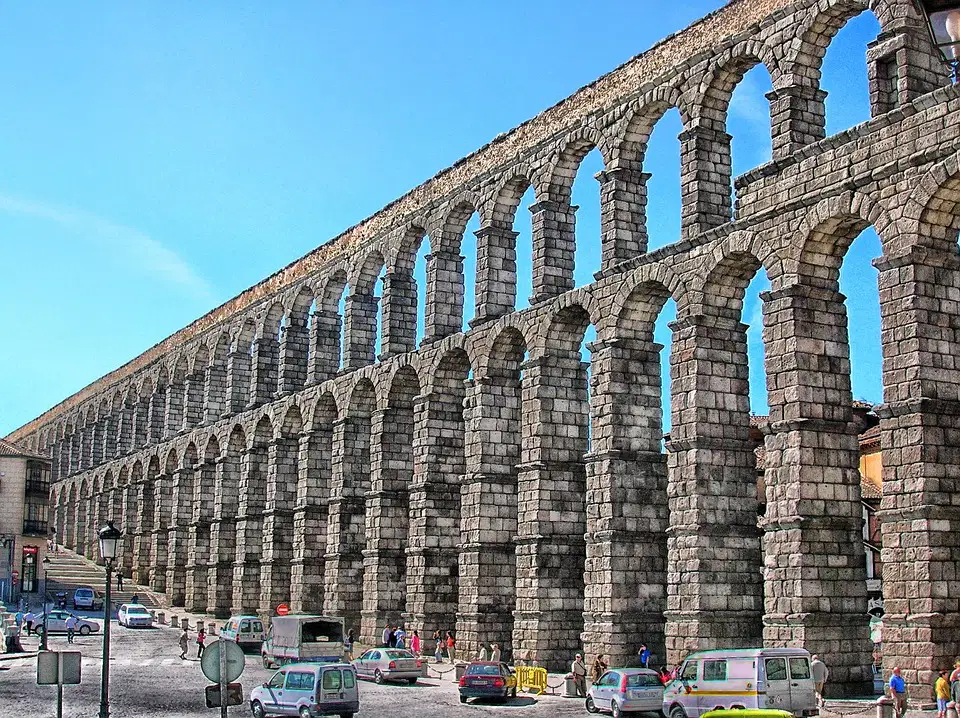
What was the purpose of this structure?
a)
To make travel easier
b)
To carry water
c)
To practice a religion
d)
To defend a city
87.
Which city was an obstacle to early Rome's control of the Mediterranean region?
a)
Athens
b)
Carthage
c)
Alexandria
d)
Corinth
88.
How did Rome's military conquests affect the economic and social structures of the
Roman Republic?
a)
Slavery became important to Rome's agricultural production.
b)
Soldiers deserted to join enemy armies attacking Rome.
c)
Trade routes fell into disuse throughout the Republic.
d)
The Republic adopted a monotheistic religion.
89.
Which characteristic describes the early Catholic Church?
a)
Established monasteries in Russia
b)
Centered in Mecca
c)
Headed by the Pope
d)
Conducted services in Greek
90.
Which art form is most associated with the Byzantine culture?
a)
Tapestries
b)
Mosaics
c)
Sculpture
d)
Music
91.
Which institution in Western Europe had the most power during the Middle Ages?
a)
The Church
b)
Merchant guilds
c)
The feudal system
d)
Roman universities
92.
The cause of the split in Islam after Muhammad's death was a difference of opinion concerning -
a)
expansion
b)
leaders
c)
prayer
d)
pilgrimages
93.
Whose codification of Roman law has strongly influenced European laws of today?
a)
Marcus Aurelius
b)
Constantine
c)
Augustus Caesar
d)
Justinian
94.
Which belief is associated with Shintoism?
a)
The gods interfere in human lives.
b)
People will experience an afterlife.
c)
Reincarnation depends on karma.
d)
People must respect nature spirits
95.
Which event helped to spread Islam in Africa?
a)
Establishment of trade with Timbuktu
b)
Conquest of Jerusalem
c)
Relocation of capital to Baghdad
d)
Conquest of Damascus
96.
During the Middle Ages, many Greek and Roman classics were preserved because they had been translated into -
a)
Russian
b)
Persian
c)
Arabic
d)
Chinese
97.
Emperor Constantine chose the location for a new capital partly for its distance from-
a)
trade routes
b)
feudal kingdoms
c)
Germanic invaders
d)
Mongol hordes
98.
Which regions were connected by the Silk Roads?
a)
East Asia and the Mediterranean basin
b)
Western Europe and East Africa
c)
East Africa and Southeast Asia
d)
Northern Europe and the Mediterranean basin
99.
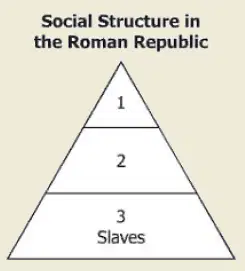
Which choice belongs in this diagram?
a)
Plebeians in section 2
b)
Patricians in section 2
c)
Consuls in section 2
d)
Emperors in section 2
100.
Ancient Athens was responsible for developing which concept in government?
a)
Civil service
b)
Elected legislatures
c)
Direct democracy
d)
Written laws
100 %

